What Is the Best Soil for Basil Indoors?
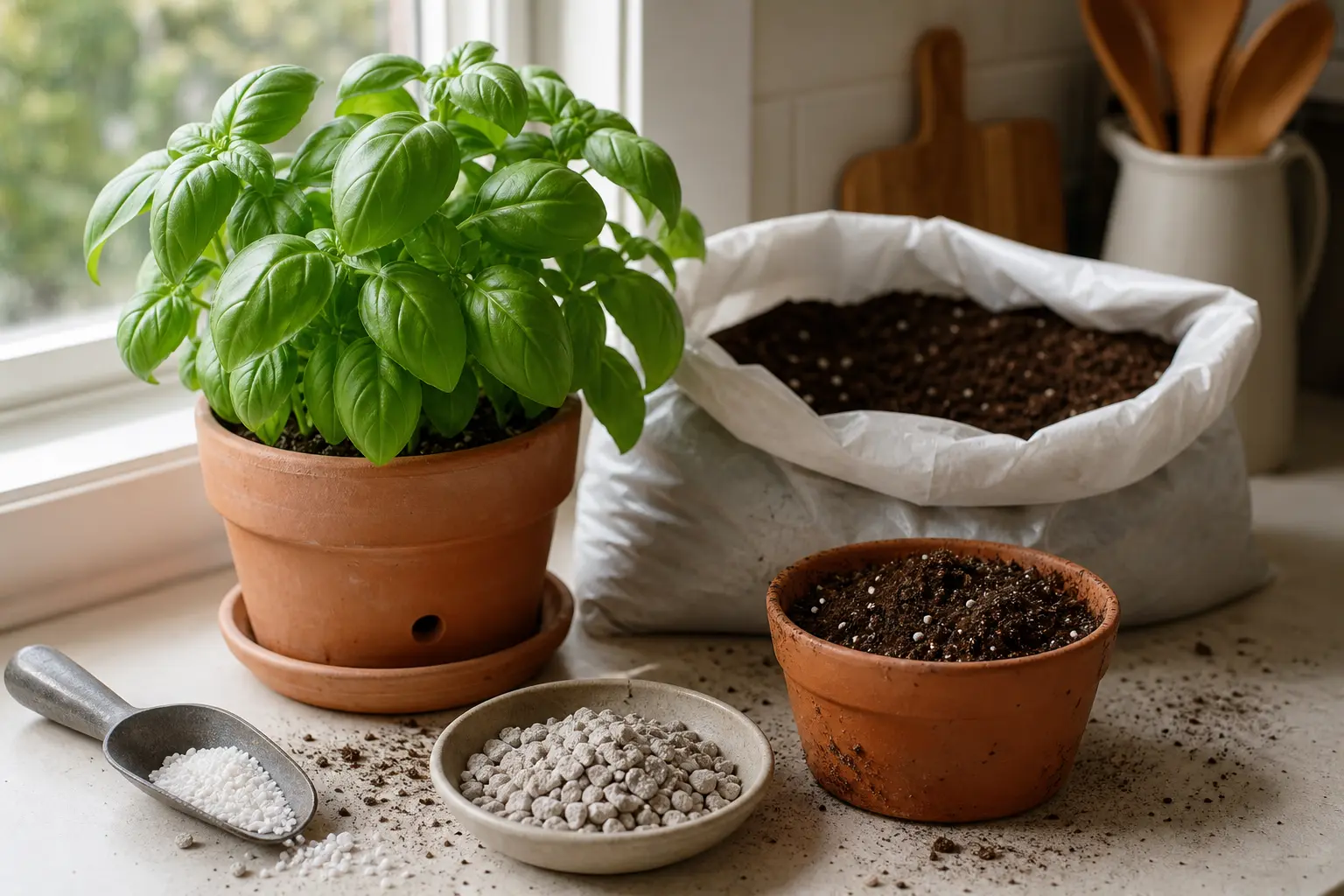
The best soil for basil indoors is a light, well-draining potting mix that still holds a little moisture. Choose a quality indoor, herb, vegetable, or general-purpose container mix—not soil dug from the garden.
Indoor basil needs roots that can breathe. A loose mix prevents water from sitting around the roots while holding enough moisture to support steady leafy growth between waterings. If your potting mix seems heavy or stays wet for several days, add perlite or pumice to open it up.
The goal is simple: moist soil, not muddy soil.
Choose a Light, Well-Draining Potting Mix for Indoor Basil
Basil is a warm-weather herb that grows quickly when its roots have oxygen, moisture, and modest nutrition. In a pot, those conditions depend far more on the potting mix than on the plant’s label or the fertilizer you use.
A suitable mix should feel fluffy when dry and crumbly when moist. After watering, it should absorb water readily, then allow excess water to run from the drainage hole. It should not turn into a dense, slick mass or remain saturated at the bottom of the pot.
What the Ideal Basil Soil Should Do
The best soil for basil indoors balances four jobs:
- Provide airflow around roots. Fine basil roots need pore spaces in the mix. Perlite, pumice, coarse organic material, and fibrous ingredients such as coconut coir help prevent compaction.
- Retain moisture without staying soggy. Basil does not perform well when allowed to wilt repeatedly, but constantly wet roots can decline quickly. A good mix keeps moisture available without becoming waterlogged.
- Drain excess water quickly. Indoor pots dry more slowly than outdoor containers, especially in cool rooms or lower light. Drainage is essential because basil uses less water when growth slows.
- Supply modest nutrients for leafy growth. Basil benefits from some fertility, but an overly rich mix can hold too much water or encourage soft, weak growth. A lightly enriched potting mix is usually enough to begin with.
Potting mix is not meant to behave like garden ground. It is designed for a confined container, where the roots have nowhere else to go and water cannot move away through a large soil profile.
A Simple Soil Mix for Indoor Basil
For most gardeners, start with a ready-made potting mix and make only one or two adjustments if necessary.
Use:
- A quality potting mix as the base
- Perlite or pumice if the mix feels dense, fine-textured, or slow to dry
- A small amount of compost or worm castings only when the mix is not already enriched
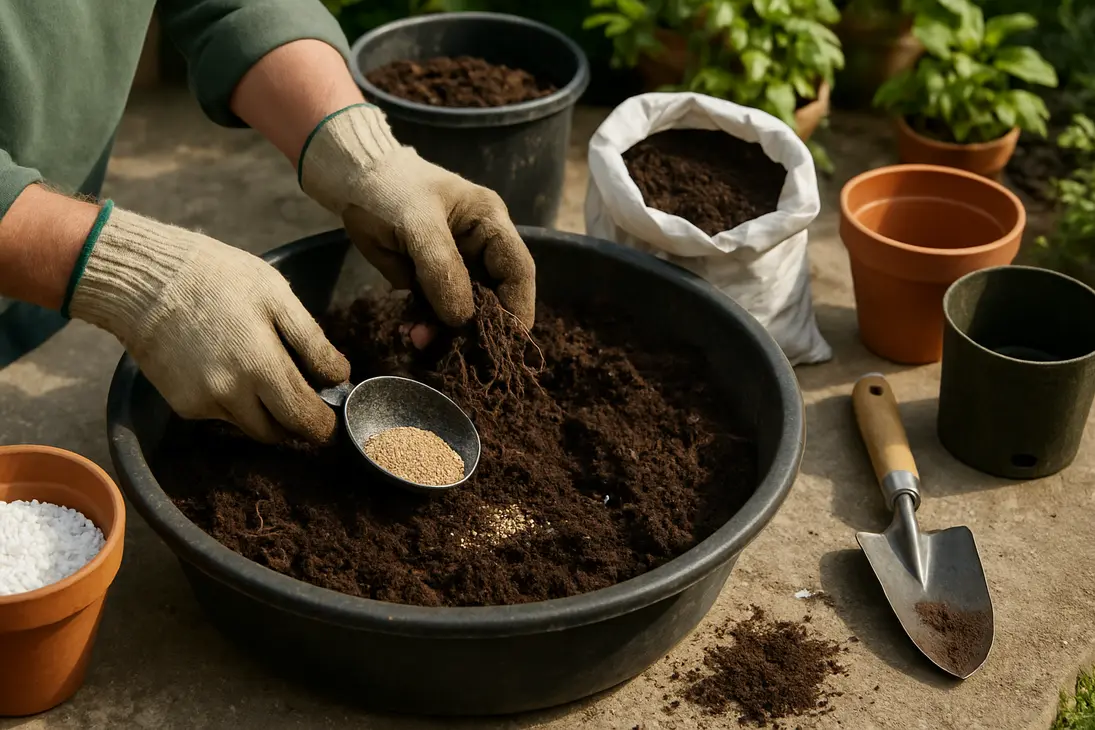
A practical approach is to fill the pot mostly with potting mix, then blend in enough perlite or pumice to make the texture visibly lighter. You do not need to create an elaborate recipe for a single basil plant.
Be restrained with compost and worm castings. They can provide gentle nutrients and improve texture in modest amounts, but too much in a small indoor pot may make the mix stay wet longer. If the bagged mix already contains compost or fertilizer, skip the extra amendment at planting time.
Buy Potting Mix or Make Your Own Basil Soil Blend
Bagged potting mix is the easiest and most reliable choice for a beginner or anyone growing one or two basil plants. A DIY blend is useful when you already have suitable ingredients or need to improve a mix that feels too heavy.
Neither option needs to be expensive or complicated. The important distinction is between a mix made for containers and dense earth intended for outdoor beds.
Best Bagged Mix Types to Look For
Look for bags labeled:
- Indoor potting mix
- Herb potting mix
- Vegetable container mix
- General-purpose potting mix suitable for containers
Many good soilless mixes contain a combination of peat moss or coconut coir for moisture retention, perlite for air space and drainage, and compost or a starter fertilizer for nutrients.
Read the ingredients rather than relying only on the front label. A mix does not have to say “for basil” to work well. What matters is that it is intended for containers and includes materials that keep it open and free-draining.
If you are growing basil under a bright grow light or in a warm, sunny window, a standard potting mix may be all you need because the plant will use water quickly. In a dimmer, cooler room, choosing a lighter mix—or adding perlite—is more helpful because the pot will dry slowly.
Easy DIY Mix for Basil Pots
If you want to make a simple blend, combine:
- Two parts quality potting mix
- One part perlite or pumice
- An optional small portion of compost or worm castings
For example, you could use two scoops of potting mix and one scoop of perlite for a single medium pot. If the potting mix has no added nutrition, replace a small part of the potting mix with compost or worm castings rather than adding a large amount on top.
Pumice is durable and adds weight, which can help stabilize a top-heavy basil plant. Perlite is lightweight, widely available, and effective, though it can float to the surface during watering. Both are useful.
Avoid adding sand to an ordinary potting mix in an attempt to improve drainage. Fine sand can fill air spaces and make a container mix denser. Perlite or pumice is a better choice for creating a more open root zone.
Ingredients to Use Sparingly or Avoid
Some ingredients sound natural or nutritious but cause problems in a small indoor container.
| Ingredient | Why it can be a problem for indoor basil |
|---|---|
| Heavy clay-based soil | Compacts easily, drains slowly, and limits root oxygen |
| Moisture-retaining crystals | Can keep the mix wet longer than basil needs, especially in low light |
| Uncomposted kitchen scraps | May smell, attract fungus gnats or other pests, and decompose unevenly |
| Large amounts of manure | Can be too rich, dense, or poorly suited to a small indoor pot |
| Large amounts of compost | May reduce drainage and keep the root zone wet |
| Fine sand | Can make potting mix heavier and more compact rather than airier |
A little organic matter is beneficial; the issue is proportion. In a countertop or windowsill pot, basil has a small root area and limited evaporation. The mix must remain physically open as well as fertile.
Why Garden Soil Is a Poor Choice for Indoor Basil
Garden soil and potting mix are not interchangeable. Garden soil may grow excellent basil outdoors, where plant roots can spread widely and rainfall moves through a deep soil profile. In a pot indoors, it often becomes dense and poorly aerated.
This is a common beginner mistake: a bag labeled “topsoil” or “garden soil” may seem like the obvious choice for a plant pot, but it is generally intended for filling, improving, or building outdoor beds.
Problems With Using Garden Soil in Pots
Garden soil can create several difficulties for basil:
- It compacts easily and limits root airflow. With repeated watering, fine particles settle together. Basil roots then struggle to access oxygen, even if the surface looks dry.
- It drains slowly. Water may remain trapped around the roots, increasing the chance of root rot and yellowing leaves.
- It may bring in weed seeds, pests, or pathogens. This is particularly inconvenient indoors, where fungus gnats and other pests can spread to nearby houseplants.
- It can become hard and water-repellent as it dries. Instead of absorbing water evenly, it may shrink away from the pot edge and channel water straight down the sides.
A basil plant in unsuitable soil may appear thirsty and overwatered at the same time: leaves can droop, yellow, or stop growing because damaged roots cannot take up water consistently.
Can Garden Soil Be Used at All?
Garden soil is best reserved for outdoor beds. If you want to use native soil in an outdoor container, it still needs substantial modification, and that is rarely worthwhile for a small basil pot.
If you have already planted basil in garden soil, the most dependable fix is to repot it into fresh potting mix rather than trying to transform the existing heavy soil with small additions. Adding a little perlite to a mostly clay-like or compacted pot does not reliably solve the drainage issue.
Gently lift the plant, loosen only the soil that falls away easily, and place it into a pot with fresh mix. Water once to settle the mix, then let excess water drain completely. Basil may pause briefly after repotting, but it is more likely to recover in an airy root environment.
Match the Soil With the Right Pot and Watering Routine
Even the best soil for basil indoors will not compensate for a pot without drainage or a watering routine that keeps the roots submerged. Soil, container, light, and watering work together.
A fast-draining mix in a pot with no hole can still become waterlogged. Conversely, a decent potting mix can stay wet too long in a large pot holding a small basil seedling.
Use a Pot With Drainage Holes
Choose a pot with at least one clear, unobstructed drainage hole. Several holes are even better, particularly in wider containers.
A plastic nursery pot is perfectly acceptable for basil if it drains well and provides enough room for the roots. It does not need to be replaced simply because it is thin plastic. Nursery pots are lightweight, practical, and often have good drainage; you can place one inside a decorative cachepot if desired.
Keep these points in mind:
- Use a saucer beneath the pot to protect furniture or windowsills.
- After watering, empty pooled water from the saucer rather than allowing the pot to sit in it.
- Do not add a layer of rocks to the bottom of the pot. It reduces the volume available for roots and does not replace drainage holes.
- Avoid moving a small basil plant directly into an oversized pot. Extra unused soil holds moisture longer and can make overwatering more likely.
For one basil plant, choose a pot that gives the roots space to grow but is proportionate to the plant. Repot gradually as the root system fills the container.
Keep Soil Evenly Moist, Not Constantly Wet
Check the soil rather than watering on a fixed calendar. Insert a finger about an inch into the potting mix. When the top inch feels dry, it is usually time to water.
Water thoroughly enough that a little excess drains from the bottom. This moistens the entire root ball and helps prevent dry pockets. Then allow the pot to drain and discard water left in the saucer.
How quickly basil dries depends on several conditions:
- Light: Bright light and grow lights increase water use.
- Room temperature: Warm rooms dry pots faster than cool rooms.
- Pot size and material: Small and unglazed pots dry faster; large plastic pots remain moist longer.
- Plant size: A large, actively growing basil plant drinks more than a new seedling.
- Season: Growth often slows in winter or under short days, reducing water needs.
Drooping does not always mean the plant needs water. Feel the mix first. Basil in wet soil can droop because roots are stressed, while basil in dry soil will usually perk up after a thorough drink.
Handle White Mold or Crust on the Soil Surface
White material on potting soil can be either fuzzy mold or a dry mineral/fertilizer crust. They look similar from a distance but call for slightly different corrections.
Fuzzy, soft, web-like growth is usually surface mold. It is often encouraged by consistently wet soil, stagnant air, decomposing organic matter, or low light. It is unpleasant but is often a sign to adjust conditions rather than panic.
Dry, chalky, or crystalline residue is more likely a mineral or fertilizer salt deposit left as water evaporates. It may form around the pot rim as well as on the soil.
For either issue:
- Remove the affected top layer of mix if the problem is noticeable.
- Replace it with fresh, dry potting mix.
- Let the surface dry slightly between waterings.
- Ensure the pot drains freely and is not sitting in water.
- Improve air movement around the plant without exposing basil to cold drafts.
If mold returns repeatedly, inspect the entire setup. The pot may be too large, the mix may be too rich or dense, the room may be too cool, or the plant may not be receiving enough light to use the water it is given.
When to Replace or Reuse Old Potting Soil
Used potting soil is not automatically unusable, but it should not be treated as fresh growing medium. Over time, potting mix loses structure, nutrients are depleted, and fine particles accumulate.
For a new indoor basil plant, fresh potting mix is the easiest option. Reusing soil can make sense only when the previous plant was healthy and the mix still has a reasonably open texture.
When Old Soil Can Be Reused
Reuse old soil only when it came from a healthy plant with no recent pest, disease, root rot, or persistent mold issues.
To refresh it:
- Remove old roots, fallen leaves, and compacted clumps.
- Blend it with fresh potting mix to restore structure.
- Add perlite or pumice if it feels dense.
- Add a light nutrient source, such as a small amount of compost, worm castings, or an appropriate fertilizer after planting.
Do not start a new basil plant in depleted old soil alone. Even if it looks acceptable, it may hold water differently than it did when new and may not provide enough nutrition for vigorous leaf production.
When to Discard Used Soil
Discard used potting soil rather than reusing it if:
- The previous plant had disease, root rot, severe pests, or ongoing mold.
- The mix smells sour, swampy, or otherwise unpleasant.
- It stays wet for an unusually long time after watering.
- It has become compacted, muddy, or difficult to rewet evenly.
- You see larvae, insects, or unknown contamination in the mix.
It is also sensible to discard soil from a plant that failed for unclear reasons. Indoor basil is inexpensive to restart, and fresh mix removes one major source of uncertainty.
Conclusion
For healthy indoor basil, use a loose, well-draining potting mix in a pot with drainage holes. A ready-made indoor, herb, vegetable, or container mix is usually ideal; add perlite or pumice if it seems dense or slow to dry.
Avoid garden soil, oversized pots, and watering that keeps the mix continually wet. With airy soil, thorough drainage, and moisture checked before each watering, basil roots can stay healthy and support steady harvests of flavorful leaves.
FAQ
Can I use regular potting soil for indoor basil?
Yes. Regular potting soil is suitable if it is made for containers and drains well. If it feels heavy or remains wet for too long, mix in perlite or pumice before planting. Avoid bags labeled garden soil or topsoil for an indoor basil pot.
Does basil need perlite in its soil?
Basil does not strictly require perlite if your potting mix is already light and free-draining. Perlite is helpful when a mix feels dense, contains lots of fine material, or dries very slowly indoors. Pumice serves a similar purpose.
How often should I replace basil potting soil?
Replace the potting mix when repotting a growing basil plant, when starting a new plant in a previously used pot, or sooner if the soil is compacted, poorly draining, moldy, pest-infested, or associated with root rot. Healthy old mix can be partly reused if refreshed with new potting mix and aerating material.
Can basil stay in its nursery pot?
Yes, provided the nursery pot has drainage holes and is large enough for the plant. Thin plastic nursery pots are not inherently harmful. Repot basil only when roots are crowded, the plant dries out unusually fast, or the pot is too small to support continued growth.
You Might Also Like