Can Any Soil Be Turned Into Arable Land?
Not any soil, and not every piece of land. But many soils that look poor, exhausted, compacted, sandy, clayey, or neglected can be improved enough to grow crops.
The practical answer is this: soil can often be made more arable when the limiting problem can be identified and corrected at a reasonable cost. A gardener may turn a hard, weedy patch into a productive vegetable bed in a season or two. A farmer reclaiming saline ground, irrigating dry land, terracing a slope, or rebuilding badly eroded soil may face years of work, high costs, and uncertain returns.
So the better question is not only “Can this soil become arable?” but also “What is limiting it, what will it cost to fix, and is cropping the best use of this land?”
What Makes Soil Arable?
Arable land is land capable of supporting cultivated crops. It does not have to be naturally perfect, but it must support crop growth with reasonable management.
Good arable soil usually has several qualities working together:
- Workable texture: enough sand for drainage, enough clay and silt to hold water and nutrients, and enough structure for roots.
- Adequate soil depth: crops need rooting space. Shallow soil over rock, hardpan, or compacted subsoil limits production.
- Nutrients: nitrogen, phosphorus, potassium, calcium, magnesium, sulfur, and trace elements must be available.
- Organic matter: decomposed residues improve structure, water-holding capacity, nutrient cycling, and biological activity.
- Suitable pH: most food crops prefer slightly acidic to neutral soil, though needs vary.
- Drainage and aeration: roots need oxygen, and waterlogged soil can suffocate them.
- Reliable water access: rainfall, stored soil moisture, irrigation, or a combination must match crop needs.
- A suitable climate: excellent soil cannot make the wrong crop thrive in the wrong climate.
This is why “soil arable land” is really a question about soil, water, climate, terrain, and management together.
Why Some Soil or Land Is Not Suitable for Crops
Non-arable land is rarely “bad” in every way. More often, one or two serious limitations make farming difficult, expensive, unsafe, or unsustainable.
Poor Soil Texture or Structure
Texture is the proportion of sand, silt, and clay. Structure is how those particles form aggregates.
Very sandy soils drain quickly and warm early, but they often hold little water or nutrients. Fertilizer can leach away, seedlings dry out quickly, and irrigation may need to be frequent.
Heavy clay soils often hold nutrients and water well, but they may drain slowly, compact easily, and become sticky when wet or hard when dry. Working clay at the wrong time can create clods and damage structure.
Compaction is another common barrier. Foot traffic, machinery, livestock, construction, or repeated tillage can press soil particles together, reducing air spaces, drainage, and root growth. Surface crusting can also prevent seedlings from emerging, especially where bare, low-organic-matter soil is hit by heavy rain.
Low Fertility or Organic Matter
Soil can contain mineral particles and still be a poor growing medium. If nutrients have been removed by years of cropping without replacement, yields decline. If organic matter is low, soil often has weaker structure, poorer water storage, less biological activity, and weaker nutrient cycling.
Organic matter is more than plant food. It is a soil conditioner and energy source for worms, fungi, bacteria, and other organisms. When soil is repeatedly left bare, over-tilled, eroded, or deprived of residues, that living system weakens.
Salinity, Sodicity, or Extreme pH
Salinity means soluble salts have built up in the soil. It is common in dry regions, poorly drained irrigated land, or places where irrigation water contains salts. Salty soil makes it harder for plants to take up water, even when the soil looks moist.
Sodic soils are high in sodium relative to other salts. Sodium damages soil structure, causing soil to disperse, seal, drain poorly, and become dense.
Extreme pH also limits growth. In acidic soils, some nutrients become less available and aluminum may harm roots. In very alkaline soils, iron, zinc, manganese, and phosphorus may become less available. Raising pH with lime is often easier than lowering the pH of naturally alkaline soil, especially at field scale.
Water Problems
Water can make land non-arable in two opposite ways: too little or too much.
In dry areas, the main limit may be water rather than fertility. Without reliable rainfall or irrigation, amendments and fertilizer cannot compensate. Irrigation also brings concerns about water quality, drainage, salinity, equipment cost, and long-term supply.
Poor drainage causes different problems. Waterlogged soil lacks oxygen, slows root growth, encourages disease, and delays planting. Heavy clay, compacted subsoil, high water tables, and low-lying sites can all create persistent wetness.
Runoff and erosion are also water problems. If rain moves across the surface instead of soaking in, it can carry away topsoil, seeds, fertilizer, and organic matter.
Shallow, Rocky, Steep, or Contaminated Land
Some land has soil, but not enough usable soil for annual crops. Shallow soil over bedrock restricts rooting depth and water storage. Rocky land can damage equipment and make planting inefficient.
Steep land may be plantable, but cropping it can cause serious erosion unless terraces, contour systems, perennial cover, or other conservation practices are used. In many cases, steep land is better suited to woodland, pasture, orchards, or habitat.
Contaminated soil is a separate concern. Land near old industrial sites, roads, treated timber, mining areas, old orchards, or demolished buildings may contain pollutants. If food crops are intended, testing and professional guidance matter more than adding compost.
How Non-Arable Soil Can Be Made More Arable
Improving land starts with diagnosis. Compost helps many soils, but it will not remove heavy metals, create rainfall, flatten a slope, or automatically fix salinity. The best improvements target the true limiting factor.
Test and Diagnose the Limiting Factors
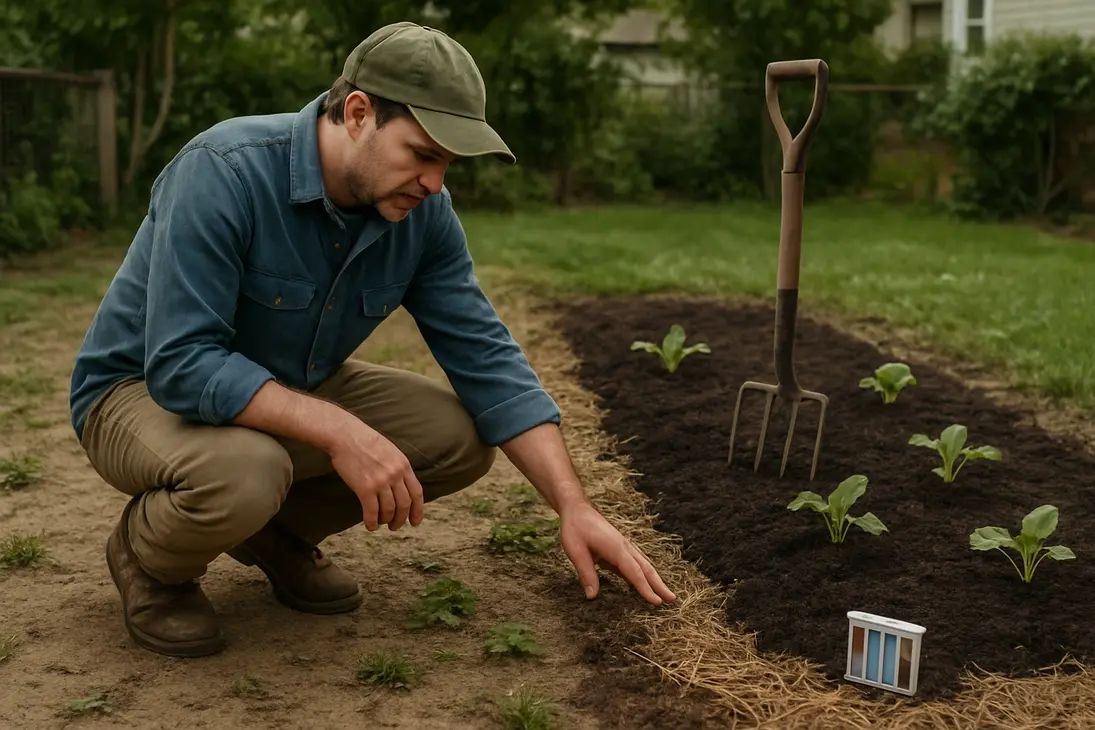
Start with a soil test before making major amendments. A standard test can report pH, organic matter, phosphorus, potassium, calcium, magnesium, and other useful indicators. If needed, ask specifically about salinity, sodicity, or contaminants.
Also observe the site after rain:
- Does water pond for hours or days?
- Does runoff form channels or carry soil away?
- Does the surface crust?
- Is there a compacted layer where a fork or probe stops?
- Are some areas much weaker than others?
- Are weeds, moss, rushes, or salt crusts suggesting wetness, acidity, or salinity?
Match the diagnosis to the crop. A site poor for carrots may still grow fruit bushes. A sandy patch may suit Mediterranean herbs better than lettuce. A wet area may be better diverted away from vegetable production or used for water-tolerant plants.
Build Organic Matter and Soil Life
For many garden and farm soils, building organic matter is the most useful long-term improvement.
Good options include:
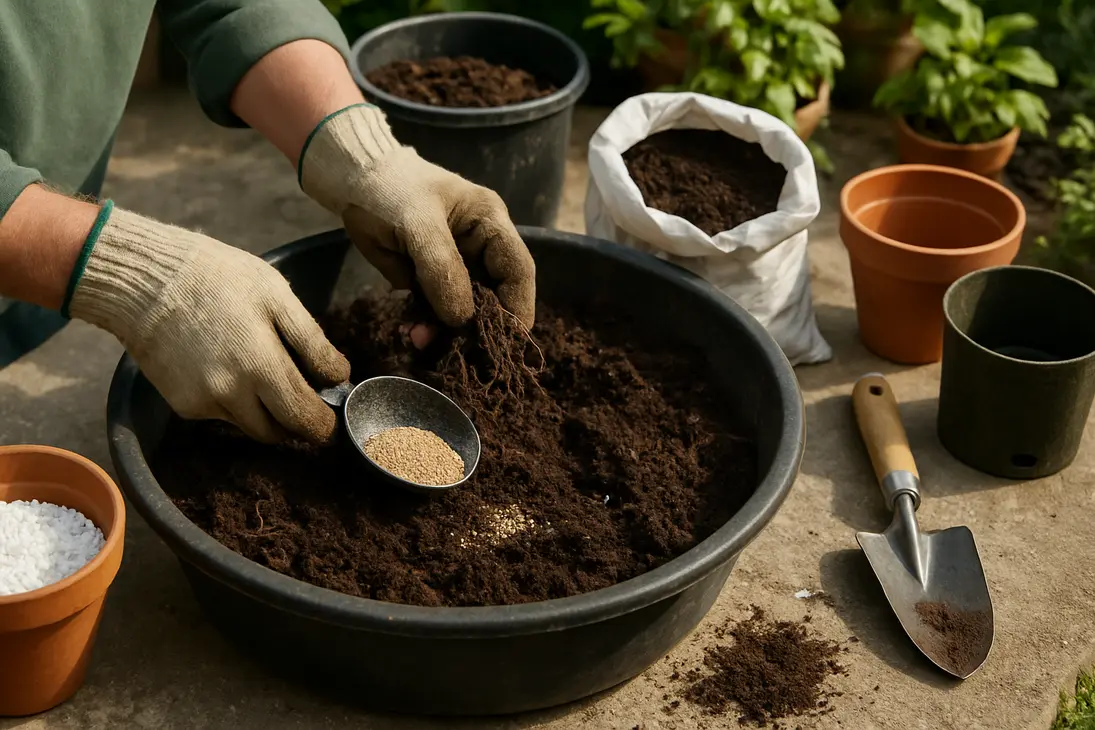
- Finished compost
- Well-rotted manure
- Cover crops or green manures
- Leaf mold
- Straw, hay, wood chips, or other suitable mulches
- Chopped crop residues
- Reduced tillage or no-dig systems where practical
Organic matter helps sandy soil hold more water and nutrients. In clay soil, it helps build crumb structure, improve aeration, and make the soil easier to work.
Cover crops are especially useful because living roots feed soil organisms and protect the surface from erosion. Legumes can add nitrogen when managed properly, while grasses and grains add fibrous roots that help build structure.
No-dig or reduced-dig systems can work well in gardens, especially when beds are not walked on. Heavily compacted ground may still need initial loosening, and no-dig beds usually need regular compost or mulch.
Correct Nutrients and pH
Nutrient correction should be based on testing. Too little fertility limits crops, but too much fertilizer can waste money, harm plants, pollute waterways, or worsen salt problems.
For acidic soils, lime is commonly used to raise pH. The amount depends on test results, soil texture, and target pH. Clay soils usually need more lime than sandy soils for the same pH change.
For alkaline soils, correction is harder. Elemental sulfur or acid-forming amendments may help in some cases, but results depend on soil chemistry, irrigation water, climate, and scale. In strongly calcareous soils, choosing crops adapted to alkaline conditions may be more realistic than trying to permanently lower pH.
Balanced fertilization means supplying what is actually deficient. Nitrogen often needs regular replacement, while phosphorus and potassium may build up or remain stable depending on soil and cropping. Micronutrients should be added only when needed.
Improve Water Management
Water management can make marginal soil productive, but poor water management can create new problems.
In dry soils, irrigation may be essential. Drip irrigation is often efficient because it delivers water near roots and reduces evaporation. Mulch helps conserve moisture, moderate soil temperature, and reduce crusting.
In wet soils, drainage may be the priority. At garden scale, raised beds can lift roots above saturated soil. At farm scale, drainage may require ditches, tile drains, grading, or engineered systems. Organic matter helps structure, but it will not solve a high water table by itself.
On slopes, the goal is to slow water and keep soil in place. Contour planting, grassed waterways, swales, terraces, perennial strips, and mulches can reduce runoff. Poorly placed earthworks can concentrate water and worsen erosion, so design matters.
Rehabilitate Damaged or Eroded Soil
Badly damaged soil can recover, but rebuilding function takes time. The first step is to stop further loss. Bare soil should be covered with mulch, cover crops, grass, or residues. Windbreaks can reduce wind erosion. On steep or fragile land, reforestation or afforestation may protect soil better than annual cropping.
Terracing can make steep land farmable in some regions, but it requires maintenance. If terrace walls fail or drains clog, erosion can be severe.
Rotational grazing can improve degraded pasture when stocking rates, rest periods, and plant recovery are well managed. Poor grazing does the opposite: it removes cover, compacts soil, and accelerates erosion.
Crop rotation also matters. Rotating deep-rooted and shallow-rooted crops, heavy and light feeders, legumes and non-legumes, or annual crops and cover crops can reduce pest pressure and improve soil condition.
How Long, Expensive, and Practical Is Soil Conversion?
Some improvements are visible within a season. Others take years. Major landscape changes may take decades and still require maintenance.
A compacted vegetable bed can often be improved quickly by loosening the soil, adding compost, mulching, and keeping feet out of the bed. A sandy garden can become more productive with repeated organic matter additions and irrigation. A saline field with poor drainage is a much larger challenge. A rocky mountainside with shallow soil may never be practical for annual crops.
| Situation | Likely difficulty | Typical approach |
|---|---|---|
| Compacted garden bed | Easy to moderate | Loosen once if needed, add compost, mulch, avoid traffic |
| Sandy garden soil | Moderate | Compost, mulch, frequent watering, drought-tolerant crops |
| Heavy clay soil | Moderate | Improve structure, avoid working wet soil, raised beds, cover crops |
| Acidic soil | Often manageable | Soil test, lime, crop selection |
| Saline or sodic soil | Difficult | Drainage, water quality management, leaching, specialist advice |
| Steep eroding slope | Difficult | Terraces, contour systems, perennial cover, or non-crop use |
| Contaminated land | Potentially unsuitable | Testing, risk assessment, raised beds or avoid food crops |
Garden-Scale vs Farm-Scale Conversion
Scale changes everything.
In a home garden, you can import compost, build raised beds, use purchased topsoil, mulch heavily, hand-water, and focus on a small area. If the native soil is poor, you can grow in containers or build beds above it.
At farm scale, importing large volumes of compost or topsoil may be too expensive. Drainage, irrigation, liming, terracing, fencing, machinery access, labor, fuel, and market value all matter. A practice that makes sense for a 100-square-foot garden may not pay across 100 acres.
Farmers also need consistency. A small garden can tolerate uneven patches and experimentation. Commercial production needs reliable yields, equipment access, and predictable water and fertility.
Easy, Moderate, and Difficult Cases
An easy case might be a neglected lawn with decent soil depth and no contamination. Remove or suppress the turf, add compost, correct pH if needed, avoid compaction, and it may grow vegetables the same year.
A moderate case might be heavy clay. It can become excellent growing soil, but it must be handled patiently: work it when moist but not wet, keep it covered, add organic matter, use raised beds where drainage is poor, and avoid repeated rototilling.
Sandy soil is also moderate. It is easy to dig but hard to keep moist and fertile. Compost, mulch, and irrigation help, but organic matter breaks down and must be renewed.
Difficult cases include saline land, sodic soils, deserts without secure water, shallow rocky slopes, and severely eroded fields. These may be technically improvable, but the cost, water demand, engineering, and maintenance can exceed the value of the crops.
Why Maintenance Matters
Arable soil is not permanent if it is poorly managed. Fertile land can become less productive through erosion, nutrient mining, over-tilling, compaction, salinization, contamination, or loss of organic matter.
Maintenance includes returning residues, rotating crops, keeping soil covered, replacing nutrients removed in harvests, managing irrigation carefully, and preventing runoff. Without those habits, converted land can slide back toward poor productivity.
When It May Not Be Worth Converting Land to Arable Use
The fact that land can be altered does not mean it should be. Some conversions are too costly, risky, or damaging compared with alternatives.
Land Better Left as Forest, Wetland, Grassland, or Habitat
Forests, wetlands, native grasslands, and other habitats provide erosion control, water filtration, flood buffering, carbon storage, wildlife habitat, and biodiversity. Converting them to cropland can cause long-term damage, especially on steep, wet, fragile, or erosion-prone sites.
Wetlands are a clear example. They may contain rich organic soils, but draining them can damage habitat, release stored carbon, cause subsidence, and create ongoing drainage problems. Steep forested slopes may protect valleys below from erosion and flooding and may be more valuable left under tree cover.
Severe Contamination or Lack of Water
If land is contaminated, food production may be unsafe. Raised beds with clean imported growing media can reduce exposure in some garden situations, but they do not automatically make the whole site safe. Testing and local guidance are important where contamination is possible.
A dependable water supply is just as fundamental. In dry regions, land may only be arable while irrigation water remains affordable and available. If water is unreliable, expensive, saline, or legally restricted, full conversion to crop production may not be practical.
Alternatives to Full Soil Conversion
You do not always need to convert the whole site.
Practical alternatives include:
- Raised beds filled with clean, suitable growing media
- Container gardening for patios, balconies, contaminated sites, or very poor soil
- Greenhouse production where climate is the main limitation
- Hydroponics for controlled production without soil
- Crop selection based on existing conditions rather than forcing unsuitable crops
- Perennial systems such as orchards, berries, pasture, or agroforestry where annual tillage would be damaging
Hydroponics can be useful where soil is contaminated or space is limited, but it requires equipment, nutrient management, monitoring, and energy. For many gardeners, improving soil or using raised beds is simpler.
Conclusion
Many non-arable soils can be made more arable, especially when the problem is low organic matter, compaction, moderate fertility imbalance, poor structure, or manageable pH. Gardeners have the most flexibility because they can work intensively on small areas, build raised beds, import compost, and choose crops carefully.
But not every soil or landscape can be practically, safely, or sustainably turned into productive arable land. Severe salinity, sodicity, contamination, lack of water, shallow rock, steep erosion-prone slopes, wetlands, and fragile habitats may make conversion uneconomic or environmentally harmful.
The best approach is diagnosis first, improvement second, and crop choice third. Good arable land is not just soil with amendments added. It is soil, water, climate, biology, terrain, and management working together.
FAQ
Can sandy soil be made arable?
Yes. Sandy soil can often be made arable, but its main challenges are low water-holding capacity and nutrient leaching. Add compost or well-rotted organic matter regularly, keep it mulched, use cover crops where possible, and irrigate more frequently but carefully. Crops adapted to fast-draining soils may perform better than thirsty crops.
Can heavy clay soil be made arable?
Yes. Heavy clay can become very productive because it often holds nutrients well, but it needs good structure and drainage. Avoid digging or driving on it when wet. Add compost, grow cover crops, keep it mulched, and use raised beds if waterlogging is a problem.
How long does it take to create arable soil?
Minor improvements can show within one growing season. A compacted bed, low-organic-matter patch, or slightly acidic soil may respond quickly to loosening, compost, mulch, and pH correction. Rebuilding badly degraded, eroded, saline, or structurally damaged soil can take years.
Is hydroponics better than improving poor soil?
Not always. Hydroponics can be useful where space is limited, soil is contaminated, or controlled production is desired. But it requires equipment, monitoring, and reliable nutrient management. For many gardens and farms, improving soil, building raised beds, or choosing better-adapted crops is more practical.
You Might Also Like