Should You Add Salt to Cactus Soil to Help It Absorb Tap Water?
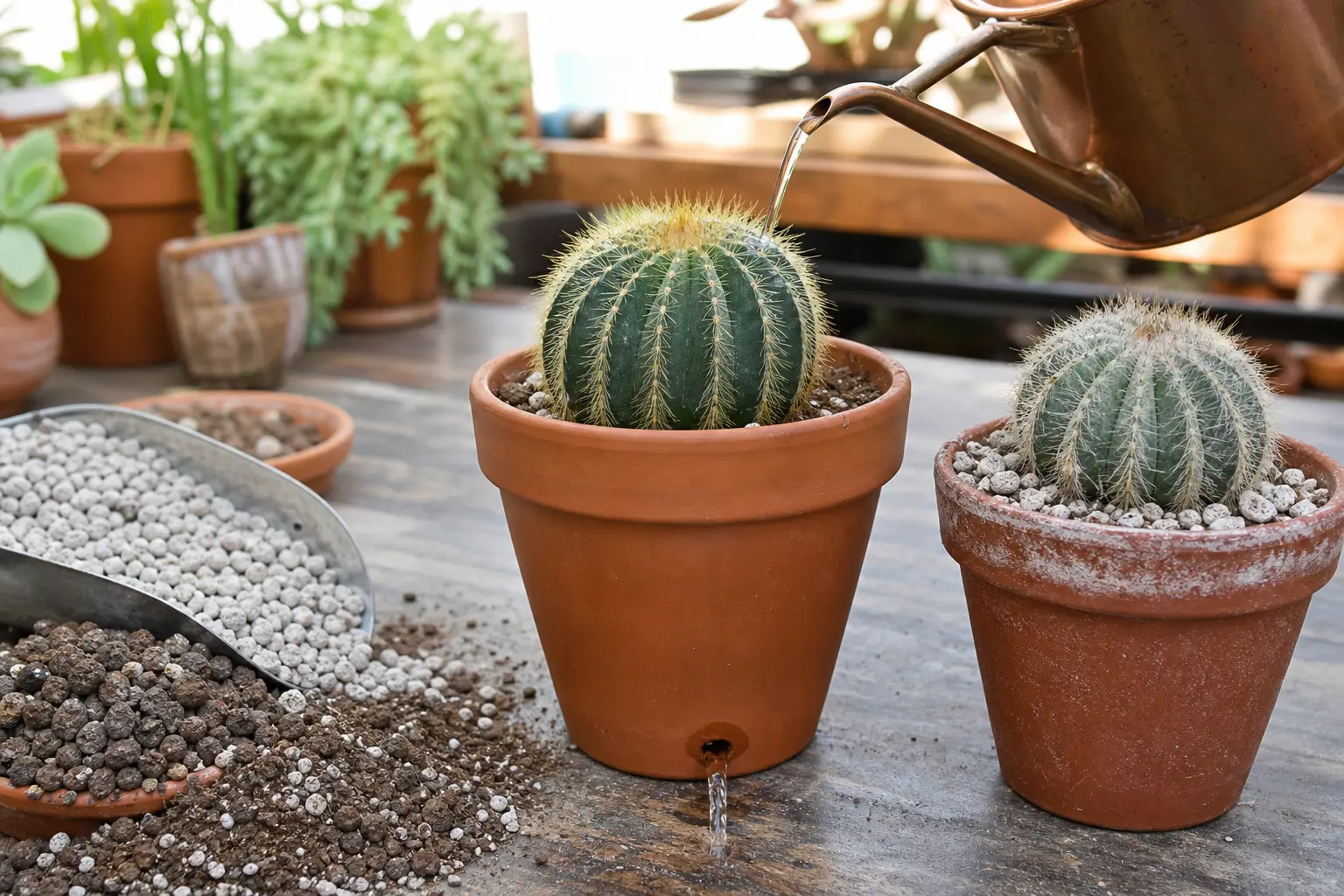
No—Salt Does Not Help a Cactus Take Up More Moisture
Do not add salt to cactus soil to help a cactus absorb moisture from tap water. Salt in cactus soil has the opposite effect: it makes it more difficult for roots to take up water.
A cactus may live in a dry climate, but its roots still need to absorb water normally when the potting mix is watered. Adding sodium chloride—ordinary table salt—raises the concentration of dissolved salts around the roots. This can leave the cactus dehydrated even when the soil looks damp.
If a cactus seems unable to use water, the likely causes are compacted soil, damaged roots, a pot without drainage, cold conditions, or an overly water-retentive mix. Salt is not a remedy for any of these problems.
How Salt Changes Water Movement Around Roots
Water moves into plant roots partly through osmosis: water tends to move from a less concentrated solution to a more concentrated one across root cell membranes.
In reasonably fresh water, the cactus roots can take up moisture from the surrounding potting mix. But when the soil solution contains too much dissolved salt, the situation changes:
- The water around the roots becomes more concentrated.
- Roots must work harder to draw in moisture.
- In severe cases, water can move out of root cells instead.
- The cactus may show dehydration symptoms despite wet soil.
This is why salty soil and dry soil can produce similar-looking plant problems. A cactus may wrinkle, stop growing, or develop dry-looking tissue even though you have been watering regularly.
Adding salt also does not improve the physical structure of potting mix. It will not make dense soil drain better, create air pockets, or prevent compaction. Those are soil-texture issues best solved with appropriate potting materials.
Why Cacti Are Especially Vulnerable to Salt Stress
Cacti are adapted to conserving water, not necessarily to tolerating concentrated salts in a small container. Desert conditions can be misleading here: many desert plants grow where rainfall is low, but they may still rely on brief rains that wash salts deeper into the ground or away from the active root zone.
A potted cactus does not have that advantage. Its roots are confined to a small volume of mix, and dissolved minerals remain behind as water evaporates or is used by the plant. Repeated use of salty water, excess fertilizer, or softened household water can gradually increase salt levels.
Cacti are also often grown in fast-draining mixes and small pots. That is generally helpful for avoiding rot, but it means there is limited soil volume to dilute mineral buildup. A little excess salt applied repeatedly can become a significant issue over time.
What Salt Buildup Can Do to a Cactus
Salt buildup is not limited to intentionally added table salt. It can come from fertilizer residues, hard tap water, softened water, and some mineral supplements. The risk depends on your water quality, how often you fertilize, whether the pot drains freely, and whether you occasionally flush the mix.
Signs of Salt Stress in Cacti
Salt stress can be difficult to identify because it overlaps with underwatering, overwatering, and root rot. Look for several symptoms together rather than diagnosing the problem from one sign.
Possible symptoms include:
- Wrinkling or shriveling that does not improve after normal watering
- Stalled growth during the active growing season
- Dull, yellowing, or pale tissue
- Brown, dry-looking edges or patches, especially on younger growth
- Root loss or weak roots when repotting
- A white or pale crust on the soil surface, pot rim, or drainage hole
- Soil that remains wet but a cactus that still looks thirsty
These symptoms are not exclusive to excess salts. For example, a cactus in cold, wet soil may fail to take up water because low temperatures slow root activity. Pests, disease, and inadequate light can also affect growth. The most useful clue is a visible mineral crust combined with a history of hard water, softened water, or frequent fertilizing.
Salt Crusts, Root Damage, and Poor Growth
When water evaporates from the potting mix, dissolved minerals do not evaporate with it. They remain behind. Over time, they can form a white, gray, or tan crust on the soil surface or around the pot’s drainage holes.
A surface crust does not always mean the cactus is in immediate danger, but it signals that minerals are accumulating. Below the surface, high salt levels can injure fine feeder roots. Damaged roots take up water and nutrients poorly, which can create a frustrating cycle: the gardener waters more because the cactus looks dehydrated, while the stressed roots become less able to respond.
Sodium is particularly troublesome because it is not a useful cactus nutrient in ordinary pot culture. It can interfere with the balance of other nutrients and, in mixes containing fine particles or actual soil, may contribute to poor structure over time.
If salt buildup is substantial, repotting into fresh mix may be more reliable than trying to rescue heavily compacted or contaminated soil. This is especially true when the old mix has become dense, slow-draining, or sour-smelling.
Table Salt vs. Epsom Salt and Other Mineral Amendments
“Salt” can describe many soluble mineral compounds, but they are not interchangeable.
| Material | What it contains | Is it appropriate for cactus soil? |
|---|---|---|
| Table salt | Sodium chloride | No. It provides no useful benefit and can create salt stress. |
| Water-softener salt | Usually sodium chloride or potassium chloride used in a softener system | Do not use softened water regularly for cacti. |
| Epsom salt | Magnesium sulfate | Not a routine cactus treatment; use only when there is a clear reason to correct magnesium deficiency. |
| Fertilizer salts | Soluble nutrient compounds | Useful in modest amounts, but overapplication can burn roots and accumulate in pots. |
| Pumice, perlite, grit, coarse sand | Mostly insoluble mineral materials | Useful for drainage and aeration; these are not “salts” in the problematic sense. |
Epsom salt is often promoted as a general plant tonic, but it is not a substitute for balanced fertilizer or good potting mix. Magnesium is a plant nutrient, yet adding it when it is not needed can disrupt nutrient balance and increase the total dissolved salts in the pot.
Do not add Epsom salt simply because a cactus is growing slowly or looks thirsty. First consider light, watering frequency, root health, temperature, and the condition of the potting mix.
Using Tap Water for Cacti Without Adding Salt
For many gardeners, ordinary tap water is perfectly acceptable for cacti. If your cactus is growing well, the mix drains properly, and you do not see crusting or repeated unexplained decline, there is usually no need to change your water source.
The goal is not to make water chemically pure. It is to avoid steadily concentrating dissolved salts in a confined pot.
Hard Water, Softened Water, and Water-Softener Salt
Hard water contains relatively high levels of dissolved minerals, commonly calcium and magnesium. It can leave scale on kettles, faucets, pot rims, and soil surfaces. Hard water is not automatically harmful to cacti, and many cacti tolerate it well. However, heavy mineral content can gradually raise the pH of some mixes and leave deposits, particularly where water evaporates quickly.
Softened water is different. Home water softeners commonly exchange calcium and magnesium for sodium. That may make water feel softer for household use, but it can introduce sodium that is undesirable in container soil.
If your indoor water comes from a softener:
- Use an unsoftened outdoor tap if available.
- Collect rainwater when practical.
- Use filtered or distilled water for sensitive plants or long-term collection plants.
- Avoid assuming a refrigerator filter removes dissolved sodium; many filters improve taste but do not significantly reduce mineral content.
If your water is hard but not softened, you may only need occasional flushing and sensible fertilizer use rather than a complete change in watering routine.
How to Flush Excess Salts From a Pot
Flushing means running low-mineral water through the potting mix so that dissolved salts leave through the drainage hole. It works only if the pot has a clear drainage hole and the mix is open enough for water to move through it.
To flush a cactus pot:
- Choose a time when the cactus would normally be watered and the mix is dry or nearly dry.
- Place the pot in a sink, tub, or outdoors where water can drain away freely.
- Water slowly and thoroughly until water flows from the drainage hole.
- Allow the pot to drain completely; never leave it standing in a saucer of runoff.
- If you suspect a heavy buildup, repeat at the next normal watering rather than keeping the cactus wet for days.
Do not flush a dormant cactus in cold conditions unless there is a pressing reason. Roots are less active when temperatures are low, and prolonged wetness can be more dangerous than mild mineral buildup. In that case, it is often better to wait for warmer growing conditions or repot in fresh mix.
When Rainwater, Filtered Water, or Distilled Water Is Worth Using
Alternative water is most worthwhile when there is a clear, recurring problem rather than as a requirement for every cactus.
Consider rainwater, distilled water, or properly filtered low-mineral water if:
- Your tap water is softened with sodium.
- White mineral deposits return quickly after flushing.
- You grow salt-sensitive cacti or other succulents.
- You fertilize regularly and want to reduce overall salt accumulation.
- Your tap water is extremely hard and plants repeatedly show mineral-related stress.
- You are maintaining valuable specimens over many years.
Collected rainwater should be clean. Avoid water from dirty roofs, chemically treated surfaces, or containers with residue. Distilled water has very low mineral content, but it does not provide nutrition; fertilization still needs to be appropriate during the cactus’s active season.
Improve Moisture Management With the Right Cactus Mix
A cactus absorbs water most effectively when its roots have both moisture and oxygen. That means the practical solution is a well-aerated, freely draining mix—not salt in cactus soil.
Many gardeners find that a bagged “cactus mix” needs adjustment for indoor conditions, humid climates, large decorative pots, or frequent watering habits. Community discussions about cactus mixes commonly focus on adding coarse mineral material such as pumice or perlite to prevent soil from staying wet too long. That concern is well founded: the mix must suit both the cactus and the way it is being grown.
Choose Potting Mix Rather Than Garden Soil
Use a container potting mix as the base for potted cacti. Garden soil is usually too dense for containers. It can compact, drain slowly, and remain wet around roots long after the surface appears dry.
Commercial cactus mixes vary widely. Some are light and gritty; others contain a large proportion of peat, compost, or fine wood-based material. A mix can be labeled for cacti and still hold more moisture than your particular cactus needs.
Assess the material rather than relying only on the label. A suitable mix should feel loose and contain visible coarse particles. After watering, it should become evenly moist but should not stay soggy or form a dense, muddy mass.
Use Coarse Mineral Amendments for Drainage
Coarse mineral amendments create larger air spaces in the potting mix. They improve drainage and reduce compaction, helping roots receive oxygen between waterings.
For many commonly grown desert cacti, a mix containing a substantial coarse mineral portion is useful. The exact balance depends on the cactus species, pot size, climate, light level, and your watering habits.
For example:
- A cactus kept indoors in low light often benefits from a grittier, faster-drying mix.
- A cactus outdoors in intense heat may need somewhat more organic material so it does not dry out too quickly.
- A large, established cactus in a heavy pot may tolerate a slightly more moisture-retentive mix than a small cactus in a tiny container.
Drainage material does not eliminate the need for sensible watering. Even an excellent mix can cause problems if watered too often in cool or dim conditions.
Perlite, Pumice, Grit, and Coarse Sand: What Each Does
| Amendment | Main benefit | Limitations and cautions |
|---|---|---|
| Perlite | Lightweight, improves aeration and drainage | Can float to the surface, crush over time, and may be messy. |
| Pumice | Durable, porous, improves air space while holding a little moisture | Heavier and often more expensive than perlite. |
| Horticultural grit | Adds weight and stable pore space | Choose washed, appropriately sized grit; avoid very fine material. |
| Coarse sand | Can improve texture when genuinely coarse and used moderately | Fine sand can compact a mix and reduce drainage. |
| Lava rock | Durable, airy, and useful in gritty mixes | Can be heavy and may be too coarse for very small pots. |
Not all sand is suitable. Fine builder’s sand, play sand, beach sand, and very fine decorative sand can fill the gaps between potting particles, making a mix denser rather than more open. If using sand, choose coarse, washed horticultural sand with visibly larger grains.
This distinction causes understandable confusion because “sand” can mean anything from powdery fine material to small gravel. For cactus containers, particle size matters more than the name on the bag.
Match the Mix and Pot to Your Watering Habits
The right mix should make good care easier. If you tend to water frequently, use a more mineral, faster-draining mix and a pot with a drainage hole. If you often forget to water and the cactus receives strong warmth and light, a mix with a little more moisture retention may be reasonable.
Also consider the pot:
- Terracotta dries faster and allows moisture to evaporate through the pot walls.
- Glazed ceramic and plastic retain moisture longer.
- Oversized pots hold unused wet mix around a small root system.
- Pots without drainage holes are unsuitable for most cacti unless used only as decorative outer containers.
A simple drainage check is to water thoroughly and observe. Water should move through the mix rather than pooling on the surface for a long time. The pot should not remain heavy and wet for an extended period under the plant’s normal growing conditions.
Conclusion
Adding salt to cactus soil will not help a cactus absorb tap water. Table salt and sodium-rich softened water can make moisture harder for roots to take up, damage fine roots, and leave harmful mineral buildup in the pot.
Ordinary tap water is often fine for cacti, especially when the pot drains well and fertilizer is used lightly. If hard water or fertilizer salts leave persistent crusts, flush the pot occasionally or switch to rainwater, filtered water, or distilled water when practical.
The most effective way to improve moisture management is to use a loose cactus potting mix with coarse mineral amendments, a pot with drainage, and a watering routine matched to light, temperature, and season.
FAQ
Can I use tap water to water my cactus?
Yes. Most cacti do well with ordinary tap water. Watch for persistent white crusts, slow growth, or unexplained dehydration symptoms that may point to mineral accumulation. Avoid regularly using water softened with sodium, and consider occasional flushing if your tap water is very hard.
Does Epsom salt help cacti grow?
Not as a routine treatment. Epsom salt supplies magnesium and sulfur, but a cactus benefits only if it actually needs more magnesium. Using it without a clear deficiency can add unnecessary dissolved salts to the potting mix. Improve light, root health, drainage, and balanced nutrition before reaching for Epsom salt.
How do I know whether my cactus soil drains well enough?
After watering, water should soak in rather than sit on the surface. Excess water should leave the drainage hole promptly, and the mix should gradually dry instead of staying constantly wet and heavy. If the soil becomes muddy, compacted, or wet for too long, repot with more coarse mineral material and check that the pot has drainage.
Is sand good for cactus soil?
Coarse, washed horticultural sand can be useful in moderation, but fine sand often makes cactus soil denser and slower draining. Perlite, pumice, horticultural grit, and lava rock are often more reliable choices because they create stable air spaces around roots.
You Might Also Like