Can Strawberries and Watermelons Fertilized With Cow or Chicken Manure Be Organic?
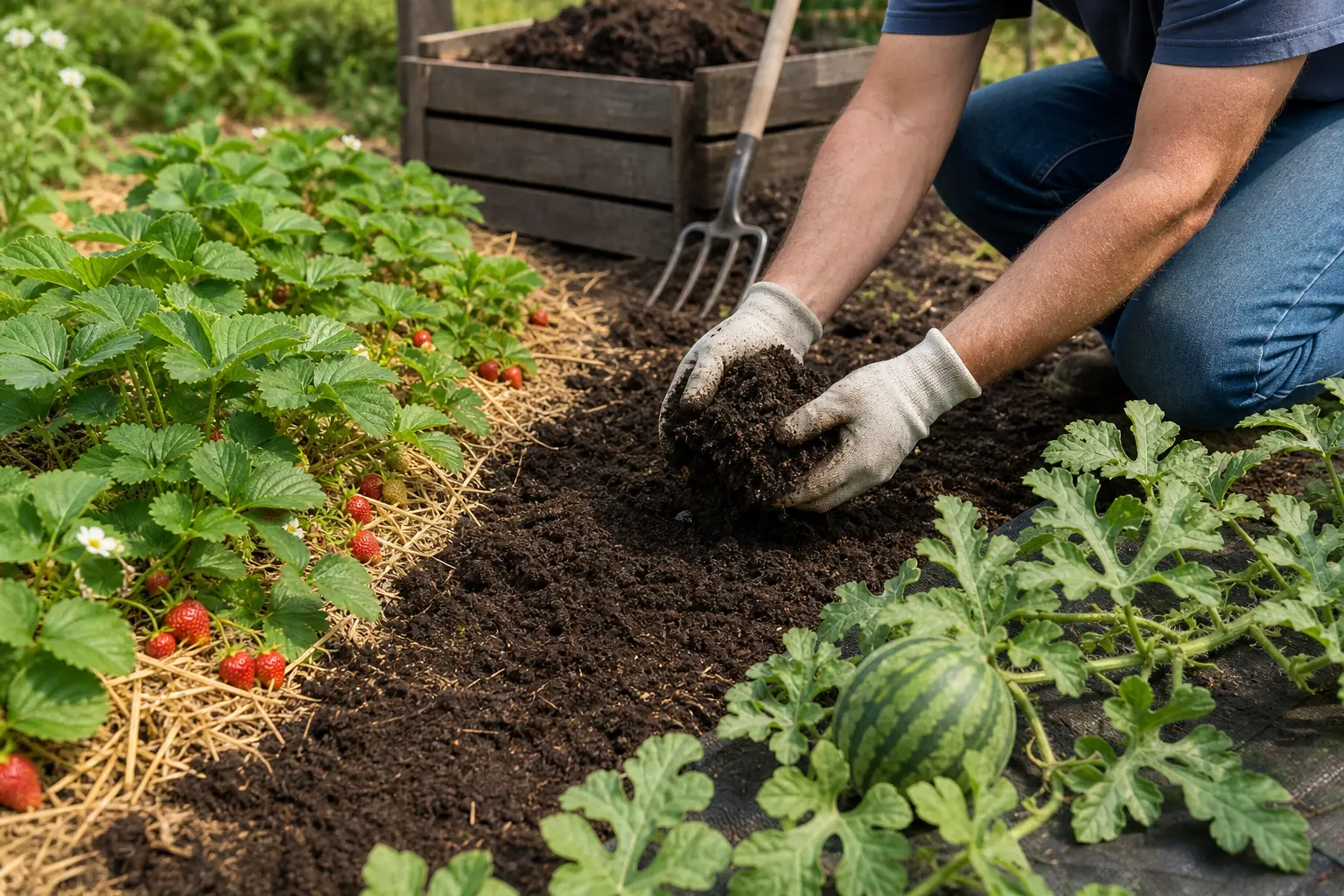
Yes. Strawberries and watermelons fertilized with cow or chicken manure can be organic. Animal manure is a traditional fertility source in organic growing systems and can supply nutrients while improving soil structure.
However, manure does not automatically make fruit organic, nor does its use automatically disqualify the crop. Whether fruit may be sold as certified organic depends on the entire production system: the land history, seeds or planting stock, pest-control products, manure handling, recordkeeping, and compliance with the applicable organic standard.
For home gardeners, the more immediate questions are usually food safety and plant health. Fresh manure needs careful timing around edible crops, especially strawberries and watermelons that rest on or near the soil.
Does Animal Manure Make Fruit Non-Organic?
No. Cow and chicken manure can fit within organic fruit production when it is an allowed input, handled safely, and used according to organic-certification and food-safety requirements.
Manure is not inherently “non-organic” because it comes from livestock. In fact, well-managed manure and compost are common tools for building fertility without relying on highly soluble synthetic fertilizers. The important distinction is between an acceptable soil amendment and an input that has been used carelessly, contains prohibited materials, or does not meet certification rules.
“Organic” Gardening vs. Certified Organic Produce
A home gardener may describe a strawberry patch as organic when they avoid synthetic herbicides, pesticides, and fertilizers and instead use compost, mulch, crop rotation, and natural soil amendments.
That is different from selling fruit as certified organic. Certification is a regulated claim in many countries. A certified grower must follow an approved organic system plan, document inputs and practices, maintain required records, and pass inspections.
A gardener can use composted cow manure responsibly and grow excellent fruit using organic methods without holding certification. But they should not assume that “grown with manure” equals “certified organic.”
What Determines Whether Strawberries or Watermelons Can Be Sold as Organic
For commercial production, organic status depends on much more than the fertilizer source. A certifier may review such factors as:
- The land’s recent management history and whether prohibited substances were used.
- The source and treatment of manure, compost, and other soil inputs.
- Whether seeds, transplants, and planting stock meet organic requirements.
- Pest, disease, and weed-management methods.
- Irrigation-water practices and equipment sanitation.
- Harvest, storage, packing, and records that prevent mixing organic and non-organic fruit.
A grower cannot turn conventionally managed fruit into organic fruit merely by applying cow manure or chicken manure. Conversely, manure use does not make an otherwise compliant crop non-organic.
Why the Manure’s Source and Handling Matter
Manure varies widely. It may contain bedding, feed residues, weed seeds, salts, or persistent contaminants. Chicken manure may be mixed with shavings or litter; cow manure may be diluted with straw or other bedding. Those differences affect nutrient strength, composting behavior, and application rates.
For certified growers, a manure source should be reviewed with the certifier before use. A local farm may have perfectly usable manure for a home garden, but a commercial organic farm still needs documentation showing what the product is, how it was handled, and whether any prohibited additives are involved.
For all growers, the major practical concern is pathogens. Fresh manure can carry harmful microorganisms. “Natural” does not mean risk-free, particularly when fruit grows close to the ground.
Using Cow and Chicken Manure Safely Around Fruit
The safest choice for established strawberry beds and growing watermelon vines is usually properly composted manure applied to the soil, not fresh manure scattered around plants.
Fresh manure, aged manure, and composted manure are not interchangeable terms:
- Raw manure is fresh or incompletely decomposed animal waste.
- Aged manure has been stored for a period but may not have reached temperatures or conditions sufficient to reduce pathogens reliably.
- Properly composted manure has been managed with adequate moisture, oxygen, heat, and turning or aeration so decomposition is complete and the material is stable, dark, earthy smelling, and no longer recognizably raw.
A pile that merely looks old is not necessarily safe compost.
Raw Manure and Harvest Waiting Periods
Where U.S. organic rules apply, raw manure must be applied well before harvest: generally at least 120 days before harvest for crops whose edible portion contacts the soil, and at least 90 days before harvest for crops whose edible portion does not contact the soil.
Strawberries clearly fall into the soil-contact category. Watermelons often rest on the ground as they mature, so they should also be treated conservatively as a soil-contact crop unless they are reliably supported off the soil and kept from contact.
For a home garden, the practical rule is simple: do not apply fresh cow or chicken manure around fruiting strawberries or watermelons during the growing season. Apply it only well before planting, or compost it fully first.
Local regulations, buyer requirements, and certification programs can be stricter, so commercial growers should confirm the rules that apply to their operation.
Why Strawberries and Ground-Grown Watermelons Need Extra Care
Strawberries are particularly vulnerable because ripe berries sit low in the plant canopy and are often splashed with soil during rain or irrigation. Their uneven surface also makes them difficult to clean thoroughly after contamination.
Watermelons have a tough rind, but the fruit commonly touches the soil for much of its development. The rind may be cut with a knife, and anything on the outside can be transferred to the edible flesh during cutting.
Mulch helps reduce soil splash, but it does not make a recent raw-manure application safe. Straw, clean plastic mulch, or other ground covers are useful supplements to good manure timing—not substitutes for it.
Properly Composting Manure Before Application
Composting reduces odor, stabilizes nutrients, and can lower the risk from pathogens and weed seeds when it is managed correctly. Good composting requires more than piling manure in a corner.
A functional manure compost pile needs:
- A balance of nitrogen-rich manure and carbon-rich materials such as straw, dry leaves, or shredded plant debris.
- Enough moisture to feel like a wrung-out sponge, not dusty or waterlogged.
- Enough volume to heat up.
- Oxygen, supplied through turning or an aerated system.
- Time to finish curing after the active heating stage.
Finished compost should be crumbly and reasonably uniform, with an earthy smell. It should not smell strongly of ammonia, contain obvious fresh droppings, or feel hot in the center.
If you cannot verify how a manure product was composted, treat it conservatively. Use it before planting and allow ample time before harvest rather than applying it directly beside fruiting plants.
Avoiding Direct Contact With Fruit, Leaves, and Irrigation Water
Apply manure-based amendments to the soil, not onto fruit or foliage. Avoid side-dressing strawberries with raw manure, and do not place fresh poultry litter beneath watermelon vines once fruit is forming.
Also keep manure piles and runoff away from wells, streams, drainage ditches, and irrigation sources. Do not use water that may have been contaminated by manure to wash harvested fruit.
When harvesting, use clean containers, remove damaged or heavily soiled fruit, and keep freshly picked berries off the ground. These basic steps matter whether the garden is organic, conventional, or somewhere in between.
Choosing and Applying Manure Without Overfertilizing
Manure is a fertilizer and soil amendment, not a harmless mulch that can be added without limits. Too much can create excessive nitrogen, phosphorus, salts, or nutrient runoff. It can also encourage lush leafy growth at the expense of flowering and fruit quality.
Cow and chicken manure behave differently in the garden.
Cow Manure: Lower Nutrient Strength and Soil-Conditioning Benefits
Cow manure is generally lower in nutrient concentration than chicken manure, especially when it contains substantial bedding. That makes it more forgiving for building soil organic matter, improving tilth, and helping sandy soil hold moisture.
Its lower nutrient density does not mean unlimited use is safe. Repeated heavy applications can still raise soil phosphorus and salts over time. Use composted cow manure as one part of a broader fertility plan, not as the only amendment every season.
For strawberries, composted cow manure is often best incorporated before planting or lightly applied as a soil-building amendment between seasons. Avoid burying crowns or piling compost against them.
Chicken Manure: Higher Nitrogen and Greater Risk of Burning Plants
Chicken manure is typically more concentrated than cow manure. It can provide substantial nitrogen, but that strength also makes it easier to overapply.
Fresh chicken manure may release ammonia and soluble salts that burn roots, yellow leaf edges, stunt seedlings, or damage young transplants. It is especially risky around shallow-rooted strawberries and newly planted watermelon seedlings.
Composting chicken manure thoroughly makes it more manageable, but compost does not erase its nutrient content. Use smaller quantities than you would with a low-analysis compost, and avoid assuming that more nitrogen will produce better fruit.
When to Apply Manure Before Planting
The least complicated time to use manure is before planting:
- Apply properly composted manure or mature manure compost before preparing beds.
- Mix it into the upper soil layer rather than leaving thick clumps on the surface.
- Allow raw manure, if used at all, to meet the full pre-harvest waiting period.
- Plant strawberries and watermelons in beds that have settled rather than directly into a concentrated pocket of manure.
For strawberries, preparing the bed before planting is especially valuable because plants may remain productive for more than one season. For watermelons, which are heavy feeders but sensitive to root disturbance, incorporate compost before planting and avoid excessive nitrogen after vines begin to run.
Soil Testing, Application Rates, and Preventing Salt Buildup
A soil test is more useful than guessing from plant appearance. It can reveal pH, organic matter, phosphorus, potassium, and sometimes soluble salts. This matters most if you have applied manure regularly for several years.
Watch for warning signs of overfertilization:
| Possible problem | Common signs | Better response |
|---|---|---|
| Excess nitrogen | Very dark, vigorous leaves but fewer flowers or delayed fruiting | Stop adding nitrogen-rich manure; let plants use existing nutrients |
| Salt buildup | Brown leaf margins, poor germination, wilting despite moist soil | Test soil; improve drainage and avoid further manure applications |
| Excess phosphorus | Often invisible in the short term | Test soil and reduce manure use, especially poultry manure |
| Root burn | Stunted seedlings, scorched foliage, poor establishment | Use only finished compost near plants and avoid fresh poultry manure |
Do not rely on manure as a cure for every plant problem. Yellow leaves may result from cold soil, poor drainage, root disease, pH imbalance, or lack of water—not simply a lack of fertilizer.
How to Evaluate Bagged Manure and Compost for Organic Use
Bagged composted manure can be convenient, especially for small gardens, but the word “organic” on a bag is not enough information by itself.
Gardeners often encounter conflicting advice online about whether bagged compost or manure is trustworthy. The sensible middle ground is to read the label, ask questions, and judge the product according to your purpose: soil improvement, fertility, certified production, or all three.
Read the Label for Ingredients, Nutrient Analysis, and Composting Details
Look for a clear ingredient statement. A useful label identifies the main feedstocks, such as composted cow manure, poultry litter, bark, straw, green waste, or other plant materials.
Also check for:
- Nutrient analysis, if provided.
- Directions for application and whether the product is intended for edible gardens.
- Whether it is described as composted, aged, dehydrated, or raw.
- Warnings about use around seedlings or direct planting.
- Added fertilizers, wetting agents, or other ingredients.
“Composted manure” is more informative than “manure,” but the label should still provide enough detail to understand what you are buying.
Look for Allowed Inputs and Organic Certification Compatibility
If you are a certified producer—or planning to become one—ask your certifier to approve products before you purchase or apply them. Keep labels, invoices, product sheets, and any supporting documentation.
For home gardeners, compatibility is more about your own standards. You may choose products with transparent ingredients and no synthetic fertilizers or unexplained additives. If a manufacturer makes a certification claim, look for the specific certifying organization or standard rather than relying on vague language.
Questions to Ask When Buying Manure From a Local Farm
Local manure can be economical and useful, but ask a few practical questions before hauling it home:
- What animal produced it, and is it mixed with bedding?
- Is it fresh, aged, or actively composted?
- How long has it been composted, and was the pile turned or monitored?
- Has it been exposed to runoff, trash, treated wood, or other contaminants?
- Has the farm used herbicide-treated hay, bedding, or pasture materials?
- Can the supplier describe any added materials, such as lime, sawdust, or poultry litter?
If the seller cannot answer basic questions, use the material only with caution—or choose a more transparent source.
Why “Organic” on a Bag Does Not Always Mean Certified for Organic Production
“Organic” can describe carbon-based material in a gardening product, a marketing term, or compliance with a particular organic-production standard. Those are not automatically the same thing.
A bag may contain organic matter and still not be documented for use in certified organic production. Another product may be appropriate for a home garden but contain an added fertilizer that does not fit your growing philosophy.
Read beyond the front label. The ingredient list, nutrient analysis, and certification documentation tell you far more than an attractive “natural” or “organic” claim.
Conclusion
Cow manure and chicken manure can be part of organic fruit production. They do not make strawberries or watermelons non-organic, and they do not by themselves make fruit certified organic.
The safe approach is to use well-composted manure, apply it before planting or well before harvest, prevent contact with fruit and irrigation water, and avoid overapplication. Strawberries and ground-grown watermelons deserve extra caution because their edible or outer surfaces are close to the soil.
For certified sales, confirm every manure-based product and practice with the relevant organic certifier. For home gardens, focus on transparent sourcing, finished compost, clean handling, and soil testing rather than assuming that any natural-looking manure is automatically safe or suitable.
FAQ
Can I use fresh chicken manure on strawberry plants?
It is best not to use fresh chicken manure on established strawberry plants. It can burn roots and foliage, and it creates an avoidable food-safety risk around berries that grow close to the soil. Use properly composted chicken manure before planting instead, or reserve fresh manure for a different area that will not produce food for the required waiting period.
How long should I wait to harvest fruit after applying raw manure?
In U.S. organic production, the commonly used interval is 120 days before harvest for crops whose edible portion contacts the soil and 90 days for crops whose edible portion does not. Strawberries should be treated as a 120-day crop. Ground-grown watermelons should also be handled conservatively as soil-contact fruit. Check local rules and buyer requirements if you grow commercially.
Is composted cow manure safe for vegetable and fruit gardens?
Properly composted cow manure can be a useful amendment for vegetable and fruit gardens. It should be mature, stable, and free of a strong manure or ammonia odor. Apply it to soil rather than fruit or leaves, and use reasonable amounts based on soil needs. If you are unsure whether it was properly composted, apply it well before planting rather than around actively fruiting crops.
Does manure-grown fruit need special washing before eating?
Fruit should always be handled and washed carefully, regardless of the fertilizer used. Rinse strawberries and watermelon rinds under clean running water before eating or cutting; do not use soap. Washing is not a substitute for proper manure management, however. The most important protection is preventing contamination in the garden through composting, timing, clean irrigation water, and keeping raw manure away from fruit.
You Might Also Like