Can You Use Fertilizer Instead of Potting Soil for Seeds or Cuttings?
No—fertilizer is not a substitute for potting soil, seed-starting mix, or any other growing medium.
Fertilizer provides plant nutrients. A growing medium provides the physical conditions roots need: support, moisture, drainage, and air. Seeds and cuttings planted directly in fertilizer are likely to fail, especially if the fertilizer is concentrated, granular, or intended for established garden or lawn plants.
If you have fertilizer but no potting mix, wait to plant until you can provide a suitable medium. Even a simple homemade mix is far safer than trying to grow seeds or cuttings in fertilizer alone.
Fertilizer Is Not a Substitute for a Growing Medium
A healthy container medium does several jobs at once. It holds a plant upright, retains enough moisture for roots to use, lets excess water drain away, and leaves air pockets around the roots. Potting mixes commonly achieve this balance with ingredients such as peat moss or coco coir, perlite, bark, compost, and other lightweight materials.
Fertilizer does none of those things. It may be a dry powder, liquid, granules, spikes, or pellets containing nutrients such as nitrogen, phosphorus, and potassium. Those nutrients are useful only when they are applied at an appropriate rate to a plant growing in a proper root medium.
What seeds and cuttings need before they need fertilizer
Seeds do not need fertilizer to germinate. A viable seed contains stored energy and nutrients that support its first stage of growth. What it needs first is:
- Even moisture without waterlogging
- Oxygen around the seed
- A suitable temperature for that species
- Good contact with a fine, loose medium
- Light or darkness, depending on the seed
After germination, the seedling develops its first pair of seed leaves, called cotyledons. These are followed by true leaves. Only after that point does a seedling begin to need a steady external nutrient supply.
Unrooted cuttings have similar priorities. Before they can use fertilizer effectively, they need a moist but airy medium where they can produce roots. A cutting has no functioning root system at first, so heavy feeding does not make it root faster. It can instead add stress while the stem is trying to heal and form new roots.
Why concentrated fertilizer can burn or dehydrate young roots
Most fertilizers are salts. When too much fertilizer is present around a seed, cutting, or root, it makes it harder for the plant to take up water. Water can be drawn out of delicate plant tissues rather than moving into them. This is often called fertilizer burn.
Young roots are particularly vulnerable because they are thin, tender, and limited in their ability to cope with a salty root zone. A seed may fail to germinate, a fresh cutting may blacken or collapse, and a seedling may emerge but stall soon afterward.
Dry granular fertilizer presents an additional problem: it is not designed to be a rooting material. It can shift, compact, dissolve unevenly, and create concentrated pockets of salts when watered. Even a fertilizer marketed as “gentle,” organic, or slow-release should be treated as an amendment—not the main material filling a seed tray or pot.
What to Use for Seeds, Cuttings, and Container Plants Instead
Choose the medium based on the plant’s stage and the job it needs to do. A seed needs a fine, evenly moist material. A cutting needs oxygen around its base. An established container plant needs longer-lasting structure and a modest nutrient supply.
Best media for starting seeds
A commercial seed-starting mix is usually the simplest choice. It is typically fine-textured, lightweight, low in nutrients, and made to hold moisture while allowing air to reach the seed.
Good options include:
- Packaged seed-starting mix
- Coconut coir or peat-based seed mix with perlite
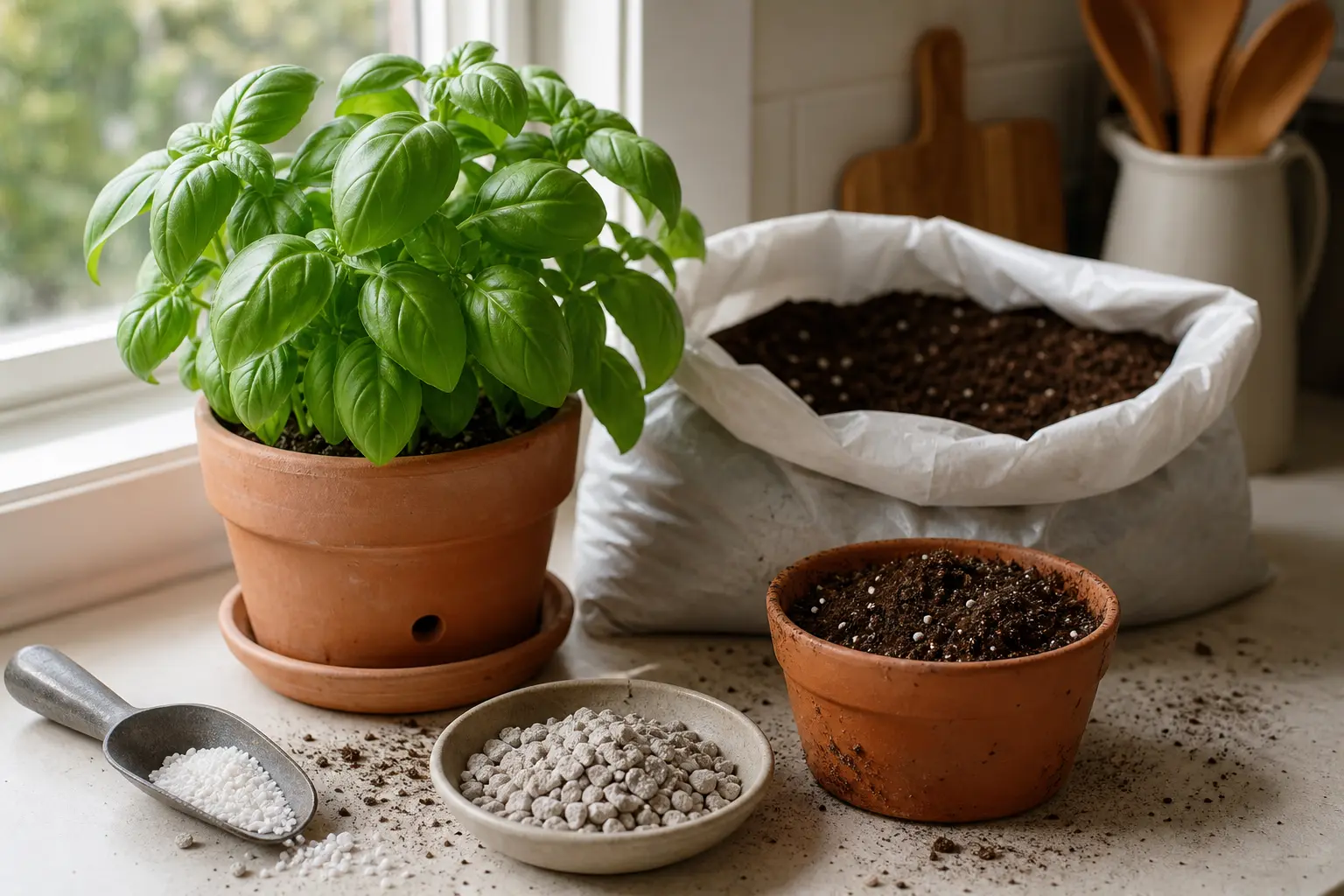
- A simple homemade blend of moistened coco coir or peat moss and perlite or vermiculite
Avoid mixes that are heavily enriched with compost or fertilizer for tiny seeds. They are not always harmful, but they can be too coarse, too wet, or too nutrient-rich for reliable germination.
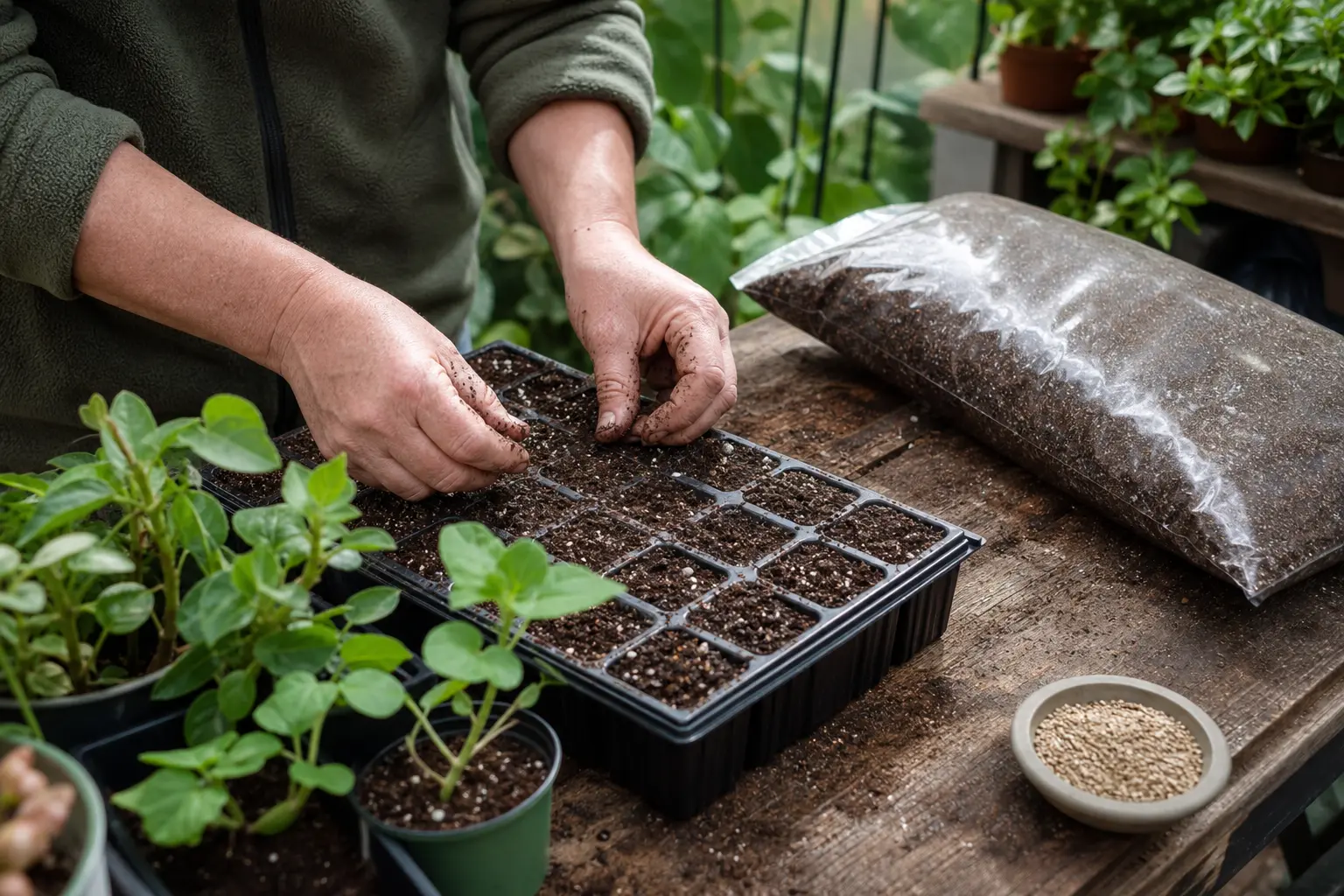
Fill clean cell trays or small pots, moisten the mix before sowing, and sow at the depth recommended on the seed packet. The goal is dampness like a wrung-out sponge—not a saturated pot.
Best media for rooting cuttings
For many common houseplant, herb, and ornamental cuttings, a low-nutrient, free-draining propagation medium is best. Suitable choices include:
- Perlite alone, kept consistently moist
- Half perlite and half coco coir or peat moss
- A seed-starting mix amended with extra perlite
- Propagation plugs made for cuttings
The right choice depends on how easily the plant roots and how carefully you can manage watering. Perlite provides excellent air space but dries quickly. Coco coir holds more moisture. A blend often gives a workable balance for beginners.
Take cuttings with clean tools, remove leaves that would sit below the surface, and insert the stem into moist medium. Keep the cutting in bright, indirect light and protect it from drying out. Humidity can help, but stagnant, overly wet conditions encourage rot.
When regular potting mix is appropriate
Regular potting mix is appropriate once seedlings have grown beyond their earliest stage and are ready for larger pots, or once cuttings have formed a healthy root system.
Many standard potting mixes contain fertilizer already, often enough to support young plants briefly. Check the bag before adding anything else. If it says it includes fertilizer or plant food, do not automatically add more at planting time.
For mature container plants, choose a potting mix that remains open and free-draining. Large outdoor containers, tomatoes, peppers, herbs, and flowering annuals generally need more durable structure than seed trays do. Potting mix can be improved with perlite, pine bark, or coco coir if it seems dense or likely to stay wet.
When and How to Add Fertilizer Safely
Fertilizer becomes useful when a plant has roots capable of taking it up and enough active growth to use the nutrients. Timing matters as much as product choice.
Wait until seedlings establish true leaves or cuttings form roots
For seedlings, wait until they have developed at least one set of true leaves—the leaves that appear after the initial seed leaves. At this stage, they can begin receiving a light feeding if they are growing in a nutrient-free seed-starting mix.
For cuttings, wait until roots are visibly forming or the cutting resists a very gentle tug. If it has been moved into potting mix after rooting, allow it time to settle before feeding.
There are exceptions. A seedling growing in a mix that already contains fertilizer may not need additional feeding for several weeks. Conversely, a fast-growing seedling kept too long in a nutrient-free seed mix may become pale and slow. Let the plant and the product label guide the timing.
Use diluted, balanced fertilizer for young plants
A balanced fertilizer supplies the major nutrients in relatively even proportions. For young plants, a water-soluble balanced product is often easier to control than strong dry granules because it can be diluted and applied evenly.
Use the product label as the starting point. If the label gives a rate specifically for seedlings, transplants, or houseplants, follow that instruction. When no young-plant rate is given, gardeners often begin more gently than the full rate intended for mature plants, then increase only if growth and color suggest the plant needs more.
Do not fertilize a wilted, bone-dry plant. Water it first, allow excess water to drain, and feed only once the root ball is evenly moist. Fertilizer on dry roots is more likely to cause damage.
Choosing fertilizer for containers and edible plants
Select a fertilizer labeled for the type of plant and setting you are growing. A container vegetable needs a product suitable for edible crops and for use in pots. A houseplant fertilizer is formulated for indoor foliage plants; it may be adequate for some ornamentals but is not automatically the best choice for tomatoes, herbs, or peppers.
When choosing, consider:
| Situation | What matters most |
|---|---|
| Seedlings in a seed-starting mix | Mild feeding after true leaves appear |
| Newly rooted cuttings | Gentle nutrition after roots establish |
| Leafy herbs and greens | Moderate, steady nutrients; avoid overfeeding |
| Fruiting vegetables in containers | Regular feeding as plants grow and fruit, following the label |
| Established houseplants | Product suited to the plant type and light level |
“Organic” and synthetic fertilizers can both be useful. The practical distinction is not simply which is safer; it is how quickly nutrients become available, how predictable the application is, and whether the product suits the crop. Any fertilizer can cause problems if too much is used.
Why lawn fertilizer may not be suitable for vegetables or pots
Lawn fertilizer is designed for turfgrass, which is usually grown in the ground and fed over a broad area. It may emphasize nitrogen for green leaf growth, while fruiting vegetables need a more balanced nutrient program as they develop flowers and fruit.
Some lawn products also include herbicides or weed preventers. These should never be used as fertilizer for vegetables, herbs, seed trays, or ornamental container plants unless the label specifically states they are suitable for that use. A “weed and feed” lawn product is especially inappropriate around edible plants.
Even plain lawn fertilizer can be too strong or poorly suited to the small volume of a container. Use a fertilizer labeled for containers and the crop you are growing.
Signs of Too Much Fertilizer and What to Do
Fertilizer damage can resemble drought, underwatering, root rot, heat stress, or disease. Check the recent care routine before assuming fertilizer is the only cause. If symptoms appeared shortly after feeding or after repeated applications, excess fertilizer is a strong possibility.
Symptoms of fertilizer burn
Common signs include:
- Brown, dry leaf tips or edges
- Yellowing or browning beginning on older leaves
- Wilting even though the potting mix is moist
- Slow growth, stunting, or failure to germinate
- Dark, damaged, or dying roots
- A white or crusty residue on the soil surface or pot rim
- Sudden decline after fertilizer spikes, granules, or a strong liquid feed
Seedlings may look scorched, develop crisp edges, or collapse soon after emerging. Cuttings may fail to root, turn soft at the base, or lose leaves rapidly.
Flush container plants with clean water when appropriate
For an established plant in a pot with drainage holes, flushing can reduce soluble fertilizer salts.
- Move the pot where water can drain freely.
- Slowly run plain water through the potting mix.
- Let the water drain completely.
- Repeat once or twice if the plant was heavily overfed.
- Do not fertilize again until the plant resumes stable growth.
Flushing is most useful for plants growing in potting mix, not for seeds or unrooted cuttings. Do not leave the pot sitting in runoff. Also avoid flushing a plant that is already in soggy, poorly drained soil, since adding more water may worsen root damage.
Repot seeds or cuttings planted directly in fertilizer
If seeds or cuttings were planted in fertilizer, the best response is usually to start over in fresh, suitable medium.
Seeds that have not yet germinated may be carefully moved, but their chances are uncertain. It is often more reliable to resow new seeds in seed-starting mix. For cuttings, gently rinse fertilizer from the lower stem if possible, trim away any soft or dark tissue with clean scissors, and place the cutting in clean propagation medium.
Do not try to “balance out” excess fertilizer by adding more compost, soil, or other amendments to the same container. This can leave concentrated salts around the developing roots. Fresh medium is the safer reset.
Can Garden Soil, Compost, or Old Potting Mix Fill the Gap?
Lower-cost materials can help stretch a potting-mix budget, but they need to be used thoughtfully. The goal is still the same: a medium with reliable drainage, air space, moisture retention, and an appropriate nutrient level.
Why garden soil often performs poorly in containers
Garden soil may grow excellent plants in the ground, where earthworms, soil organisms, deep root zones, and natural drainage help maintain its structure. In a pot, it often compacts after repeated watering.
Compacted garden soil can hold too much water, exclude oxygen, and become hard enough that young roots struggle to spread. It may also carry weed seeds, insects, and plant disease organisms. For those reasons, it is not a good stand-alone substitute for potting mix in seed trays or containers.
If you want to use local soil for large outdoor planters, blend only a modest amount into a light container mix rather than filling the whole pot with garden soil. For seeds and cuttings, use a cleaner, finer, lighter medium.
Using compost without making the mix too rich
Finished compost can improve moisture retention and add some nutrients, but it is not a complete seed-starting or propagation medium. Compost quality varies widely. Some batches are fine and mature; others are dense, unfinished, salty, or still actively decomposing.
Use well-finished, earthy-smelling compost in moderation in potting mixes for established plants. Keep it out of very small seedling cells or use only a small portion of the blend. For cuttings, a low-nutrient medium is usually more dependable until roots develop.
Do not assume compost replaces all fertilizer for a season. Its nutrient availability varies, especially in containers where watering gradually leaches nutrients from the pot.
When old container soil can be reused—and when to discard it
Old potting mix can often be reused for vigorous, healthy plants if it still drains well and has not become severely compacted. Remove old roots and debris, break up clumps, and refresh the mix with new potting mix and a drainage material such as perlite or bark if needed. Any fertilizer left from the prior season may be depleted, so feed the new plant only after it has established.
Discard rather than reuse potting mix when:
- The previous plant had a serious root disease or unexplained collapse
- The mix smells sour or rotten
- It is heavily compacted or stays wet for too long
- It contains persistent pests or many weed seeds
- There is a heavy crust of fertilizer salts
- The prior plant died from root rot and the cause was not clearly corrected
Avoid using old mix for seeds and delicate cuttings. Even if it looks acceptable, its structure may be uneven and its nutrient level unpredictable. Fresh seed-starting or propagation mix gives those vulnerable plants a better start.
Conclusion
Fertilizer cannot replace potting soil for seeds, cuttings, or container plants. It supplies nutrients, but it does not provide the moisture balance, drainage, oxygen, or physical support that roots need.
Start seeds in a fine, low-nutrient seed mix. Root cuttings in a clean, airy propagation medium. Move young plants into a quality potting mix once they are established, then add fertilizer carefully and according to the product label. Feeding at the right time is helpful; using fertilizer as the growing medium is likely to damage or kill the plant.
FAQ
Can a plant grow in fertilizer alone?
No. Even an established plant needs a root medium or a properly managed hydroponic system. Fertilizer alone does not provide stable support, usable air space, or a safe water balance around roots. In a conventional pot, fertilizer should be added to a growing medium, not used in place of one.
Will fertilizer kill seeds before they germinate?
It can. High fertilizer concentrations can interfere with water uptake and damage the emerging root. Some seeds may still germinate, but seedlings can be weak, scorched, or stunted. Use a low-nutrient seed-starting mix instead.
Can I mix fertilizer into potting soil before planting?
Yes, if the fertilizer is intended to be mixed into potting media and you follow its label rate. This is more suitable for established transplants than for germinating seeds or unrooted cuttings. Also check whether the potting mix already contains fertilizer so you do not double-feed.
What is the cheapest substitute for commercial potting soil?
For seeds and cuttings, a simple mix of coco coir or peat moss with perlite is often an economical substitute, especially when bought in larger quantities. For larger established plants, combine a basic potting mix with modest amounts of finished compost and a drainage material. Avoid using straight garden soil or straight compost in containers just because they are inexpensive.
You Might Also Like