What Is the Best Organic Fertilizer for Houseplants?
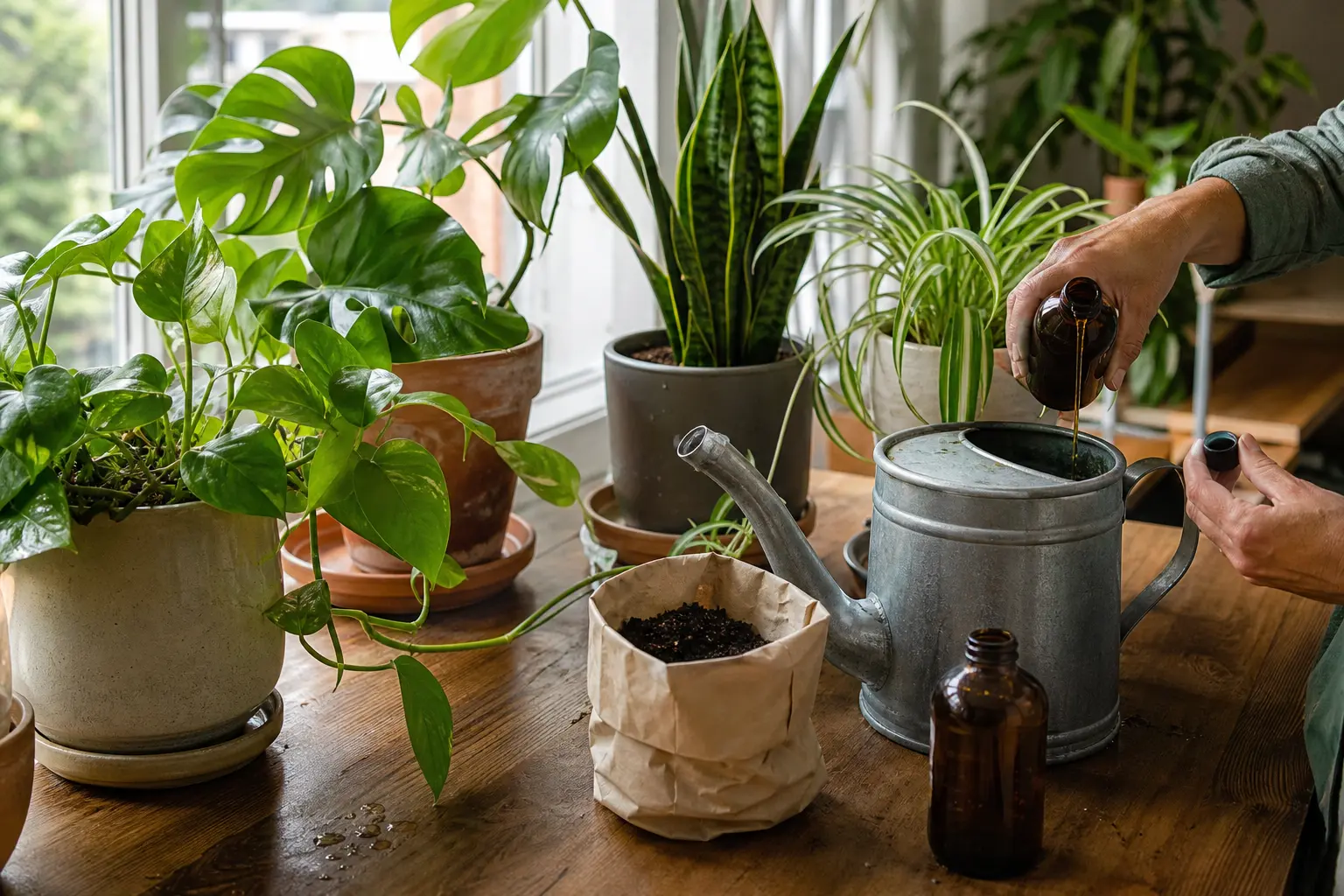
For most houseplants, the best organic fertilizer is a balanced, low-strength liquid fertilizer formulated for indoor plants. It is easy to dilute, apply with watering, and adjust if a plant’s growth slows.
No single fertilizer suits every plant. A fast-growing pothos in bright light needs more nutrition than a snake plant in a dim room. Worm castings provide gentle nutrition, while fish emulsion can support leafy growth but may be too strong-smelling for indoor use.
Choose a product with a clear nutrient analysis, use it conservatively, and fertilize only during active growth.
Best Organic Fertilizers for Common Houseplant Needs
Organic fertilizers may contain plant meals, fish products, compost, seaweed, or worm castings. Their nutrients often become available gradually, especially in potting mixes with limited microbial activity.
| Fertilizer type | Best for | Main advantage | Main limitation |
|---|---|---|---|
| Balanced liquid organic fertilizer | Most foliage houseplants | Easy, adjustable feeding | Must be applied regularly |
| Worm castings | Newly repotted plants, gentle feeders | Mild nutrition and improved soil texture | Usually not enough alone for heavy feeders |
| Fish emulsion | Fast-growing leafy plants | Nitrogen-rich during active growth | Odor; can be too strong if overused |
| Seaweed fertilizer | Plants during active growth | Trace minerals and gentle support | Often low in major nutrients alone |
| Granular organic fertilizer | Large, established plants | Longer-lasting nutrition | Harder to control in small pots |
| Compost | Large containers and soil mixes | Adds organic matter | Can make pots dense and wet |
Liquid Organic Fertilizer for Regular Feeding
A balanced liquid organic fertilizer is the best all-purpose option for most houseplant collections. Look for a product labeled for houseplants, containers, or indoor plants that lists nitrogen, phosphorus, potassium, and micronutrients.
Liquid fertilizers are practical because you can dilute them for sensitive plants, add them during watering, and stop feeding immediately if a plant shows stress. They work well for pothos, philodendron, monstera, peace lily, spider plant, dracaena, and many palms.
For a mixed collection, start with the label’s lower recommended rate. Roots in pots have little room to escape excess nutrients.
Worm Castings for Gentle, Slow-Release Nutrition
Worm castings are a mild organic amendment that adds modest nutrients and organic matter. They are useful for newly repotted plants, sensitive foliage plants, indoor herbs, and plants that do not need heavy feeding.
Mix a small amount into fresh potting mix or add a light top-dressing. Avoid covering the soil so heavily that water cannot penetrate easily.
Worm castings may not provide enough nutrition for a large, fast-growing plant in bright light. They work best as a supplement to occasional liquid feeding rather than the sole nutrient source for every plant.
Fish Emulsion and Seaweed Fertilizer for Active Growth
Fish emulsion is useful for vigorous foliage plants because it commonly supplies relatively high nitrogen, which supports leafy growth. It can help during spring and summer when plants are producing new leaves quickly.
Its main drawback indoors is odor. Use it carefully, clean spills, and avoid overapplication in poorly ventilated rooms.
Seaweed or kelp fertilizers are generally gentler and provide trace elements, but they may not contain enough nitrogen, phosphorus, and potassium to serve as a complete fertilizer alone.
- Choose fish emulsion for fast-growing leafy plants.
- Choose seaweed fertilizer as a mild supplement.
- Choose a fish-and-seaweed blend for broader nutrition in one liquid product.
Neither will correct poor light, compacted soil, or chronically wet roots.
Granular Organic Fertilizer for Longer-Term Feeding
Granular organic fertilizers release nutrients gradually as they break down. They can work well for large floor plants, established palms, indoor citrus, or other substantial containers.
They are less suitable for tiny pots, where concentrated granules can create uneven nutrient zones and make overfeeding difficult to correct. Use a product intended for containers, follow the label, and mix it lightly into the upper potting mix. Water after application.
Granular fertilizer is convenient but less flexible than liquid feeding. If growth slows during darker months, you cannot remove it as easily as you can stop adding liquid fertilizer.
Compost: When It Helps and When It Is Too Heavy for Pots
Finished compost can add organic matter and a small amount of nutrition to fresh potting mix, especially for a large container. It is rarely the best stand-alone fertilizer for houseplants.
Too much compost can make a mix dense, water-retentive, and low in air space around roots. Do not use unfinished compost, kitchen scraps, or sour-smelling compost in indoor pots; these can attract fungus gnats and create moisture problems.
For most houseplants, quality potting mix plus measured liquid fertilizer is more reliable than feeding mainly with compost.
How to Choose an Organic Fertilizer for Your Houseplants
The best fertilizer depends on the plant’s current conditions. A plant producing leaves in strong window light needs more nutrition than the same species growing slowly in low light.
Match Fertilizer Strength to the Plant
Fast-growing plants generally use more fertilizer than slow-growing plants with thick, water-storing leaves or roots.
Use regular but restrained feeding for:
- Pothos and heartleaf philodendron
- Monstera
- Spider plant
- Peace lily
- Indoor herbs
- Ficus in bright light
Use lighter, less frequent feeding for:
- Snake plant
- ZZ plant
- Haworthia
- Jade plant
- Many cacti
- Slow-growing dracaenas
A plant that lacks adequate light does not need stronger fertilizer. Extra nutrients cannot replace light and may build up in the pot.
Check the NPK Ratio and Micronutrients
NPK refers to the main nutrients on fertilizer labels:
- Nitrogen (N) supports leafy growth.
- Phosphorus (P) supports roots, flowering, and general plant processes.
- Potassium (K) supports overall plant function.
For foliage houseplants, a balanced formula or one with modestly higher nitrogen is usually suitable. Flowering plants may benefit from bloom formulas, but high phosphorus will not force blooms in poor light.
Micronutrients such as iron, magnesium, and manganese are also important. A complete fertilizer made for houseplants is generally more dependable than a single-ingredient amendment.
Consider the Growing Medium and Pot Drainage
Fertilizer behaves differently in different mixes. A chunky mix with bark and perlite drains quickly and may need more regular feeding. A dense peat-based mix stays wet longer, so nutrients remain in the pot longer as well.
Before fertilizing, make sure:
- The pot has a drainage hole.
- Excess water can leave freely.
- The plant is not sitting in water.
- The mix is not severely compacted.
- Roots are not rotting or extremely crowded.
Damaged roots cannot safely take up fertilizer.
Choose Liquid, Granular, or Soil Amendment Forms
Choose the form that fits the plant and your care routine.
- Liquid organic fertilizer: Best for most collections and seasonal adjustment.
- Granular organic fertilizer: Best for large, established plants.
- Worm castings: Best as a mild amendment or top-dressing.
- Compost: Best in small proportions for larger containers.
- Fish or seaweed products: Best as targeted liquid supplements during active growth.
A monthly or every-other-watering liquid routine during active growth is often safer indoors than relying on long-lasting granules.
Organic vs. Chemical Fertilizer for Indoor Container Plants
Organic and synthetic fertilizers can both grow healthy houseplants. What matters most is whether the fertilizer is complete, suitable for the plant, and used at a sensible strength.
Benefits and Limits of Organic Fertilizers
Organic fertilizers can feed gradually and may contain useful organic compounds. Worm castings, fish products, compost, and seaweed all have a place in container care.
However:
- Nutrient release can be less predictable.
- Some products smell noticeable.
- Excess use can encourage fungus gnats.
- Their effectiveness may depend on potting-mix conditions.
- “Organic” does not mean impossible to overapply.
A formulated organic fertilizer is usually more reliable than homemade inputs because its nutrient content is listed on the label.
When Synthetic Fertilizer May Be More Practical
Synthetic fertilizers are often odorless, precisely formulated, and immediately available to roots. They can be useful for large collections, plants under strong grow lights, or species with specialized needs.
They are not inherently harmful when used correctly, just as organic products can cause problems when overused. If you prefer organic fertilizer, choose a complete product and treat label directions as a maximum, especially in lower light.
Why Overfertilizing Is a Bigger Risk Than Underfeeding
Most established houseplants tolerate light feeding better than overfeeding. Excess fertilizer can damage root tips and leave salts or residues in the potting mix.
Underfed plants may grow slowly or produce smaller leaves. Overfed plants can decline quickly. When uncertain, feed less often, dilute appropriately, and monitor new growth over several weeks.
How to Apply Organic Fertilizer Without Harming Houseplants
Good application habits matter as much as the fertilizer itself.
How Often to Fertilize Houseplants
Follow the product label first. During active growth, many houseplants can be fed lightly every few waterings or about monthly, depending on light levels and the formula.
Do not fertilize just because the calendar says it is time. Check for active growth and make sure the soil and roots are healthy first.
Fertilizing During Spring, Summer, Fall, and Winter
Most houseplants grow most strongly in spring and summer, when indoor light is brighter. This is usually the best period for routine fertilizing.
Reduce feeding in fall as growth slows. In winter, plants grown only in natural window light often need little or no fertilizer.
Plants under strong grow lights, warm temperatures, and long light periods may continue growing in winter. Feed only if they are genuinely producing new growth.
Apply Fertilizer to Moist Soil, Not Dry Roots
Do not apply fertilizer solution to bone-dry potting mix. Dry roots are more vulnerable to stress, and dry soil can absorb fertilizer unevenly.
- Water lightly first if the mix is very dry.
- Apply diluted fertilizer according to the label.
- Let excess solution drain.
- Empty water from the saucer or outer container.
Avoid fertilizing immediately after repotting a stressed plant, after severe underwatering, or when root rot is suspected.
Signs of Too Much Fertilizer or Salt Buildup
Pause fertilizing if you notice:
- Brown, crispy leaf tips despite reasonable watering.
- White crust on soil or the pot rim.
- Wilting while soil is moist.
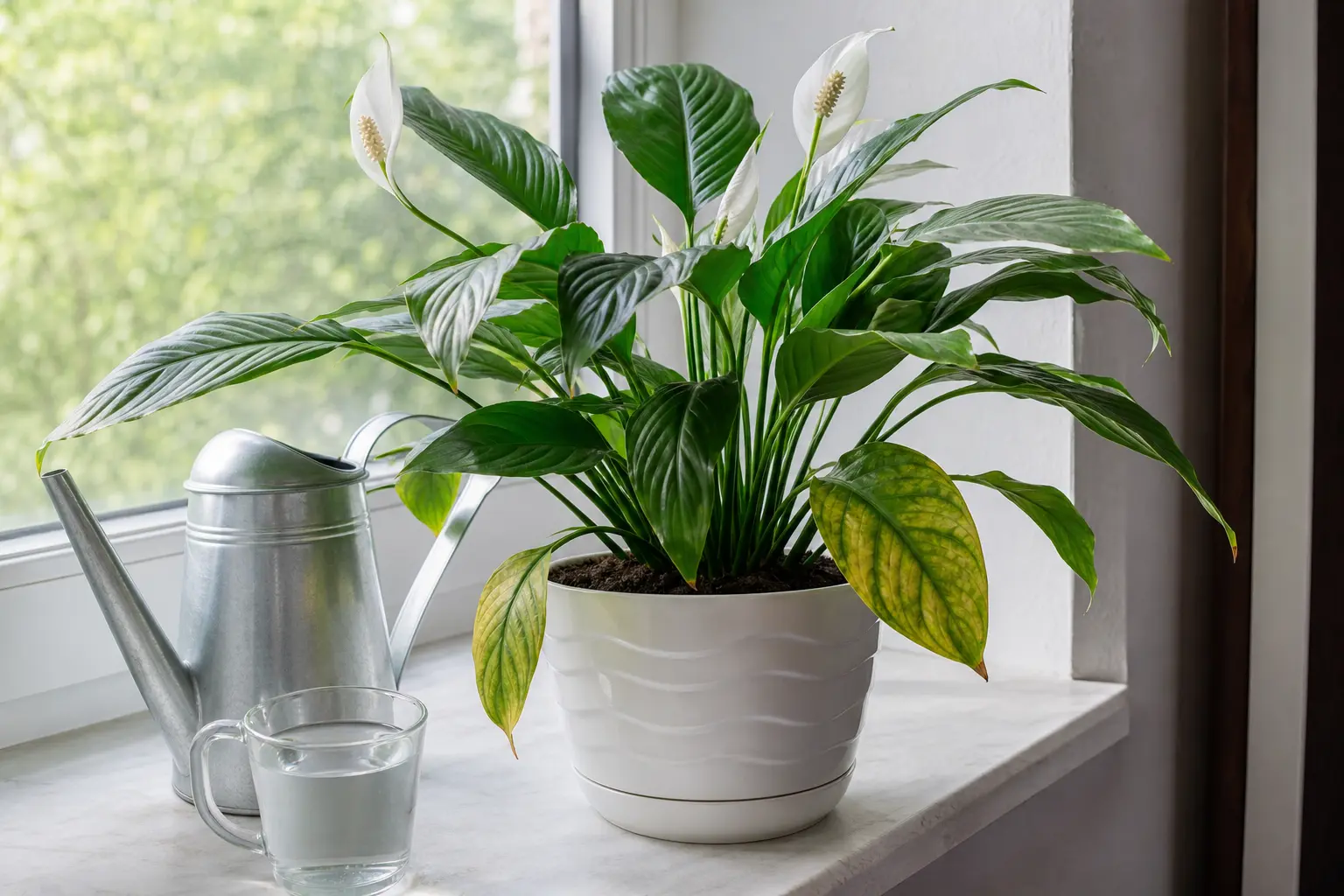
- Sudden yellowing after feeding.
- Stunted new growth.
- Sour-smelling, persistently wet mix.
These symptoms can have other causes. If buildup seems likely, flush the pot with plain water and let it drain thoroughly. Resume feeding only after the plant is recovering.
DIY Fertilizers, Coffee Grounds, and Nutrient Problems
Household fertilizer ideas may seem inexpensive and natural, but they are rarely balanced, predictable, or well suited to indoor containers.
Can Coffee, Banana Peels, or Kitchen Scraps Fertilize Houseplants?
Coffee grounds, banana peels, eggshells, and kitchen scraps are not dependable substitutes for formulated fertilizer.
Coffee grounds can compact soil, retain moisture, and encourage mold or fungus gnats. Banana peel water has uncertain nutrient content and can spoil. Eggshells break down slowly. Kitchen scraps belong in a managed compost system, not buried in a houseplant pot.
A diluted, complete fertilizer designed for the plant is more predictable than kitchen-based alternatives.
When Old Potting Soil Needs Refreshing or Replacing
Potting soil breaks down over time. Fine particles accumulate, drainage worsens, and mineral residues can remain after repeated watering. Repotting may help more than extra fertilizer if:
- Water drains unusually slowly.
- Soil is hard, compacted, or shrinks from pot sides.
- Roots tightly circle the root ball.
- The plant dries extremely quickly because roots fill the pot.
- The mix stays wet too long.
- There is a sour odor or recurring pest problem.
Refreshing the soil is often more useful than increasing fertilizer strength.
Rule Out Light, Watering, Root, and Pest Problems Before Fertilizing
Yellow leaves and slow growth do not automatically mean nutrient deficiency. Check for:
- Insufficient light: Sparse, stretched, or absent growth.
- Overwatering: Yellow leaves, wet soil, or soft roots.
- Underwatering: Dry soil, wilting, or crisp leaves.
- Rootbound conditions: Water races through the pot and growth stalls.
- Pests: Check for mites, scale, mealybugs, or thrips.
- Temperature stress: Cold drafts and heating vents can cause decline.
Fertilizer supports healthy growth; it does not cure poor light, root damage, or pests.
Conclusion
The best organic fertilizer for houseplants is usually a complete, balanced liquid organic fertilizer used gently during active growth. It provides the most control and suits the widest range of indoor plants.
Use worm castings as a mild amendment, fish emulsion for vigorous foliage plants, and granular fertilizer mainly for larger containers. Use compost sparingly, since too much can make a mix dense and slow-draining.
Feed conservatively. Healthy roots, suitable light, proper watering, and airy potting mix matter more than extra fertilizer.
FAQ
What is the best organic liquid fertilizer for houseplants?
The best organic liquid fertilizer is a complete, low-strength product labeled for houseplants or container plants. Choose one that lists NPK values and micronutrients, then use it at a conservative label rate. A balanced formula suits most foliage plants, while fish-and-seaweed blends can help actively growing plants.
Are worm castings enough fertilizer for indoor plants?
Worm castings can be enough temporarily for slow-growing plants or plants in fresh potting mix. They are usually not enough as the only fertilizer for large or fast-growing houseplants over the long term. Use them as a gentle supplement and add a complete liquid fertilizer when appropriate.
Can I use organic fertilizer on succulents, orchids, and cacti?
Yes, but use a fertilizer suited to the plant and apply it sparingly. Succulents and cacti generally need far less feeding than tropical foliage plants, especially in low light or winter. Orchids need fertilizer appropriate for their growing medium. For all three, avoid fertilizing dry or stressed roots.
How long can houseplants grow without added fertilizer?
Many houseplants can go months without fertilizer, especially in winter or after repotting into fresh mix. Eventually, growth may slow as nutrients are used or washed away. The timing depends on the plant’s growth rate, light, pot size, and the condition of its potting mix.
You Might Also Like