Can You Reuse Potting Soil? How to Refresh Old Potting Mix Safely
Yes, you can reuse potting soil when the previous plant remained healthy and the medium still drains well, rewets evenly, and maintains enough structure to support roots. After a growing season, used mix may suffer from compaction, depleted nutrients, salt buildup, or biological risks such as root disease or pests. The health of the previous plant and the current physical condition determine whether to refresh and reuse, repurpose in a lower-risk location, or discard. Routine heat treatment is not necessary for healthy mix. Compost can restore organic matter but does not fix drainage or air porosity. Mature flowers and hardy outdoor plants tolerate more reused material, while heavy feeders need stronger restoration. Seeds and sensitive plants deserve a cleaner medium.
| What happened in the previous pot? | Current mix condition | Best next step | Avoid |
|---|---|---|---|
| Plant stayed healthy | Loose, drains well, rewets evenly | Remove roots, refresh, reuse | Adding fertilizer before checking next plant’s needs |
| Healthy plant but mix compacted | Water drains slowly, lost volume | Blend with fresh structural material and fresh mix | Using compost alone as drainage amendment |
| Healthy plant but dry mix repels water | Water pools or runs down pot edge | Pre-moisten, loosen, test wettability | Planting into dry hydrophobic root ball |
| Heavy fertilizer or hard-water history | White crust or salt buildup | Check drainage, leach only when appropriate | Automatically adding more fertilizer |
| Root rot, wilt, or confirmed disease | Risk remains uncertain | Do not reuse for susceptible container plants | Assuming crop rotation makes it safe |
| Soil-dwelling pests confirmed | Pest stage may remain | Identify pest, use targeted disposal | Treating every foliar insect as soil infestation |
| Root-bound annual left little usable mix | Mostly roots and fine material | Recover usable material, downgrade or rebuild | Replanting heavy feeder after fertilizer alone |
| Condition and plant history unknown | Risk cannot be evaluated | Use for low-risk non-container purpose or replace | Starting seeds or planting valuable sensitive plants |
Key Takeaways
- Inspect the previous plant and mix condition first: The health of the last plant and the physical state of the medium—not a fixed age—determine whether old potting soil can be refreshed, repurposed, or needs to be discarded.
- Restore structure and drainage before adding fertilizer: Compaction, shrinkage, and poor rewetting are physical problems that must be corrected first. Compost adds organic matter but does not fix collapsed air space or improve drainage.
- Match the restored mix to the next plant’s needs: Mature flowers and hardy outdoor plants tolerate more reused material. Heavy-feeding vegetables need rebuilt volume and porosity. Seeds, seedlings, and sensitive houseplants deserve a cleaner, more predictable medium.
- Skip routine sterilization for healthy mix: Heat treatment is a targeted option for small batches with specific risks, not a default step. Healthy mix benefits more from structural restoration and crop-appropriate fertilization than from pasteurization or solarization.
Decide Whether Old Potting Soil Is Safe to Reuse
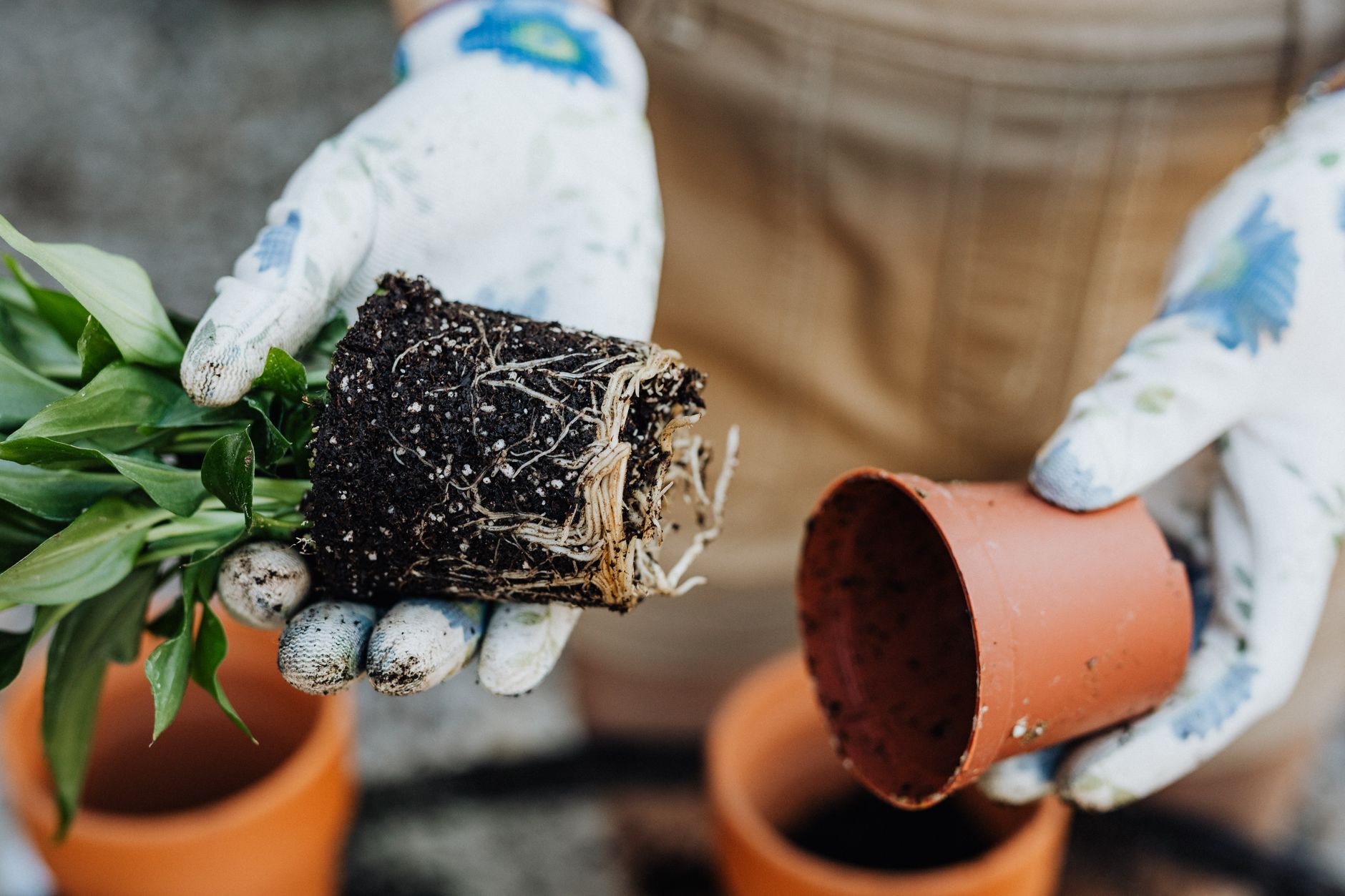
Start with the previous plant. Did it complete the season normally? Did it wilt while mix was wet? Were roots rotten? Were insects present? A dead plant does not automatically mean infected mix; cause could be frost, drought, or natural end. Unexplained wilt in wet mix or root decay requires a more conservative decision. Use the five-minute inspection below.
What Happens to Potting Mix After a Growing Season?
Over time, organic particles break down, fine particles fill air spaces, and the mix loses volume. Root systems occupy and compress the medium. Dry peat-based mix may become hydrophobic. Fertilizer may be used up or leached, but salts can accumulate. Old roots and debris provide pest habitat. Volume loss comes from root occupancy, decomposition, and settling.
| Type of decline | What gardener may notice | Restoration priority |
|---|---|---|
| Compaction | Dense feel, slow drainage | Restore structure |
| Shrinkage | Gap between mix and pot wall | Rewet, rebuild volume |
| Hydrophobicity | Water pools on surface | Pre-moisten, test absorption |
| Nutrient depletion | Weak growth | Plan crop-appropriate fertilization |
| Salt accumulation | Surface crust, leaf-tip injury | Check drainage, salt risk |
| Root-filled mix | Little loose medium left | Remove root mass, rebuild |
| Structural collapse | Mix muddy, remains saturated | Downgrade or replace |
Check Disease, Pests, Roots, Drainage, and Salt Buildup
- Review previous plant: record disease, pests, treatments. Distinguish diagnosed from guessed.
- Remove root ball; break apart roots. Look for firm vs. rotten, foul-smelling roots.
- Smell medium: earthy is fine; sour or rotten suggests anaerobic conditions.
- Check texture: squeeze moistened handful—should break apart, not remain muddy.
- Test rewetting: place sample in small pot, apply water slowly. Observe if water enters or stays on surface.
- Test drainage: fully moisten, confirm excess water drains.
- Inspect white material: hard crystals may be salts, light white particles may be perlite.
- Inspect for pests: check roots, drainage holes, debris. Distinguish leaf pests from root-zone pests.
A lab test may be useful for many valuable containers, repeated failure, or suspected salt injury.
| Check | Reuse signal | Caution signal | Stop signal |
|---|---|---|---|
| Previous plant | Healthy or died normally | Cause uncertain | Confirmed root/wilt disease |
| Roots | Firm, no unusual odor | Dense root mat | Soft, rotten, foul-smelling |
| Smell | Mild or earthy | Stale after wet storage | Strong rotten/anaerobic |
| Texture | Loose, breaks apart | Fine but amendable | Mud-like or collapsed |
| Rewetting | Absorbs after moistening | Initially repels but improves | Continues channeling |
| Drainage | Excess water exits | Slower than needed | Remains saturated |
| Salts | No crust, moderate fertilizer | White crust or hard water | Severe recurring injury |
| Pests | No root-zone evidence | Unknown larvae | Confirmed soil-dwelling pest |
Reuse, Repurpose, or Discard?
Refresh and reuse when previous plant was healthy, no root disease, drainage and wettability restorable, salt manageable, next plant suitable.
Repurpose at lower risk: blend into ornamental bed, add to compost, use as fill in non-sensitive landscape depressions, place beneath fresh layer in large container, or hold hardy divisions. Not appropriate for mix with serious pathogens, regulated weeds, chemicals, or where local rules prohibit.
Discard when serious root disease confirmed, mix foul-smelling and collapsed, persistent root pests, contamination with chemicals or floodwater, or restoration would require nearly total replacement. Ordinary home compost doesn’t eliminate all pathogens.
| Condition | Container reuse | Lower-risk repurpose | Discard |
|---|---|---|---|
| Healthy crop, good structure | Yes | Yes | Usually unnecessary |
| Healthy crop, moderate compaction | Yes after structural repair | Yes | Only if repair uneconomical |
| Unknown plant death | Avoid for sensitive plants | Possible in non-sensitive use | Preferable if root disease suspected |
| Confirmed root disease | No | Usually avoid | Yes |
| Foliar pest only | Assess | Often possible after cleanup | Only if justified |
| Soil-dwelling pest confirmed | Only after validated treatment | Limited | Often safest |
| Severe salt accumulation | Only after correction | Limited | When correction impractical |
| Mix fine and waterlogged | No without major rebuilding | Possible as small amendment | If no useful structure remains |
How to Refresh Old Potting Soil
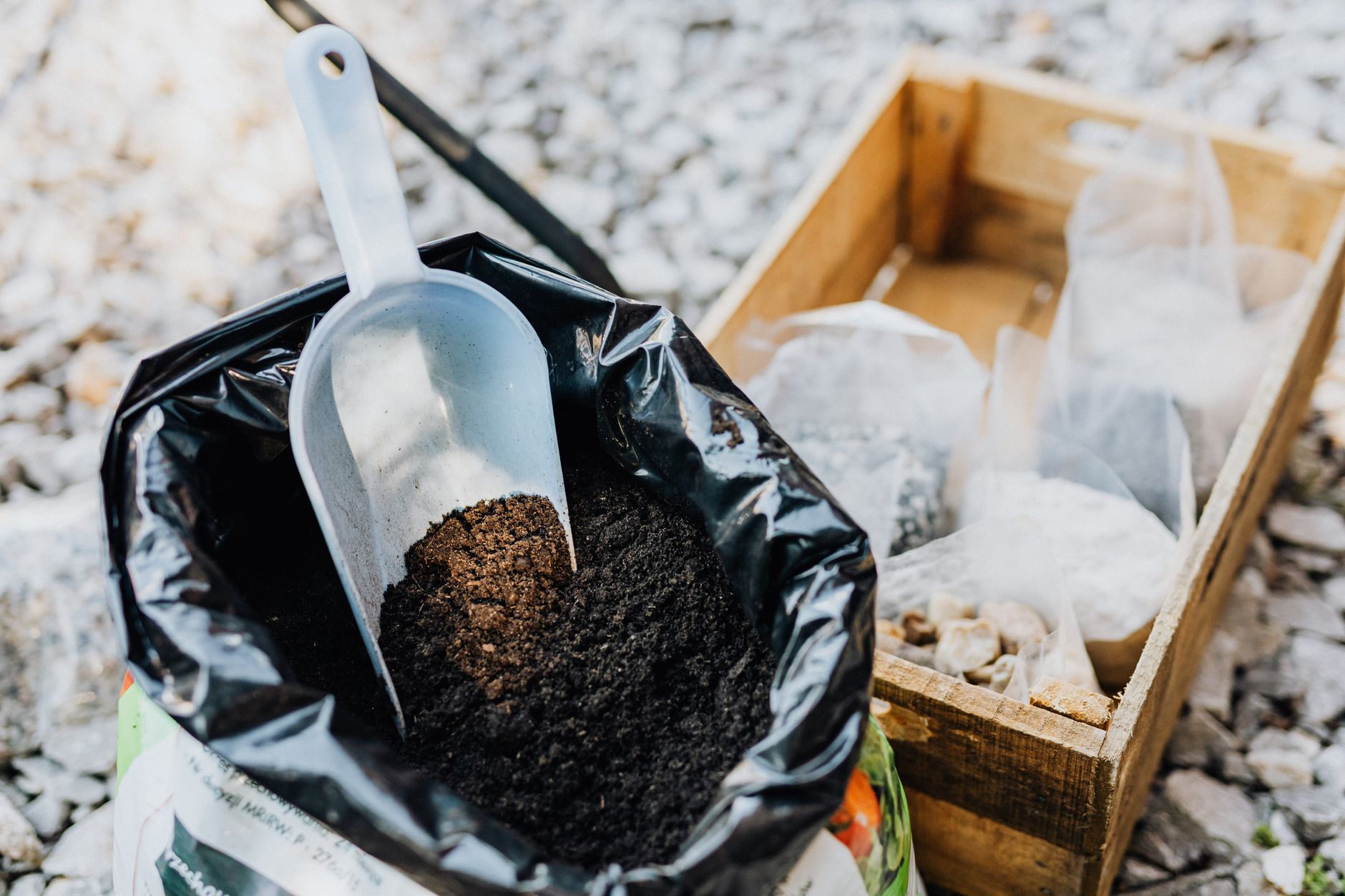
Adjust restoration based on inspection. Use lowest-cost intervention. Process: clean, rewet, restore structure, restore volume, plan nutrients, test, plant.
| Refresh level | Appropriate situation | General approach | Best next use |
|---|---|---|---|
| Minimal | Healthy mix, good drainage, moderate volume loss | Remove roots, add fresh material, plan fertilizer | Annual flowers, herbs |
| Standard | Healthy mix, some compaction, nutrient depletion | Blend with fresh mix/compost, restore structure, fertilize | Container vegetables, mixed planters |
| Major rebuild | Root-bound heavy feeder or strongly degraded | Smaller proportion old material with fresh structural medium | Lower-risk mature plants after testing |
| Do not rebuild | Diseased, waterlogged, contaminated, saline | Remove from container use | Disposal or approved lower-risk |
Remove Roots and Restore Moisture and Structure
- Empty container onto clean surface.
- Remove main root crown, thick roots, debris, weed seed heads, pest stages.
- Break compacted clumps; do not pulverize.
- Pre-moisten gradually, allow dry material to absorb water.
- If mix becomes loose and evenly moist, proceed; if dense or water-repellent, rebuild or repurpose.
- Restore structure with fresh coarse potting mix, perlite, pumice, or bark. Fine sand reduces pore space; vermiculite holds water. Avoid gravel at bottom, raw wood chips.
| Problem | Useful direction | What may make it worse |
|---|---|---|
| Dense, slow drainage | Add fresh coarse material | Fine compost or sand |
| Too quick drainage | Add water-retentive component | Only more perlite |
| Dry mix repels water | Pre-moisten slowly | Planting into dry core |
| Root-bound, lost volume | Remove root mass, add fresh medium | Fertilizer without volume |
| Mostly fine particles | Use lower % or repurpose | More fine organic matter |
| Adequate structure, low volume | Top up with fresh medium | Unrelated household materials |
Add Fresh Mix, Compost, and Fertilizer for the Next Plant
Fresh potting mix restores volume and improves consistency. A 50:50 blend of old and new is a practical starting point for container vegetables, but adjust per plant.
Mature compost adds organic matter and slow-release nutrients. Compost quality varies; fine or excess compost can reduce air space. Raw manure not suitable.
Fertilizer chosen per next plant: heavy feeders need planned program; light feeders need less. Succulents differ from tropicals. Check salt history before adding.
pH amendments not routine; test if concerned.
Test small batch before treating whole.
When to Pasteurize, Solarize, or Skip Reuse
Heat treatment is targeted, not routine. Consider for small volume of valuable medium, known weed seeds, identified heat-sensitive pest, or old seed-starting mix. Not worthwhile for serious root disease, large volume, collapsed structure, or unreliable methods.
Solarization requires moisture, strong sun, clear plastic, proper time. Oven/microwave for small batches only, with temperature control; never place metal or chemicals. After treatment, cool, store clean, restore structure separately.
| Situation | Routine refresh | Heat treatment | Fresh mix/disposal |
|---|---|---|---|
| Healthy plants | Yes | Unnecessary | No |
| Weed seeds in small batch | Possible after removal | May consider | When impractical |
| Unknown larvae in large batch | Not until identified | Often impractical | Safer |
| Confirmed root rot/wilt | No | Unreliable | Yes |
| Old seed-starting mix | Not ideal for direct reuse | Small batch may be treated | Fresh mix simpler |
| Collapsed mix | No | Heat doesn’t fix structure | Repurpose/replace |
Use Recycled Potting Mix in the Right Place
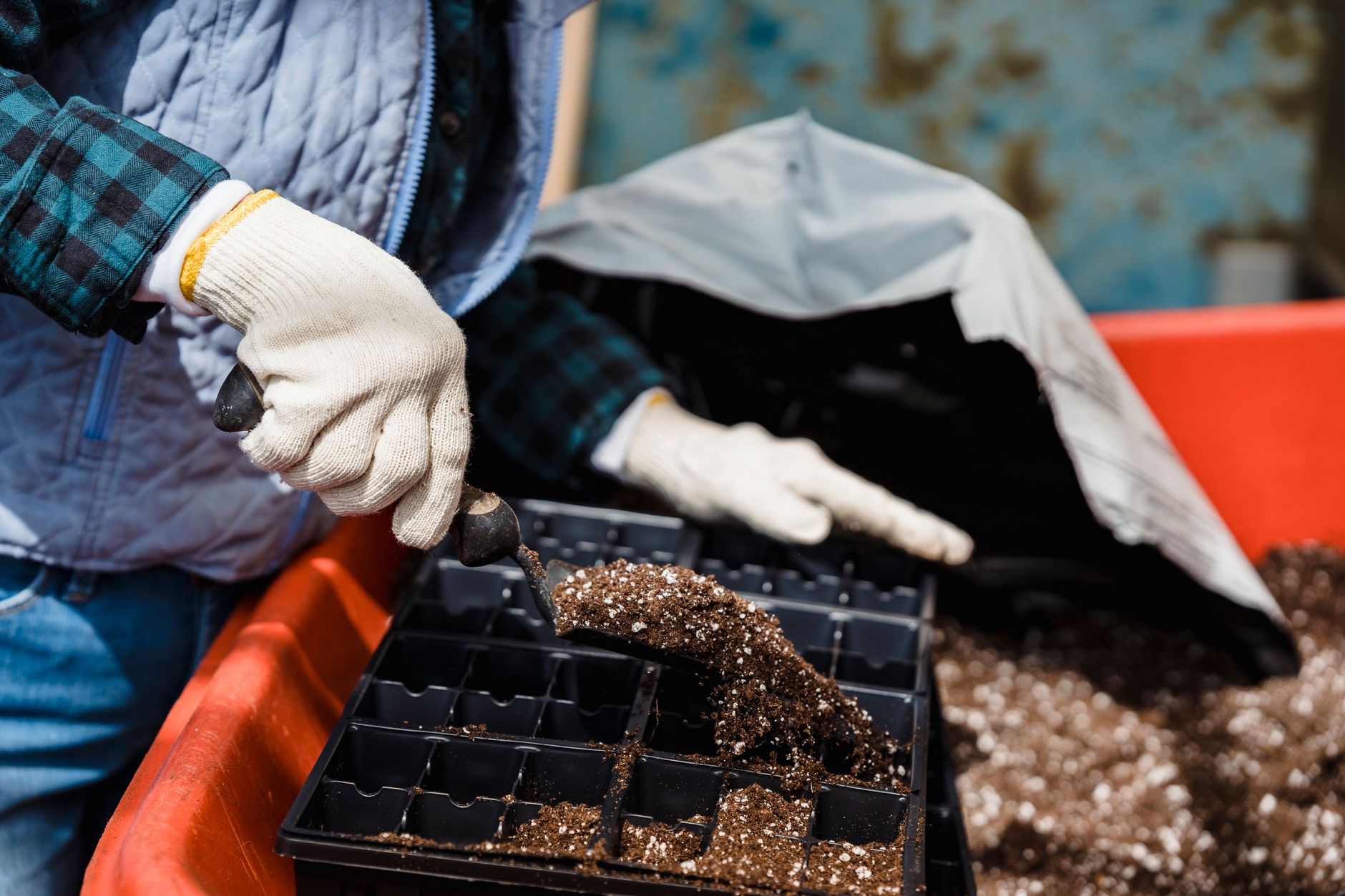
Match restored medium to next plant’s needs. The more sensitive the plant, the more predictable the medium should be.
Reusing Mix for Vegetables, Flowers, Houseplants, and Root-Bound Pots
Annual flowers and hardy outdoor plants: healthy refreshed mix suitable with structure and fertilizer adjustments.
Container vegetables: heavy feeders need sufficient root volume, good drainage, planned fertilizer. Blend last year’s healthy medium with fresh mix and/or compost. Trial if reused multiple times.
Root-bound tomato: remove root mass, estimate usable loose medium. If mostly roots, treat as component of rebuilt blend rather than full pot. Inspect for disease.
Houseplants: do not combine old mix from infested plants with clean indoor mix. Use fresh mix for valuable plants, root-rot recovery, sensitive species. Healthy old houseplant mix may be reused outdoors.
Perennials and large permanent planters: do not replace all medium yearly if plant healthy. Top-dress or replace portion.
| Next use | Old-mix suitability | Refresh intensity | Main caution |
|---|---|---|---|
| Hardy annual flowers | High when healthy | Light to standard | Match drainage and fertility |
| Culinary herbs | Moderate to high | Light to standard | Avoid overfertilizing low-demand herbs |
| Tomato, pepper, eggplant | Moderate | Standard to major | Restore volume, porosity, nutrients |
| Succulents and cacti | Conditional | Plant-specific rebuild | Compost-heavy old mix holds too much water |
| Moisture-loving tropicals | Conditional | Plant-specific | Indoor pest and root-rot risk |
| Large permanent planter | High if healthy | Refresh upper zone | Don’t disturb established roots |
| New seedlings and cuttings | Low | Fresh predictable mix preferred | Damping-off and poor aeration |
Can You Reuse Potting Soil for Seeds and Sensitive Plants?
Seedlings are vulnerable. Fresh seed-starting mix is simplest. If reusing, use only known clean source, remove debris, confirm particle size, use sanitation if needed. Do not use from diseased mature plants. Use fresh for expensive seed, slow-germinating species, or root-rot recovery.
| Plant stage | Recommended medium |
|---|---|
| Germinating seed | Fresh or validated disease-free seed-starting mix |
| Small seedling | Predictable fine but aerated mix |
| Established transplant | Refreshed healthy mix maybe suitable |
| Mature annual | Properly restored mix often suitable |
| Hardy perennial | Healthy reused mix adjusted per plant |
| Root-rot recovery plant | Fresh plant-specific mix |
Store, Manage, or Repurpose Leftover Potting Mix
Remove debris. Store in clean bin, label with year, previous plant, history. Keep separate for healthy vegetable, healthy ornamental, indoor, questionable. For large containers, refresh upper zone. Repurposing: add to beds, compost, fill non-sensitive depressions. Never dump into natural areas. Check local rules.
| Batch label | Storage decision | Suitable next use |
|---|---|---|
| Healthy annual flowers | Keep and refresh | Flowers, herbs, moderate containers |
| Healthy heavy-feeding vegetables | Keep separately | Rebuild for vegetables or lower-demand plants |
| Indoor plant, no pests | Keep separate from outdoor | Compatible houseplant after refresh |
| Root disease confirmed | Do not add to healthy storage | Disposal |
| History unknown | Quarantine and inspect | Low-risk repurpose or replace |
| Severe salt/chemical concern | Keep isolated | Test or dispose |
Conclusion
Healthy, structurally usable potting mix can often be refreshed and reused. Diseased or collapsed mix should not be forced back into container production. Review previous plant, remove debris, test physical condition, choose reuse/repurpose/discard, restore structure before nutrients, match to next plant, test small batch first. No fixed number of seasons determines when mix is finished. Responsible reuse saves money by making better decisions.
FAQ
Can I Reuse Potting Soil From a Diseased Plant?
No, if root disease or soilborne pathogen is confirmed. Distinguish from normal decline. Changing plant families does not make infected mix clean. Use fresh mix and cleaned container for valuable plants. Do not put diseased material into cold compost.
Do I Need to Sterilize Old Potting Soil Before Reusing It?
No, healthy mix does not need routine sterilization. Heat does not restore nutrients or structure. Consider for small batch with weed seeds or identified heat-sensitive pest. Replace rather than treat mix from serious root disease.
How Many Times Can You Reuse the Same Potting Soil?
No fixed number. Reuse as long as physical performance can be restored, risks manageable, amendments reasonable. Stop when mix remains muddy, water bypasses center, most volume is fine degraded material, or rebuilding requires near total replacement.
Can I Reuse Potting Soil From a Root-Bound Tomato?
Possibly if tomato was healthy. Remove dense root mass, inspect for disease. Do not plant another heavy feeder after adding fertilizer alone. Restore volume, structure, wettability, drainage, and nutrients. Use finest fraction at lower percentage or repurpose.
You Might Also Like