What Fertilizer Is Best for a Jade Tree?
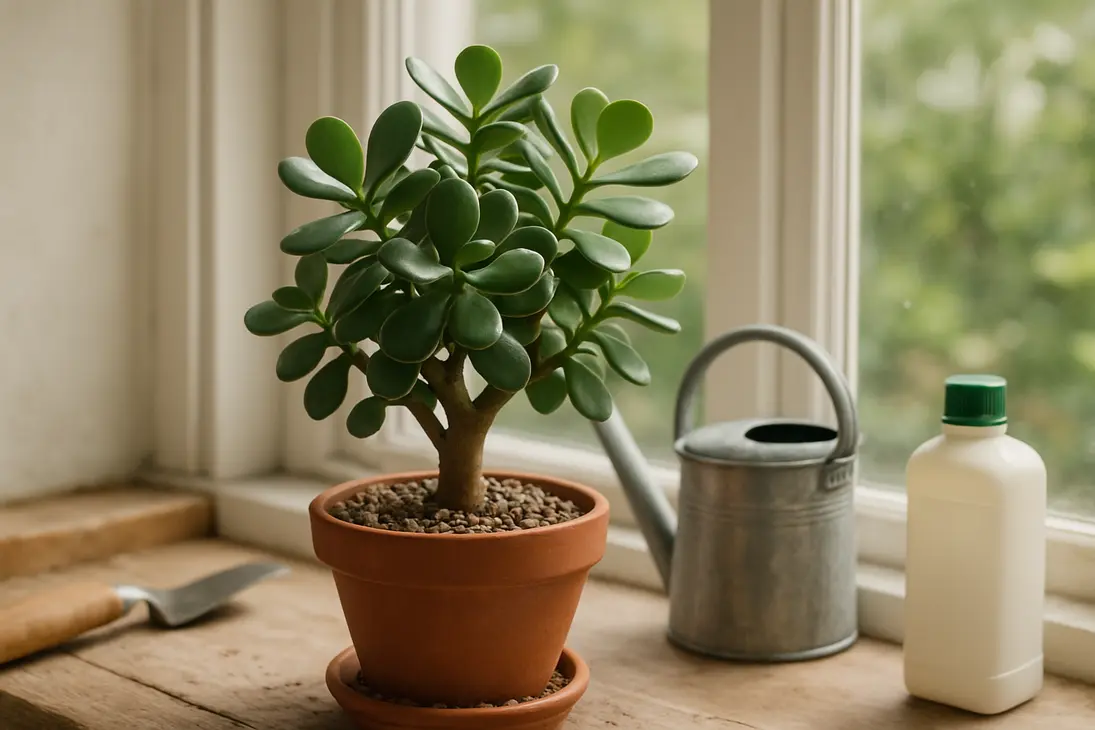
The best fertilizer for jade tree care is a balanced liquid houseplant fertilizer diluted to half or quarter strength, or a cactus/succulent fertilizer used sparingly during the growing season. Jade trees are light feeders, so too much fertilizer is usually more harmful than too little.
A jade tree, also called a jade plant or Crassula ovata, is a slow-growing succulent with thick leaves and stems that store water. Fertilizer should be a small seasonal boost, not the foundation of care. Bright light, careful watering, and fast-draining soil matter much more.
Do Jade Trees Actually Need Fertilizer?
Jade trees can live for years with very little fertilizer, especially indoors. They are adapted to lean conditions and naturally grow slowly. If your plant is in decent potting mix, gets bright light, and is not overwatered, it may only need occasional feeding in spring and summer.
Fertilizer can support new leaves, stronger stems, and overall vigor when a jade tree is actively growing. But it will not fix the most common jade plant problems:
- Low light, which causes weak, stretched growth
- Overwatering, which can lead to soft stems, yellowing leaves, and root rot
- Dense or wet soil, which keeps roots from getting enough air
- No drainage hole, which lets water and fertilizer salts collect
A jade tree that is dropping leaves, leaning, or looking pale often needs better light or a watering adjustment—not stronger fertilizer. Fertilizing a stressed plant can make problems worse because damaged roots are less able to handle mineral salts.
Use fertilizer only when the plant is stable and actively growing. If your jade tree is in a dark corner, staying wet for weeks, or recovering from root damage, fix those conditions first.
Best Fertilizer for Jade Trees
The safest fertilizer for jade trees is mild, balanced, and easy to dilute. You do not need a specialty product, but you do need restraint. Look for a clear N-P-K ratio, which refers to nitrogen, phosphorus, and potassium.
For jade trees, choose:
- A balanced or near-balanced N-P-K ratio
- A product that can be diluted in water
- A formula intended for houseplants, cacti, or succulents
- Directions that allow light, occasional feeding
Common options include:
| Fertilizer type | Good choice for jade trees? | Best use |
|---|---|---|
| Balanced liquid houseplant fertilizer | Yes | General spring and summer feeding |
| Cactus/succulent fertilizer | Yes | Simple low-risk option |
| Worm castings | Yes, lightly | Gentle organic top-dressing |
| Compost tea | Sometimes | Mild feeding if not overused |
| Fish emulsion | Sometimes | Organic liquid feed, diluted well |
| Lawn fertilizer | No | Usually too strong or nitrogen-heavy |
| Bloom booster | Usually no | Not needed for routine jade care |
| Strong slow-release pellets | Use caution | Hard to control in small pots |
Balanced Liquid Houseplant Fertilizer
A balanced liquid houseplant fertilizer is usually the easiest and most reliable choice. Look for ratios such as 10-10-10 or 20-20-20, then dilute the product more than the label recommends.
For jade trees, full-strength feeding is rarely necessary. Start with:
- Half strength for a healthy jade in bright light
- Quarter strength for a smaller plant, lower-light indoor plant, or one you have not fertilized before
A 20-20-20 fertilizer is more concentrated than a 10-10-10 product, but both are balanced. What matters most is the final diluted amount you apply.
Cactus or Succulent Fertilizer
A cactus or succulent fertilizer is also an excellent choice for jade trees. These products are usually formulated for plants that prefer leaner conditions and do not need frequent feeding.
This is a good option if you are unsure about standard houseplant fertilizer. Succulent fertilizers are often gentler or used at lower rates, which suits jade trees well.
Even with a succulent fertilizer, do not assume more is better. Use it during active growth, dilute if needed, and skip feeding during low-light winter months.
Organic vs. Synthetic Fertilizer
Both organic and synthetic fertilizers can work for jade trees if used lightly.
Synthetic liquid fertilizers are predictable and fast-acting. The label gives a clear N-P-K ratio, and nutrients are available soon after application. They are convenient, but overuse can cause salt buildup or root burn.
Organic fertilizers are often gentler, but they still add nutrients and can still be overdone. Worm castings, compost tea, and fish emulsion may be useful in small amounts.
| Option | Advantages | Trade-offs |
|---|---|---|
| Synthetic liquid fertilizer | Easy to dilute, predictable, quick results | Can burn roots or build up salts if overused |
| Worm castings | Gentle, slightly improves mix texture | Too much can make soil denser and wetter |
| Compost tea | Mild, easy to apply lightly | Quality varies; often unnecessary indoors |
| Fish emulsion | Nutrient-rich organic option | Odor; can be too strong if poorly diluted |
For potted jade trees, avoid adding too much compost-like material. These plants need a well-draining root zone, and rich organic matter can hold excess moisture. A small amount of worm castings as a spring top-dressing is usually safer than mixing in heavy compost.
Fertilizers to Avoid
Avoid fertilizers designed for plants with very different needs. Jade trees are not lawns, tomatoes, roses, or heavy-blooming annuals.
Be cautious with:
- High-nitrogen fertilizers, which can push soft, weak growth
- Lawn fertilizers, which are often too strong for potted succulents
- Bloom boosters, which are not needed for routine jade growth
- Frequent full-strength applications
- Strong slow-release fertilizers in small pots
- Homemade mixtures used without dilution or testing
Excess nitrogen may create fast green growth at first, but that growth can be stretched, soft, and less resilient—especially indoors where light is limited. For a jade tree, compact, sturdy growth is better than rapid, weak growth.
When and How Often to Fertilize a Jade Tree
Jade trees should be fertilized according to their growth cycle, not a rigid calendar. Indoors, that usually means feeding lightly in spring and summer and stopping or greatly reducing fertilizer in fall and winter.
A healthy jade tree in bright light may benefit from fertilizer every 4–8 weeks during active growth. A plant in lower light may need much less.
| Season or situation | Fertilizer recommendation |
|---|---|
| Spring | Begin light feeding once new growth appears |
| Summer | Feed every 4–8 weeks if healthy and in bright light |
| Fall | Reduce or stop as growth slows |
| Winter | Usually do not fertilize indoors |
| Newly repotted plant | Wait before feeding |
| Stressed or declining plant | Do not fertilize until the cause is addressed |
Spring and Summer Feeding
Spring and summer are the main feeding seasons for jade trees because longer days and stronger light encourage growth. If your jade is producing new leaves or stems, it can use a modest nutrient boost.
A reasonable schedule is:
- Bright light, healthy plant: every 4–6 weeks at half or quarter strength
- Moderate indoor light: every 6–8 weeks at quarter strength
- Low light or little new growth: skip fertilizer or feed only once lightly
Do not fertilize just because the calendar says spring. If the plant is firm, rooted, and showing signs of growth, feeding is appropriate. If it is sitting in damp soil, losing leaves, or looking weak from winter, wait.
Outdoor jade trees in warm climates may grow more actively than indoor plants and may tolerate slightly more regular feeding, but light feeding is still safer than heavy feeding.
Fall and Winter Feeding
Most indoor jade trees need little to no fertilizer in fall and winter. Lower light slows growth, and the plant uses fewer nutrients. Fertilizer applied during this time can remain unused in the potting mix and increase salt buildup.
Skip winter feeding if:
- The plant is not producing new growth
- It is in a cool room
- It receives limited natural light
- The soil stays moist for a long time
- The plant looks stressed
A jade tree under strong grow lights, in warm conditions, and actively growing may accept occasional very weak feeding. But for most homes, winter is a rest period.
After Repotting or Stress
Do not fertilize immediately after repotting a jade tree. Fresh potting mix may already contain some nutrients, and repotting can disturb roots. Give the plant time to settle first.
Also wait before fertilizing a jade tree that has been:
- Overwatered
- Severely underwatered
- Sunburned
- Damaged by cold
- Dropping many leaves
- Recently divided or propagated
- Treated for root rot
A common mistake is feeding a struggling plant in hopes of “reviving” it. Fertilizer is not plant medicine. Stabilize the plant with correct watering, better light, and proper drainage. Once new growth appears, resume light feeding if it is the growing season.
How to Apply Fertilizer Safely
The safest way to fertilize a jade tree is to use a weak solution on soil that is already slightly moist, then let excess water drain away. This lowers the chance of root burn and helps prevent fertilizer salts from collecting in the pot.
A simple method:
- Check that the plant is healthy enough to feed.
- Make sure the pot has a drainage hole.
- Dilute the fertilizer to half or quarter strength.
- Apply it evenly to the potting mix, not directly onto the leaves.
- Let extra liquid drain out completely.
- Empty the saucer.
- Wait several weeks before feeding again.
Avoid repeatedly adding tiny amounts of fertilizer without ever watering thoroughly. That habit can allow salts to accumulate in the soil.
Dilute More Than the Label Suggests
Jade trees prefer weak fertilizer doses. Most fertilizer labels are written for a range of plants, including faster-growing houseplants that need more nutrients than succulents.
If the label gives a standard indoor plant rate, start with:
- Half strength for robust plants in strong light
- Quarter strength for small plants or cautious feeding
You can always feed again later if the plant is growing well. It is much harder to undo root burn from a strong application, especially in a small pot.
Water Before or During Feeding
Do not apply fertilizer to bone-dry soil. Dry roots are more vulnerable to fertilizer burn, and dry potting mix may not absorb liquid evenly.
You have two safe options:
- Water lightly first, then apply diluted fertilizer.
- Use the diluted fertilizer solution as part of a normal watering, as long as the root ball is not extremely dry.
If the jade tree is very shriveled from drought, rehydrate it gradually with plain water first. Wait until it has recovered before fertilizing.
Use Well-Draining Soil and a Pot With Drainage
Fertilizer problems are worse when the potting mix stays wet or excess water cannot escape. Jade roots need air as much as they need moisture.
Use a pot with at least one drainage hole. A cactus or succulent mix is usually better than dense all-purpose potting soil. Many growers improve drainage with mineral materials such as pumice, perlite, or coarse grit.
Good drainage allows you to water thoroughly when needed, including occasional plain-water flushing, without leaving the plant waterlogged.
Signs Your Jade Tree Is Overfertilized or Underfed
A jade tree rarely shows dramatic hunger symptoms overnight. Overfertilizing, however, can cause a faster decline—especially if the plant was already dry, stressed, or in poor drainage.
Before assuming your jade needs fertilizer, consider light, water, temperature, and soil. Many symptoms overlap.
Signs of Too Much Fertilizer
Too much fertilizer can damage roots and disrupt water uptake. Watch for symptoms that appear soon after feeding or worsen with repeated applications.
Possible signs include:
- Sudden leaf drop after fertilizing
- Brown leaf tips or dry brown edges
- White or crusty buildup on the soil surface or pot rim
- Limp or declining growth despite moist soil
- Weak, stretched, overly soft new growth
- Yellowing or browning leaves without an obvious watering cause
- Root damage, dark roots, or an unpleasant smell if soil is also wet
- A general decline after a strong feeding
White crust on the soil often signals mineral salts from fertilizer or hard water. It does not always mean the plant is doomed, but it is a sign to pause feeding and flush or refresh the mix if needed.
Weak, stretched growth can come from too much nitrogen, but low light is usually a major factor. If your jade grows long spaces between leaves, fertilizer will not correct that. More light and pruning are usually more helpful.
Signs a Jade Tree May Need Feeding
An underfed jade tree usually declines slowly. It may survive, but growth can become less vigorous during the season when it should be active.
A jade tree may benefit from light fertilizer if:
- It is growing very slowly in spring or summer despite bright light
- New leaves are smaller or paler than usual
- It has been in the same potting mix for several years
- Water drains well, but the mix seems depleted
- The plant is otherwise healthy and rooted
Very slow growth alone is not always a problem. Jade trees naturally grow slowly, especially indoors. A compact plant with firm green leaves may simply be healthy and slow—not hungry.
If the plant has not been repotted for a long time, you can feed lightly or refresh the potting mix. Jade trees often like being somewhat snug, but old, compacted, depleted mix can make watering and nutrient management harder.
What to Do If You Overfertilized
If you think you used too much fertilizer, stop feeding and respond based on the severity.
For mild overfertilizing:
- Stop fertilizing.
- Water thoroughly with plain water, allowing excess to drain freely.
- Empty the saucer.
- Repeat a plain-water flush at the next appropriate watering if crust remains.
- Resume feeding only after the plant is stable and actively growing again.
For more serious problems:
- Check that the pot drains properly.
- Remove visible fertilizer pellets or crust if possible.
- Inspect the roots if the plant is rapidly declining.
- Repot into fresh, dry, well-draining succulent mix if roots are badly affected or the soil is contaminated with excess fertilizer.
Do not repot automatically at the first sign of stress. Repotting is another shock. If the plant is mostly firm and the soil drains well, flushing and pausing fertilizer may be enough.
Conclusion
The best fertilizer for jade tree growth is a balanced liquid houseplant fertilizer diluted to half or quarter strength, or a cactus/succulent fertilizer used lightly. Feed only during active growth, usually spring and summer, about every 4–8 weeks depending on light and plant health.
Jade trees are light feeders. They do not need rich soil, frequent fertilizer, or strong nitrogen formulas. If you give them bright light, a pot with drainage, well-draining soil, and careful watering, fertilizer becomes a small seasonal support rather than a rescue treatment.
When in doubt, use less. A jade tree can forgive a missed feeding far more easily than an overdose.
FAQ
Can I use Miracle-Gro on a jade tree?
Yes, you can use a general Miracle-Gro-style water-soluble houseplant fertilizer on a jade tree if it is diluted well. Use half strength at most, and quarter strength is often safer for indoor jade plants.
Avoid frequent full-strength applications. Make sure the jade is healthy, actively growing, and in a pot with drainage before feeding. If the plant is dropping leaves, sitting in wet soil, or getting low light, fix those issues first.
Are coffee grounds good fertilizer for jade plants?
Coffee grounds are not a good primary fertilizer for jade plants. They can hold moisture, compact in the potting mix, and create conditions that are not ideal for succulent roots.
A tiny amount in a well-managed compost system is different from adding loose grounds directly to a jade tree’s pot. For jade plants, a diluted balanced fertilizer or succulent fertilizer is cleaner, easier to control, and safer.
Is 10-10-10 fertilizer safe for jade trees?
Yes, 10-10-10 fertilizer can be safe for jade trees if it is diluted and used sparingly. It is a balanced formula, which is generally appropriate.
The key is strength and frequency. Use a weak solution during spring or summer, and do not apply it every week. If the fertilizer is granular rather than liquid, be more cautious because it can be harder to control the dose in a small pot.
Should I fertilize a jade tree that is dropping leaves?
Usually, no. A jade tree that is dropping leaves is often reacting to overwatering, underwatering, sudden changes in light, cold stress, poor drainage, or low light. Fertilizer may add stress if the roots are already struggling.
Check the basics first: soil moisture, drainage, root health, light level, and recent environmental changes. Once the plant is stable and producing new growth, you can resume very light feeding during the growing season.
You Might Also Like