What Are the Signs of Soil pH Problems in Plants?
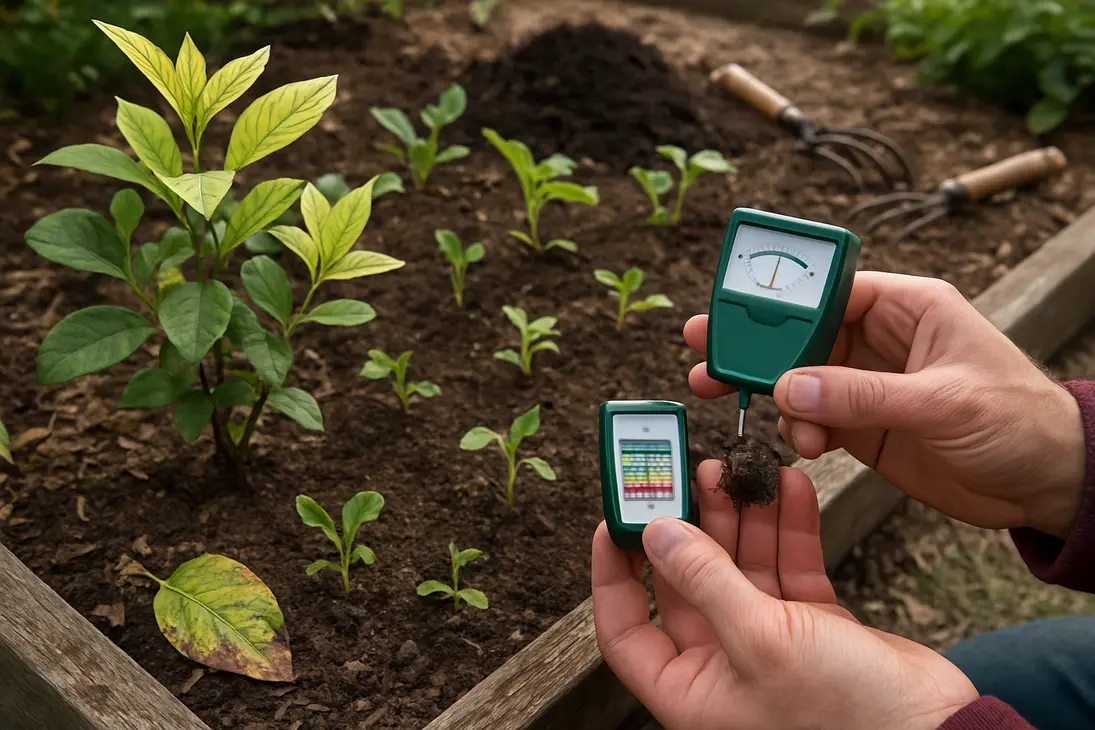
Soil pH problems in plants often look like ordinary nutrient deficiencies: yellow leaves, weak growth, poor flowering, and disappointing harvests. The soil may contain enough nutrients, but the plant cannot absorb them well because the pH is too high or too low.
You cannot diagnose soil pH accurately by appearance alone. Still, patterns can provide clues. Acidic soil may cause stunted growth, weak roots, poor crop performance, and sometimes toxicity symptoms in sensitive plants. Alkaline soil commonly causes nutrient lockout, especially iron chlorosis: yellow leaves with green veins, usually on newer growth.
The best next step is to test before correcting. Guessing with lime, sulfur, vinegar, or extra fertilizer can make the problem worse.
Why Soil pH Problems Show Up in Plant Leaves and Growth
Soil pH measures how acidic or alkaline soil is. A pH of 7 is neutral. Below 7 is acidic, and above 7 is alkaline. Many vegetables, herbs, annual flowers, lawns, and landscape plants prefer slightly acidic to near-neutral soil, often around pH 6.0 to 7.0. Some plants, including blueberries, azaleas, rhododendrons, camellias, and heathers, prefer more acidic soil.
pH matters because it changes nutrient availability. At the wrong pH, nutrients can become chemically tied up in the soil. The plant may then look deficient even when the nutrient is present.
For example:
- In alkaline soil, iron, manganese, and zinc may become less available.
- In very acidic soil, calcium, magnesium, phosphorus, and molybdenum may become less available.
- In strongly acidic soil, aluminum or manganese can become too available and harm sensitive plants.
That is why pH problems often show up as yellowing, mottling, browning, pale new growth, or weak color.
However, the same symptoms can also come from overwatering, drought, compacted soil, root damage, pests, diseases, cold soil, or fertilizer mistakes. A tomato with yellow leaves does not automatically have a pH issue. Soil pH is one possibility, not the only one.
Signs Your Soil May Be Too Acidic
Acidic soil is not automatically bad. Many plants prefer mildly acidic conditions. Problems appear when the pH is below the preferred range for the plant being grown.
Common signs of overly acidic soil include:
- Stunted or uneven growth
- Poor root development
- Yellowing, mottled, or dull leaves
- Browning on leaf edges or older leaves
- Weak stems
- Poor flowering or fruiting
- Reduced crop yield
- Seedlings that fail to establish
- Decline in plants that prefer neutral or slightly alkaline soil
These symptoms are most meaningful when several plants in the same bed show similar trouble, especially if they are species known to dislike acidic conditions.
Yellowing, Browning, or Speckled Leaves
Low pH can interfere with nutrient balance, so leaves may turn yellow, pale, mottled, or speckled. Depending on the nutrient involved, symptoms may appear first on older or newer leaves.
In very acidic soil, excess manganese or aluminum availability can also contribute to spotting, browning, or a scorched look in sensitive plants. These symptoms are easy to confuse with fungal leaf spots, drought stress, salt injury, or fertilizer burn.
Clues that pH may be involved include:
- Several plants in the same soil show similar discoloration.
- Fertilizer does not help much.
- Watering is appropriate.
- Mottling or yellowing persists for weeks.
- Growth remains weak beyond a short weather event.
If only one plant has speckled leaves while nearby plants look healthy, check pests, disease, and watering first.
Slow Growth and Poor Root Development
Plants in soil that is too acidic may grow slowly even during the right season. Seedlings may sit without gaining size, and transplants may fail to “take off.”
When pH is far outside the plant’s preferred range, roots may absorb nutrients poorly. If aluminum toxicity occurs in strongly acidic soil, roots may become short, stubby, or poorly branched.
You might notice:
- Plants staying smaller than expected
- Sparse root balls on struggling annuals or vegetables
- Poor transplant recovery
- Wilting during mild dry spells
- Uneven growth across a bed
Compacted soil, heavy clay, waterlogging, root rot, grubs, and deep planting can also cause poor roots, so testing is important.
Weak Flowering, Fruiting, or Crop Performance
Soil that is too acidic can reduce flowering, fruit set, and yield in plants that prefer neutral or slightly acidic soil. The plant may survive but never perform well.
In vegetable beds, this can mean small harvests, slow-growing brassicas, poor seed establishment, or uneven crops. In flower beds, you may see fewer blooms, smaller blooms, or a shorter flowering period.
Poor flowering is not specific to pH. Too much nitrogen, too little sun, drought, heat stress, incorrect pruning, or lack of pollination can also reduce blooms and crops. But if the same bed underperforms year after year, soil pH belongs on the checklist.
Signs Your Soil May Be Too Alkaline
Alkaline soil has a pH above 7. Some plants tolerate it well, and some prefer it. But for acid-loving plants and many nutrient-sensitive crops, high pH can cause nutrient lockout.
The classic high-pH symptom is iron chlorosis. Leaves turn yellow while the veins remain green, usually first on young or new leaves because iron is not very mobile inside the plant. The soil may contain iron, but the plant cannot access enough of it when pH is too high.
Common signs of overly alkaline soil include:
- Yellow leaves with green veins
- Pale new growth
- Weak growth despite feeding
- Small leaves
- Poor performance in acid-loving shrubs
- Deficiency symptoms that do not improve with standard fertilizer
- Brown leaf edges after prolonged stress
High-pH problems are common in limestone-based soils, arid climates, areas with alkaline irrigation water, soil contaminated with concrete or mortar debris, or gardens repeatedly amended with alkaline materials.
Yellow Leaves With Green Veins
Yellow leaves with green veins are one of the strongest visual clues of alkaline soil problems, especially on new growth. This pattern is called interveinal chlorosis.
It is often associated with iron deficiency, but the issue is often not a lack of iron in the soil. High pH makes iron less available to the plant.
You may see this pattern on:
- Azaleas
- Rhododendrons
- Camellias
- Blueberries
- Gardenias
- Citrus
- Hydrangeas
- Roses
- Some vegetables and fruit trees in alkaline soils
At first, the leaf tissue between veins turns light green or yellow while the veins stay darker. If the problem continues, leaves may become nearly white, develop brown patches, or drop early.
Check where yellowing appears. Iron chlorosis usually shows strongly on newer leaves. Yellowing older leaves may point more toward nitrogen deficiency, overwatering, root stress, or seasonal aging.
Pale New Growth and General Nutrient Deficiency Symptoms
High pH can also limit access to manganese, zinc, copper, and other micronutrients. Plants may show pale new growth, smaller leaves, shortened internodes, and an overall thin appearance.
Adding general fertilizer may help if the plant is truly short on nutrients, but it often does little for high-pH lockout. The plant may be surrounded by nutrients and still unable to use them efficiently.
Signs that suggest pH-related lockout include:
- Fertilizer produces little improvement.
- New growth stays pale.
- Leaves show green veins with yellow tissue.
- Acid-loving plants struggle more than tolerant plants nearby.
- The problem returns every season in the same soil.
- Container plants decline when watered with hard, alkaline water over time.
In containers, alkaline irrigation water can gradually affect the potting mix or contribute to mineral buildup. If potted citrus, gardenia, or blueberry keeps developing chlorosis despite regular feeding, test the mix and consider the water source.
Acid-Loving Plants Declining in Otherwise Good Care
One of the clearest pH clues is when acid-loving plants decline even though watering, mulching, light, and feeding seem appropriate. Blueberries are a common example. They may produce pale leaves, weak shoots, and poor crops if soil pH is too high.
Watch for this pattern:
- The plant is known to prefer acidic soil.
- It is near concrete, masonry, or limestone gravel.
- Leaves turn yellow between green veins.
- Growth remains sparse or twiggy.
- Flowering or fruiting is weak.
- Less acid-sensitive plants nearby look fine.
Ordinary balanced fertilizer may not solve this. The plant may need a more acidic root environment, or it may be better grown in a large container with an appropriate acidic mix.
How to Confirm Whether Soil pH Is the Real Problem
Visual symptoms can point you in the right direction, but they cannot confirm pH. Soil testing is the difference between a useful correction and a guessing game.
A basic pH test is usually inexpensive and can prevent months of frustration. Gardening Australia notes that a simple pH test kit from a nursery or garden center is one of the easiest ways to measure soil pH and understand what nutrients plants can access.
Use symptoms as clues, then test before adding lime, sulfur, or other amendments.
Test the Soil Before Adjusting It
You have several practical options:
| Testing method | Best for | Limitations |
|---|---|---|
| Home color-change pH kit | Quick garden checks | Less precise than lab testing |
| Digital pH meter | Repeated testing, containers | Cheap meters can be inaccurate |
| Soil test through a lab or extension service | Reliable decisions for beds, lawns, orchards | Costs more and takes longer |
| Professional landscape soil testing | Persistent or expensive problems | More than many small gardens need |
For the best result, test soil where the roots grow. Do not test only surface mulch or one random handful. In a bed, take small samples from several spots, mix them, and test the combined sample. If one area is healthy and another is failing, test them separately.
In containers, test the potting mix, not just drainage water. Be cautious with very cheap three-in-one probe meters that claim to measure moisture, light, and pH without calibration. They can be a rough prompt, but not the sole basis for major amendments.
Check the Preferred pH Range for the Plant
A pH reading only matters when compared with the plant’s needs. A pH of 5.5 may be excellent for blueberries but too acidic for many vegetables. A pH of 7.5 may suit some Mediterranean herbs but cause problems for azaleas.
Before correcting anything, look up the preferred pH range for the plant. As a general pattern:
- Many vegetables and annual flowers prefer slightly acidic to near-neutral soil.
- Blueberries and many ericaceous shrubs prefer distinctly acidic soil.
- Lavender, thyme, many salvias, and some Mediterranean plants often tolerate neutral to slightly alkaline soil.
- Some native plants are adapted to local soil and dislike heavy amendment.
This is why “fixing” pH across an entire garden can backfire. The right pH for one planting area may be wrong for another.
Rule Out Watering, Drainage, Pests, and Fertilizer Problems
Because symptoms overlap, check the basics before blaming pH.
Ask:
- Is the soil staying soggy or drying out too quickly?
- Are roots healthy, pale, and branching well?
- Are there aphids, mites, scale, fungus gnats, grubs, or root damage?
- Are leaves yellowing mostly on old growth or new growth?
- Has fertilizer been overused, underused, or skipped?
- Is the plant getting the right amount of sun?
- Did symptoms appear after heat, cold, transplanting, herbicide drift, or a new amendment?
Online gardening discussions often show how easily these issues get mixed together. Gardeners may want to lower pH with sulfur or vinegar after a meter shows alkaline soil, as in this Reddit gardening thread about tomato plants. But the symptoms, test reliability, and plant’s actual pH preference all matter before taking action.
What to Do After You Identify a Soil pH Issue
Once you have a reliable pH reading and know the plant’s preferred range, adjust slowly. Soil pH does not behave like turning a dial. Amendments take time, and overcorrecting can create a new problem.
For in-ground beds, pH correction is usually gradual and measured in months, not days. For containers, repotting into a more suitable mix may be easier than chemically altering a small volume of potting soil.
Do not keep adding products because the plant still looks stressed after a week. Damaged leaves may not turn green again. Look for healthier new growth over time.
If Soil Is Too Acidic: Raising pH Gradually
Lime is the standard amendment used to raise soil pH. Garden lime is usually ground limestone. Calcitic lime mainly supplies calcium, while dolomitic lime supplies calcium and magnesium. Which is better depends on your soil test.
Practical steps:
- Confirm the pH with a reliable test.
- Check the target pH for the plant.
- Follow the lime recommendation from a soil test if available.
- Apply evenly rather than dumping it near stems.
- Mix into the soil before planting when possible.
- Water normally and allow time for reaction.
- Retest before adding more.
Sandy soils usually change pH faster and with less amendment than clay or high-organic-matter soils. Heavy soils resist sudden shifts.
Avoid using wood ash casually as a pH fix. It can raise pH, but it is variable and can add salts and potassium. It is easy to overdo, especially in small beds.
If Soil Is Too Alkaline: Lowering pH Gradually
Elemental sulfur is commonly used to lower soil pH. Soil microbes convert sulfur into sulfuric acid over time, gradually acidifying the soil. This works best when soil is warm, moist, and biologically active, so results are not instant.
Practical steps:
- Test the soil and confirm the pH is too high.
- Check whether the plant truly needs lower pH.
- Use a soil-test recommendation where possible.
- Apply elemental sulfur carefully and evenly.
- Incorporate before planting if possible.
- Keep soil moderately moist, not waterlogged.
- Retest before repeating.
Lowering pH in naturally alkaline soil can be difficult, especially where soil contains free lime or irrigation water is alkaline. For strongly acid-loving plants, raised beds or containers with an acidic mix may be more realistic than fighting the native soil indefinitely.
Compost can improve root health and nutrient availability, but it may not meaningfully lower high pH by itself.
Why Quick Fixes Can Harm Plants
Quick fixes are tempting when a plant is yellow and declining. Vinegar is a common suggestion for lowering pH, but it is not a reliable long-term soil acidifier. It may briefly acidify water or surface soil, but the effect is usually temporary, and stronger solutions can injure roots, soil organisms, or foliage.
Adding large amounts of lime, sulfur, fertilizer, coffee grounds, ash, or random household products can also create salt stress, nutrient imbalances, or pH swings.
Be especially careful in containers. A pot has limited soil volume, so mistakes concentrate quickly. If pH is badly wrong in a container plant, repotting is often safer than repeated chemical tinkering.
A safer approach:
- Test first.
- Adjust only if pH is outside the plant’s preferred range.
- Use recognized soil amendments.
- Apply gradually.
- Watch new growth, not damaged old leaves.
- Retest before making another correction.
Conclusion
Soil pH problems often look like nutrient deficiencies because pH controls how easily plants can access nutrients. Acidic soil may cause stunted growth, weak roots, yellowing or mottled leaves, poor flowering, and sometimes nutrient toxicity. Alkaline soil often causes nutrient lockout, especially iron chlorosis, where leaves turn yellow but veins stay green.
Do not diagnose by appearance alone. Yellow leaves, weak growth, and poor crops can also come from watering problems, poor drainage, pests, disease, fertilizer mistakes, or weather stress.
If you suspect a pH issue, test the soil, compare the result with the plant’s preferred range, and correct gradually. Use lime to raise pH and elemental sulfur to lower pH when appropriate. Avoid quick fixes that promise instant results but leave you with a more stressed plant.
FAQ
Can you tell soil pH just by looking at a plant?
No. You can suspect a soil pH problem from plant symptoms, but you cannot accurately measure pH by appearance. Yellow leaves, stunted growth, and poor flowering can come from many causes. A soil pH test is needed before making corrections.
What is the most common sign of alkaline soil in plants?
The most common sign is interveinal chlorosis, especially on new growth. The leaf tissue turns yellow while the veins remain green. This often happens because high pH makes iron less available to the plant, even if iron is present in the soil.
What is the most common sign of acidic soil in plants?
Acidic soil symptoms are less visually specific, but common signs include stunted growth, weak roots, yellowing or mottled leaves, poor crop performance, and weak flowering or fruiting. In strongly acidic soil, sensitive plants may also suffer from aluminum or manganese toxicity.
How fast can you fix soil pH for struggling plants?
Usually not overnight. In garden soil, pH adjustment often takes months and may need retesting and gradual amendment. Lime raises pH gradually, and elemental sulfur lowers pH gradually as soil microbes process it. Container plants can often be corrected faster by repotting into a suitable mix, but damaged leaves may not recover; look for healthier new growth.
Sources
- Gardening Australia, “How to test your soil’s pH and what it means for your plants”: https://www.youtube.com/watch?v=KmJXh5zfcSw
- Reddit gardening discussion on lowering soil pH: https://www.reddit.com/r/gardening/comments/11wef1x/how_to_reduce_soil_ph_of_tomato_plants/
You Might Also Like