Do Plants Grow Better in Dirt or Water?
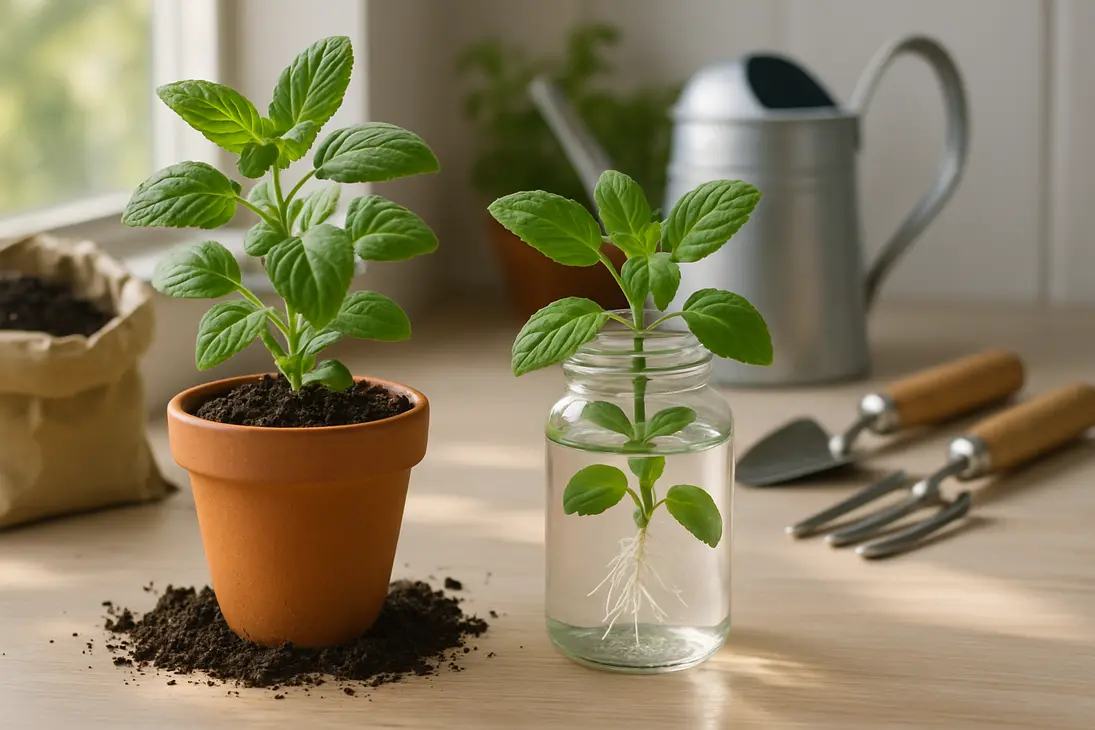
Plants can grow in both dirt and water, but plain water is rarely enough for long-term growth unless it contains the mineral nutrients plants need. In everyday gardening, plants usually grow better in soil or potting mix because it provides support, moisture, air pockets, nutrients, and helpful soil life. In hydroponics, plants can grow very well in water, but only when the water is managed as a nutrient solution with enough oxygen around the roots.
The practical answer is: plants need water, but they also need nutrients, oxygen, light, and support. Dirt often supplies several of these naturally; water must usually be supplemented and managed.
Comparing Plant Growth in Dirt and Water
When comparing plants in dirt and water, the result depends on what “water” means. A cutting in a glass of tap water is very different from lettuce growing in a balanced hydroponic solution.
| Growing method | Strength | Main limitation |
|---|---|---|
| Soil or potting mix | Support, moisture, nutrients, air pockets | Can compact, dry out, stay too wet, or become depleted |
| Plain water | Moisture and short-term rooting | Lacks enough nutrients for long-term growth |
| Nutrient water / hydroponics | Water plus dissolved minerals | Needs oxygen, pH, nutrient, and cleanliness management |
What Plants Need to Grow
Plants are not “fed” by dirt or water alone. They need light, water, carbon dioxide, oxygen, mineral nutrients, space, and physical support. Leaves use light to make sugars through photosynthesis. Roots absorb water and dissolved minerals.
Water is essential, but it is not complete plant food. Plants make sugars themselves; minerals help them build leaves, roots, flowers, enzymes, chlorophyll, and cell walls.
Water’s role in plant growth
Water transports dissolved minerals, keeps plant cells firm, and supports chemical reactions. When a plant wilts, its cells have lost pressure.
Both underwatering and overwatering can cause drooping. In dry soil, roots cannot access enough moisture. In soggy soil, roots may be starved of oxygen or damaged by rot, so they cannot absorb water even though water is present.
Light and photosynthesis
Light drives photosynthesis. A plant in good soil but poor light may become weak and stretched. A plant in nutrient water but poor light will also struggle. If you compare plants in dirt and water, keep light conditions the same or the results will be misleading.
Essential nutrients: nitrogen, phosphorus, potassium, and trace minerals
The main fertilizer nutrients are nitrogen, phosphorus, and potassium, shown as N-P-K.
- Nitrogen supports leafy growth and chlorophyll.
- Phosphorus supports roots, flowering, and energy transfer.
- Potassium helps water regulation, stem strength, stress tolerance, and overall function.
Plants also need calcium, magnesium, sulfur, iron, manganese, zinc, copper, boron, molybdenum, chlorine, and nickel in smaller amounts.
Growing Plants in Dirt: What Soil Provides
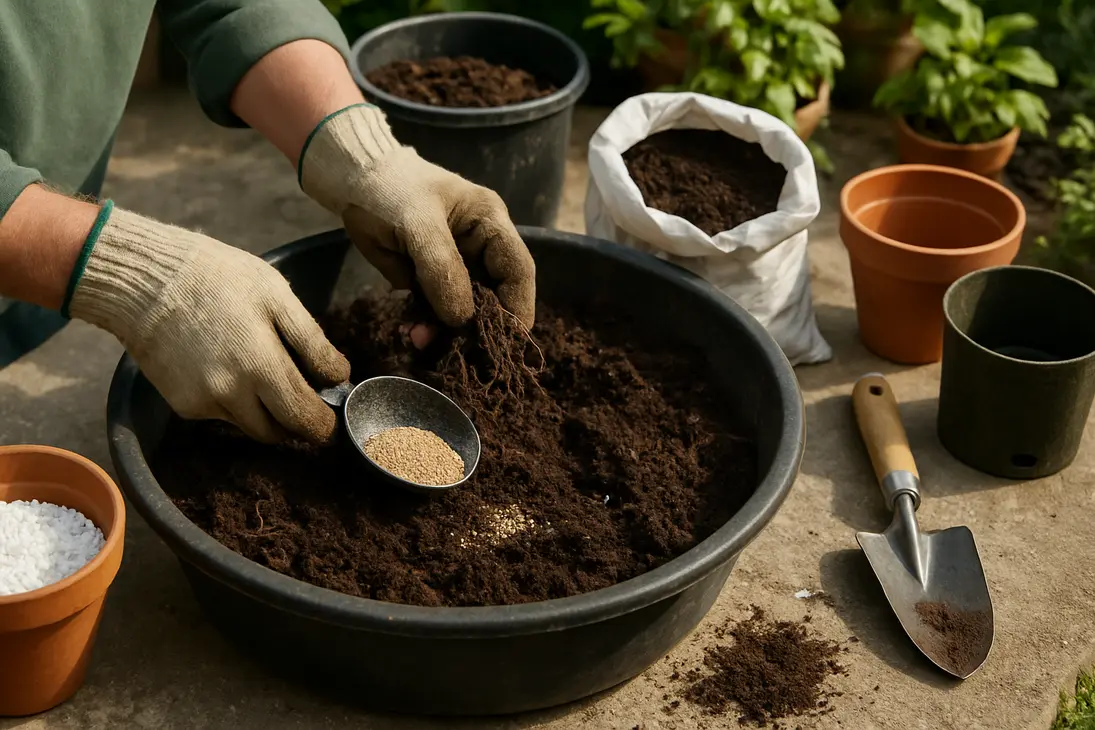
Soil does more than hold a plant upright. Good soil or potting mix gives roots a stable place to grow, holds water between waterings, stores nutrients, and contains air spaces. Outdoor soil also supports microorganisms that break down organic matter and help cycle nutrients.
This is why healthy soil often supports better growth than plain water. Soil acts as a reservoir and buffer for moisture, minerals, oxygen, and biological activity.
Dirt vs potting soil vs seed-starting mix
“Dirt” can mean different things:
| Material | Best use | Key point |
|---|---|---|
| Garden soil | In-ground beds | May be too heavy for containers |
| Potting soil or potting mix | Pots and houseplants | Lighter, better draining, often contains bark, coir, peat, perlite, compost, or fertilizer |
| Seed-starting mix | Germinating seeds | Fine and gentle, but often low in nutrients |
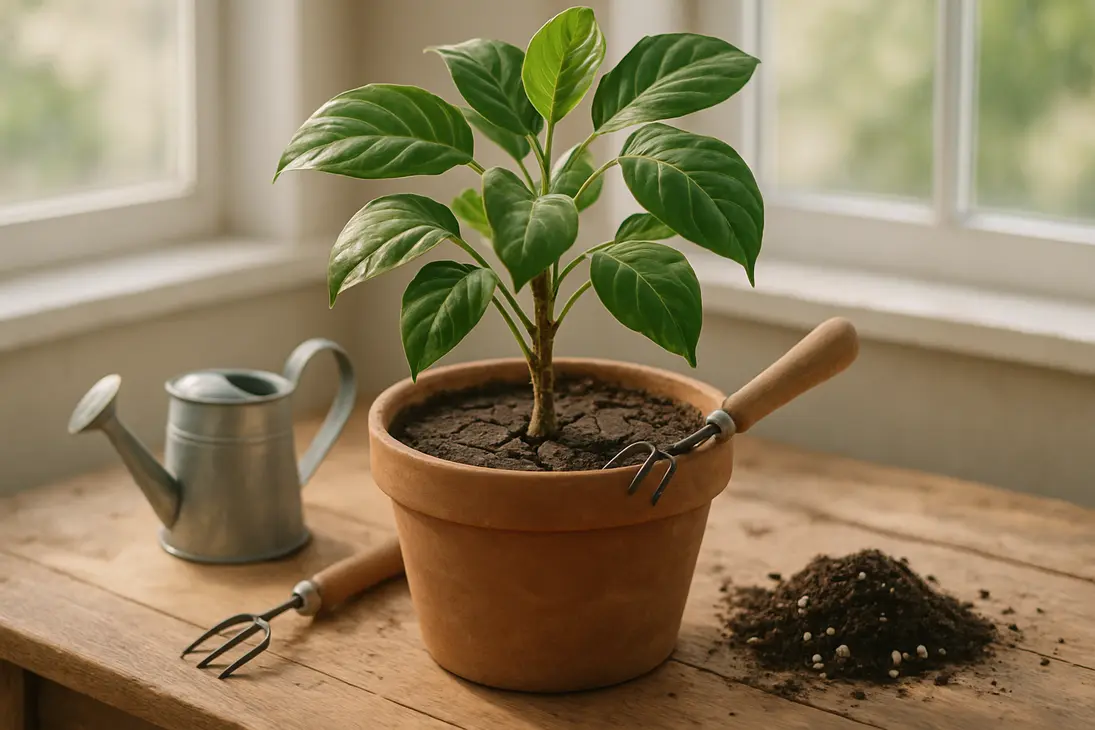
Seed-starting mix is good for young seedlings but may not support larger plants for long. Garden soil can compact in pots and stay wet too long. For containers, potting mix is usually the better choice.
How soil stores nutrients and water
Soil particles and organic matter hold water and nutrients. Clay and organic matter store more; sand drains quickly and holds less. A good soil drains excess water while keeping enough moisture for roots.
Roots absorb dissolved minerals from water films around soil particles. In that sense, soil-grown plants still take up nutrients through water, while soil acts as the storage and exchange system.
When soil becomes nutrient-poor
Soil does not stay fertile forever. Nutrients are removed as plants grow, when leaves or harvests are taken away, and when watering leaches minerals out of the root zone. Container mixes deplete especially quickly.
Possible signs include pale growth, small leaves, weak stems, slow growth, and plants that stop thriving despite decent light and watering. Depleted soil may need compost, repotting, or a balanced fertilizer used according to the label.
Growing Plants in Water: What Happens Without Soil
Some plants root easily in water, including pothos, philodendron, lucky bamboo, spider plant babies, coleus, mint, and basil cuttings. This can make it seem like soil is unnecessary.
For propagation, plain water can work well. For long-term growth, it is usually incomplete. A cutting may survive on stored energy for a while, and tap water may contain small amounts of minerals, but that is rarely enough for strong growth over time.
Plain water vs nutrient solution
Plain water mainly supplies moisture. A nutrient solution supplies moisture plus dissolved mineral nutrients in forms roots can absorb. Hydroponics works because it replaces the nutrient role of soil, not because plants no longer need nutrients.
In water growing, the grower must manage nutrient strength, pH, oxygen, cleanliness, water temperature, algae, and regular solution changes. A jar on a windowsill is not the same as a managed hydroponic system.
Why roots still need oxygen
Roots use oxygen to release energy from sugars made by the leaves. In soil, oxygen sits in air spaces between particles. In hydroponics, oxygen may come from moving water, air stones, shallow solution, or roots partly exposed to air.
If roots sit in stagnant, oxygen-poor water, they can turn brown, mushy, or smelly. The plant may wilt even with submerged roots.
Plants that tolerate growing in water
Good candidates for water culture include:
- pothos
- heartleaf philodendron
- lucky bamboo
- spider plant plantlets
- coleus
- mint
- basil
- lettuce in simple hydroponic systems
- some leafy greens and herbs
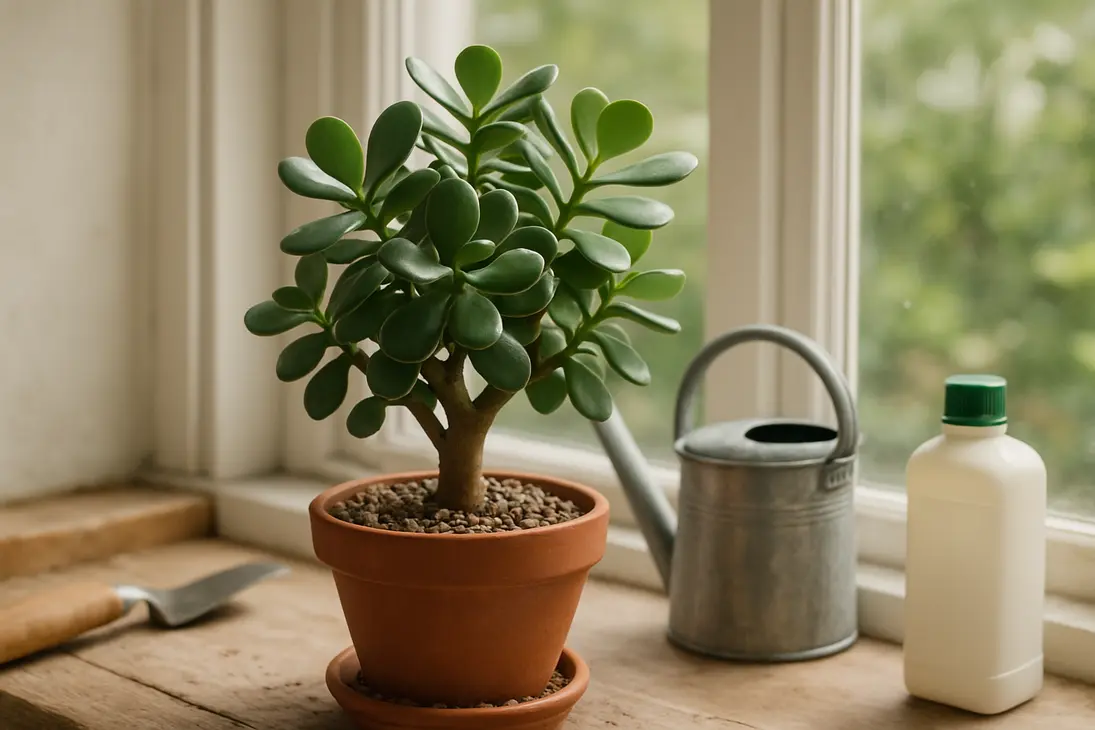
Plants adapted to dry conditions, such as many succulents, cacti, lavender, rosemary, and Mediterranean herbs, are poor candidates for standing water. They need fast drainage and oxygen-rich roots.
What Nutrient Deficiency Looks Like in Plants
Nutrient problems can happen in both soil and water. In soil, nutrients may be absent, depleted, locked up by pH, or unavailable because roots are damaged. In water, nutrients may be missing, imbalanced, or poorly absorbed because of pH or root stress.
Common symptoms include yellowing leaves, weak stems, small new growth, poor roots, slow growth, and poor flowering or fruiting. Symptoms overlap, so appearance alone is not always enough for a perfect diagnosis.
Nitrogen deficiency
Nitrogen deficiency often appears as pale green or yellow older leaves, especially on leafy plants. Nitrogen is mobile inside the plant, so the plant can move it from older leaves to newer growth.
A nitrogen-starved plant may look thin, slow, and weak. In water propagation, a cutting may survive but stop producing strong new leaves once stored reserves run low.
Phosphorus and potassium deficiency
Phosphorus deficiency may cause slow growth, poor rooting, delayed flowering, or dull, dark, sometimes purplish foliage. Purple color is not always phosphorus deficiency; cold temperatures and natural plant color can also cause it.
Potassium deficiency may show as weak stems, leaf-edge browning, scorching, or poor stress tolerance. Older leaves often show symptoms first.
Micronutrient problems
Micronutrient issues often appear in newer growth. Iron deficiency commonly causes yellowing between veins on young leaves while the veins stay greener. Magnesium deficiency, though not a micronutrient problem, often causes interveinal yellowing on older leaves.
In water culture, micronutrient problems are more likely when plants sit in plain water or an incomplete homemade mix. In soil, they may happen when pH makes nutrients unavailable.
Too Much Fertilizer Can Harm Plants Too
More fertilizer does not automatically mean faster growth. Roots need nutrients in the right range. Too much fertilizer can draw water out of roots, burn tender tissues, and leave salts behind in soil or potting mix.
Fertilizer is useful, but it is not a cure for every stressed plant. Light, watering, drainage, pests, temperature, and root health also matter.
Signs of over-fertilization
Possible signs include:
- brown leaf tips or margins
- wilting despite moist soil
- white crust on soil or pot edges
- sudden yellowing or leaf drop after feeding
- stunted growth
- brown or damaged roots
- unusually dark, soft, weak leafy growth
These symptoms can also come from watering problems, heat, root rot, or pests. Timing helps: if decline follows a strong or repeated fertilizer application, over-fertilization is a likely suspect.
What to do after adding too much fertilizer
For potted plants, stop fertilizing and flush the potting mix with plain water if the container has drainage holes. Let excess water drain fully, and do not leave the pot sitting in runoff.
If damage is severe, repot into fresh mix. Trim only dead or mushy leaves; partly damaged leaves may still help the plant photosynthesize. In garden beds, avoid adding more products, water deeply if drainage is good, and give the plants time.
Why baby formula and household substitutes are not ideal plant food
Baby formula, milk, sugar water, sports drinks, broth, and kitchen experiments are not good plant fertilizers. They are made for people, not roots, and may contain sugars, fats, proteins, salts, or additives that encourage mold, pests, smells, or nutrient imbalance.
Plants need mineral ions in suitable forms and concentrations. Use a balanced fertilizer, hydroponic nutrient, compost, or another appropriate gardening product instead.
Simple Dirt vs Water Plant Growth Experiment
A simple experiment can compare soil, plain water, and nutrient water. Keep the test fair: if one plant gets more light or starts larger, the result will not mean much.
Fast-growing plants work best. Try basil, coleus, pothos cuttings, bean seedlings, or lettuce seedlings.
Materials to use
You will need:
- 9 similar young plants or cuttings of the same type
- 3 small pots with drainage holes
- potting mix
- 3 containers for plain water
- 3 containers for nutrient solution
- complete water-soluble fertilizer or hydroponic nutrient, mixed as directed
- labels
- ruler
- notebook or spreadsheet
- bright, consistent light
Use three plants per treatment if possible. One plant can fail for unrelated reasons, so repeats make observations more reliable.
Variables to keep the same
Keep these conditions consistent:
- same plant species and starting size
- same light
- same room temperature
- similar container size
- same start date
- same observation schedule
- same water source
- same nutrient dilution for the nutrient-water group
For soil plants, water when the upper mix begins to dry. For water-grown plants, change cloudy, smelly, or algae-filled water. Keep leaves above the waterline because submerged leaves rot.
What to measure: height, leaves, roots, color, and survival
Measure more than height. A tall, weak plant is not necessarily healthier than a shorter, sturdy one.
Record once or twice a week:
- height
- number of leaves
- leaf color
- stem strength
- root length and color
- new growth
- wilting or browning
- survival
After three to six weeks, compare the groups. Plain-water plants may root but grow slowly or turn pale. Soil plants may look sturdier because roots have support and stored nutrients. Nutrient-water plants may grow well if the solution stays clean and oxygenated.
Conclusion
Plants do not grow better in dirt or water simply because one is “natural.” They grow best where their needs are met.
Soil and potting mix usually make plant care easier because they provide support, water storage, nutrients, air spaces, and biological activity. Plain water can root cuttings and keep some tolerant plants alive for a while, but it is usually not enough for strong long-term growth. Water-grown plants need dissolved nutrients and oxygen around their roots.
For most beginners, dirt or potting mix is the more forgiving choice. For growers willing to manage nutrients, oxygen, and cleanliness, water-based growing can work very well.
FAQ
Can a plant live in just water forever?
Some plants can live in plain water for a long time, especially pothos, lucky bamboo, and philodendron cuttings. But “alive” is not the same as “growing well.” Most plants eventually need dissolved mineral nutrients, or growth slows and leaves may yellow.
Do plants get nutrients from dirt or from water?
Plants absorb nutrients mostly as dissolved minerals in water around their roots. Soil stores and releases those nutrients, while water carries them into the plant. Hydroponic plants get nutrients from the nutrient solution. Plain water usually lacks the full range plants need.
How often should I water plants growing in soil?
Water when the plant needs it, not simply every day. Many houseplants are ready when the top inch or two of mix feels dry, though succulents need less and moisture-loving plants need more. Pot size, drainage, temperature, light, and plant type all affect watering.
Is fertilizer always necessary for plant growth?
Not immediately. Fresh potting mix may contain nutrients for weeks or months, and healthy garden soil with compost may support plants well. But containers, heavy-feeding vegetables, fast-growing annuals, and long-term water-grown plants usually need added nutrients eventually. Follow the label, because too much fertilizer can damage roots and leaves.
You Might Also Like