What Are NPK Fertilizers and How Do They Affect Soil?
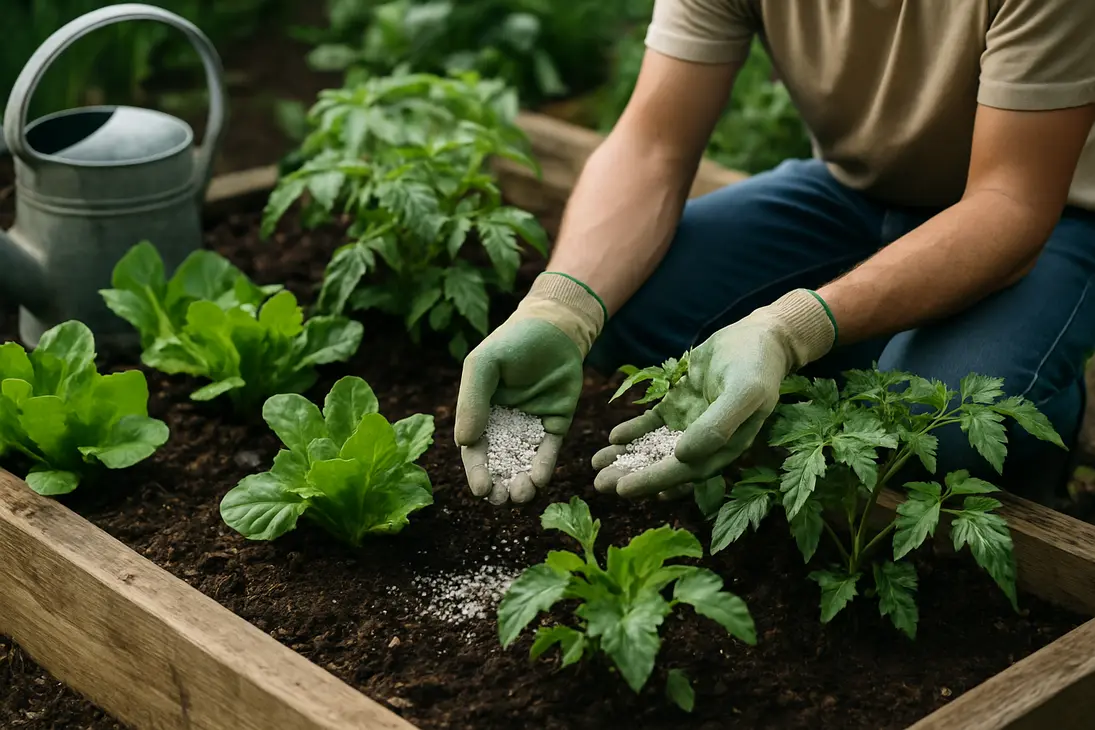
NPK fertilizers supply three major plant nutrients: nitrogen, phosphorus, and potassium. Plants need other nutrients too, but these three are required in larger amounts and are among the most common nutrients gardeners add.
Used well, NPK fertilizers correct deficiencies, support leafy growth, improve flowering and fruiting, and help plants perform in nutrient-poor soil. Used carelessly, they can cause salt buildup, nutrient imbalance, weak growth, runoff, and soil chemistry changes. The best results come from matching the fertilizer to the plant, season, and actual soil condition.
What NPK Means on Fertilizer Labels
NPK stands for:
- N = nitrogen
- P = phosphorus
- K = potassium
The three numbers on a fertilizer label show the percentage by weight of these nutrients:
- 10-10-10 contains 10% nitrogen, 10% phosphorus, and 10% potassium.
- 20-5-10 contains 20% nitrogen, 5% phosphorus, and 10% potassium.
- 5-10-5 contains 5% nitrogen, 10% phosphorus, and 5% potassium.
The remaining percentage may include carriers, coatings, secondary nutrients, micronutrients, or organic materials. It is not always useless filler.
Phosphorus and potassium are usually listed as available phosphate and soluble potash rather than pure elements. For everyday gardening, you usually do not need to convert the numbers; the NPK ratio is enough to compare products.
A balanced fertilizer such as 10-10-10 has equal percentages of all three nutrients. A product like 24-8-16 is nitrogen-heavy, while 3-9-4 is higher in phosphorus relative to the others. These differences matter because plants use nutrients differently depending on growth stage.
Nitrogen: Leaf and Stem Growth
Nitrogen supports green, leafy growth. Plants use it to make chlorophyll, proteins, enzymes, and new tissue. Lettuce, spinach, basil, parsley, and lawns often respond strongly when nitrogen is low.
Nitrogen deficiency often appears as pale green or yellowing older leaves, slow growth, and smaller leaves. However, yellowing can also result from poor drainage, cold soil, root damage, pests, compaction, or other nutrient problems, so leaf color alone is not a reliable diagnosis.
Too much nitrogen can push soft, lush growth that attracts pests and is more vulnerable to stress. In fruiting crops such as tomatoes, peppers, and squash, excess nitrogen may produce large leafy plants with fewer flowers or delayed fruiting.
Phosphorus: Roots, Flowers, and Early Development
Phosphorus supports root development, energy transfer, early growth, flowering, seed formation, and fruit production. It is especially important for young plants as they establish roots and for crops moving into bloom.
Phosphorus deficiency may cause stunted growth, weak roots, delayed maturity, or purplish coloring on leaves and stems. Symptoms overlap with other problems. Cold soil, for example, can limit phosphorus availability even when the soil contains enough.
Use phosphorus carefully. Many garden soils already contain adequate or high phosphorus, especially where compost, manure, or general-purpose fertilizer has been applied for years. Adding more does not automatically improve roots or flowers. Excess phosphorus can interfere with iron and zinc and can contribute to water pollution if it leaves the site in runoff or eroded soil.
Potassium: Plant Strength and Stress Resistance
Potassium helps regulate water movement, enzyme activity, disease resistance, stem strength, and overall plant resilience. It also supports fruit quality in many crops, affecting size, firmness, flavor development, and storage quality.
Potassium deficiency may appear as yellowing, browning, or scorching along leaf edges, often on older leaves first. Stems may be weak, and plants may be less vigorous. Sandy soils, heavily cropped beds, and frequently irrigated areas are more likely to become low in potassium over time.
Why Plants Need NPK Fertilizers
Plants need NPK fertilizers when soil cannot supply enough nitrogen, phosphorus, or potassium for healthy growth. Soil is a nutrient reservoir, but fertility varies widely. A new raised bed, old vegetable plot, sandy garden, compacted clay yard, and heavily watered lawn can all have different nutrient levels.
NPK fertilizers are useful because they provide nutrients in known amounts. If a soil test shows low nitrogen but adequate phosphorus and potassium, you can choose a nitrogen-focused fertilizer. If a container plant is depleted after weeks of watering, a soluble NPK fertilizer can quickly replace leached nutrients.
The goal is not to feed constantly. The goal is to supply what is missing when plants can use it.
Matching NPK Ratios to Plant Needs
Different plants and growth stages need different nutrient emphasis. You do not need a separate fertilizer for every plant, but the ratio should fit the situation.
| Plant or situation | Useful NPK approach |
|---|---|
| Leafy greens, lawns, herbs | Higher nitrogen if needed |
| Tomatoes, peppers, cucumbers | Moderate nitrogen, adequate potassium |
| New transplants in low-phosphorus soil | Some phosphorus |
| Flowering annuals | Balanced or bloom-supporting formula |
| Root crops | Avoid excess nitrogen |
| High-phosphorus soil | Low- or zero-phosphorus fertilizer |
A balanced fertilizer such as 10-10-10 may help if the soil needs all three nutrients. It is not automatically best. If phosphorus is already high, repeated use of 10-10-10 keeps adding a nutrient the soil does not need.
Vegetable gardeners often overuse high-nitrogen fertilizer. Early growth may look impressive, but flowering and fruiting can lag. Likewise, “bloom booster” fertilizers high in phosphorus may not improve flowering if phosphorus is already adequate.
Fast-Release vs. Slow-Release NPK Fertilizers
NPK fertilizers can release nutrients quickly or gradually.
Fast-release fertilizers dissolve readily and make nutrients available soon after application. They are useful for quick correction, container plants, and annual vegetables entering heavy growth. Liquid feeds and many water-soluble granules are fast-release. Their drawback is a higher risk of leaching, runoff, and fertilizer burn if overapplied, mixed too strong, used before heavy rain, or applied to bare soil.
Slow-release fertilizers release nutrients over weeks or months. Some are coated synthetic granules; others are organic fertilizers that depend on microbes to break down. They reduce the risk of sudden overfeeding and are convenient for containers, shrubs, and long-season crops. However, they are less useful when plants need an immediate correction, and organic forms work more slowly in cold soil.
How NPK Fertilizers Affect Soil Health
NPK fertilizers affect soil by changing nutrient availability. That is beneficial when nutrients are low and harmful when nutrients accumulate beyond what plants can use.
Fertilizer does not “improve soil” the same way compost does. NPK fertilizers mainly feed plants by supplying mineral nutrients. Compost, leaf mold, aged manure, cover crops, and mulch improve soil structure, water-holding capacity, microbial habitat, aggregation, and long-term nutrient cycling. These functions are related but not the same.
Short-Term Soil Benefits
In the short term, NPK fertilizers can make soil more productive by supplying plant-available nutrients. This is especially useful in:
- Newly established beds with low fertility
- Containers and raised beds where nutrients leach faster
- Sandy soils with low nutrient-holding capacity
- Heavily cropped vegetable gardens
- Lawns or beds with confirmed deficiencies
When applied at the right rate, fertilizer can help plants develop stronger roots, produce more flowers or fruit, and recover from stress. Better plant growth can also indirectly support soil by adding root residues and increasing biological activity around roots.
Long-Term Soil Risks from Overuse
Long-term problems usually come from repeated overapplication, poor timing, or using the wrong ratio.
Salt buildup is a common risk. Many fertilizers are salts in the chemical sense. In excess, soluble salts can accumulate, especially in containers, greenhouses, arid climates, and poorly drained soils. High salt levels make water harder for roots to absorb and can cause wilting, leaf burn, poor germination, or root damage.
Soil pH changes can happen over time. Some nitrogen fertilizers acidify soil as they break down. This may help alkaline soils but can harm plants if soil becomes too acidic. Soil testing is the reliable way to track pH.
Nutrient imbalance can also occur. Excess phosphorus can contribute to micronutrient deficiencies, including iron and zinc. Too much potassium can interfere with magnesium uptake in some situations. Too much nitrogen can create lush but weak growth.
Soil biology effects are more nuanced than “synthetic fertilizer kills soil.” Fertilized soil can still support microbes. The bigger problem is relying on soluble fertilizer while neglecting organic matter. Low-organic-matter soil is less resilient, more prone to compaction, and less able to buffer moisture and nutrients.
Runoff and leaching matter beyond the garden. Nitrogen can move downward with water, and phosphorus can move with eroded soil or runoff. Fertilizer applied to pavement, frozen ground, saturated soil, or before heavy rain is more likely to leave the site.
Why Organic Matter Still Matters
Organic matter is the foundation of long-term soil health. NPK fertilizers can supply nutrients, but they do not replace compost, mulch, cover crops, or plant residues.
Organic matter helps soil hold moisture, retain nutrients, support soil organisms, improve structure, reduce compaction, buffer pH and nutrient swings, and improve root growth and air movement.
Compost also contains some nitrogen, phosphorus, and potassium, but usually in lower and less predictable amounts than labeled fertilizer. Its greatest value is often physical and biological, not just nutritional.
A practical approach is to use NPK fertilizers as targeted tools and organic matter as soil maintenance. For example, a vegetable gardener might add compost each year, mulch between plants, and still use modest nitrogen during peak growth if testing and plant performance show a need.
How to Use NPK Fertilizers Safely and Effectively
Use the right nutrient, at the right rate, at the right time, in the right place. Most fertilizer problems come from guessing, applying “just in case,” or assuming more fertilizer means more growth.
Fertilizer cannot fix every problem. If soil is compacted, waterlogged, bone dry, too cold, or outside the right pH range, fertilizer may not help and can make stress worse.
Start With a Soil Test
A soil test is the best starting point for in-ground gardens, lawns, orchards, and ornamental beds. It can show pH, phosphorus, potassium, and sometimes organic matter and other nutrients. Nitrogen is harder to measure because it changes quickly, but a test still gives useful direction.
A soil test helps prevent three common mistakes:
- Adding phosphorus when the soil already has plenty
- Trying to solve pH problems with fertilizer
- Using a balanced fertilizer when only one nutrient is low
Test before building a long-term fertilizing routine, then retest periodically. Vegetable beds that receive compost and fertilizer every year may need closer monitoring than low-input ornamental beds.
Containers are different. Potting mix drains quickly, nutrients leach easily, and root volume is limited. Follow the fertilizer label and watch plant response closely.
Choose the Right NPK Ratio
Choose a fertilizer ratio that fits the soil and plant need. If the soil is low in nitrogen but adequate in phosphorus and potassium, choose a nitrogen-focused fertilizer. If potassium is low, look for a higher third number. If all three are low, a balanced fertilizer may make sense.
Practical examples:
- Leafy greens in soil with adequate phosphorus: use a nitrogen-forward fertilizer.
- Tomatoes in fertile soil: avoid repeated heavy nitrogen after establishment.
- New raised beds: use a moderate complete fertilizer, then adjust after future testing.
- Established perennial beds: avoid routine feeding unless growth, flowering, or testing shows a need.
Also consider the form. Granular fertilizers are convenient for beds and lawns. Liquids work well for containers and quick feeding. Spikes are easy but can concentrate nutrients in one spot. Organic meals and blends release more slowly and depend on soil temperature and microbial activity.
Avoid Overfertilizing
A weak-looking plant is not always hungry. It may be overwatered, underwatered, root-bound, shaded, diseased, planted too deeply, or growing in compacted soil.
To reduce risk:
- Read the label and measure; do not apply by handfuls.
- Use the lower label rate for seedlings, sensitive plants, or uncertain situations.
- Do not fertilize dry, stressed roots unless you can water properly.
- Keep fertilizer off leaves unless it is intended for foliar use.
- Sweep granules off pavement back into the bed or lawn.
- Avoid fertilizing before heavy rain.
- Store fertilizer dry and away from children, pets, and water sources.
Watering after application is often important, especially with granular fertilizers. It moves nutrients into the root zone and reduces burn risk. Apply fertilizer when plants are actively growing, not when they are dormant, frozen, or drought-stressed.
Conclusion
NPK fertilizers supply nitrogen, phosphorus, and potassium, the three major nutrients shown on fertilizer labels. They are useful when soil nutrients are low, plants are growing quickly, or containers and intensively planted beds need replenishment.
Their effect on soil depends on use. In the short term, they can improve nutrient availability and plant performance. Over time, excessive or poorly matched applications can cause salt buildup, pH changes, nutrient imbalance, runoff, and weaker soil resilience.
The best practice is simple: test soil when possible, choose a ratio that matches the need, apply the correct amount, water appropriately, and keep building organic matter. Fertilizer can feed plants, but healthy soil needs more than NPK alone.
FAQ
What is the best NPK ratio for general use?
There is no single best ratio for every garden. A balanced fertilizer such as 10-10-10 can help when soil needs all three nutrients, but it is not always ideal.
Many established soils already have enough phosphorus, so a lower-phosphorus fertilizer may be better. Leafy crops often need more nitrogen, while fruiting crops need steady nutrition without excess nitrogen. A soil test is the best guide.
Can too much NPK fertilizer damage soil?
Yes. Too much fertilizer can cause salt buildup, root burn, nutrient imbalance, pH shifts, and nutrient loss through leaching or runoff. It can also encourage weak, overly lush growth that is more vulnerable to pests, disease, and weather stress.
The risk is highest when fertilizer is applied too often, at too high a rate, to dry or stressed plants, in containers, or before heavy rain.
Is organic fertilizer better than synthetic NPK fertilizer?
Not automatically. Organic fertilizers usually release nutrients more slowly and may add some organic material. Synthetic NPK fertilizers are more concentrated, predictable, and often faster acting.
For long-term soil health, compost, mulch, and cover crops matter most. For nutrient correction, either organic or synthetic labeled fertilizers can work when chosen and applied properly.
How often should NPK fertilizer be applied?
It depends on the plant, soil, fertilizer type, season, and growing conditions. Fast-growing vegetables and container plants may need feeding more often than established shrubs or perennial beds. Slow-release fertilizers may last weeks or months, while liquids are usually applied more frequently at lower rates.
Follow the product label and adjust based on plant response and soil test results. Avoid fertilizing by habit. If plants are healthy and soil nutrients are adequate, more fertilizer is unnecessary and may create problems.
You Might Also Like