Is Biochar Worth Using in a Home Garden for Better Soil Fertility?
Biochar can be a useful addition to a home garden, but it is not a shortcut to rich soil or higher yields. It is a stable, carbon-rich material that can improve how soil holds nutrients and water over time. Its greatest value is usually as part of a broader soil-building approach that includes compost, mulch, and appropriate fertilizer.
For many home gardeners, biochar is most worth trying in a small vegetable bed, a new raised bed, or a garden with light, sandy soil that dries quickly. It may be less worthwhile in already fertile soil with plenty of organic matter, especially if the cost of a quality product would prevent you from buying compost or addressing an obvious nutrient deficiency.
What Biochar Does for Garden Soil
Biochar is made by heating plant material—such as clean wood, crop residues, or nutshells—in a low-oxygen environment. This process creates a lightweight black material with a highly porous internal structure. Although it resembles charcoal, properly made garden biochar is intended as a soil amendment rather than a cooking fuel.
Those pores can hold water, dissolved nutrients, and microscopic life. Once incorporated into soil, biochar breaks down very slowly compared with fresh plant matter. That durability is one reason gardeners use it as a long-term amendment rather than a seasonal fertilizer.
Biochar is not the same as fertilizer
Biochar may contain some mineral nutrients, particularly when it has a high ash content, but it does not reliably supply the nitrogen, phosphorus, potassium, and micronutrients that vegetables and flowering plants need each season.
Think of it as a nutrient bank and habitat, not a nutrient delivery system. Its surfaces may help retain some nutrients supplied by compost, manure, or fertilizer, reducing the chance that they move beyond the root zone. It can also improve the physical condition of some soils.
A tomato plant growing in nutrient-poor soil will not thrive simply because biochar was added. It still needs sufficient nutrition, adequate moisture, sunlight, and a suitable soil pH.
How biochar may improve fertility over time
Biochar’s potential benefits are gradual and depend on the rest of the garden system. In a well-managed bed, it may contribute to fertility in several ways:
- Nutrient retention: Its porous surfaces can hold onto some nutrients and make them less likely to leach away quickly, particularly in light soils.
- Water-holding capacity: In sandy or fast-draining soil, biochar may help hold moisture near plant roots. It is not a substitute for irrigation during hot, dry weather.
- Soil structure: Combined with compost and plant roots, biochar can support a more crumbly, workable soil over time.
- Soil biology: The pore spaces may provide protected sites for beneficial microbes. Biochar itself does not add the diverse biology and food sources that finished compost contributes.
- Long-term carbon: Much of biochar’s carbon is relatively stable, so it can remain in soil far longer than ordinary organic matter.
The keyword is may. Garden soils differ widely, and results are not always immediate or dramatic. A gardener might notice that a bed stays evenly moist and becomes easier to work over several seasons, rather than seeing a sudden leap in harvest size.
Soils and gardens most likely to benefit
Biochar is often most promising where soil has limitations that match its strengths.
It can be useful in:
- Sandy soil that loses water and nutrients quickly
- New raised beds built from low-organic-matter topsoil
- Intensively planted vegetable beds that receive regular compost and fertilizer
- Gardens where homemade compost is available to “charge” the biochar first
- Sites where a long-lasting soil amendment is more practical than frequent replacement of organic matter
Heavy clay soil can benefit too, but biochar is not a cure for compaction or poor drainage. Clay usually responds more noticeably to repeated additions of compost, plant roots, and protection from foot traffic. Likewise, a very acidic or very alkaline soil needs a soil-test-informed plan; biochar can affect pH, especially if it is ash-rich.
Is Biochar Worth It for a Home Garden?
For most home gardens, biochar is worth considering as an optional, long-term improvement—not as the first purchase for a struggling garden.
If your beds lack organic matter, dry out fast, or have been repeatedly cultivated, a modest trial can make sense. If your garden has not received compost, is poorly mulched, or has a known nutrient deficiency, put those priorities first.
When biochar can be a worthwhile amendment
Biochar is often a good fit when you want to improve a bed for several years rather than solve a single-season problem. It is particularly practical when you can mix it with compost before application.
Consider using it if:
- You are building or renewing raised beds.
- Your soil is sandy and needs better moisture and nutrient retention.
- You make compost and want a durable material to combine with it.
- You garden in an area with frequent heavy rain, where nutrient leaching is a concern.
- You are willing to apply it gradually and observe the results over more than one growing season.
- You can buy a clearly labeled, garden-grade product made from known feedstocks.
A small test area is sensible. Treat one bed or part of a bed with charged biochar and manage the rest of the garden the same way. Compare moisture, plant vigor, and harvest quality over time rather than judging the amendment from a few weeks of growth.
When compost, mulch, or fertilizer may matter more
Compost generally offers more immediate value in a typical home garden. It supplies some nutrients, introduces organic material that feeds soil organisms, and can improve both sandy and clay-heavy ground. Organic mulch helps conserve moisture, moderate soil temperatures, suppress weeds, and eventually contributes organic matter as it breaks down.
Fertilizer is more important when plants have a demonstrated nutrient shortage. For example, pale new growth, weak vegetable production, or poor growth in a bed with limited fertility may call for an appropriate fertilizer application after considering a soil test.
Prioritize these needs before investing in biochar:
| Garden situation | First priority | Role for biochar |
|---|---|---|
| Bare, depleted bed with little organic matter | Compost and mulch | Useful addition after basic soil-building begins |
| Vegetables showing nutrient deficiency | Soil test and suitable fertilizer | May help retain nutrients, but will not correct the deficiency alone |
| Dry, sandy soil | Compost, mulch, and consistent watering | Potentially helpful for long-term moisture retention |
| Compacted clay | Reduce traffic, add compost, grow roots | Secondary amendment; not a quick fix |
| Productive, well-managed garden | Maintain compost and mulch routine | Optional long-term enhancement |
Why results can vary by soil type and crop
Biochar is not a uniform material. Its properties vary according to the original material, production temperature, particle size, and ash content. Two bags labeled “biochar” may behave differently in the same garden.
Soil conditions matter just as much. A nutrient-poor sandy bed may respond differently than a fertile loam. Plants also vary in their nutrient demand, root systems, and tolerance for pH changes. Heavy-feeding crops such as corn, squash, tomatoes, and brassicas still need substantial fertility whether or not biochar is present.
A fresh, uncharged biochar application can sometimes temporarily complicate nutrient availability, especially in a bed that is already short on nutrients. That is why charging it with compost or a nutrient source before use is a practical precaution.
How to Use Biochar in Vegetable Beds and Established Gardens
The safest approach is to start small, use a garden-grade product, and combine it with compost or another nutrient source before putting it near roots. Avoid creating concentrated pockets of dry, dusty char in planting holes.
Wear gloves and a dust mask when handling very dry, finely crushed biochar. Lightly dampening it before mixing can reduce airborne dust.
Charge biochar with compost, compost tea, or fertilizer first
“Charging” means allowing biochar to absorb nutrients and moisture before it goes into the garden. This helps turn its porous structure into an asset rather than asking it to draw nutrients from an already lean soil.
Simple charging options include:
- Mix it into finished compost. Combine biochar with moist finished compost and let the mixture sit while you prepare beds. Turning it into an active compost pile earlier in the process can also work.
- Blend it with aged manure or worm castings. Use only materials appropriate for food gardens and follow normal safety practices for manure use around edible crops.
- Moisten it with diluted fertilizer. Follow the fertilizer label, moisten the biochar thoroughly, and then mix it with compost or soil before application.
- Use compost tea only as a moistening medium. It can help wet the char, but it should not be viewed as a dependable substitute for compost or fertilizer.
The aim is not to create a special recipe. You simply want moist biochar that has been exposed to nutrients and beneficial organic material.
Mixing biochar into new beds and planting holes
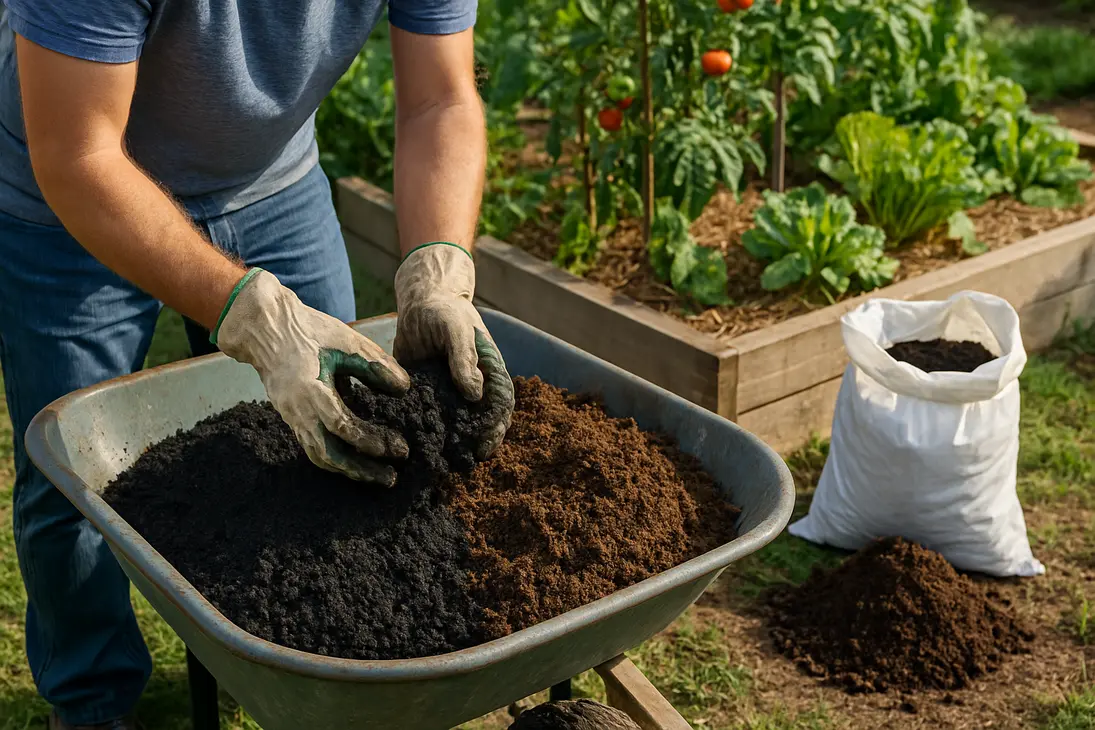
New beds are the easiest place to use biochar because you can distribute it evenly through the upper root zone. Spread charged biochar alongside compost, then mix both into the top layer of soil rather than leaving a distinct black layer beneath the surface.
Use a modest amount for the first application. More is not automatically better, particularly if you do not know the product’s pH or ash content. An overly heavy application of alkaline, ash-rich material can push soil conditions away from what many vegetables prefer.
For individual planting holes, mix a small amount of charged biochar thoroughly with the excavated native soil and compost before backfilling. Do not place a thick layer of biochar directly under a transplant’s root ball. Roots need a consistent growing medium, not abrupt changes in texture or moisture behavior.
Applying biochar around established plants
You can add biochar around established perennials, shrubs, flowers, and vegetables, but avoid aggressive digging that damages roots.
A low-disturbance method is to:
- Moisten and charge the biochar first.
- Pull mulch aside, if present.
- Spread a thin, even layer over the soil surface around the plant, keeping it away from stems and crowns.
- Cover it with compost.
- Replace the mulch and water the area.
Earthworms, watering, root activity, and ordinary cultivation will gradually move small particles into the soil. For annual vegetable beds, you can incorporate the material lightly after the crop is finished or before the next planting.
Do not apply dry biochar in a deep ring against plant stems. It can be messy, may blow away, and does little good when isolated from soil moisture and organic matter.
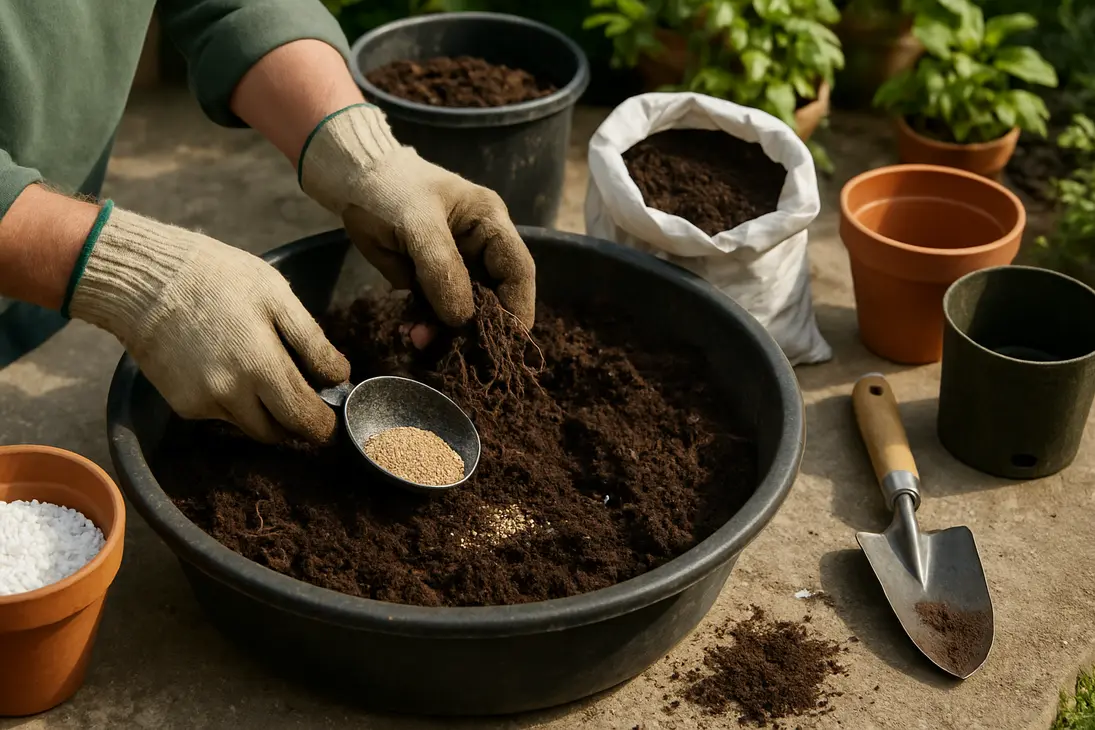
Using biochar in potting mixes and containers
Biochar can be included in container mixes, but containers are less forgiving than garden beds. Their limited root volume means pH, nutrient concentration, and drainage can change quickly.
Use only a small, well-mixed portion of charged biochar in a quality potting mix. Never fill a pot with biochar, garden soil, or charcoal fragments. A good container mix still needs materials that provide balanced moisture retention, aeration, and nutrients.
Watch container plants closely after introducing biochar. If growth slows, leaves become pale, or the mix dries unusually fast or stays too wet, review watering and fertilizing first. Repotting into fresh potting mix may be easier than trying to correct a poorly balanced container blend.
Choosing Safe Biochar and Avoiding Common Mistakes
The material’s source matters, especially in a garden that produces food. Choose products sold specifically for horticultural or agricultural soil use, with clear information about the feedstock and intended application.
A bag that merely says “charcoal” does not provide enough assurance for an edible garden.
Do not use briquettes, treated wood charcoal, or unknown ash-rich char
Never use charcoal briquettes in garden soil. They may contain binders, ignition aids, mineral additives, or other ingredients not intended for growing food.
Also avoid char made from:
- Pressure-treated, painted, stained, or glued wood
- Plywood, particleboard, or demolition lumber
- Trash, plastics, or mixed waste
- Wood with unknown chemical treatments
- Material from a fire pit or burn pile when the fuel source is uncertain
Lump charcoal made from untreated wood is not necessarily the same as garden biochar. It may be relatively clean, but its feedstock, production process, ash content, and contaminants are often unknown. In an ornamental setting, gardeners may choose to experiment cautiously with known, untreated wood char. For vegetable beds and other edible gardens, garden-grade biochar is the more reliable choice.
Avoid relying on biochar as a replacement for fertilizer
This is the most important expectation to set correctly. Biochar can support soil fertility, but it does not replace the nutrients removed when you harvest tomatoes, beans, lettuce, cut flowers, or fruit.
Continue to use compost, cover crops where practical, mulch, and fertilizer as needed. A soil test can help identify whether a bed needs nitrogen, phosphorus, potassium, lime, sulfur, or micronutrients. Adding biochar without knowing the underlying problem can waste money and delay a more useful correction.
Start with a modest amount and monitor plant response
Apply biochar to one area first, especially if the product is new to you. Keep notes on:
- How often the bed needs watering
- Plant color and growth rate
- Flowering and fruit production
- Soil pH, if you test it
- Any change in drainage or soil crusting
Give the amendment time. Biochar is not like a soluble fertilizer that produces a quick response. Its potential value lies in gradual changes to the soil environment, particularly when it is continually supported with compost and mulch.
Conclusion
Biochar can be worth using in a home garden, particularly in sandy soil, new raised beds, and intensively managed vegetable plots. Its porous, stable structure may help soil hold moisture and nutrients while providing long-term carbon and habitat for soil organisms.
Still, it is best viewed as a supporting amendment rather than the foundation of fertility. Compost adds organic matter and biological activity, mulch protects the soil surface, and soil-test-based fertilizer management supplies nutrients plants actually need. Choose a safe garden-grade product, charge it before use, start modestly, and judge its value in your own garden over several seasons.
FAQ
Can biochar replace fertilizer in a home garden?
No. Biochar may help soil retain some nutrients, but it does not reliably provide enough plant-available nutrition for vegetables, annual flowers, or fruiting plants. Use it alongside compost and fertilizer when needed.
Should biochar be mixed with compost before adding it to soil?
Yes, that is usually a good practice. Mixing biochar with moist compost helps it absorb moisture and nutrients before it reaches plant roots. It also makes the material easier to distribute evenly through a bed.
Can I add biochar around plants that are already growing?
Yes. Use charged, moistened biochar, spread it thinly over the soil around the plant, cover it with compost, and replace mulch. Keep it away from stems and avoid deep digging near roots.
Is lump charcoal the same as biochar for gardening?
Not necessarily. Lump charcoal and biochar can both be made from wood, but garden biochar is produced and sold for soil use. Lump charcoal may have unknown feedstocks, ash levels, or processing details. Avoid briquettes altogether, and use only clearly identified, untreated material in edible gardens.
You Might Also Like