What Are the Uses of Clay Soil in the Garden Compared With Loam Soil?
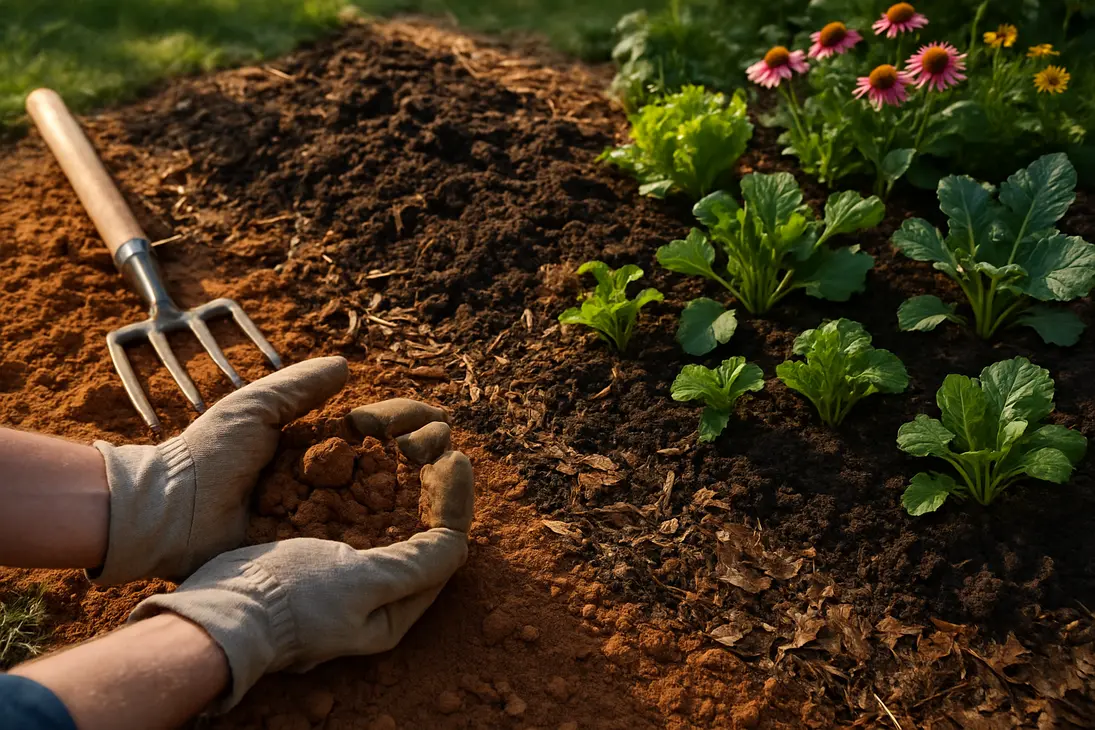
Clay soil is often treated as a problem, but it has useful qualities in the right setting. It holds water and nutrients well, which can support established shrubs, trees, and plants that prefer reliably moist ground. Its drawbacks are slow drainage, limited airflow, and difficult root growth when compacted.
Loam is usually more versatile for general gardening because it balances moisture retention, drainage, mineral particles, organic matter, and air spaces. Still, most gardeners do not need to replace clay soil. The practical goal is to use its strengths, improve its structure gradually, and choose suitable plants.
How Clay Soil Works in a Garden
Clay consists of extremely fine mineral particles that fit closely together. Their large surface area holds water and plant nutrients, so clay soil is often naturally fertile and stays moist longer than sandy soil.
Those same small particles leave few large pore spaces for excess water and oxygen. After heavy rain, clay may remain wet for days; when dry, it can become hard, cloddy, and cracked.
Clay also compacts easily. Walking on it, digging it while wet, or repeated tilling presses particles closer together. Roots then struggle to spread, and water is more likely to run off than soak in.
Where Clay Soil Can Be Useful
Clay can be useful when its moisture-holding nature matches the site and plants.
-
Supporting moisture-loving plants. Plants that tolerate consistently moist soil can do well in clay if the area is not permanently waterlogged. Many established shrubs, some perennials, and rain-garden plants benefit from its dependable moisture supply.
-
Holding nutrients in in-ground beds. Clay particles retain nutrient ions, helping reduce leaching. This can be valuable in permanent beds that receive compost, mulch, and fertilizer over time.
-
Forming stable berms, banks, and low areas. Clay-rich soil holds its shape better than very sandy soil, making it useful for gentle contours, low banks, and areas intended to remain moist.
-
Improving very sandy soil in moderation. Small amounts of clay-rich soil, combined thoroughly with organic matter, can improve water and nutrient retention in sandy soil. For large areas, adding organic matter is usually more practical than importing enough clay to change the texture.
Clay can also help established trees and shrubs through dry spells. Once their roots are adapted to the site, the soil’s moisture reserve can be an advantage over fast-draining sand.
Limitations to Plan Around
Problems arise when clay dominates the soil and its structure is poor.
-
Slow drainage and reduced root aeration. Saturated soil has little oxygen for roots and can encourage rot in plants that need free drainage.
-
Compaction when worked wet. If a handful of soil forms a shiny, sticky ribbon, it is too wet to dig. Working it then creates dense clods.
-
Cold, slow-warming spring soil. Wet clay warms slowly, delaying early sowing and warm-season crops.
-
Difficulty for some crops. Carrots, parsnips, and other long-rooted crops may fork or struggle in dense ground. Plants needing sharp drainage may fail in winter-wet clay.
Clay Soil vs. Loam Soil: Which Is Better for Different Garden Uses?
Neither soil type is automatically good or bad. The better choice depends on what you grow and how much soil management you can provide. Loam is generally easier to use across a wider range of garden purposes.
A true loam contains a balanced mixture of sand, silt, and clay, plus enough organic matter to create a crumbly structure. It holds moisture without staying saturated and allows roots, water, and air to move readily.
Moisture Retention and Drainage
Clay retains water for a long time, reducing irrigation needs during dry weather. However, that benefit becomes a problem where rainfall is frequent, drainage is poor, or plants are sensitive to wet roots.
Loam is more forgiving. It stores water for plants while allowing excess rainfall to drain through larger pore spaces.
| Garden need | Clay soil | Loam soil |
|---|---|---|
| Holding water during dry weather | Excellent, though water may be held tightly | Good |
| Draining excess rainwater | Often slow | Usually reliable |
| Root aeration | Can be limited when wet or compacted | Usually better |
| Ease of digging and planting | Difficult when wet; hard when dry | Generally easy when moderately moist |
| Suitability for a wide plant range | More limited without improvement | Broadly suitable |
A clay garden can still drain well on a slope or where subsoil drains freely. Conversely, loamy topsoil over compacted subsoil may puddle. Observe how long water stands after rain before deciding what to change.
Nutrients and Fertility
Clay can hold nutrients well, but storage is not the same as availability. If soil is compacted, cold, waterlogged, or low in organic matter, roots may not be able to use those nutrients effectively.
Loam more readily provides moisture, nutrients, oxygen, and room for root growth at the same time. Organic matter improves both soils: it helps clay form stable crumbs and air spaces, while maintaining loam’s structure and fertility.
Best Uses for Each Soil Type
Clay is often workable for:
- Established trees and shrubs adapted to local soil
- Moisture-tolerant perennials
- Naturally damp lower garden areas
- Permanent borders improved regularly with compost and mulch
- Dry-climate gardens where extra moisture retention helps
Loam is generally preferred for:
- Vegetable beds, especially direct-sown crops
- Annual flowers and mixed borders
- Root vegetables needing loose soil
- Gardens with a wide range of plant types
- Areas where easy planting and reliable drainage matter most
Improved clay can produce vegetables successfully, but raised beds, surface composting, and careful timing are especially helpful.
How to Use and Improve Clay Soil for Garden Beds
The most sustainable approach is to improve the soil you have rather than excavating and replacing it. A shallow layer of imported soil over dense clay can create a boundary where water collects.
Build structure from the top down, prevent compaction, and select suitable plants while the soil improves.
Add Compost and Well-Aged Organic Matter
Compost is one of the best amendments for clay. It helps particles form aggregates, creating channels for water, air, roots, and soil organisms.
For new beds, spread compost, leaf mold, or well-rotted manure over the surface and mix it into the upper layer only when the soil is moist but not sticky. In established beds, apply it as a surface layer and let worms, roots, and weather carry it downward.
Useful materials include:
- Finished garden compost
- Leaf mold
- Aged bark-based organic matter where appropriate
- Well-rotted manure from a reliable source
Avoid fresh manure as a general clay amendment. It may be too strong around plants, contain weed seeds, and is unsuitable immediately before harvesting food crops.
Mulch is equally valuable. Shredded leaves, compost, and other organic mulches protect soil from heavy rain, reduce crusting, moderate temperatures, and add organic matter as they decompose.
Improve Structure Without Creating Drainage Problems
Adding a small amount of sand to heavy clay is a common mistake. Unless enough coarse sand is added in the right proportion and blended thoroughly, the soil may become denser and more cement-like. Organic matter is the safer long-term amendment for most home gardens.
Protect clay structure with these habits:
- Do not walk on planting beds. Use permanent paths to keep traffic off root zones.
- Avoid digging wet clay. Wait until a squeezed handful breaks apart rather than smearing.
- Use low-impact cultivation. A garden fork or broadfork can loosen soil with less disruption than repeated deep rototilling.
- Keep soil covered. Bare clay is more likely to crust, erode, and compact.
- Use raised beds where drainage remains poor. Open-bottomed beds provide a deeper, better-aerated rooting zone above native soil.
Raised beds do not solve drainage problems if water regularly pools around them. Improve surface grading, provide a runoff route, or choose plants that tolerate periodic wetness.
Choose Plants That Suit Clay Conditions
Plant choice is often more effective than endless amendment. Watch the site through the year: does it stay wet in winter, bake dry in summer, receive full sun, or remain shaded?
Choose plants for those conditions rather than clay alone. Deep-rooted perennials and grasses can help create channels in the soil. Cover crops can protect bare ground and add organic matter when cut down and used as mulch.
In clay vegetable beds, start with crops that tolerate moderately heavy soil. Reserve the loosest, most amended areas for carrots, parsnips, and other root crops. Transplanted vegetables often establish more reliably than tiny direct-sown seedlings in cold spring clay.
When Clay Soil Needs Testing or Extra Amendments
Red, orange, or heavy clay does not automatically need lime, fertilizer, gypsum, or bagged soil conditioner. Color often reflects iron minerals and drainage history, not a specific pH or nutrient issue.
Identify the actual limitation before adding products: poor structure, low pH, nutrient deficiency, poor drainage, or compaction all require different solutions.
Test Before Adding Lime
Lime raises soil pH. It is useful when soil is too acidic for the plants you want to grow and a soil test supports that conclusion. It is not a universal remedy for red clay.
Adding lime to soil that is already near neutral or alkaline can create nutrient-availability problems, especially for acid-loving plants. Test separate areas when they are managed differently; a vegetable bed, lawn, and shrub border may have different needs.
Fertilizer and Organic Amendments Have Different Jobs
Compost and fertilizer are not interchangeable.
- Compost improves structure, contributes modest nutrients, feeds soil organisms, and helps clay become more workable.
- Fertilizer supplies specific nutrients when a soil test, plant symptoms, or crop demand indicates a need.
- Lime or sulfur changes pH and should be used only when testing and plant requirements justify it.
Do not apply the same amendment program everywhere. Vegetable beds may benefit from seasonal compost, while lawns and containers require different management.
Why Garden Clay Soil Is Not the Same as Potting Mix
Improving clay in the ground works because roots can extend into a broad soil system and natural processes gradually build structure. Containers are enclosed, so water movement and air supply are more restricted.
That is why native garden soil is rarely a suitable main ingredient for pots.
Using Clay Soil in Containers
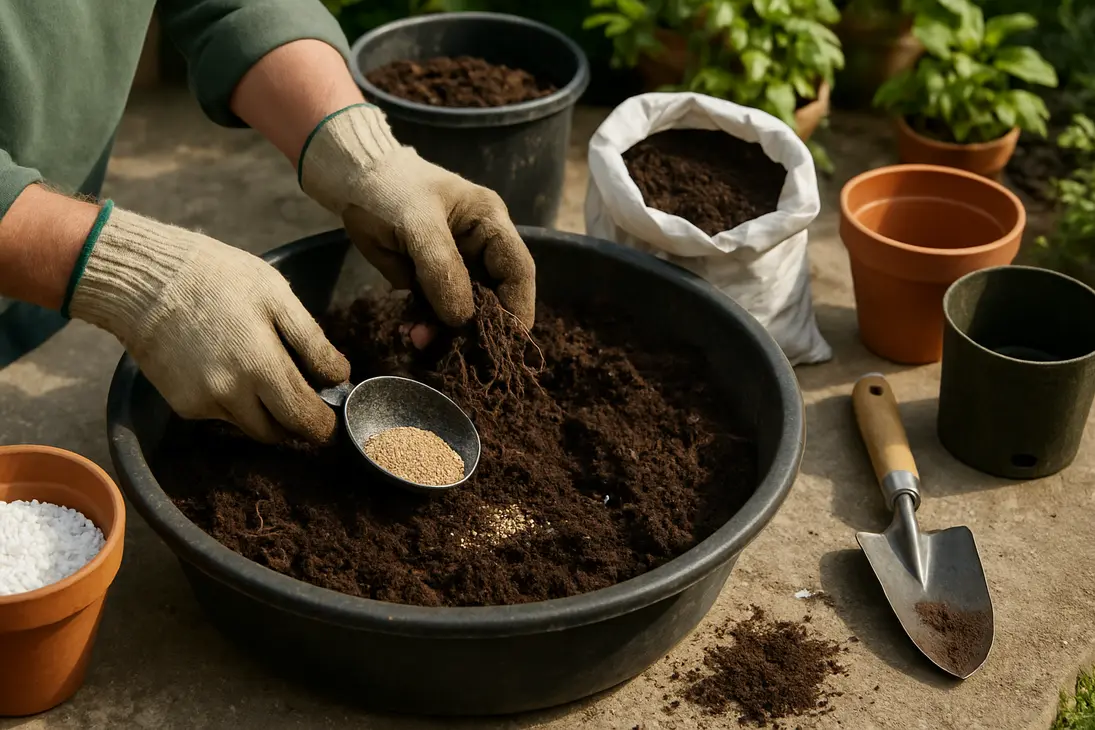
Straight clay garden soil in a pot settles and becomes dense. Water may sit around roots or run through cracks while leaving parts of the root ball dry. It also has too little air space compared with purpose-made container media.
For most containers, use a quality potting mix that holds moisture while draining freely. This is especially important for seedlings, herbs, vegetables, houseplants, and any plant without access to native soil.
A small amount of screened garden soil can sometimes be used in homemade mixes for large outdoor containers, but it should not dominate the blend, particularly if it is clay-heavy. It may also introduce weed seeds, pests, or diseases.
Making Better Choices for Beds, Lawns, and Pots
Use the growing medium that suits the setting:
- In-ground beds: Improve native clay gradually with compost, mulch, reduced compaction, and suitable plants.
- Lawns: Test soil before liming or fertilizing.
- Pots and raised containers: Use lightweight, free-draining potting mixes rather than dense backyard soil.
Conclusion
Clay soil is useful where its ability to hold water, nutrients, and shape is an advantage. It can support established trees, shrubs, moisture-tolerant plants, and permanent beds improved with organic matter.
Loam is usually better for broad garden use because it provides a more reliable balance of water, nutrients, drainage, and oxygen. Improve clay gradually, avoid compaction, test before adding corrective products, and match plants to your conditions.
FAQ
Is clay soil good for vegetable gardens?
Clay can grow vegetables, but it needs careful management. Add compost regularly, keep beds mulched, avoid working soil when wet, and consider raised beds if drainage is poor. Transplanted crops often establish well once the soil improves.
For carrots, parsnips, and other long root crops, use the loosest part of the garden or a raised bed filled with a lighter blend. Clay also warms slowly in spring, so early planting may need to wait longer than in loam.
Can I turn clay soil into loam soil?
You can make clay behave more like loam over several seasons, but you are unlikely to change its basic mineral texture completely. Repeated compost, leaf mold, mulch, roots, and soil life can create a darker, more crumbly, better-draining top layer.
The goal is not textbook loam. It is soil that drains adequately, holds moisture, allows root growth, and is manageable.
Should I add lime to red clay soil?
Not unless a soil test shows that the soil is too acidic and lime suits the plants you are growing. Red clay does not inherently mean low pH; its color usually reflects iron-containing minerals.
Adding lime unnecessarily can make some nutrients less available and may harm acid-loving plants.
Can I use clay garden soil in pots or raised containers?
Avoid straight clay garden soil in pots. It compacts easily, drains poorly, and leaves too little air around roots. Use a purpose-made potting mix for most containers.
For open-bottomed raised beds, native clay can remain underneath, but fill the growing area with a well-structured soil-and-compost blend.
You Might Also Like