Bioswale vs. Rain Garden: Differences, Costs, and Which One Fits Your Yard
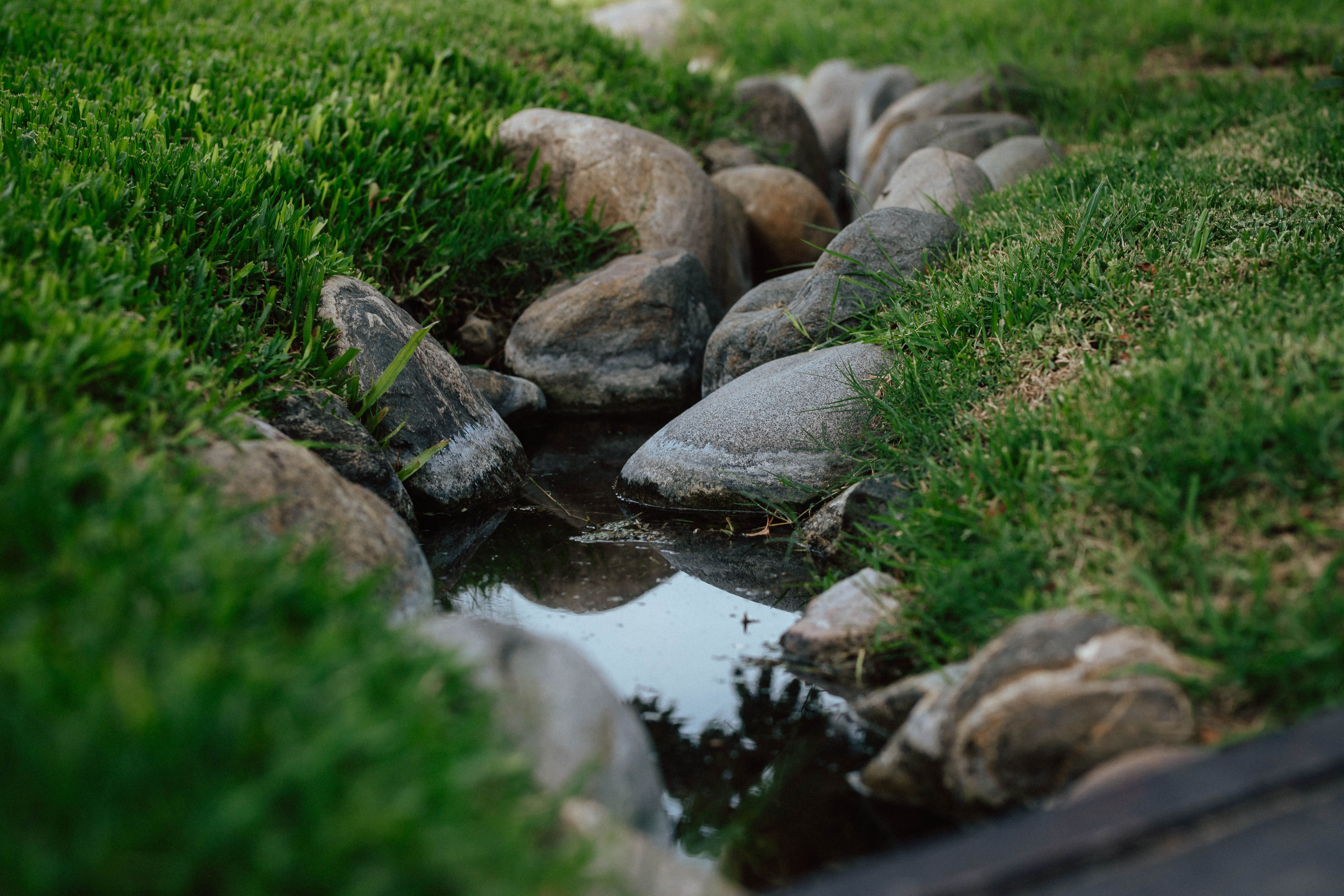
A rain garden is a shallow basin that captures and temporarily stores runoff; a bioswale is a linear channel that slows, treats, and conveys water along a planned route. Choosing the wrong feature can lead to poor drainage, erosion, or foundation problems. Terms are not standardized—local manuals may use “bioswale,” “bioretention swale,” or “linear bioretention” for overlapping designs. Many properties benefit from using both practices together.
Your final choice depends on where runoff originates, whether water should stay onsite or move elsewhere, available slope, local soil and groundwater conditions, a safe outlet, the type of runoff pollution, and property boundary or regulatory requirements. Neither feature fixes every wet-yard problem. Neither should direct water toward a foundation or a neighbor. Plants cannot compensate for incorrect grading, insufficient capacity, or a blocked outlet. Proper planning starts with understanding your property’s drainage pattern during a typical storm.
Key Takeaways
- A rain garden is a basin; a bioswale is a channel. Rain gardens capture and store runoff in a shallow depression; bioswales slow, filter, and convey water along a linear route.
- Start with the full water path, not appearance. Map runoff origins, movement, and safe destination before deciding.
- Many properties benefit from using both together. A bioswale can carry runoff to a rain garden for storage, or a rain garden overflow can drain into a vegetated swale.
- Cost comparisons are misleading without context. Always compare project scope, not feature names.
- Maintenance centers on hydraulic function, not decoration. Prioritize inlet, sediment, drainage time, erosion, and outlet after storms.
What’s the Difference Between a Bioswale and a Rain Garden?
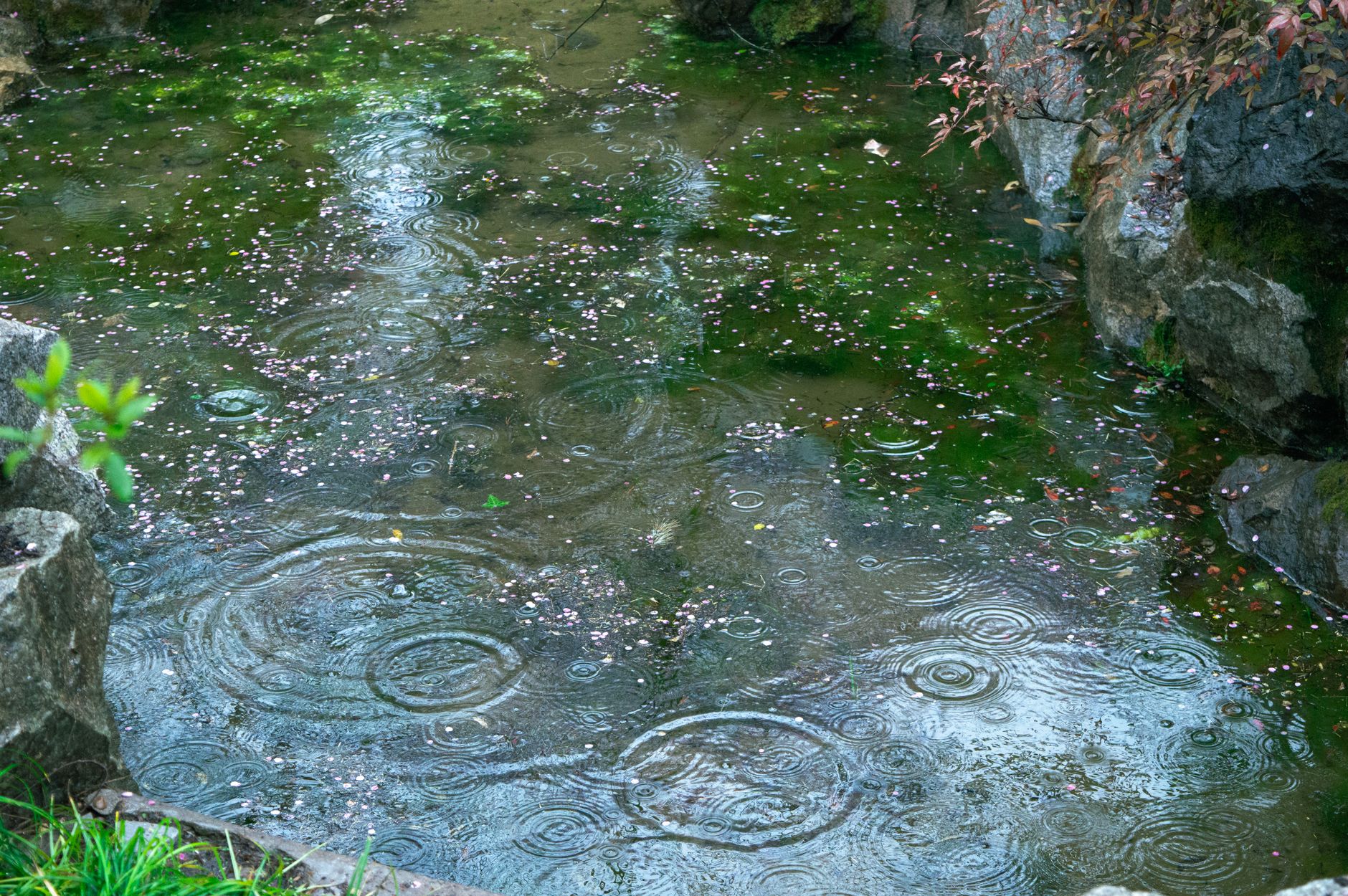
A rain garden is a basin; a bioswale is a channel. The shape reflects the hydraulic job. Both slow runoff, filter sediment, infiltrate water, use vegetation, and overflow during large storms. Terms are not nationally standardized; follow your local stormwater manual or permit authority. Understanding the core hydraulic role is essential—it dictates design, sizing, and placement.
| Design question | Rain garden | Bioswale |
|---|---|---|
| Basic form | Shallow basin or depression | Long, shallow linear channel |
| Primary hydraulic role | Capture, store, and infiltrate or filter | Slow, filter, and convey runoff |
| Water movement | Spreads across a level storage area | Moves gradually from inlet to outlet |
| Temporary ponding | Usually expected (6–48 hours typical) | May occur behind check dams |
| Longitudinal slope | Basin bottom generally level (0–1%) | Requires controlled grade (1–4% typical) |
| Outlet | Requires safe overflow; may have underdrain | Requires defined outlet or bypass |
| Check dams | Not normally a defining feature | Often used to reduce velocity |
| Typical runoff source | Downspout, roof, patio, driveway | Road edge, long driveway, parking area |
| Main failure risk | Prolonged ponding, undersizing | Erosion, stagnant sections, blocked outlet |
| Design complexity | Simple basin to engineered bioretention | Shallow channel to engineered linear bioretention |
Why the Terms Sometimes Overlap
Sources may call a planted depression a rain garden or a bioswale. Some use “rain garden” for simple basins, “bioretention” for engineered media. Others describe a bioswale as a long, narrow rain garden. Do not identify a system from photos alone. Look for a level basin versus a sloped channel, check dams, underdrain, and overflow structure. Many local stormwater manuals define “bioretention” broadly to include both rain gardens and bioswales. When in doubt, consult your municipality’s design criteria.
Rain Garden: Basin Storage and Temporary Ponding
A rain garden receives runoff, spreads water across a shallow basin, temporarily stores it below overflow elevation, allows infiltration or filtration, and becomes mostly dry between storms. Key distinction: temporary ponding versus permanently wet soil. The basin bottom is typically flat or nearly flat to maximize storage volume. Heavy rains cause brief ponding that recedes within a day or two.
Bioswale: Linear Conveyance, Slowing, and Treatment
A bioswale receives water at an upstream inlet, carries it along a shallow channel, uses vegetation and geometry to slow flow, may use check dams for short ponding, and releases excess through a planned outlet. The difference from a ditch: a bioswale is designed to slow, filter, and stabilize runoff. Types include grassed swale, densely vegetated bioswale, dry swale, and swale with engineered media. Check dams are critical to maintaining low velocities and promoting sediment settling.
When a Bioswale and Rain Garden Work Together
Common treatment-train combinations: a bioswale carrying roof runoff to a rain garden, a bioswale slowing driveway runoff before it enters a basin, rain garden overflow entering a vegetated swale. The bioswale controls route and velocity; the rain garden provides larger temporary storage. This pairing is especially effective when a property has both concentrated flow from a long driveway and a low area suitable for ponding.
Which One Fits Your Yard’s Water Path?
Build your decision around the complete route from runoff source to safe destination. Observe your property during rain. The right feature is determined by water behavior, not appearance. Walk your yard during a moderate storm to see where water flows, puddles, and leaves.
| Property situation | Likely direction | Why |
|---|---|---|
| One downspout drains toward a broad, safe, gently sloped area | Rain garden | Water can be stored near its source |
| Runoff travels along driveway or property edge | Bioswale | Linear channel matches the route |
| Water must cross yard before reaching a suitable basin | Bioswale leading to rain garden | Conveyance and storage both needed |
| Rain garden fills and needs safe surface outlet | Rain garden draining to bioswale | Swale can manage excess flow |
| Clay soil drains slowly but safe lower outlet exists | Engineered bioswale or drained rain garden | Infiltration may need supplemented discharge |
| Soil remains saturated for days | Neither simple option | May involve groundwater or restrictive soil |
Start With Where the Water Comes From and Where It Must Go
Map the source, contributing area, flow route, inlet, storage or channel, and final receiving location. Separate roof, driveway, road, and neighbor runoff. Roof runoff may be suitable for onsite infiltration; road runoff may require treatment. Do not begin with plant selection. Use simple tools like a garden hose or flour to trace flow paths—low-tech observations are often more reliable than contour maps for small yards.
Choose a Basin for Storage or a Channel for Movement
Choose a rain garden when runoff arrives at one suitable area, the area can temporarily store water, and a safe overflow route exists. Choose a bioswale when water follows a long route, there is sufficient controlled slope, and an outlet exists. Choose both when water must travel and then be stored, or the site benefits from distributed treatment. A rain garden alone cannot handle flow that must cross the yard; a bioswale alone cannot provide significant temporary storage.
Clay, Compaction, Groundwater, and Underdrains
Soil conditions do not automatically select one feature. Assess infiltration, compaction, groundwater, and restrictive layers. Possible responses to slow soil: larger shallow rain garden, engineered media, underdrain, or conveyance bioswale. An underdrain needs a lawful outlet and maintenance access. A simple perc test or hole-digging observation can reveal whether infiltration is feasible—if water stands in a test hole for days, infiltration-only designs will struggle.
Foundation, Property-Line, Utility, and Permit Stop Signs
Stop or seek professional advice when: basement is leaking, the only location is beside a foundation, water will discharge toward a neighbor, utility lines are present, a septic field or well is nearby, groundwater is shallow, or runoff comes from a large paved area. Check utility marking, HOA rules, and municipal stormwater requirements. Many jurisdictions require permits for any feature that handles runoff from impervious areas larger than a few hundred square feet.
How Design, Sizing, Plants, and Costs Differ
Rain-garden sizing focuses on storage area and drawdown. Bioswale sizing focuses on channel geometry, slope, velocity, and outlet. Both require a defined design storm, inlet, overflow, soil assessment, and maintenance access.
Size a Rain Garden From Runoff Volume and Local Drawdown Rules
Inputs: contributing impervious area, design rainfall, ponding depth, infiltration capacity, side slopes, freeboard, overflow. Use a local Extension worksheet or municipal calculator. Common residential design storms are 1‑ to 2‑year, 24‑hour events. Ponding depth typically 6–12 inches. Drawdown time often 48 hours maximum.
Size a Bioswale From Flow Path, Slope, Cross-Section, and Outlet
Inputs: drainage area, peak flow, channel length, slope, bottom width, flow depth, velocity, check dams, outlet capacity. Risks: too steep causing erosion, too flat causing stagnant water. Typical bottom widths range from 2 to 8 feet. Check dams spaced so that ponded length from one dam does not exceed 50–100 feet. The Manning’s equation is commonly used to size the channel.
Design Inlets, Pretreatment, Check Dams, Overflow, and Outlets Before Planting
A rain garden needs a stable inlet, sediment-catching area (forebay or splash pad), level basin, overflow (weir or spillway), and underdrain cleanout. A bioswale needs a stable inlet, channel with controlled grade, check dams (stone, concrete, or wood), erosion matting, high-flow bypass, and stable outlet. Both should have a clearly defined overflow path that directs excess water safely away from structures. Inlet protection—such as riprap or turf reinforcement—prevents scour.
Choose Plants by Hydraulic Zone and Runoff Source
For rain gardens: basin bottom tolerates inundation and dry soil; side slopes handle alternating moisture; rim is drought-tolerant. For bioswales: channel bottom needs dense stems for flow; banks stabilize slopes. Adjust for road salt, sun, climate. Prefer locally adapted noninvasive plants. Native grasses and sedges are excellent for channel bottoms because they retain stiffness in flowing water. Avoid aggressive species that may clog check dam weep holes.
Compare Cost Drivers Instead of National Price Averages
Rain-garden cost drivers: excavation, media, underdrain, plants, mulch. Bioswale cost drivers: grading, channel length, check dams, erosion materials, inlet/outlet structures. Per-square-foot and per-linear-foot values cannot be compared directly. Check for rebates and stormwater credits. Average backyard rain gardens cost $3–$8 per square foot; simple bioswales cost $5–$15 per linear foot, but these ranges overlap significantly. Always get site‑specific estimates.
Maintenance and Failure Modes
Organize maintenance around hydraulic function. Prioritize inlet, sediment, drainage time, erosion, check dams, overflow, outlet.
| Problem | More likely in | Likely causes | First checks |
|---|---|---|---|
| Water remains beyond drawdown standard | Rain garden or ponded bioswale | Compaction, clogged media, groundwater, undersizing | Ponding duration, soil surface, cleanout |
| Water does not reach feature | Both | Wrong elevations, blocked pipe, settlement | Observe inlet during rain |
| Fast water cuts channel through plants | Bioswale or rain-garden inlet | Excess velocity, steep grade, inadequate protection | Inlet, slope, check dams |
| Stagnant pools between storms | Bioswale | Uneven grade, blocked check dam, compaction | Longitudinal profile, outlet |
| Berm overtops during ordinary rain | Rain garden | Undersizing, blocked overflow, changed drainage | Contributing area, ponding level |
| Sediment buries plants near inlet | Both | Dirty runoff, inadequate pretreatment | Inlet forebay, upstream erosion |
| Mosquito larvae appear | Both | Water remains too long (over 7 days) | Drawdown, blocked outlet, debris |
| Performance declines over years | Both | Sediment, compaction, vegetation loss | Maintenance history, post-storm inspection |
Inspect After Storms, Not Only by Season
Observe where water enters, maximum ponding depth, time to drain, inlet erosion, sediment deposition, check-dam behavior. Routine tasks: clear litter, remove sediment near inlet, repair bare soil, maintain vegetation. A post‑storm inspection takes 10 minutes but catches developing problems early.
Remove Sediment and Repair Erosion Before Capacity Is Lost
Sediment often accumulates at inlet or behind check dams. Install pretreatment forebay. Remove sediment before it blocks outlets or buries plant crowns. Use a shovel or small excavator—don’t let sediment build up more than 3 inches deep in the forebay. Re-seed or re-plant any eroded bank immediately.
Diagnose Standing Water and Mosquito Risk
Rain gardens and bioswales are designed for temporary ponding (typically 24–48 hours). Persistent water indicates groundwater, clogged media, compaction, blocked outlet, or undersizing. Correct the hydraulic cause before considering mosquito treatment. If water stands more than 7 days, the feature is failing hydraulically.
Know When to Retrofitor Call a Professional
Seek design help when a foundation is threatened, water discharges onto neighboring property, the outlet repeatedly fails, or the feature is part of a permitted stormwater system. Possible retrofits: inlet stabilization, pretreatment forebay, check dams, wider channel, revised overflow, underdrain, splitting drainage area. A professional engineer or landscape architect can perform a drainage evaluation and suggest cost‑effective improvements.
Conclusion
Choosing between a bioswale and a rain garden comes down to understanding your property’s water path. A rain garden works best for capturing runoff in one spot; a bioswale works best for directing water along a route. Many properties benefit from using both. Always keep water away from foundations and neighbors. Neither feature is a cure-all, but when designed and maintained correctly, both manage runoff effectively while adding a functional landscape. Start with observation, map the flow, and only then decide on the tool that fits your yard’s specific hydrology.
FAQ
Are Bioswales and Rain Gardens the Same Thing?
No, although terms overlap. A rain garden is a basin that temporarily stores runoff; a bioswale is a channel that conveys and treats runoff. Use your local manual’s definition. When in doubt, look at the primary function—storage or conveyance.
Is a Bioswale Better Than a Rain Garden for Clay Soil?
Not automatically. The decision depends on infiltration rate, groundwater, slope, and outlet availability. A conveyance bioswale may work where infiltration is limited and a safe outlet exists. In slow‑draining clay, a rain garden used without underdrain often ponds for days; a bioswale with check dams can keep water moving.
Which Costs More: a Bioswale or a Rain Garden?
There is no universal winner. Compare project scope. A small DIY rain garden can be inexpensive; an engineered rain garden costly. A simple swale may be modest; a roadside bioswale may require major civil work. Always get three quotes for the same scope and check local programs for cost‑sharing.
Do Rain Gardens and Bioswales Attract Mosquitoes?
Not when they drain correctly. Temporary ponding is normal. Persistent water requires inspection of soil, grade, outlet, and debris. Correct the drainage problem rather than using pesticides. A properly designed feature dries within 48 hours, well before mosquito larvae can mature.
You Might Also Like