What Soil Is Best for Monstera and Ficus Elastica?
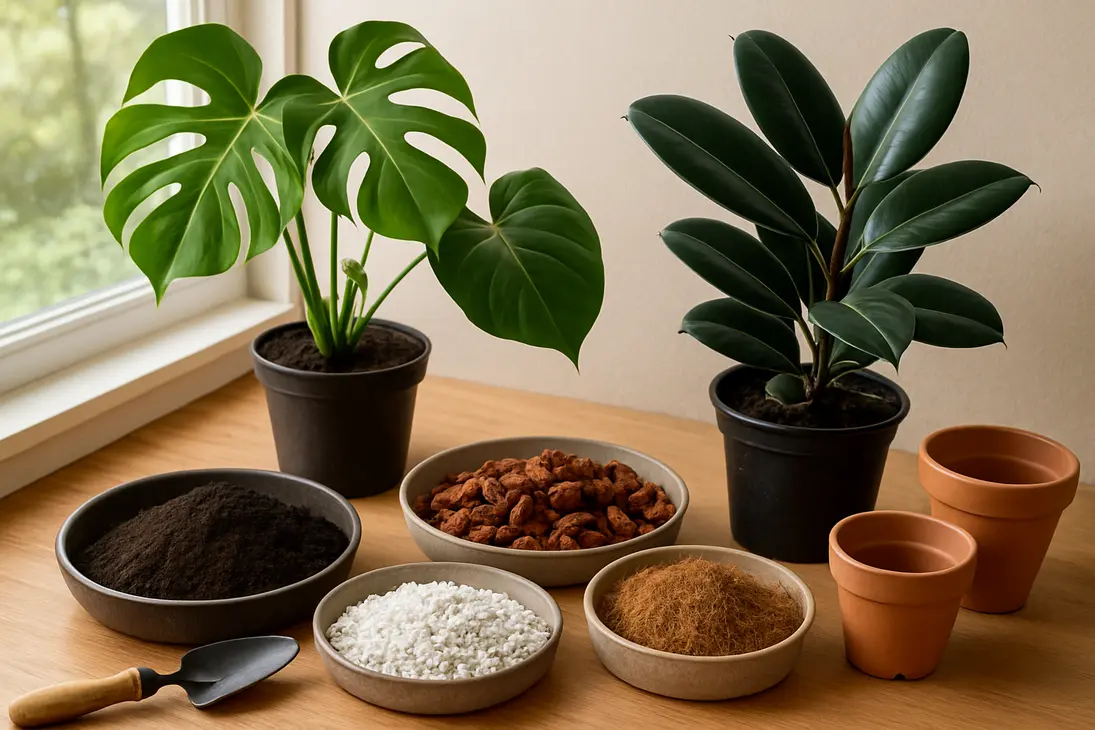
The best soils for Monstera and Ficus elastica are indoor potting mixes that drain freely, hold light moisture, and leave air around the roots. Both dislike dense, wet soil, but they do not need the exact same mix.
Monstera usually does best in a chunky aroid-style mix with bark, perlite or pumice, and a moisture-holding base such as coco coir, peat, or quality potting mix. Ficus elastica, also called rubber plant, prefers a well-draining indoor mix that is slightly finer and more moisture-stable.
In simple terms: make Monstera soil chunkier; make Ficus elastica soil airy but a little steadier.
What Monstera and Ficus Elastica Need From Soil
Both are tropical houseplants, but their roots behave differently. Monstera is an aroid with thick roots that appreciate oxygen and chunky organic matter. Ficus elastica is a tree-like ficus with a more conventional root system that likes consistent moisture without sitting in a wet, airless pot.
Good soil should:
- Let excess water drain.
- Hold light moisture between waterings.
- Stay open instead of compacting.
That balance matters more than the brand name on the bag.
Drainage without drying out too fast
Good drainage means water moves through the pot instead of collecting around the roots. Indoors, this matters because lower light and slower evaporation make pots dry more slowly.
Useful drainage ingredients include perlite, pumice, orchid bark, coarse coco chips, and chunky composted bark. Monstera can handle more chunky material. Ficus elastica benefits from drainage too, but the mix should not be so bark-heavy that it dries in a day or two.
If water runs straight through without moistening the root ball, or the plant wilts soon after watering, add more coco coir, peat, or quality potting mix.
Moisture retention without soggy roots
Moist soil is lightly damp and still airy. Soggy soil feels heavy, smells stale, and stays wet too long. In soggy soil, oxygen drops and root rot becomes more likely.
Moisture-retentive ingredients include coco coir, peat moss, fine bark, small amounts of compost or worm castings, and the organic base in indoor potting mix. The goal is not constant wetness. The mix should hold some moisture after watering while still letting air return to the roots.
Airflow around the roots
Roots need oxygen as much as water. Many all-purpose potting soils look fine at first but compact after months of watering. Once compacted, they hold water too long and create low-oxygen conditions.
Perlite, pumice, bark, and coarse fibers create structure. This is especially important for Monstera, whose thick aroid roots prefer a loose, chunky medium. Ficus elastica also benefits from aeration, usually with less bark and a slightly finer texture.
Best Soil Mixes for Monstera vs. Ficus Elastica
Think of these plants as having similar needs, not identical ones. They can share a base, but Monstera should lean chunkier and Ficus elastica should lean more moisture-stable.
| Plant | Best soil style | Texture goal | Simple DIY direction |
|---|---|---|---|
| Monstera | Chunky aroid mix | Loose, airy, barky | Potting mix + bark + perlite/pumice |
| Ficus elastica | Amended indoor potting mix | Well-draining, slightly finer | Potting mix + perlite/pumice, optional bark |
| Both together | Moderately chunky indoor mix | Drains well, not soggy | Adjust bark and fine mix as needed |
Best soil mix for Monstera
Monstera grows well in a chunky aroid mix. You can buy one or make your own.
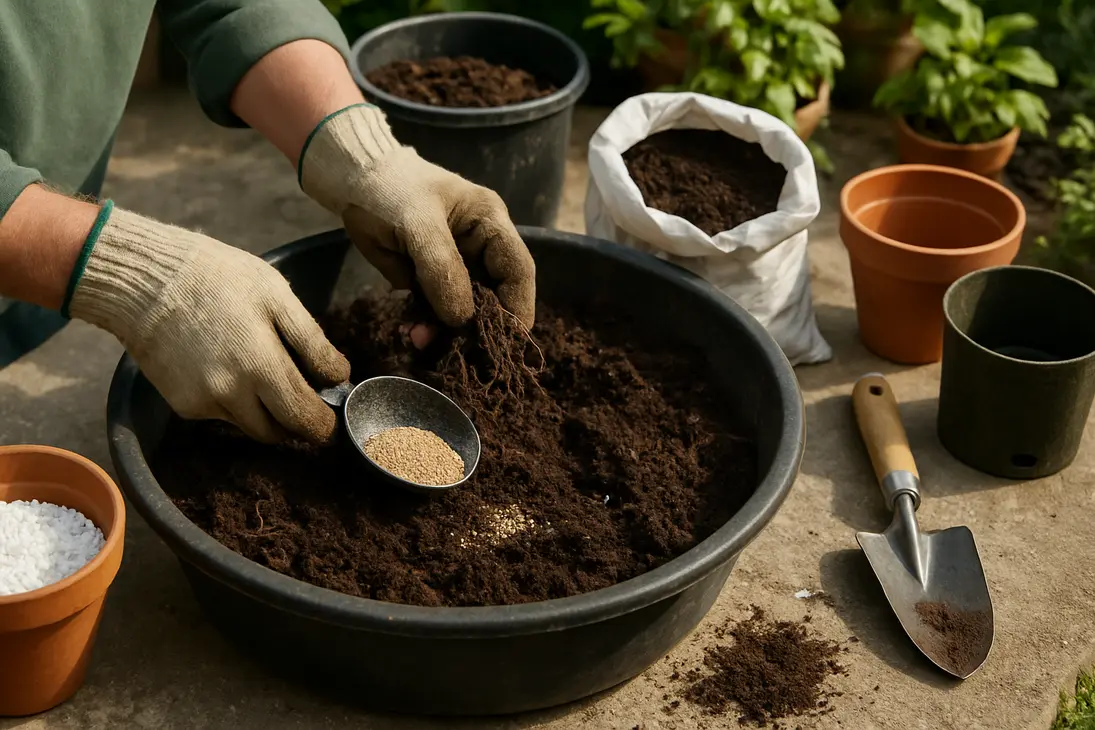
A reliable DIY Monstera mix is:
- 2 parts high-quality indoor potting mix
- 1 part orchid bark
- 1 part perlite or pumice
- Optional: 1 part coco coir or peat moss if the base mix dries too fast
If your potting mix already contains plenty of peat or coir, reduce the extra moisture-holding ingredient. If it feels dense and fine, add more bark and perlite.
The finished mix should feel springy and open. When watered, it should drain quickly but remain lightly damp afterward. For large Monsteras, structure matters because big pots dry slowly in the center and heavy plants can compress soft soil.
Best soil mix for Ficus elastica
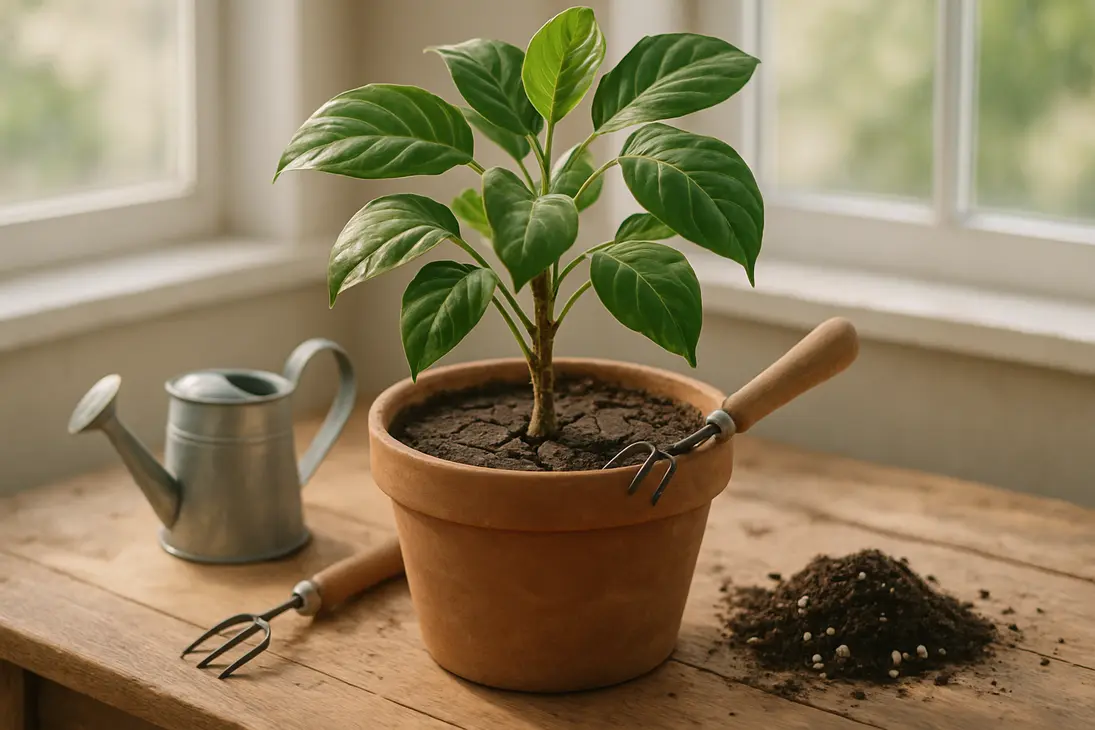
Ficus elastica usually does best in a quality indoor potting mix amended for drainage. It does not need the very chunky aroid mix that Monstera prefers.
A simple Ficus elastica mix is:
- 3 parts indoor potting mix
- 1 part perlite or pumice
- Optional: ½ to 1 part fine orchid bark for larger pots or heavier mixes
This blend drains well while holding enough moisture for the plant’s woody root system. Rubber plants can become stressed if they swing sharply between wet and bone dry.
If a small rubber plant dries too quickly, use less bark and more potting mix. If a large pot stays wet for a week or more, add more perlite or pumice and consider a smaller pot. Variegated forms such as ‘Tineke’ or ‘Ruby’ often grow more slowly, so they may use water more slowly too.
Can they use the same soil?
Yes. Monstera and Ficus elastica can share a soil if it is well-draining, lightly moisture-retentive, and moderately chunky.
A good middle-ground mix is:
- 2 parts indoor potting mix
- 1 part perlite or pumice
- 1 part orchid bark
To optimize it, add more bark for Monstera or more fine potting mix for Ficus elastica. Add more perlite or pumice if the pot is large, the room is cool, or the light is low. Add more coir, peat, or potting mix if the soil dries too quickly.
Ingredients to Use — and What to Avoid
Most soil problems come from poor aeration, too much water retention, or a mismatch between soil, pot, and watering habits.
Good ingredients
Indoor potting mix
Use a light indoor mix as the base. Avoid heavy outdoor container soil.
Perlite or pumice
Both improve drainage and air space. Perlite is lightweight and common. Pumice is heavier, longer-lasting, and less likely to float.
Orchid bark
Bark adds chunky structure. It is especially helpful for Monstera and useful in smaller amounts for Ficus elastica.
Coco coir or peat moss
Both hold moisture. Coco coir often rewets more easily after drying, while peat can become hydrophobic if it dries completely.
Compost or worm castings in small amounts
Use sparingly indoors. Too much can make the mix heavy, wet, and attractive to fungus gnats.
Ingredients to use carefully
Sand
Fine sand can make potting soil denser instead of airier. If used, it should be coarse horticultural sand, but perlite or pumice is usually better.
LECA or semi-hydro setups
LECA is a different growing system, not just a soil amendment. It requires different watering, nutrient, and root-care habits.
Heavy compost-rich mixes
Too much compost holds water, breaks down quickly, and reduces air space. Keep it as a minor amendment.
Ingredients to avoid
Outdoor garden soil
Garden soil is too dense for indoor pots and may contain pests, weed seeds, or pathogens.
Dense moisture-control potting soils
These often stay wet too long indoors, especially in low light.
Mixes with no aeration amendments
Plain fine-textured potting mix can compact over time. Add perlite, pumice, bark, or another structural ingredient.
Pot Choice, Drainage, and Watering Work With the Soil
Even good soil can fail in the wrong pot. Soil, pot size, drainage, light, temperature, and watering all work together.
Use pots with drainage holes
Use pots with drainage holes for both plants. Without them, water collects at the bottom and creates a hidden saturated layer.
If you like a decorative pot without holes, use it as a cachepot. Keep the plant in a nursery pot with holes, water thoroughly, let it drain, then return it to the outer pot. Do not let the inner pot sit in water.
Avoid oversized pots that stay wet too long
A pot that is too large holds more soil than the roots can use. That extra soil stays wet, especially in the center and bottom.
When repotting, usually move up only one pot size, about 1–2 inches wider for small to medium plants. For large plants, still avoid a dramatic jump. If a Monstera needs stability, use a heavy cachepot, moss pole, or stake rather than an oversized root pot.
Water based on soil dryness, not a fixed schedule
Do not water only because it is a certain day of the week. Water when the soil has dried enough.
For Monstera, water when the top few inches are dry, then water thoroughly until excess drains out. For Ficus elastica, let the top 2–3 inches dry before watering. In low light, cool rooms, or large pots, wait longer.
Use your finger, a wooden chopstick, or pot weight to judge moisture. Moisture meters can help, but they may be unreliable in chunky mixes.
Signs the soil is staying too wet
Check for overly wet soil if you see:
- Yellowing lower leaves
- Leaf drop
- Mushy stems or soft roots
- Fungus gnats
- Musty or sour smell
- Soil that stays wet for many days
- Stalled growth despite adequate light
Healthy roots are usually firm and pale to tan. Rotten roots are soft, dark, and may smell bad.
When to Repot or Refresh the Soil
Soil breaks down over time. Organic matter decomposes, roots fill the pot, minerals accumulate, and the mix can lose structure. Repotting can restore airflow and drainage, not just provide more room.
Signs your plant needs fresh soil
Your Monstera or Ficus elastica may need fresh soil if:
- Water sits on top before soaking in.
- The mix is dense, muddy, or compacted.
- The plant dries out extremely fast because roots fill the pot.
- Roots circle tightly around the root ball.
- Water runs down the sides without moistening the center.
- The pot smells musty.
- Fungus gnats keep returning.
- Growth has slowed despite otherwise good care.
Aerial roots on Monstera do not automatically mean repotting is needed. For Ficus elastica, leaf drop can come from soil issues, but also from light changes, drafts, underwatering, or relocation.
Best time to repot
The best time to repot both plants is spring or early summer, when they are entering active growth. They usually recover faster then.
Repot at other times only if needed for root rot, sour soil, or severe compaction. Avoid heavy root pruning in winter unless the roots are unhealthy.
How much old soil to remove
If the plant is healthy, remove only loose old soil and gently loosen the outer roots. Do not bare-root a healthy plant unless necessary.
If the soil is rotten, sour, pest-infested, or extremely compacted, remove more of it. Trim mushy roots with clean scissors, then repot into fresh, airy mix.
After repotting, water thoroughly once to settle the soil. Then let it dry appropriately before watering again. Fresh mix may hold moisture differently from the old one.
Should you test soil pH or nutrients?
For most indoor Monstera and Ficus elastica owners, pH testing is not the first priority. A good indoor potting mix is usually suitable. Drainage, aeration, light, and watering matter more day to day.
Fresh potting mix may contain starter nutrients, but these run out over time. During active growth, use a balanced houseplant fertilizer according to the label. Do not try to fix compacted or waterlogged soil with fertilizer; poor root conditions must be corrected first.
Conclusion
The best soils for Monstera and Ficus elastica are similar but not identical. Monstera prefers a chunky, airy aroid mix with bark, perlite or pumice, and a moisture-holding base. Ficus elastica prefers a well-draining indoor potting mix that is slightly less chunky and more moisture-stable.
Avoid garden soil, dense moisture-control mixes, pots without drainage holes, and oversized pots that stay wet. If you want one shared mix, use a moderately chunky indoor blend, then adjust: more bark for Monstera, more fine potting mix for Ficus elastica.
Good soil should not stay soggy, dry instantly, or collapse into a dense mass. It should give the roots both moisture and oxygen.
FAQ
Can I use regular potting soil for Monstera and Ficus elastica?
Yes, but use it as a base rather than straight from the bag. For Monstera, add orchid bark plus perlite or pumice. For Ficus elastica, add perlite or pumice and, if needed, a smaller amount of bark.
Avoid dense all-purpose soil with little visible aeration.
Is cactus soil good for Monstera or Ficus elastica?
Cactus soil can be part of a mix, but it is not always ideal by itself. Some cactus mixes are too dry and gritty; others are still peat-heavy.
For Monstera, improve cactus soil with orchid bark and extra perlite or pumice. For Ficus elastica, blend it with indoor potting mix so it retains a little moisture.
How do I make soil drain better for indoor plants?
Add airy ingredients such as perlite, pumice, orchid bark, or coarse coco chips. A simple starting point is 1 part perlite or pumice to 3 parts potting mix. For Monstera, add bark too.
Also make sure the pot has drainage holes and is not too large.
Should Monstera and Ficus elastica soil stay moist?
The soil should hold light moisture after watering, but it should not stay constantly wet. Let the top few inches dry before watering again.
Monstera can handle a chunkier mix that dries somewhat faster. Ficus elastica often prefers a slightly steadier mix. If the pot stays wet for many days, the soil may be too dense, the pot too large, or the light too low.
You Might Also Like