Can You Use Ashes as Fertilizer in the Garden?
Yes—some ashes can be used as fertilizer, but only in the right situation. Clean wood ash from untreated firewood can add minerals and raise soil pH. It is best treated as a targeted mineral amendment with a liming effect, not a balanced fertilizer.
The key word is clean. Ash from natural, untreated wood is very different from ash from charcoal briquettes, coal, painted lumber, treated wood, glossy paper, or household trash. The wrong ash can introduce salts, metals, chemical residues, or contaminants, especially risky in food gardens.
Used carefully, wood ash can help acidic soils and plants that benefit from potassium. Used carelessly, it can make soil too alkaline, interfere with nutrient uptake, damage seedlings, and harm acid-loving plants.
What Ashes Add to Garden Soil
Wood ash is the mineral residue left after wood burns. Most carbon is lost as smoke and gases, while minerals the tree absorbed remain in concentrated form.
Wood ash can:
- Add potassium and trace minerals
- Supply calcium
- Raise soil pH
- Act somewhat like a mild lime substitute
Because ash affects both fertility and pH, it requires more caution than many organic amendments.
Nutrients Found in Wood Ash
The nutrient content of wood ash varies by tree species, growing conditions, burned plant parts, fire temperature, and how much charcoal or debris remains.
Clean wood ash may contain:
- Potassium
- Calcium
- Magnesium
- Phosphorus
- Trace minerals such as boron, copper, zinc, manganese, and iron
Potassium helps plants regulate water, strengthen stems, resist stress, and support flowering and fruiting. Calcium is useful too, but the calcium compounds in ash are alkaline. If your soil is already neutral to alkaline, ash is usually the wrong way to add calcium.
Why Ashes Raise Soil pH
Wood ash is alkaline because burning leaves behind mineral compounds such as carbonates and oxides. When these mix with moist soil, they neutralize acidity and raise pH.
That can help if your soil is too acidic for the crops you grow. But if soil becomes too alkaline, plants may struggle to absorb iron, manganese, phosphorus, and other nutrients even when those nutrients are present.
Wood ash is not harmless dust. It is a chemically active amendment.
What Ashes Do Not Provide
Wood ash does not provide nitrogen. Nitrogen is lost during burning, so ash will not feed leafy crops the way composted manure, blood meal, fish emulsion, or balanced fertilizers can.
It also does not add meaningful organic matter. Compost improves structure, moisture retention, and soil biology; ash does not. Think of wood ash as a targeted amendment, not a substitute for compost or complete fertilizer.
When Ashes Are Helpful—and When They Are Not
Whether ashes help depends mainly on:
- Your current soil pH
- The plants you are growing
- Whether your soil needs potassium or liming
Having a steady supply from a fireplace or wood stove does not mean your garden needs it.
Best Situations for Using Wood Ash
Wood ash is most useful when:
- Soil is acidic
- A soil test shows low or moderate potassium
- Crops prefer slightly acidic to neutral soil
- You are not already applying lime
- You can spread the ash thinly and evenly
It can be practical in established beds where pH is known to run low, especially in rainy regions with naturally acidic soils. It may also be used as a light mineral addition in compost, but only in small amounts.
Plants That May Benefit from Ashes
Plants that may appreciate small amounts of wood ash include those that prefer near-neutral soil and use potassium.
| Plant group | Why ash may help | Caution |
|---|---|---|
| Brassicas | Prefer soil that is not strongly acidic | Keep away from seedlings |
| Onions, garlic, leeks | May benefit from potassium | Avoid alkaline soils |
| Beans and peas | Grow well in mildly acidic to neutral soil | Do not overapply |
| Asparagus | Tolerates slightly alkaline conditions | Apply only if pH supports it |
| Non-acid-loving fruit trees and berries | Potassium supports flowering and fruiting | Avoid blueberries |
| Lawns on acidic soil | May act like light lime | Spread evenly |
Tomatoes are a common question. Wood ash can supply potassium and calcium, but tomatoes generally prefer slightly acidic soil. If pH is already suitable, ash may cause more harm than good. Use ash only as a small, soil-test-informed addition.
Plants and Soils That Should Avoid Ashes
Do not use wood ash around acid-loving plants, including:
- Blueberries
- Rhododendrons
- Azaleas
- Camellias
- Gardenias
- Pieris
- Mountain laurel
- Many heathers
- Acid-loving ferns
- Potatoes, especially where potato scab is a problem
Potatoes deserve special caution because more alkaline soil can encourage common scab. Keep ash away from potato beds unless a soil test gives you a specific reason to use it.
Also avoid ash if your soil is already alkaline, calcareous, or high in salts. Container plants are another poor fit because small soil volumes can change pH and salt levels quickly.
Which Ashes Are Safe to Use
Not all ashes belong in the garden. Safety depends on what was burned.
For vegetables, herbs, fruit, or any edible crop, be especially strict. Soil contamination can be difficult to reverse.
Safe: Clean, Untreated Wood Ash
The safest garden ash comes from plain, untreated, unpainted wood, such as:
- Firewood from known clean wood
- Untreated branches and prunings
- Natural wood burned in a fireplace, stove, or outdoor fire pit
Hardwood and softwood ash can both be used if the source is clean. Hardwoods often produce more ash because they are denser, but cleanliness matters more than wood type.
Let ash cool completely before handling. Hidden embers can remain hot for a long time. Store cooled ash in a metal container with a lid, away from buildings, mulch, dry leaves, and other flammable materials.
Avoid: Charcoal, Coal Ash, Treated Wood, Painted Wood, and Trash Ash
Do not use ash from:
- Charcoal briquettes
- Coal
- Pressure-treated lumber
- Painted or stained wood
- Plywood, particleboard, MDF, or composite wood
- Glossy paper or colored cardboard
- Household trash
- Chemical fire starters
- Burn piles containing plastic, fabric, rubber, or packaging
Charcoal briquettes may contain binders or lighter fluid residues. Coal ash, treated wood, painted wood, and mixed trash ash can leave contaminants you do not want near roots or food crops.
If you are not sure what was burned, do not use the ash in the garden.
Fireplace vs. Wood Stove Ashes
Fireplace ashes and wood stove ashes can both be suitable if they come only from clean wood.
The differences are mostly practical:
- Wood stoves often produce finer ash.
- Fireplaces may leave more charcoal chunks or debris.
- Outdoor fire pits are more likely to contain mixed materials.
Sift or remove large charcoal pieces if needed. Small bits of natural charcoal are usually not a major concern, but fine gray ash is the main material used as a soil amendment.
How to Apply Ashes as Fertilizer
The safest method is: test first, use small amounts, spread evenly, and repeat only if the soil still needs it.
Ash is easier to add than remove. Too much can create pH problems that take years to correct.
Test Soil Before Applying
A soil test is the best way to decide whether wood ash belongs in your garden. At minimum, check:
- Soil pH
- Potassium level
- Calcium and magnesium balance, if available
- General fertility recommendations
Home pH meters and strips can give rough clues, but lab testing is more reliable. If pH is already near the upper end of your crops’ preferred range, skip the ash. If soil is acidic and potassium is low, ash may be useful.
How Much Ash to Use
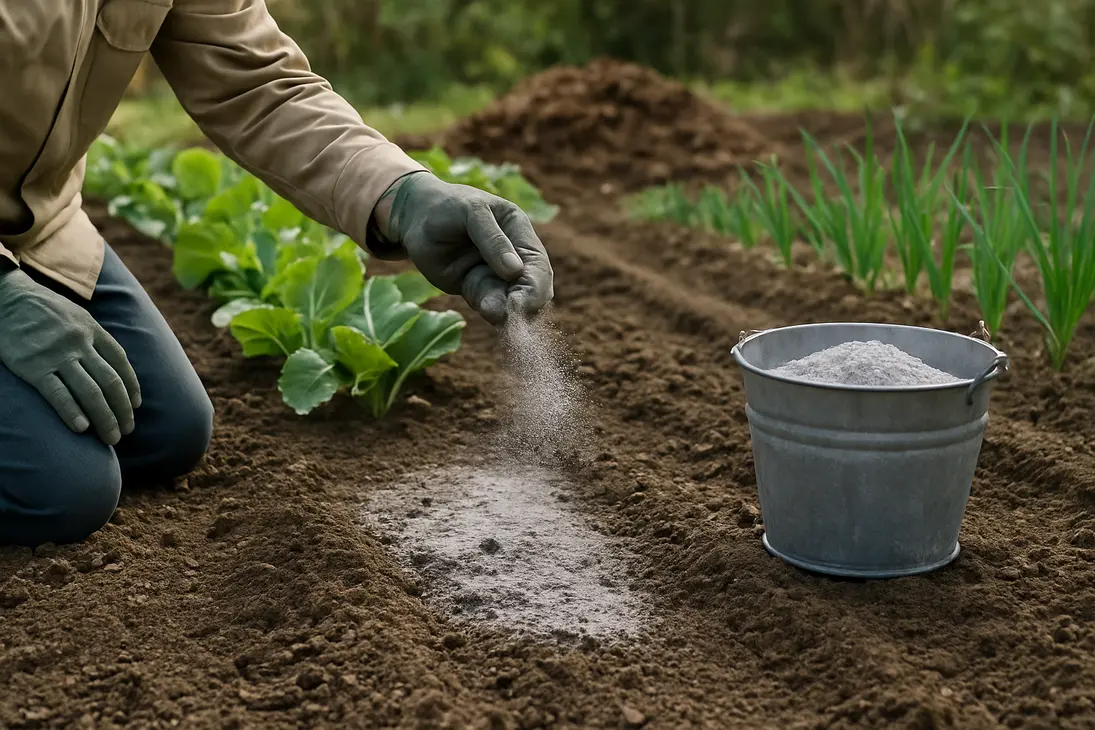
Use less than you think you need. Spread a very thin dusting—enough to lightly gray the soil surface, not coat it. Avoid piles, clumps, or visible layers. A modest handful per square yard is safer than dumping ash heavily.
If you have a soil test, follow its liming and potassium guidance. If lime was applied recently, do not add ash unless the test supports it.
Never dump a bucket of ash in one spot. Concentrated ash can create a highly alkaline patch that harms roots and soil life.
Wear gloves and avoid breathing ash dust. It is fine, powdery, and alkaline, so it can irritate skin, eyes, and lungs.
Where and When to Apply It
Apply wood ash to bare soil before planting or carefully around established plants. Good times include:
- Late winter
- Early spring before planting
- Fall after crops are finished
Spread it evenly and lightly rake it into the top layer of soil. Keep ash off leaves, stems, crowns, and new shoots. If ash lands on foliage, rinse it off.
Avoid applying ash:
- On windy days
- Right before heavy rain
- Directly in seed furrows
- Against plant stems
- On young seedlings
- On frozen ground where runoff is likely
For vegetable beds, apply ash well before sowing so it can disperse through the soil.
Using Ashes in Compost
Wood ash can be added to compost in small amounts. A light sprinkle between layers is enough. Avoid thick bands, which can make parts of the pile too alkaline and slow decomposition.
Ash supplies minerals, not food for microbes. Do not use it to “dry out” wet compost. Add dry leaves, shredded cardboard, straw, or other bulky brown materials instead.
Finished compost containing small amounts of ash is easier to spread evenly than raw ash, but avoid using ash-heavy compost around acid-loving plants.
Common Mistakes to Avoid With Ash Fertilizer
Most problems come from treating ash as harmless or universally beneficial. With wood ash, more can quickly become too much.
Using Too Much at Once
Too much wood ash can:
- Raise pH too high
- Create salty or caustic conditions
- Damage roots and seedlings
- Reduce micronutrient availability
- Disrupt balanced fertility
Overuse can look like nutrient deficiency: yellowing leaves, poor growth, weak stems, or plants that fail to green up despite feeding. The issue may be high pH, not lack of fertilizer.
If you apply too much, remove visible excess if possible. Water to help disperse it, but avoid runoff. Do not add lime or more alkaline amendments. A soil test can guide the next step.
Applying Ashes to Acid-Loving Plants
Blueberries, azaleas, rhododendrons, and similar plants need acidic soil. Ash pushes soil in the opposite direction.
If these plants yellow after ash was applied, high pH may be part of the problem. They may be unable to access iron or other nutrients even if the soil contains them.
Keep ash out of acid-loving beds, and do not add ash to compost or mulch that will later be used around those plants.
Mixing Ashes With the Wrong Fertilizers
Do not mix wood ash directly with nitrogen fertilizers such as ammonium sulfate, ammonium nitrate, or urea. Ash’s high pH can encourage nitrogen loss as ammonia gas.
Also avoid mixing ash directly with fresh manure. Fresh manure is already strong, and alkaline ash can increase nitrogen loss and create a harsh amendment.
A safer approach:
- Use compost for soil building.
- Use nitrogen fertilizer only when plants need it.
- Use ash sparingly when pH and potassium needs justify it.
Do not casually combine wood ash with lime. Both raise pH, and together they can make soil too alkaline.
Ignoring Soil pH Over Time
Wood ash has a cumulative effect. A small amount once may cause no problem, but yearly applications can gradually push soil pH too high.
This is easy to do if you heat with wood and have ash available all winter. The garden may seem like a convenient disposal place, but soil is not a dumping ground.
Track where, when, and how much ash you apply, along with crop performance and pH test results. If pH trends upward, stop using ash. You may not need it again for years.
Conclusion
Clean wood ash can be useful in the garden, but it is not a universal fertilizer. It adds potassium, calcium, and other minerals, and it can raise the pH of acidic soil.
Those same qualities can cause problems. Wood ash contains no nitrogen, adds little organic matter, and can make soil too alkaline if used heavily or repeatedly. Do not apply it to acid-loving plants, alkaline soils, containers, or beds where pH is already suitable.
Use only ash from clean, untreated wood. Apply it sparingly, spread it evenly, and let soil testing guide your decisions.
FAQ
Can I sprinkle ashes directly on my garden?
Yes, but only clean wood ash and only in a thin, even layer. Rake it lightly into the soil and keep it away from seedlings, stems, and leaves.
Use it only if your soil is acidic or needs potassium. If soil is neutral to alkaline, skip it.
Are fireplace ashes good for vegetable gardens?
Fireplace ashes can be good for vegetable gardens if they come from clean, untreated wood and the soil needs them. They may help acidic soils and provide potassium and calcium.
Do not use ash from treated wood, painted wood, charcoal briquettes, glossy paper, trash, or unknown materials. Avoid it in potato beds and around acid-loving crops.
How often should I use wood ash as fertilizer?
Not often. Wood ash should be an occasional amendment, not a weekly or monthly fertilizer. Test soil first, apply lightly if needed, and recheck pH before using more.
Repeated use without testing can make soil too alkaline.
What plants do not like wood ash?
Acid-loving plants do not like wood ash. Avoid it around blueberries, azaleas, rhododendrons, camellias, gardenias, pieris, mountain laurel, and similar plants.
Also avoid ash around potatoes where common scab is a concern, and avoid using it on any plant growing in already alkaline soil.
You Might Also Like