What Makes a Potted Plant Beautifully Arranged?
A beautifully arranged potted plant looks intentional. The plant, pot, soil surface, and placement feel connected rather than accidental. Design creates proportion, color, shape, and style; care keeps the plant clean, healthy, and attractive over time.
The First Impression: Shape, Balance, and Proportion
From a distance, you notice the outline before the leaf detail. A strong arrangement has a clear silhouette: upright and architectural, rounded and lush, trailing and soft, or airy and sculptural.
The first impression depends on plant-to-pot ratio, foliage balance, and visual weight. If the plant is too small for the pot, it looks lost. If the pot is too small, the plant can look top-heavy. If growth is bare on one side, the display may look neglected even when the plant is alive.
A pleasing plant-to-pot ratio
A good plant-to-pot ratio makes the arrangement look stable. As a visual rule, the plant above the soil often looks best at about one to two times the height of the visible pot, though this varies by growth habit.
Compact plants such as peace lilies, ferns, African violets, and peperomias often look balanced when the foliage is roughly as tall as the pot or slightly taller. Tall plants such as snake plants, dracaenas, fiddle-leaf figs, and citrus trees can be much taller if the container visually anchors them.
Width matters too. Foliage that spreads slightly wider than the pot usually looks full and settled. Foliage that extends far beyond a narrow pot, especially on a stand, can look unstable.
Root size and visual size are not always the same. A plant may need only a modest nursery pot but look better inside a larger decorative cachepot. Keep it in a draining inner pot and place that inside the outer container.
Symmetry vs. natural asymmetry
A beautiful potted plant does not need perfect symmetry. Formal plants, clipped shapes, orchids, boxwoods, and architectural foliage often look best centered and even. Plants with movement, such as monstera, pothos, grasses, and hoyas, can look better with controlled asymmetry.
The key is intention. A bare side caused by leaf drop looks tired; a vine trailing over one side of a shelf can look graceful. Turn indoor plants every week or two for even growth, or let a directional shape develop if it suits the display. Either way, prune and train the plant enough that it looks composed.
Height, spread, and visual weight
Height adds drama, spread adds fullness, and visual weight adds stability. Visual weight comes from dense foliage, broad leaves, dark colors, thick stems, heavy containers, rough textures, and low placement.
Use visual weight to correct imbalance. If a plant looks too tall, choose a heavier-looking pot or place it lower. If it looks squat, raise it on a stand. If it looks thin, group it with smaller companion pots instead of expecting one plant to fill the whole space.
Choosing the Right Pot for the Plant
The pot is the frame around the plant. It should support the plant’s character without stealing attention. A decorative pot can be beautiful, but if it competes with variegated leaves, colorful flowers, or a strong plant shape, the result may look busy.
Matching pot style to plant character
Start with the plant’s natural personality.
Architectural plants such as snake plant, yucca, agave, and zamioculcas suit simple cylinders, cubes, and tapered planters. Their strong leaves look best with clean lines.
Soft foliage plants such as ferns, calatheas, and peace lilies suit rounded pots, baskets, or warmer textures. These make the display feel generous and calm.
Trailing plants such as pothos, philodendron, ivy, and hoya need pots that look good from above and from the side. Hanging planters, shelf pots, and raised containers let the trailing habit become part of the arrangement.
Flowering plants usually need quieter pots because the blooms already provide color. White, terracotta, gray, cream, or muted green containers often show flowers better than bright patterned pots.
Mediterranean plants such as lavender, rosemary, olive, and citrus look natural in terracotta, stone, or aged clay. Tropical plants often suit glazed ceramic, dark fiberstone, baskets, or simple modern planters.
Using color contrast or harmony
Color can make a potted plant feel arranged rather than random. Harmony creates a calm effect: a sage pot with soft green foliage, a cream pot in a neutral room, or terracotta on a brick patio. Contrast creates focus: dark foliage in a white pot, silver leaves in charcoal, or red foliage in pale stone.
When unsure, repeat a color already nearby, such as a wall, cushion, shelf, paving stone, or timber deck. Use highly saturated pots carefully; bright containers work best with simple foliage or a deliberate color scheme.
Why drainage and size still matter visually
Drainage affects beauty because poor drainage quickly leads to yellow leaves, fungus gnats, root rot, and tired growth. If a decorative pot has no hole, use it as a cachepot and keep the plant in a draining inner pot.
Size affects both appearance and health. A much-too-large pot can overwhelm a small plant and hold excess wet soil. A too-small pot can dry out quickly, restrict roots, and make the plant look cramped.
For most houseplants, repot only one size up: about 1 to 2 inches wider for small and medium plants, or 2 to 4 inches wider for large floor plants. Outdoor containers may need more volume because sun, wind, and heat dry them faster.
Arrangement Details That Make a Potted Plant Look Beautiful
Once the plant and pot work together, small finishing details make the display feel polished: grouping, top dressing, clean leaves, tidy stems, and thoughtful placement.
Grouping plants by height and texture
Grouping pots is one of the easiest ways to make plants look designed. A single small pot on a large surface may look lonely; three pots of different heights can look intentional.
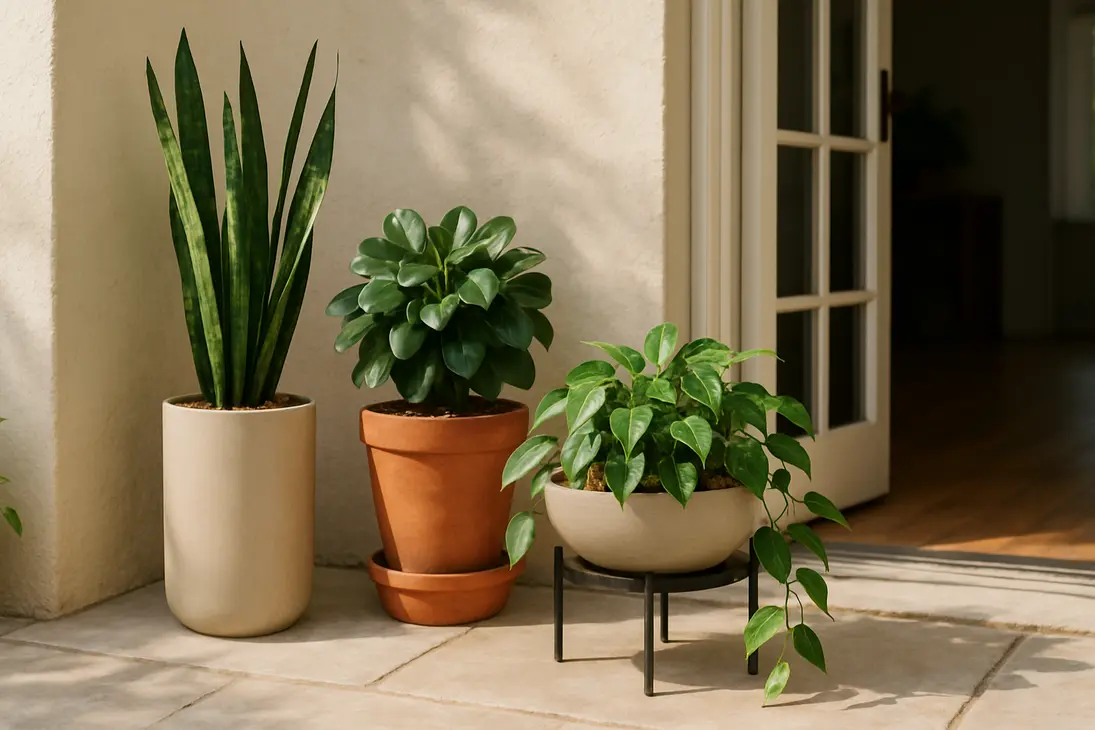
Vary height, texture, and form. Pair an upright plant with a rounded plant and a trailing plant, such as snake plant, peperomia, and pothos. Odd-numbered groups, especially three or five, often look natural. Matching pairs can look formal on either side of a doorway.
The pots do not need to match exactly, but they should share something: color, material, shape, or style. A group of terracotta pots can vary in size because the material ties them together.
Using pebbles, moss, or mulch as top dressing
Top dressing hides exposed potting mix and gives the surface a finished look. Options include pebbles, horticultural grit, bark mulch, preserved moss, sheet moss, and coconut fiber.
Match the material to the plant. Pebbles or grit suit succulents, cacti, snake plants, and modern containers. Bark suits outdoor pots, herbs, shrubs, and rustic displays. Moss looks soft around orchids, ferns, and gift plants, but it should not stay constantly wet around plants that prefer drier soil.
Use only a thin layer. A deep dressing can slow drying and make it harder to judge moisture. If soil smells sour, stays wet too long, or has salt crusts, fix the drainage, mix, or watering before covering the surface.
Keeping leaves, stems, and pot surfaces tidy
Clean plants look better. Dust, dead leaves, mineral stains, and fallen debris distract from the shape.
Wipe broad houseplant leaves with a damp cloth every few weeks. Use a soft brush for delicate or fuzzy leaves. Remove yellowing leaves with clean scissors rather than tearing them away.
Outdoor pots need the same attention. Deadhead flowers, trim broken stems, brush soil from rims, and wipe mineral marks from glazed pots. Pruning is part of presentation: pinch leggy herbs, trim long pothos vines, and rotate plants that lean too far.
Placing the plant where it complements the room or garden
Placement determines whether a plant looks decorative or merely stored. The plant should suit the scale, light, and function of the space.
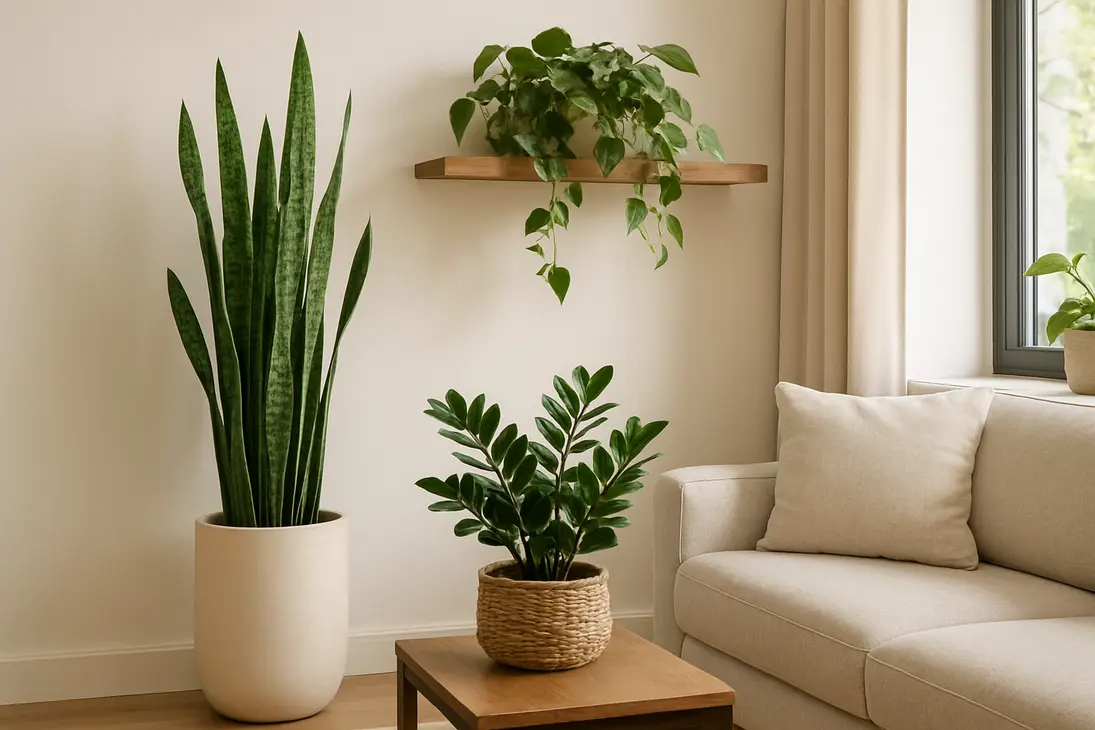
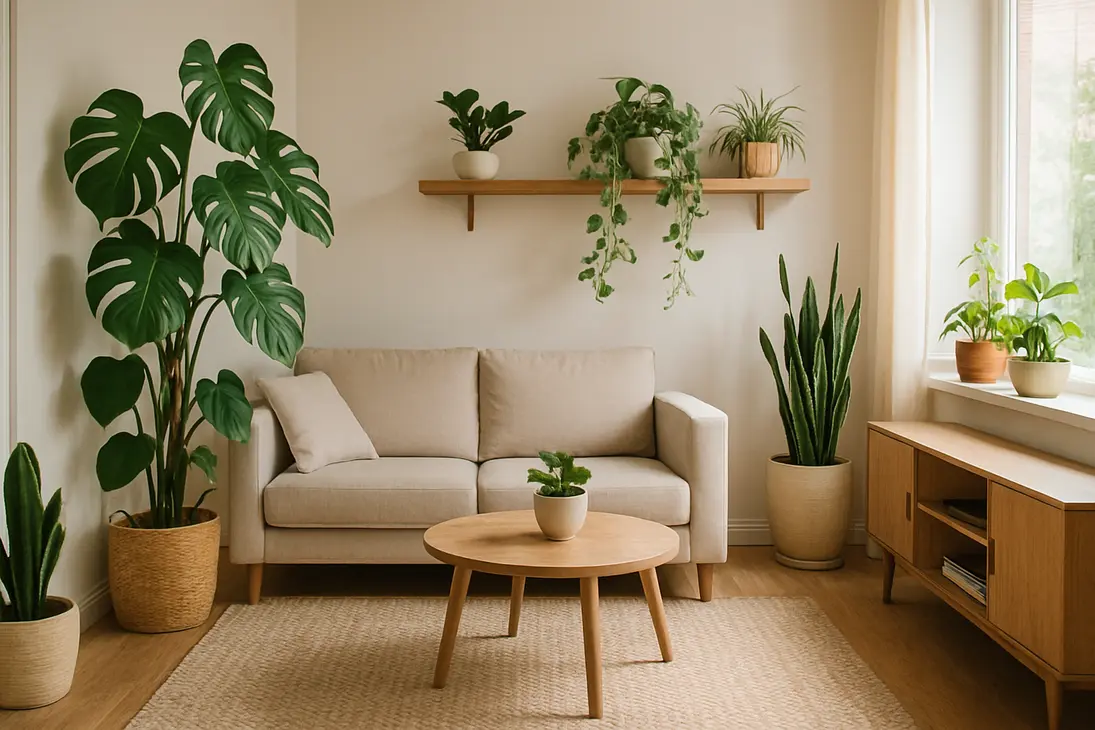
Indoors, large plants work well in empty corners, beside sofas, near windows, or behind chairs where they add height. Small plants suit shelves, desks, bedside tables, and counters, but they need breathing room rather than clutter.
Outdoors, pots can frame entrances, soften steps, mark seating areas, or create focal points. Matching pots beside a door feel formal. A cluster of herbs near a kitchen door feels useful and inviting.
Consider the viewing angle. A high shelf needs a trailing plant or attractive lower foliage. A floor plant should rise above nearby furniture. A pot against a wall can have its best side forward, while a patio pot viewed from all sides should be full all around.
The Hidden Care Behind a Beautiful Potted Plant
Lasting beauty depends on care that may not be obvious: suitable soil, light, watering, drainage, pruning, repotting, and weather protection. A plant in poor conditions becomes leggy, yellow, sparse, or unstable no matter how stylish the pot is.
Soil quality and sun exposure
Container plants need potting mix that holds enough moisture but still drains well. Garden soil is usually too dense for pots and can compact around roots.
Different plants need different mixes. Succulents and cacti need gritty, fast-draining soil. Tropical foliage plants usually prefer a lighter houseplant mix that holds moderate moisture. Orchids need bark-based media. Outdoor annuals and shrubs need a quality container mix that can handle frequent watering.
Light shapes the plant’s form. Too little light causes stretching, pale leaves, fewer flowers, and one-sided growth. Too much direct sun can scorch leaves or dry pots too quickly. Before choosing a spot for appearance, make sure it suits the plant’s needs.
Watering enough without overwatering
There is no single watering schedule that fits every plant. Pot size, material, soil mix, season, light, temperature, and plant type all matter. Terracotta dries faster than glazed ceramic or plastic, and outdoor pots may need frequent watering in heat.
For many houseplants, check the soil before watering. Push a finger into the top inch or two. If it is still moist, wait. If it is dry and the plant prefers moderate moisture, water thoroughly until excess drains out, then empty the saucer.
Overwatering usually means watering too often, not adding too much at once. A deep watering followed by proper drying is better than constant small sips that keep roots stressed.
Knowing when to repot
Repot when the plant has outgrown its container or the mix has broken down. Signs include roots circling tightly, roots emerging from drainage holes, water running straight through, soil drying much faster than before, slowed growth, instability, or compacted mix.
Spring or early summer is often best because many plants are entering active growth. Move up gradually, loosen circling roots gently, remove dead or mushy roots, and use fresh mix suited to the plant.
If a plant is already in a large decorative container, you may be able to refresh the top layer of mix instead of moving to a bigger pot.
Protecting outdoor pots from heavy rain
Outdoor pots can handle rain only if they drain freely. Repeated heavy rain can waterlog soil, reduce oxygen around roots, leach nutrients, damage flowers, and tip lightweight containers.
Use pots with drainage holes and keep the holes clear. Raise containers slightly on pot feet, bricks, or risers if water pools underneath. Avoid leaving saucers under outdoor pots during wet weather unless you empty them quickly.
Move plants that dislike wet roots under eaves or into shelter during long storms. After heavy rain, check the soil before watering again; the surface may look dry while the lower root zone is still saturated.
Why Nursery Plants Often Look Better Than Plants at Home
Nursery plants often look fuller, more compact, and more floriferous because they are grown for a strong sales-ready appearance. Nurseries control light, spacing, humidity, watering, feeding, temperature, pruning, and timing. Plants may be cleaned, rotated, trimmed, and displayed when they are at their peak.
Homes are less controlled. A plant may sit far from a window, near dry heating, in imperfect drainage, or on an irregular watering routine. Outdoor containers face wind, storms, heat, shade, and pests.
You can copy some nursery advantages:
- Give plants the brightest suitable light.
- Rotate them for even growth.
- Prune lightly before they become leggy.
- Feed during active growth if needed, following the label.
- Refresh tired potting mix.
- Remove spent flowers and damaged leaves.
- Buy flowering plants with unopened buds for a longer display.
Also adjust expectations. A plant that was perfect on purchase day is still a living thing. Flowers fade, growth changes, and foliage responds to the home environment. The goal is not frozen perfection, but a plant that stays healthy, attractive, and suited to its space.
Conclusion
A beautifully arranged potted plant comes from several quiet choices: pleasing shape, suitable proportion, the right pot, clean foliage, tidy soil, and intentional placement.
Lasting beauty depends on care as much as design. Good potting mix, suitable light, careful watering, drainage, pruning, and repotting all affect how the arrangement looks over time. When proportion, container, placement, and care align, even a simple green plant can become one of the most beautiful features in a room or garden.
FAQ
How do you make a potted plant look more attractive?
Remove dead leaves, wipe dusty foliage, prune leggy stems, and rotate uneven growth. Check whether the pot suits the plant’s size, color, and style. Add a thin top dressing if appropriate, and give the pot enough visual space. If the plant is small, group it with pots of different heights and textures.
What size pot looks best for a plant?
The pot should look large enough to anchor the plant without overwhelming it. Many plants look balanced when the foliage is about one to two times the height of the visible pot, though tall architectural plants can be much taller.
For health, avoid moving to a much larger pot unless necessary. If you want a bigger decorative look, place the functional pot inside a larger cachepot.
When should I repot a potted plant?
Repot when roots circle densely, grow through drainage holes, the soil dries much faster than before, growth slows, the plant becomes top-heavy, or the mix has compacted.
Spring or early summer is often best for many plants. Move up gradually and use fresh potting mix suited to the plant.
How often should a potted plant be watered?
Watering depends on the plant, pot, soil, light, temperature, and season. Instead of using a fixed schedule, check the soil. Many common houseplants need water when the top inch or two has dried; succulents usually need to dry more thoroughly.
Water deeply until excess drains out, then let the plant dry to the right level before watering again. Empty indoor saucers, and check outdoor pots carefully after rain.
You Might Also Like