What Flowers Survive Houston Winters and Still Bloom in Summer?
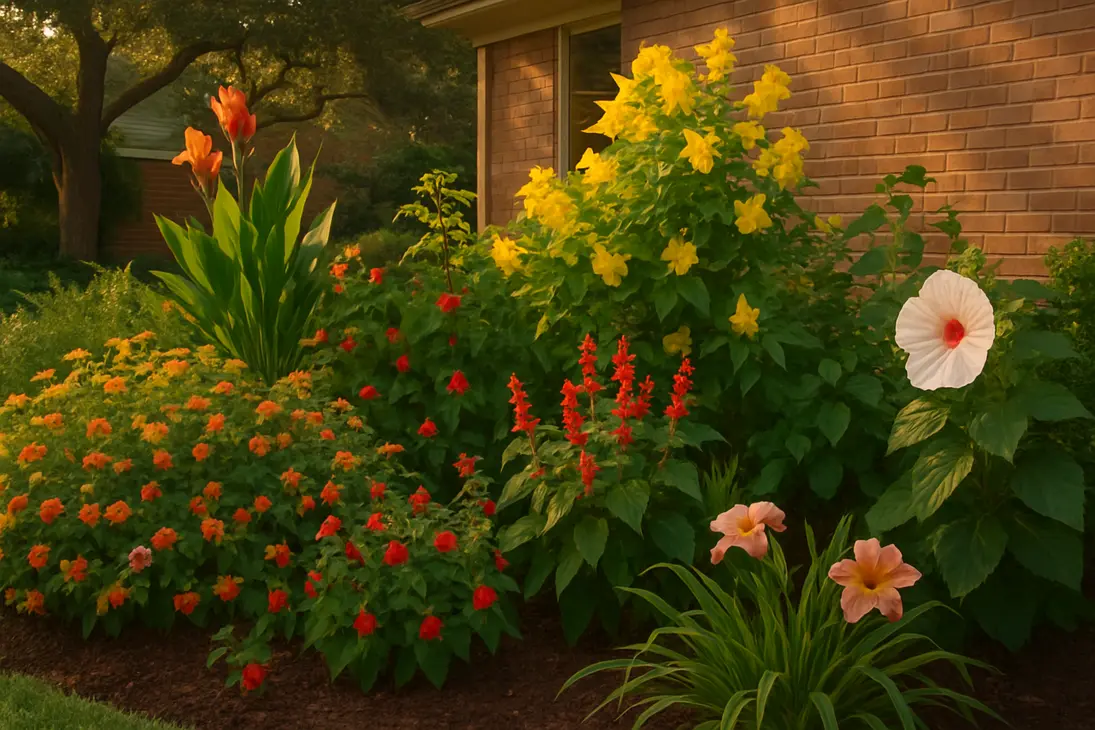
Houston gardeners have a real advantage: the city’s winters are usually mild enough for many perennials, shrubs, bulbs, and Texas-adapted flowers to survive and bloom again when summer heat arrives. The catch is that Houston winters are not consistently mild. A plant may thrive for years, then get knocked back by one hard freeze.
The best flowers that survive Houston winters and still bloom in summer are usually heat-tolerant perennials, natives, adapted shrubs, and root-hardy plants such as lantana, salvia, Turk’s cap, coreopsis, cannas, daylilies, hardy hibiscus, esperanza, crinums, society garlic, and autumn sage. Some stay evergreen or semi-evergreen in mild winters. Others may die to the ground after a freeze but return from the roots in spring.
Houston Winters: Mild Most Years, but Cold Snaps Matter
Houston is generally treated as USDA Zone 9, which means many plants that would be tender farther north can survive outdoors in the ground here. But Zone 9 does not mean “no freezes.” Houston can still get sudden cold snaps, icy wind, wet winter spells, and occasional unusually low temperatures.
For gardeners, the important question is not simply whether a plant is labeled “hardy.” It is how it handles winter.
- Evergreen through winter: These plants keep most of their foliage in a typical Houston winter, though they may pause blooming or look thinner.
- Root-hardy and returning after a freeze: These plants may lose top growth, look dead for a while, and then resprout from the crown or roots in spring.
- Tender plants that need protection: Tropical annuals and tender perennials may survive mild winters but can be killed by a hard freeze unless covered or moved.
Houston’s winter risks are not only about temperature. Soggy soil can rot roots and crowns, especially for plants that prefer sharp drainage. Wind exposure can burn foliage during freezes. Containers are more vulnerable than garden beds because roots get colder faster above ground.
When choosing flowers, look for resilience: plants that tolerate Houston’s summer heat, handle heavy rain, and either remain alive or return reliably after winter damage.
Best Flowers That Can Survive Houston Winters and Bloom in Summer
The following plants are among the most dependable choices for Houston gardeners who want flowers that can survive winter and still perform during hot, humid summers. Exact performance depends on drainage, sun exposure, freeze severity, and whether the plant is in the ground or a pot.
Tough Perennials for Sun
Sunny Houston beds can be brutal in July and August, so winter survival is only half the test. These perennials combine cold tolerance with summer toughness.
| Flower | Winter behavior in Houston | Summer bloom notes | Best conditions |
|---|---|---|---|
| Lantana | Semi-evergreen in mild winters; may freeze back and return | Heavy heat-season blooms; attracts butterflies | Full sun, well-drained soil |
| Salvia | Many types are root-hardy or evergreen | Long bloom season; pollinator-friendly | Sun to part sun, good drainage |
| Coreopsis | Usually perennial or reseeding, depending on type | Yellow, gold, or bicolor daisy-like flowers | Full sun, average soil |
| Black-eyed Susan | Often perennial or self-seeding | Strong summer color | Sun, moderately drained soil |
| Coneflower | Usually returns if drainage is good | Summer blooms; seedheads feed birds | Sun to light shade |
| Verbena | Can be perennial in mild winters; some types short-lived | Spreading purple, pink, or red flowers | Full sun, sharp drainage |
| Gaura | Often survives and returns; may thin in soggy soil | Airy white or pink flowers | Sun, well-drained beds |
| Yarrow | Hardy, but dislikes wet feet | Flat flower clusters; drought tolerant | Sun, lean well-drained soil |
| Society garlic | Usually evergreen or semi-evergreen | Lavender flowers; onion-scented foliage | Sun to part sun, good drainage |
Lantana is a classic choice because established plants often return strongly after freezes. In mild winters, it may keep foliage. In a hard freeze, stems can brown, but the crown often resprouts when warm weather returns. Give it full sun and avoid rich, constantly wet soil.
Salvia is a broad and useful group. Autumn sage, mealy blue sage, Mexican bush sage, and other salvias vary in cold tolerance, but many are well adapted to Texas gardens. They bloom best with sun, reasonable drainage, and occasional trimming after bloom cycles.
Coreopsis, black-eyed Susan, and coneflower bring a meadow-like look and cheerful summer color. Coneflowers especially appreciate drainage; heavy clay that stays saturated can shorten their life.
Verbena and gaura work well at the front or middle of sunny beds. Both can be tough once established, but they dislike cold, wet soil. Raised beds, berms, or amended planting areas help.
Yarrow is hardy but can struggle where irrigation or winter rain keeps the crown too wet. Society garlic is easier in many Houston yards and provides strappy foliage plus summer blooms with little fuss.
Native and Texas-Friendly Bloomers
Native and Texas-adapted flowers are often the best long-term choice because they suit local heat, rainfall patterns, pollinators, and soils. They are not immune to freeze damage, but they often recover better than tender ornamentals.
Turk’s cap is one of the most valuable flowering plants for Houston shade and part shade. It produces red, turban-shaped flowers through the warm season and is useful under trees or along fences. It may die back after a hard freeze, but established plants commonly return from the roots.
Greg’s mistflower is a butterfly magnet with soft blue-purple flowers in warm weather. It can spread when happy, so use it where a naturalistic patch is welcome.
Texas betony offers red tubular flowers and good heat tolerance. It works well in pollinator plantings and mixed borders, especially where drainage is decent.
Rock rose is a small, shrubby Texas native with pink hibiscus-like blooms. It handles heat and drought once established and may bloom over a long season with occasional light shaping.
Gulf Coast penstemon fits the region well, particularly in beds that are moist but not stagnant. It blooms earlier than some summer perennials but is a reliable part of a layered native planting.
Autumn sage is one of the best Texas-friendly flowering perennials for sun to part sun. Despite the name, it can bloom in multiple waves from spring through fall, especially if trimmed lightly.
Summer-Flowering Shrubs and Larger Plants
If you want dependable color with more height and structure, flowering shrubs and larger perennials can carry the summer garden. Some remain woody in mild years, while others behave like dieback perennials after freezes.
Esperanza, also called yellow bells, is a Houston favorite for bright yellow trumpet flowers in summer and fall. It loves heat and sun. In mild winters, it may remain woody; after a hard freeze, it often dies back but can return from the base if established and mulched.
Hardy hibiscus is known for dramatic summer flowers. Unlike tropical hibiscus, hardy hibiscus is a perennial that naturally dies back in winter and returns in spring. It likes sun and consistent moisture, making it useful in Houston’s heavier soils as long as the site is not stagnant.
Plumbago brings clear blue flowers and a soft, sprawling habit. In protected spots, it may overwinter with minimal damage. In colder or exposed areas, it may freeze back. Mulch and a sheltered microclimate improve its chances.
Firebush has orange-red tubular flowers that hummingbirds love. It may be damaged by freezes, but established plants are often root-hardy in many Houston gardens. Treat it as a dieback shrub in colder pockets.
Roses, especially shrub roses and antique varieties, can do well in Houston when chosen carefully. Look for disease-resistant shrub roses, old garden roses, and varieties known to handle heat and humidity. They need sun, air circulation, and realistic maintenance, but they can bloom repeatedly through the warm season.
Bulbs, Rhizomes, and Spreading Plants
Bulbs and rhizomatous plants are excellent for Houston because their underground storage structures help them survive seasonal stress.
Cannas are among the easiest tropical-looking plants for Houston. Their foliage may freeze, but the rhizomes often survive in the ground and send up new shoots in spring. They like sun and moisture and can spread into large clumps.
Crinums are long-lived Southern garden bulbs with strappy foliage and summer flowers. Once established, they are tough, persistent, and well suited to Gulf Coast gardens.
Daylilies handle Houston winters easily and bloom in late spring to summer, depending on variety. They do best with sun, though afternoon shade can help in very hot spots. Evergreen and semi-evergreen types are common in the South.
Louisiana iris is a strong choice for wetter soils, pond edges, rain gardens, and low areas that stay moist. It blooms mainly in spring, but it pairs well with summer bloomers nearby.
Rain lilies are small bulbs that bloom after rains, often in warm months. They naturalize well in lawns, borders, and informal beds where they are not disturbed too much.
Flowers That Look Good in Winter but Usually Fade Before Summer
A common source of confusion is the difference between flowers that thrive in Houston winter and flowers that survive winter and bloom in summer. Many cool-season annuals look fantastic from late fall through spring, but they are not meant to power through Houston’s summer heat.
These include:
- Pansies and violas
- Snapdragons
- Dianthus
- Calendula
- Sweet alyssum
- Cyclamen
Pansies and violas are excellent winter color plants, but they usually collapse as temperatures climb. Snapdragons may last into spring but generally decline in summer. Dianthus can sometimes act like a short-lived perennial if drainage is excellent, though many plantings fade once heat and humidity build.
Calendula, sweet alyssum, and cyclamen are best treated as cool-season accents. They are useful plants — just not the answer if your goal is a bed that blooms all summer after surviving winter.
A practical approach is to use cool-season annuals as temporary color around permanent plants. For example, plant pansies in front of dormant hardy hibiscus, lantana, or cannas in winter. As the annuals fade in late spring, the summer perennials begin taking over.
How to Protect Flowers During Houston Freezes
Even hardy plants recover better with a little preparation. Houston freezes are often brief, so simple protection can make the difference between a plant dying, resprouting weakly, or returning vigorously.
Before a freeze, water plants if the soil is dry. Moist soil holds temperature more steadily than bone-dry soil. Do not water already soggy beds; the goal is to prevent drought stress, not create cold mud around roots.
Add mulch around root zones before winter. A 2- to 3-inch layer of pine straw, shredded leaves, bark mulch, or compost helps insulate crowns and roots. Keep mulch slightly away from the direct base of stems to reduce rot.
When a hard freeze is forecast, cover vulnerable plants with frost cloth, old sheets, or other breathable fabric. The cover should reach the ground if possible, trapping warmth from the soil. Avoid letting plastic touch leaves. If you use plastic as an outer rain shield, keep fabric underneath and remove it promptly when temperatures rise.
For containers, protection matters even more because pots expose roots to cold air on all sides. Move containers:
- Against a south- or west-facing wall
- Under a porch or patio cover
- Into a garage for the coldest nights
- Indoors temporarily for tender tropicals
After a freeze, resist the urge to prune everything immediately. Brown stems and leaves can provide some insulation if another freeze follows. Wait until the worst cold has passed before cutting back most freeze-damaged perennials and shrubs. Remove mushy, foul-smelling, or diseased growth sooner to reduce rot.
Also pay attention to drainage. In Houston, winter root rot can be as damaging as cold. If a plant repeatedly disappears after wet winters, consider raising the bed, planting on a slight mound, reducing irrigation, or choosing moisture-tolerant plants instead.
Choosing the Right Flowers for Your Houston Yard
The right flower for one Houston yard may fail in another. A protected courtyard near brick walls, a windy open lot, a shaded older neighborhood garden, and a low clay bed all create different conditions.
For full sun, hot open beds, choose plants that enjoy heat and strong light. Good options include lantana, salvias, coreopsis, black-eyed Susan, coneflower, gaura, yarrow, verbena, esperanza, roses, cannas, and daylilies. Most bloom best with at least six hours of sun.
For part shade, especially under high tree canopy, along patios, or in east-facing beds, look at Turk’s cap, Gulf Coast penstemon, society garlic, some salvias, rock rose, hardy hibiscus with enough light, and plumbago in protected spots. Morning sun and afternoon shade can be ideal in Houston.
For low-maintenance, drought-tolerant gardens, prioritize lantana, autumn sage, rock rose, society garlic, yarrow, gaura, coreopsis, and some shrub roses once established. “Drought tolerant” does not mean “no water ever”; new plants still need consistent watering while roots establish.
For heavier Gulf Coast soils or moist areas, use plants that can handle more moisture. Hardy hibiscus, cannas, Louisiana iris, crinums, rain lilies, Turk’s cap, and Gulf Coast penstemon are often better choices than dry-climate plants that resent wet feet.
For containers, choose compact plants and be ready to protect them during freezes. Society garlic, compact salvias, dwarf lantana, daylilies, plumbago, and some roses can work in large pots. Use well-draining potting mix, not dense garden soil. Containers dry out faster in summer and chill faster in winter.
For in-ground planting, you usually get more winter resilience because soil temperatures fluctuate less than potting mix. Root-hardy plants such as cannas, hardy hibiscus, lantana, esperanza, firebush, and Turk’s cap are more likely to return when planted in the ground and mulched.
In general, native and adapted plants outperform tender ornamentals because they match the region’s heat, humidity, rainfall swings, and pest pressures more closely. Tropical flowers can be beautiful, but if your goal is dependable winter survival and summer bloom, build the garden around plants proven in Gulf Coast conditions.
Conclusion
Many flowers survive Houston winters, but the most reliable choices are not delicate cool-season annuals or unprotected tropicals. For flowers that return after winter and bloom in summer, focus on heat-tolerant perennials, Texas natives, adapted shrubs, and root-hardy bulbs or rhizomes.
Lantana, salvia, Turk’s cap, coreopsis, cannas, daylilies, hardy hibiscus, society garlic, autumn sage, esperanza, crinums, and rain lilies are all strong candidates. Give them the right sun exposure, avoid soggy soil where drainage-sensitive plants are growing, mulch before winter, and protect borderline plants during hard freezes. With those basics in place, a Houston garden can move from winter survival to summer color with less replanting.
FAQ
What flowers survive winter in Houston without much protection?
Some of the most dependable options include lantana, salvia, coreopsis, Turk’s cap, society garlic, daylilies, cannas, crinums, rain lilies, hardy hibiscus, autumn sage, and many shrub or antique roses. In a mild winter, several may stay green. In a harder freeze, plants like lantana, cannas, Turk’s cap, and hardy hibiscus may die back but often return from the roots.
Can tropical flowers survive Houston winters?
Some tropical-looking flowers can survive mild Houston winters, especially in protected spots near walls, under tree canopy, or in warm urban gardens. Hard freezes can still damage or kill tender plants. Firebush, plumbago, cannas, and esperanza may return from the roots in many gardens, while more tender tropicals often need covering, container protection, or indoor shelter during freezes.
Should I cut back flowers after a Houston freeze?
Usually, wait until the danger of more hard freezes has mostly passed before cutting back freeze-damaged plants. Dead-looking stems can help protect the crown if another cold snap arrives. You can remove mushy, rotting, or diseased growth sooner, but save major pruning for late winter or early spring when you can see what is resprouting.
What can I plant for both winter survival and summer blooms?
Plant long-lived perennials, natives, and Texas-adapted flowers rather than relying only on cool-season annuals. Good choices include lantana, salvias, Turk’s cap, coreopsis, black-eyed Susan, coneflower, society garlic, cannas, hardy hibiscus, daylilies, esperanza, rock rose, autumn sage, and crinums. Use pansies, violas, snapdragons, and alyssum as temporary winter color, not as your main summer-blooming plants.
You Might Also Like