How Can You Identify Self-Pollinating Houseplants Before You Buy?
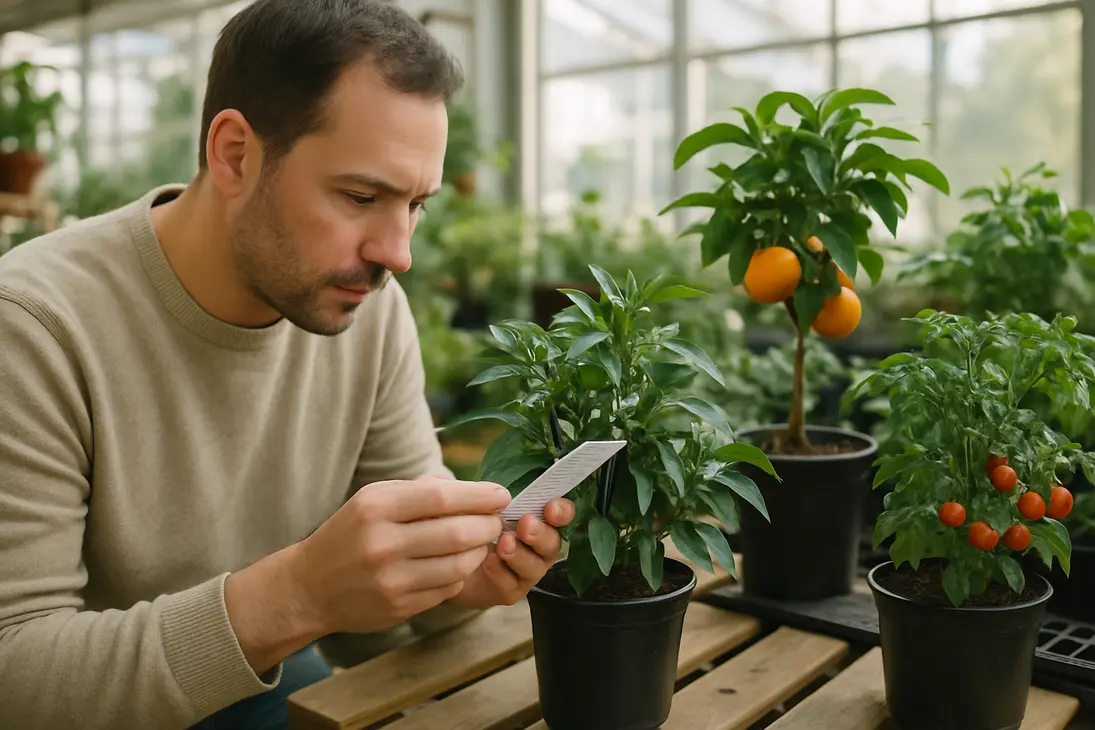
Buying one plant and expecting fruit, seed, or berries from it is reasonable—but only if you confirm what the seller means by “self-pollinating.” The phrase is often used loosely in plant listings. A plant may be able to use its own pollen yet still need a bee, a breeze, or your help to move that pollen into the right place.
Before you buy, look beyond attractive flowers and claims such as “great for indoor growing.” Check the botanical name, cultivar, pollination requirements, mature size, and the conditions needed for flowering. A verified self-fertile variety in a bright growing space is far more likely to succeed than a mystery plant labeled simply as “indoor fruiting.”
Know What “Self-Pollinating” Means on a Plant Label
A self-pollinating plant can produce viable pollen and use it to fertilize its own flowers. In practical terms, one plant may be enough to produce fruit or seed.
That does not necessarily mean the flower pollinates itself automatically. Many flowers need pollen physically transferred from the anthers—the pollen-bearing structures—to the stigma, the receptive surface that leads to fertilization. Outdoors, insects, wind, and vibration often do that work. Indoors, still air and the absence of insects can make the difference between flowers that drop and flowers that develop fruit.
For shoppers, the useful question is not only, “Can one plant produce fruit?” It is also, “How does pollen move within that one plant’s flowers?”
Self-pollinating vs. self-compatible
These terms are related but not identical:
| Term | What it means for the buyer | What it does not guarantee |
|---|---|---|
| Self-pollinating | The plant can pollinate itself, sometimes within the same flower. | Reliable fruit indoors without suitable light or pollen movement. |
| Self-fertile or self-compatible | Pollen from the same plant can fertilize its flowers. A second variety is not required for genetic compatibility. | That pollen will reach the stigma on its own. |
| Self-fruiting | Usually a retail term suggesting one plant can set fruit. | A precise botanical explanation of pollination requirements. |
| Parthenocarpic | The plant can form fruit with little or no fertilization, depending on the variety. | Seeds, or fruit production under poor growing conditions. |
| Requires a pollinator | A compatible second plant or cultivar is needed nearby. | That one plant alone will bear a useful crop. |
“Self-compatible” is often the most helpful term when buying fruiting plants. It tells you that the plant is genetically capable of using its own pollen. However, a self-compatible tomato, pepper, citrus, or other flowering edible plant can still need vibration, air movement, or hand-pollination indoors.
Also distinguish pollination from fruit formation. A few plants can make fruit without fertilization, while others need successful pollination but may still drop developing fruit because of low light, temperature stress, drought, overwatering, or weak growth.
Why a single plant can still fail to produce fruit or seed
One self-fertile plant can fail for several ordinary reasons:
- It is too young or has not reached flowering size.
- The cultivar needs more light than the intended windowsill provides.
- Temperatures swing sharply near cold glass, heating vents, or air-conditioning.
- The flowers are present, but pollen is not moving.
- The plant is stressed by inconsistent watering, root crowding, pests, or recent repotting.
- The seller’s label is incomplete, incorrect, or refers to the species generally rather than the particular cultivar.
A single flowering plant is therefore not proof that one plant will reliably produce fruit in a home. Flowers are only the first stage. The plant must be mature, healthy, and growing in conditions that allow pollen production, pollen transfer, and fruit development.
Check Plant Tags, Nursery Listings, and Botanical Names Before Buying
The plant tag is your first screening tool, but it should not be your only source. Tags are often brief and may prioritize appearance, container size, or light needs over pollination details.
Look for a full botanical name: genus, species, and, where relevant, the named cultivar. “Indoor citrus” is too broad to answer a pollination question. A named citrus cultivar, with a statement that it is self-fertile or needs a pollinating partner, gives you something concrete to verify.
For edible plants, buy from a nursery that can answer variety-specific questions. For ornamental houseplants, clarify whether your goal is simply to enjoy flowers or to collect seed. Many flowering houseplants are worth growing even when fruit or viable seed is unlikely indoors.
Look for terms such as “self-pollinating,” “self-fertile,” or “self-fruiting”
Useful wording on a tag or nursery listing includes:
- “Self-pollinating”
- “Self-fertile”
- “Self-compatible”
- “One plant will set fruit”
- “No pollinator required”
- “Does not require a second variety”
- “Parthenocarpic,” where applicable
Read the surrounding details. “Self-pollinating” is more meaningful when paired with instructions such as “shake flowers gently,” “grow in full sun,” or “suitable for containers.” Those notes acknowledge the real conditions needed for indoor fruiting.
Be cautious with broad descriptions such as “perfect houseplant fruit tree.” The phrase may mean the plant tolerates container life, not that it will fruit easily in an average room.
Confirm the exact species and cultivar
Pollination behavior can vary within the same genus and sometimes within the same species. Do not assume that all plants commonly called lemon, pepper, fig, strawberry, or orchid share the same requirements.
Before paying, confirm:
- The botanical name on the label or listing.
- The cultivar name, if there is one.
- Whether it is grafted, seed-grown, or a cutting. This matters especially for fruit trees because grafted plants may flower and fruit sooner.
- Whether the seller means self-fertile or automatically self-pollinating.
- Whether a second plant, second cultivar, or male plant is required.
- The expected mature size and light requirement.
For example, a compact pepper or tomato cultivar can be a sensible indoor project because its flowers contain both male and female parts and the plant is generally self-fertile. But it still needs strong light and occasional flower vibration. A plant sold only as a “mini fruit tree” requires more investigation before you assume one plant is enough.
Treat vague claims like “easy indoor fruiting” with caution
“Easy” may refer to germination, compact growth, or tolerance of a pot—not dependable fruit production on a dim shelf.
Ask yourself what the claim leaves out:
- Does the listing name the cultivar?
- Does it say whether a pollinator is required?
- Does it explain whether the plant needs direct sun or supplemental lighting?
- Is the pictured plant mature, while the one for sale is a juvenile?
- Does the plant normally take years to reach flowering size?
A seller should be able to distinguish “good indoors” from “will fruit indoors.” If they cannot provide the variety or pollination information, treat the purchase as an ornamental plant rather than a reliable fruiting investment.
Ask Whether the Plant Needs a Pollinator, a Second Variety, or Pollen Movement
A short conversation with the nursery can prevent the common disappointment of buying one beautiful plant that cannot produce fruit on its own. Ask before you purchase, rather than waiting until it flowers unsuccessfully.
The answers also help you choose the right plant for your space. A self-fertile dwarf edible may suit a sunny window or grow-light setup. A cross-pollinated fruit tree may be impractical if you only have room for one container.
Questions to ask the nursery or seller
Use this pre-purchase checklist:
- Is this exact species and cultivar self-fertile or self-compatible?
- Can one plant set fruit, or does it need a compatible second plant?
- If it needs another plant, must it be a different cultivar?
- Does it have separate male and female plants?
- Does it need insects, wind, vibration, or hand-pollination indoors?
- At what age or size does this plant typically begin flowering?
- Is the plant currently mature enough to flower, or how long might that take?
- How much direct light does it need to flower and hold fruit?
- Is it suitable for a windowsill, or does it realistically need a grow light?
- Is the plant grafted or otherwise established enough to fruit sooner?
Write down the cultivar name or photograph the tag. It is much easier to check care details later when you know exactly what you bought.
Plants that need cross-pollination versus separate male and female plants
Some plants are self-incompatible: their own pollen will not fertilize their flowers successfully. They need pollen from another compatible individual, often a different cultivar that flowers at the same time. In a home, that can mean keeping two sizable plants and coordinating their bloom period.
Other plants are dioecious, meaning male and female flowers occur on separate plants. A female plant may need a nearby male plant to make seeded fruit. The seller should state the sex of the plant and whether a male is needed. Do not assume a plant with flowers is automatically capable of fruiting on its own.
There are also plants with male and female flowers on the same plant. That arrangement may allow one plant to set fruit, but it still may need pollen moved from a male flower to a female flower. “One plant is enough” and “no pollination assistance is needed” are not the same claim.
Whether the plant needs insects, hand-pollination, or air circulation
Indoors, there are few natural pollinators and much less wind than outdoors. Ask specifically how pollen moves.
For flowers that release pollen readily with vibration—such as tomato flowers—gentle tapping can be enough. Lightly tap the flower truss or support stem at midday when flowers are open and dry. A small fan on a low, indirect setting can also provide mild movement, but avoid a constant strong draft that dries soil and stresses foliage.
A gardener describing flower-only tomato plants on Reddit was advised to tap the flowering stems or use a fan to move pollen. That is a useful illustration of an indoor problem, not a guarantee of the cause: poor light, heat, and plant stress can also prevent fruit set. Reddit discussion
For flowers with more complex structures, hand-pollination may require a small brush or careful transfer of pollen. Do not use a brush blindly on every plant; learn the flower structure first. Rough handling can damage delicate flowers, and some plants simply need conditions or pollinator partners that a brush cannot replace.
Check Whether Your Indoor Conditions Will Support Pollination
Self-pollination solves only one part of the fruiting puzzle. A plant must first produce strong, viable flowers, then retain developing fruit. Indoor conditions are often the limiting factor.
Evaluate your space honestly before buying. A bright room is not always the same as enough direct light for a fruiting edible plant. Windows can be shaded by buildings, trees, screens, or seasonal changes in sun angle.
Make sure the plant is mature enough to flower
Many houseplants sold in small pots are juvenile. They may need months—or, for some woody fruiting plants, much longer—to reach flowering size.
Ask whether the plant is:
- A mature flowering specimen
- A rooted cutting from an adult plant
- A grafted plant
- A seedling still in its juvenile phase
A mature plant can still pause flowering after transport, repotting, or a major change in light. Give it time to establish before judging its fruiting potential.
Provide sufficient light and stable growing conditions
Fruiting is energy-intensive. Plants generally need more light to make fruit than they need to keep leaves alive.
Place a fruiting houseplant in its brightest suitable position, usually close to a sunny window, while respecting the plant’s tolerance for hot glass and intense afternoon sun. If natural light is limited, use an appropriate grow light rather than expecting a north-facing corner to support a crop.
Keep conditions as steady as possible:
- Water thoroughly when the growing medium has dried to the level appropriate for that plant, rather than alternating drought and saturation.
- Avoid placing plants directly in the path of heating or cooling vents.
- Protect tender flowers from cold drafts near windows.
- Do not make frequent major changes in location, light exposure, or watering during flowering.
- Check for pests, especially on buds and new growth.
Heavy fertilizing is not a shortcut. Excess fertilizer can encourage leafy growth at the expense of flowers, and it will not compensate for insufficient light.
Use gentle tapping or airflow when pollen is not moving
If the plant is self-fertile, mature, healthy, and flowering, but fruit is not forming, try helping pollen move.
For suitable flowers:
- Wait until flowers are fully open and dry.
- Gently tap or flick the flower stem once a day for several days.
- Alternatively, run a small fan nearby on a low setting for brief periods.
- Watch for swelling at the flower base after petals fade.
Do not shake the entire plant aggressively. Gentle vibration is the goal. If flowers repeatedly drop without swelling, reassess light, temperature, watering, and whether the variety actually needs cross-pollination.
Choose Based on Your Goal: Flowers, Fruit, Seeds, or Low-Maintenance Foliage
The best self-pollinating houseplant depends on what you want from it.
If your goal is flowers, choose a plant for bloom performance and the light you can provide. Pollination may not matter at all unless you want seed.
If your goal is fruit, prioritize a named, verified self-fertile cultivar with a realistic mature size. Be prepared to provide strong light, a large enough container, regular care, and occasional pollination assistance.
If your goal is seeds, confirm that the plant is self-compatible and that self-pollination produces viable seed. Some hybrids may produce variable offspring, so saved seed may not resemble the parent plant.
If your goal is low-maintenance foliage, skip the fruiting requirement. Fruiting plants are usually more demanding than foliage houseplants because flowers and fruit require more energy, light, and consistent care.
It is perfectly reasonable to buy a flowering houseplant for its appearance alone. Problems arise when a buyer expects edible harvests from a plant selected primarily for decorative value.
Conclusion
To identify self-pollinating houseplants before buying, start with the exact species and cultivar—not a generic common name or a marketing promise. Look for clear statements such as “self-fertile,” “self-compatible,” or “no second plant required,” then ask whether pollen still needs insects, airflow, or hand-pollination.
The most dependable choice is a verified self-fertile variety that fits your available light, space, and willingness to provide hands-on care. One plant can be enough, but successful indoor fruiting still depends on maturity, healthy flowers, pollen movement, and stable growing conditions.
FAQ
Can a self-pollinating houseplant produce fruit with only one plant?
Yes, if it is truly self-fertile or self-compatible and receives suitable conditions. One plant may still need pollen moved within its flowers by vibration, light airflow, insects, or hand-pollination.
Do self-pollinating plants need bees or other insects indoors?
Not always. Some self-pollinating plants can transfer pollen within the flower on their own, while others benefit from gentle tapping, a small fan, or hand-pollination. Check the needs of the exact species and cultivar.
Why is my self-pollinating plant flowering but not producing fruit?
Common causes include inadequate light, immature plants, temperature swings, watering stress, poor pollen movement, pests, or an incorrect assumption that the plant is self-fertile. Confirm the cultivar’s pollination needs before changing care.
Should I hand-pollinate a self-pollinating indoor plant?
It can help when flowers are healthy but there is little indoor airflow or insect activity. Start with gentle tapping for flowers that respond to vibration. Use a soft brush only when you understand the plant’s flower structure and know that hand transfer is appropriate.
Sources
You Might Also Like