Why Choose a Spider Plant for Your Home?
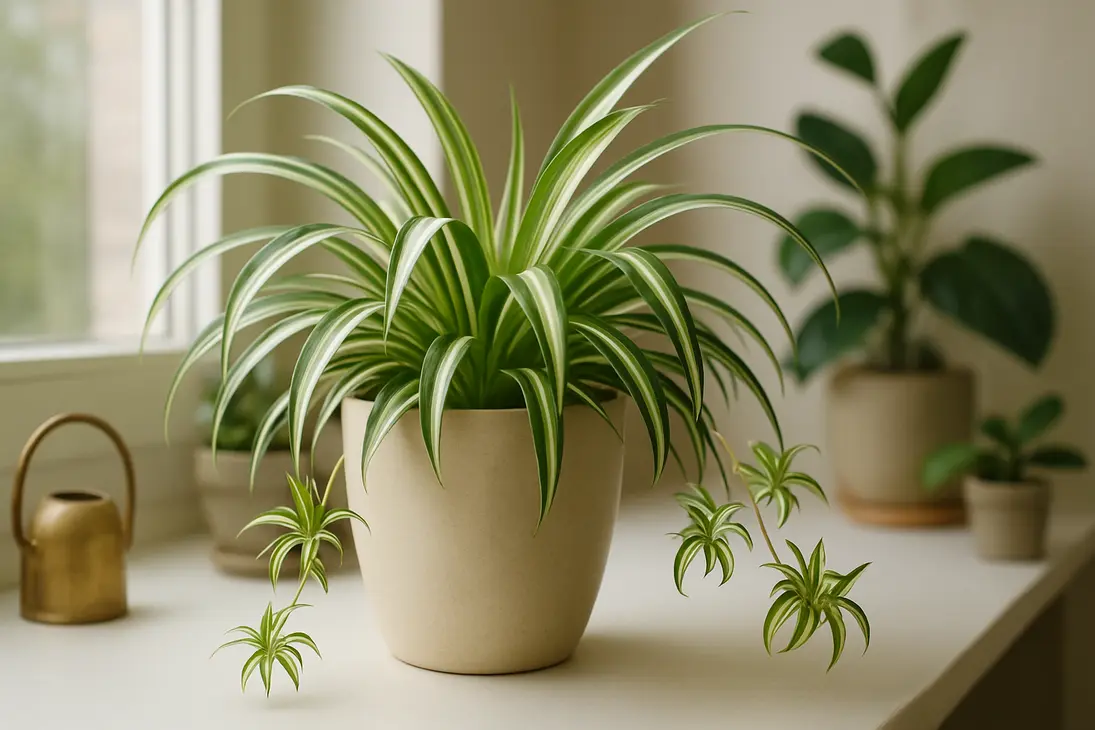
If you want a houseplant that looks full and lively without specialist care, a spider plant is easy to recommend. It has long, arching leaves, tolerates normal indoor conditions, grows quickly in the right spot, and often produces small “baby” plants that can be rooted and shared.
The best reason to choose a spider plant is not that it is indestructible. It still needs light, water, drainage, and occasional attention. But compared with many popular houseplants, spider plants are forgiving, affordable, easy to find, and satisfying for beginners.
The Main Benefits of Spider Plants
Spider plants are popular because they combine good looks with low maintenance. Variegated types brighten a room with green-and-white striped leaves, while mature plants may send out dangling stems with plantlets, giving you free new plants with little effort.
They’re forgiving for new plant owners
Spider plants are often recommended to beginners because they give you room to learn. If you water a little late, they usually recover. If the light is not perfect, they often keep growing, though more slowly. If you forget to fertilize for a while, they generally do not collapse.
They also show clear signs when something is off: pale growth, limp leaves, brown tips, or slower growth. Usually, you have time to correct the issue before the plant seriously declines.
The caveat is that “easy” does not mean “no care.” Spider plants dislike being left bone-dry for long periods, and they can decline in soggy soil. They are tolerant, not maintenance-free.
They look good in pots, shelves, and hanging baskets
A spider plant’s arching shape makes it decorative on shelves, plant stands, and in hanging baskets. The leaves spill outward and downward, softening hard edges and adding a relaxed, leafy look.
They work well in:
- hanging baskets near bright windows
- high shelves where the leaves can cascade
- simple pots on desks or side tables
- grouped displays with upright plants like snake plants or dracaenas
The plantlets add to the appeal. On a mature spider plant, long stems may carry tiny white flowers followed by miniature plants. If you prefer a tidy look, trim off the runners; if you like a fuller, cascading plant, leave them in place.
They’re generally considered pet-safe
Spider plants are generally considered a good choice for homes with cats and dogs because they are commonly regarded as non-toxic to pets. That makes them less concerning than plants such as peace lilies in many pet households.
Still, “pet-safe” does not mean “snack-safe.” Cats may chew the grassy leaves, and eating enough foliage can cause mild stomach upset in some pets. If your pet is curious, use a hanging basket or high shelf to protect both the animal and the plant.
They produce “babies” you can grow into new plants
One of the most rewarding reasons to choose a spider plant is easy propagation. Mature plants often produce plantlets, also called babies, pups, or offsets, along long stems.
Once a plantlet has small root nubs or visible roots, you can usually root it in water or plant it directly into a small pot of moist potting mix:
- Choose a healthy plantlet with visible root bumps or small roots.
- Cut it from the runner with clean scissors.
- Place it in water with only the root area submerged, or pot it into lightly moist soil.
- Keep it in bright, indirect light.
- Pot up water-rooted plantlets once roots are a few inches long and branching.
You can also leave the plantlet attached to the mother plant while setting it into a nearby pot of soil. Once rooted, cut the runner.
How Spider Plants Compare With Other Popular Houseplants
Spider plants are not the only easy houseplant. Pothos, snake plants, ZZ plants, philodendrons, and peace lilies are also common choices. The best plant depends on your light, watering habits, pets, and preferred look.
| Plant | Best reason to choose it | Main caution |
|---|---|---|
| Spider plant | Easy, fast-growing, pet-friendlier, produces plantlets | Brown tips are common |
| Pothos | Very adaptable trailing vine | Not ideal for pets that chew plants |
| Snake plant | Very drought-tolerant and architectural | Easy to overwater; slower-growing |
| Peace lily | Flowers indoors and wilts visibly when thirsty | Not pet-friendly; more dramatic with watering stress |
| Calathea/many tropicals | Striking patterned foliage | Often fussier about humidity and water quality |
Spider plant vs. pothos
Pothos is highly adaptable and may outperform a spider plant in lower light. It trails beautifully, roots easily from cuttings, and tolerates irregular care.
Choose a spider plant if you want a grassy, arching plant rather than a vine, or if you want visible plantlets that are easy for beginners to root. Pet households may also prefer spider plants because pothos is not a good choice for pets that chew leaves.
Choose pothos if your space is quite dim, you want long trailing vines, or you prefer a plant that can climb or drape across furniture.
Spider plant vs. snake plant
Snake plants are excellent for people who forget to water. They store moisture in their thick leaves, prefer to dry out, and have an upright, sculptural shape.
A spider plant is better if you want faster visible growth, a softer form, or a plant that feels more active. Spider plants often produce new leaves, runners, flowers, and plantlets when conditions are good. Snake plants are more drought-tolerant, while spider plants prefer a more evenly moist routine with good drainage.
Spider plant vs. peace lily
Peace lilies are popular because they can flower indoors and droop dramatically when thirsty. For some owners, that clear signal is helpful.
Spider plants are usually the calmer choice. They do not wilt as theatrically, are generally more pet-appropriate, and propagate readily. Choose a peace lily if you want white blooms and do not have pets or small children likely to chew the plant. Choose a spider plant if you want an easier foliage plant that looks good in a hanging basket.
Spider plant vs. more demanding tropical plants
Many tropical houseplants, such as calatheas, some ferns, and certain alocasias, are grown for striking foliage. They can be beautiful, but they often need more consistent humidity, careful watering, warm conditions, and cleaner water to stay attractive.
Spider plants can develop brown tips from dry air or water quality, but they are usually more adaptable. They do not typically need a cabinet, humidifier, or carefully controlled environment to survive in an average home.
What to Look For When Choosing a Spider Plant
When choosing a spider plant, look for steady growth rather than perfection. A few brown tips are common and not necessarily a deal-breaker. Widespread yellowing, mushy crowns, sour-smelling soil, or severe pest problems are more concerning.
Choose the leaf style you like
Spider plants come in several common forms. The differences are mostly visual, though greener types may tolerate slightly lower light better than heavily variegated ones.
Common choices include:
- Variegated spider plant: green leaves with white or cream striping.
- Reverse variegated types: white or pale margins with green centers.
- Solid green spider plant: less flashy but vigorous and attractive.
- Curly spider plant: compact, curled leaves, often sold as ‘Bonnie’ or similar forms.
Pick the one you genuinely like. Spider plants can live for years with good care, so leaf style matters. In dimmer rooms, a greener variety may be more forgiving. In bright, indirect light, variegated forms usually do well and keep strong color.
Check for healthy foliage and roots
A healthy spider plant should have firm leaves, a stable crown, and no strong odor from the soil. The foliage should look mostly upright or arching, not limp and collapsed.
Before buying, check for:
- Firm leaves: Avoid mushy, translucent, or rotting foliage.
- Reasonable color: Some older leaves may yellow, but widespread yellowing can mean stress.
- Minimal pests: Look for webbing, sticky residue, insects, or cottony clusters.
- Drainage: The pot should have drainage holes.
- Root condition if visible: Healthy roots are usually pale to tan and firm; black, mushy roots suggest rot.
Spider plants can become root-bound because they grow thick, tuberous roots. Mild crowding is normal, but if roots are circling heavily or the soil dries almost immediately after watering, expect to repot soon.
Look for plantlets if you want easy propagation
If propagation is one of your reasons for choosing a spider plant, look for a mature plant with runners and plantlets already forming. A small young plant may not produce babies for a while.
Plantlets are a good sign that the plant is mature and has had enough light and energy to reproduce. Still, do not reject a healthy young plant just because it has no babies yet. With time, light, and consistent care, many spider plants produce runners once established.
Basic Care That Keeps Spider Plants Looking Good
Spider plant care is simple, but the best-looking plants come from consistency. Give them enough light, even moisture, and drainage so they can grow steadily without stress.
Light: bright, indirect light is best
Spider plants grow best in bright, indirect light. An east-facing window, a spot a few feet from a bright south or west window, or a bright room with filtered light is often ideal.
They can tolerate lower light, but growth may slow, variegation may fade, and they may produce fewer plantlets. Direct hot sun, especially through afternoon glass, can scorch leaves or dry the plant too quickly.
A practical test: if you can comfortably read in the spot during the day without turning on a lamp, it may be bright enough. If the room feels dim most of the day, the spider plant may survive but not thrive.
Watering: keep it lightly moist, not soggy
Spider plants prefer soil that is lightly moist but not waterlogged. Let the top inch or so of potting mix dry before watering again, then water thoroughly until excess drains from the bottom.
Avoid tiny daily sips. Shallow watering can leave parts of the root ball dry while other areas stay wet. A thorough watering followed by a drying period is usually better.
Watering frequency depends on pot size, light, temperature, season, soil mix, and whether the plant is root-bound. In warm, bright conditions, it may need water more often. In winter or lower light, it usually needs less. Check the soil rather than watering strictly by the calendar.
Soil and pot: use drainage and avoid standing water
A standard indoor potting mix works well if the pot drains properly. If your mix stays wet too long, add perlite or another aerating material.
Use a pot with drainage holes. If the nursery pot sits inside a decorative cachepot, empty any water that collects after watering. Standing water around the roots is one of the easiest ways to turn an easy plant into a struggling one.
Repot when the plant dries out very quickly, roots are crowded, or growth stalls despite good light and watering. Move up only one pot size at a time. A very large pot holds extra wet soil, increasing the risk of root problems.
Humidity and temperature: normal indoor conditions usually work
Spider plants usually adapt well to average household humidity and temperatures. Keep them away from cold drafts, heating vents, and very hot window glass.
Dry indoor air can contribute to brown tips, especially in winter. You usually do not need a tropical setup, but grouping plants, keeping them away from forced-air vents, or using a humidifier in a very dry home can help.
Possible Drawbacks Before You Choose One
Spider plants are easy, but not flawless. The most common disappointment is cosmetic: brown leaf tips. This does not always mean you are doing something badly, and it usually does not mean the plant is dying. Still, it is worth understanding before you choose one.
Brown leaf tips are common
Brown tips are probably the most frequent spider plant complaint. Many owners notice crisp brown ends even when the plant is otherwise growing well.
Common causes include:
- inconsistent watering
- very dry air
- mineral buildup in the soil
- sensitivity to some tap water
- too much fertilizer
- old leaf tissue
- stress from repotting or shipping
If only the tips are brown and the rest of the plant is firm and growing, the issue is usually cosmetic. You can trim brown tips with clean scissors, following the natural angle of the leaf.
Tap water can sometimes cause leaf-tip browning
Spider plants can be sensitive to minerals or chemicals in some tap water. Many grow perfectly well with tap water, but if your plant repeatedly develops brown tips despite good care, water quality is worth considering.
You can try:
- letting tap water sit out overnight before use
- using filtered water
- using clean rainwater if available
- flushing the pot occasionally by watering thoroughly and letting excess drain away
- avoiding heavy fertilizer use
Do not overcorrect by keeping the soil wet all the time. Brown tips from water quality will not be solved by overwatering, and soggy soil can cause more serious root problems.
They still need consistent basic care
A common misconception is that spider plants thrive on neglect. They can survive imperfect care, but they look best with regular attention.
| Symptom | Possible cause | What to try |
|---|---|---|
| Brown, crispy tips | Dry air, water quality, inconsistent watering, fertilizer buildup | Trim tips, review watering, consider filtered water, flush soil |
| Pale, weak growth | Too little light | Move to brighter indirect light |
| Limp leaves and wet soil | Overwatering or poor drainage | Let soil dry, check roots, improve drainage |
| Dry, curled leaves | Underwatering or excessive heat | Water thoroughly, move away from hot sun or vents |
| Few or no plantlets | Plant is young, low light, or not established | Give more time and brighter indirect light |
The plant is forgiving, but it cannot compensate forever for poor drainage, very low light, or repeated drought.
Air-purifying claims should be kept realistic
Spider plants are often described as air-purifying plants. While plants can interact with indoor air in controlled settings, it is easy to overstate what one houseplant can do in a real home. A spider plant should not be chosen as a substitute for ventilation, source control, air filtration, or cleaning.
Choose a spider plant because it is attractive, easy to care for, pet-friendlier than some alternatives, and enjoyable to propagate. Treat any air-quality benefit as a modest bonus.
Conclusion
You should choose a spider plant if you want a low-effort, attractive houseplant that gives you visible growth without demanding advanced care. It is especially well suited to beginners, people who like hanging baskets, homes with pets where plant choice needs more caution, and anyone who enjoys propagating new plants from offsets.
It is not the right plant if you expect perfect leaves at all times or want a plant that can be ignored indefinitely. Brown tips are common, and basic care still matters. But with bright indirect light, sensible watering, and a pot that drains, a spider plant can be one of the most rewarding and reliable houseplants in your home.
FAQ
Are spider plants good for beginners?
Yes. Spider plants are good for beginners because they tolerate normal indoor conditions, recover from minor care mistakes, and grow quickly enough to keep new plant owners encouraged. They still need bright indirect light, drainage, and regular watering, but they are more forgiving than many decorative tropical plants.
Why are the tips of my spider plant turning brown?
Brown tips can come from dry air, inconsistent watering, mineral buildup, too much fertilizer, or sensitivity to some tap water. If the rest of the plant looks healthy, brown tips are usually cosmetic rather than an emergency. Review watering, avoid letting the pot sit in water, consider filtered or rested water, and trim browned ends if they bother you.
Is it normal for a spider plant to flower?
Yes. Mature spider plants can produce small white flowers on long stems. Those flowers may later be followed by baby plantlets. Flowering is usually a sign that the plant is mature and receiving enough light and energy. If your spider plant does not flower, it may simply be young or not yet growing in strong enough light.
Can I grow new spider plants from the baby plantlets?
Yes. Baby plantlets are one of the easiest ways to grow new spider plants. Cut a plantlet with small roots or root bumps from the runner, then root it in water or plant it directly into lightly moist potting mix. Keep it in bright, indirect light while it establishes. Once it has a stronger root system and begins new growth, care for it like a small adult spider plant.
You Might Also Like