What Is the Function of the Queen of the Night Flower?
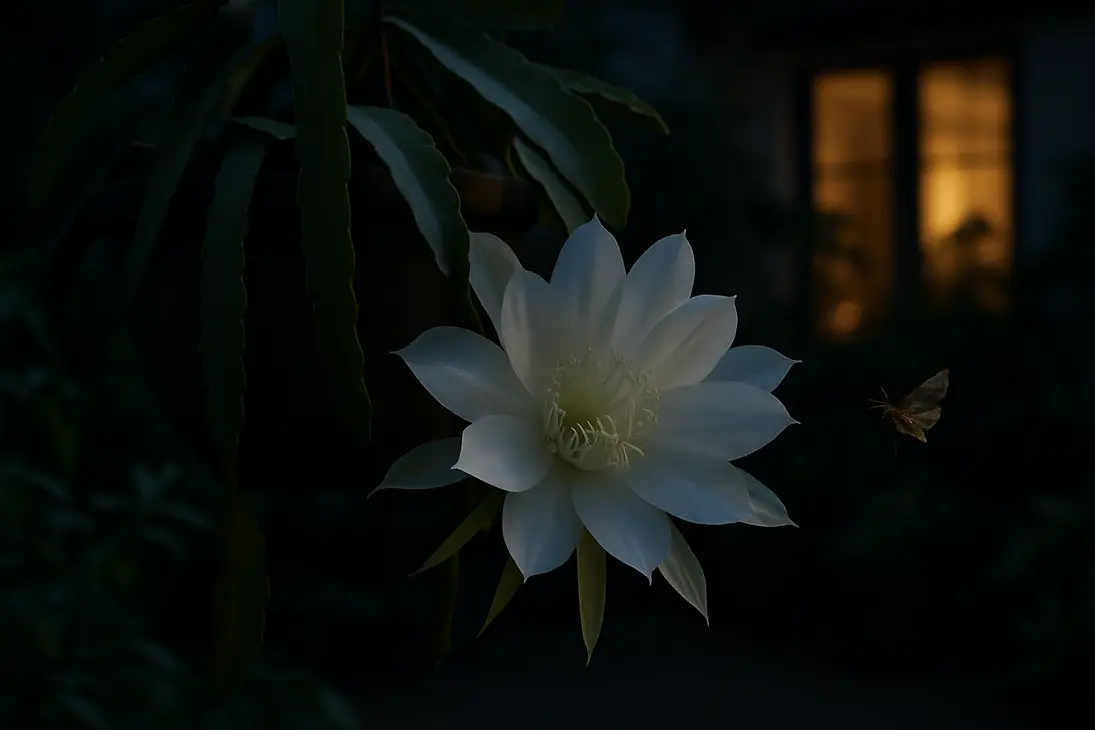
The Queen of the Night flower function is reproduction. Its large white bloom is designed to produce pollen, receive pollen, attract nighttime pollinators, and—if pollination succeeds—help the plant form fruit and seeds.
“Queen of the Night” is a common name for several night-blooming cacti, especially Epiphyllum oxypetalum and related night-blooming cereus types. Details vary by species, but the basic purpose is the same: the flower opens at night, advertises itself with pale petals and fragrance, and fades after a brief reproductive window.
The Main Function: Reproduction
A Queen of the Night plant may grow for years before flowering. When it finally blooms, the flower is not just decorative. It is an energy-intensive reproductive structure built to exchange genetic material.
Producing pollen and receiving pollen
The flower contains both pollen-producing and pollen-receiving parts:
- Stamens produce pollen.
- The stigma receives pollen.
- The style and ovary connect the stigma to the area where seeds may form.
When a pollinator enters the flower, pollen can stick to its body. If it later visits another compatible flower, some of that pollen may be deposited on the stigma. That transfer is the main event the flower is built to encourage.
Indoor growers can sometimes hand-pollinate a bloom by moving fresh pollen from the stamens to the stigma with a small brush or cotton swab while the flower is fully open. Success depends on timing, species, pollen compatibility, and flower condition.
Forming fruit and seeds after successful pollination
If pollination and fertilization succeed, the base of the flower may swell instead of shriveling. Over time, it can develop into a fruit containing seeds.
In home settings, fruit is often uncommon. Natural night pollinators may be absent, only one plant may be flowering, or the plant may need pollen from a genetically different individual. A flower can open beautifully and still produce no fruit.
| Flower stage | Main function | What you notice |
|---|---|---|
| Bud forms | Reproductive structures develop | Long bud swells from the stem |
| Flower opens | Pollinators are attracted | Large white bloom opens at night |
| Pollination window | Pollen transfer may occur | Strong scent, exposed stamens and stigma |
| After bloom | Fruit may form or flower may collapse | Base swells or withers |
Why the flower invests so much energy in one dramatic bloom
The flower is large, pale, scented, and short-lived because it is optimized for a narrow pollination window. White petals make it visible in low light. A wide shape gives pollinators access. Fragrance travels through night air. Nectar, when present, encourages visitors to move deeply enough into the flower to contact pollen.
This display costs the plant stored carbohydrates, water, and nutrients. Immature, underlit, stressed, or nutrient-depleted plants may not bloom. The strategy is concentrated: invest heavily, open briefly, attract strongly, then stop maintaining the flower once its purpose has passed.
Why the Queen of the Night Blooms at Night
The Queen of the Night blooms at night because it is adapted to nocturnal pollination. Instead of competing with daytime flowers for bees and butterflies, it targets animals active after dark. Its timing, pale color, large shape, and fragrance all support that strategy.
Attracting moths, bats, and other night pollinators
Night-blooming cactus flowers are often associated with moths and, in some species and regions, bats. The most important pollinator depends on the species and where it grows. In cultivation, especially indoors, effective pollinators may be missing.
A moth hovering near the bloom may brush against the anthers and pick up pollen. A bat visiting a larger cactus flower may contact pollen while feeding. Even if you never see a pollinator, the flower’s design reflects this relationship.
For indoor plants, this matters practically. A Queen of the Night blooming in a living room may smell wonderful but never be naturally pollinated. If fruit or seed is the goal, hand pollination may be needed, though it is not guaranteed.
How white petals help the flower stand out in low light
White or pale petals reflect limited light, making the bloom easier for night pollinators to find. Moonlight, porch light, or faint ambient light can make a white flower stand out more than a dark one.
The large size also creates a bigger visual target, which matters when the bloom may be open for only one night.
The role of strong fragrance after dark
The scent of Queen of the Night is one of its best-known traits. Many growers describe it as sweet, rich, or perfume-like, and one open bloom can scent a room or patio.
Fragrance is useful after dark, when visual cues are weaker. In cooler, calmer night air, scent can guide pollinators from a distance. The flower is often most fragrant when fully open, matching the peak pollination window.
Not every bloom smells equally strong. Scent varies by species, individual plant, temperature, humidity, flower age, and growing conditions.
Why the Bloom Is So Short-Lived
The Queen of the Night bloom is short-lived because it is built for a narrow pollination window. In many cases, it opens in the evening, peaks overnight, and wilts by morning or the next day. That rapid fading is normal.
The plant gains little by maintaining delicate petals and fragrance after its main pollination opportunity has passed. Once the window closes, the flower has either been pollinated or it has not.
Opening at the right time for pollinators
The flower often opens when nocturnal pollinators are most active. The bud may swell noticeably during the final day, and the outer petals may begin loosening as evening approaches.
Gardeners often miss the event because the timing is brief. To observe it, watch mature buds closely when they become plump, elongated, and slightly loosened at the tip. On the likely night, check from evening onward.
Conserving plant energy
A large flower uses water and stored energy. Its petals must expand, scent must be produced, and reproductive parts must remain functional. For an epiphytic cactus, there is little benefit in keeping that structure alive longer than necessary.
After flowering, the plant redirects resources. If pollination succeeds, energy may go into fruit and seed development. If not, the plant returns to maintaining stems, roots, and future growth. A wilted bloom is not a failure; it is the normal end of the flower’s lifespan.
What happens if the flower is not pollinated
If the flower is not pollinated, it usually wilts, dries, and eventually detaches or can be removed. The ovary at the base will not continue swelling into fruit.
For houseplants, lack of pollination is common because moths, bats, or other night pollinators are absent. If you have only one plant or one flower, fruit may be even less likely, depending on whether that plant can self-pollinate.
After an unpollinated bloom fades, continue normal care. Do not overwater because the flower collapsed; wilting after bloom is not the same as drought stress.
Blooming Patterns and Common Misunderstandings
Queen of the Night has many myths because its bloom is brief and memorable. Some people say it blooms only once a year, while others expect every bloom to be intensely fragrant. In reality, blooming patterns vary.
The name also causes confusion because it can refer to more than one plant. Some bloom once in a season; others may bloom in flushes during warm months when mature and well grown. Young plants may not flower for years.
Does Queen of the Night bloom only once a year?
Some Queen of the Night plants bloom once a year, especially indoors or under limited conditions. Others may bloom more than once in a season or produce several flowers on the same night.
The better answer is: the individual flower usually lasts only one night, but the plant does not necessarily bloom only once per year.
Blooming frequency depends on species or hybrid, plant age and size, light exposure, seasonal temperature changes, plant health, nutrient reserves, and local climate or indoor conditions.
Why some plants take years to flower
It is normal for Queen of the Night plants to take years to bloom, especially when grown from small cuttings or seed. The plant must mature and store enough energy to support flowers.
Common reasons for delayed flowering include:
- Insufficient light. Weak light encourages growth without buds.
- Immaturity. A young plant may not be ready.
- Too much nitrogen. Heavy nitrogen feeding can favor stems over blooms.
- Constant indoor conditions. Some plants respond to seasonal changes.
- Root or stem stress. Rot, pests, repeated underwatering, or frequent repotting can delay flowering.
If a mature plant never buds, review light, watering, nutrition, and overall health.
Why some blooms have little or no scent
Although Queen of the Night is famous for fragrance, not every bloom fills a room. Plant identity matters because different species and hybrids sold under the same common name can vary in scent.
Timing also matters. A flower checked too early may not be fully fragrant; one checked late the next morning may already be fading. Temperature, humidity, airflow, and plant health can also affect how noticeable the fragrance seems.
A low-scent bloom is not necessarily a problem. If the flower opens normally and the plant looks healthy, it may simply be natural variation.
What Helps the Queen of the Night Flower Perform Its Function
Because the flower’s function is reproduction, good care focuses on helping the plant become mature, healthy, and energy-rich enough to bloom. You cannot force a Queen of the Night to flower on command, but you can improve the odds.
The main needs are bright filtered light, appropriate watering, good drainage, modest nutrition, and a stable seasonal rhythm.
Bright indirect light and seasonal cues
Queen of the Night generally needs bright light to bloom well. Bright indirect light, filtered sun, or gentle morning sun is often best. Harsh midday sun can scorch stems, especially on plants grown indoors or in shade, but deep shade often prevents flowering.
Good light helps the plant produce and store energy for buds. If the plant grows long, thin stems and never flowers, light is one of the first conditions to improve.
Seasonal cues can also help. Bud formation may be encouraged by warm growing periods followed by subtle changes in temperature, day length, or watering. Indoors, where conditions stay the same all year, the plant may receive fewer signals to reproduce.
Helpful adjustments include:
- Moving the plant to brighter filtered light
- Avoiding sudden intense direct sun
- Letting it experience natural day length near a window
- Providing slightly cooler nights when practical
- Reducing watering during slower growth without severe shriveling
A mature, healthy plant
A young Queen of the Night may grow well but still not bloom. Maturity depends on age, size, stored energy, and root stability. A plant with many healthy stems is more likely to flower than a small cutting.
Watch for problems that can interfere with blooming:
- Soft, blackened, or mushy stems
- Severe wrinkling from prolonged dryness
- Pale, stretched growth from low light
- Sticky residue, webbing, or pests
- Repeated bud drop
Repotting can help if the mix is broken down or waterlogged, but unnecessary repotting can set the plant back. These plants usually prefer a chunky, well-draining medium rather than dense soil that stays wet.
Proper watering and nutrients before bloom season
Queen of the Night is a cactus, but many commonly grown types are epiphytic cacti, not desert cacti. They often appreciate more moisture than desert cacti but still dislike soggy roots.
Water thoroughly, then let the mix dry partially before watering again. The exact interval depends on pot size, temperature, light, and growing medium. During active growth, the plant may need more water; during cooler or slower periods, it usually needs less.
Feed moderately during active growth. Long-unfed plants may lack reserves for flowering, but heavy feeding—especially with high nitrogen—can encourage stems instead of buds. Avoid feeding a stressed, rotting, or bone-dry plant.
Once buds form, keep care steady. Sudden changes in light, temperature, moisture, or handling can contribute to bud drop.
Conclusion
The Queen of the Night flower functions mainly as a reproductive structure. It produces pollen, receives compatible pollen, and may form fruit and seeds if pollination succeeds.
Its famous traits support that purpose: it opens at night for nocturnal pollinators, uses white petals to stand out in low light, releases fragrance as a nighttime signal, and lasts only briefly to conserve energy.
FAQ
What is the purpose of the Queen of the Night flower?
Its purpose is reproduction. The flower produces pollen, receives pollen on the stigma, and may form fruit and seeds if fertilization succeeds. Its size, pale color, night opening, and fragrance help attract nocturnal pollinators.
Why does Queen of the Night bloom only at night?
It blooms at night because it is adapted to night-active pollinators such as moths and, in some species and regions, bats. White petals help it show in low light, and fragrance helps guide pollinators after dark.
Does Queen of the Night always smell strong?
No. Many blooms are strongly fragrant, but scent varies with plant identity, flower age, temperature, humidity, plant health, and timing. A low-scent bloom is not automatically unhealthy.
How can I encourage my Queen of the Night to bloom?
Give it bright indirect light or filtered sun, a well-draining mix, thorough but not excessive watering, and moderate feeding during active growth. Let the plant mature, keep care stable, and avoid sudden changes once buds form.
You Might Also Like