What Quick Houseplant Care Task Should You Do Today?
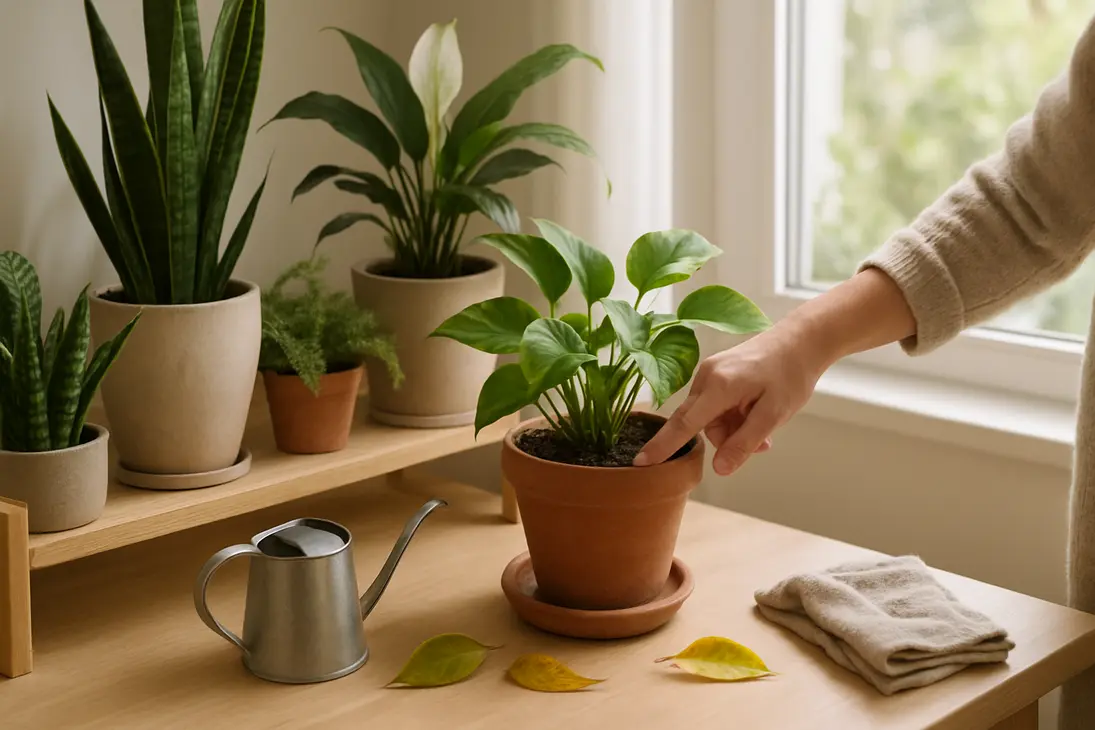
If you only have five minutes for your plants today, make your quick houseplant care task a soil moisture check. Not watering, fertilizing, or repotting—just checking.
This habit prevents many common problems: watering plants that are still wet, missing plants that have dried out, and treating every pot as if it needs the same care. If you have extra time, remove dead leaves, inspect for pests, wipe dusty foliage, and rotate pots. But start with moisture.
The Best Quick Task: Check Soil Moisture Before You Water
The best quick houseplant care task is checking the soil before adding water. This separates attentive care from “plant-care day” autopilot.
Many struggling houseplants are watered on a fixed schedule that does not match the plant, pot, season, light, or room temperature. A plant in a bright window may dry out much faster than the same plant across the room. A small terracotta pot may need water long before a large glazed pot. A plant that was thirsty every few days in summer may stay damp much longer in winter.
A moisture check gives you a real-time answer. Sometimes the right action is water. Sometimes it is waiting.
Use the finger test or a moisture meter
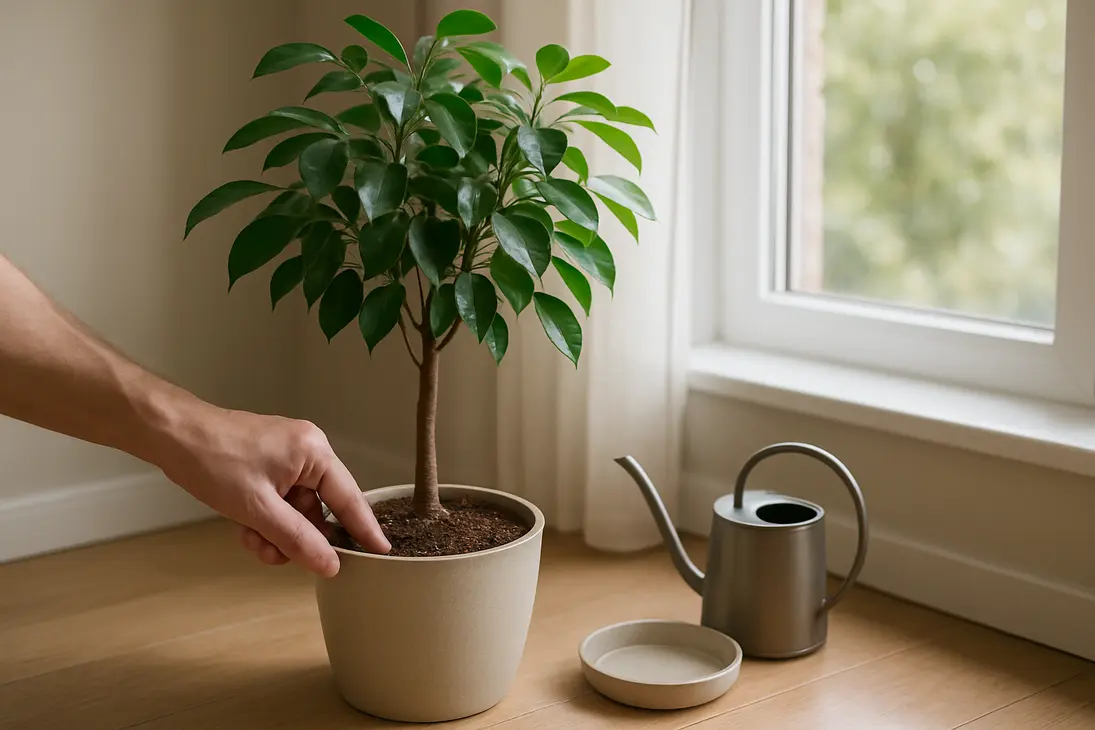
The simplest method is the finger test. Push your finger into the potting mix about 1 to 2 inches deep for small and medium pots. For larger pots, check deeper if you can without damaging roots.
Use what you feel:
| Soil feel | Usual meaning | What to do |
|---|---|---|
| Wet, cool, or sticky | Still moist | Wait |
| Slightly moist | Often fine for tropical foliage plants | Recheck later |
| Dry on top, moist below | Not urgent | Check again soon |
| Dry several inches down | Likely ready | Water if appropriate |
| Pulling from pot edge | Very dry | Water slowly |
A moisture meter can help with large pots or if you tend to overwater. Insert the probe into the root zone and wipe it between plants. Meters are useful but imperfect; chunky mixes, dry pockets, salts, and poor placement can affect readings. Treat the meter as one clue.
Pot weight is another quick guide. Lift a pot after watering, then again when dry. Over time, you learn the difference between a heavy wet pot and a light thirsty one.
Water only the plants that actually need it
After checking, water only the plants that are ready. Do not line up every plant and give each one the same drink.
A snake plant, pothos, fern, peace lily, succulent, and calathea should not automatically receive the same care. Even two identical plants can dry at different speeds because of light, pot size, airflow, and heat.
As a general guide:
- Snake plants, ZZ plants, many succulents, and cacti usually prefer to dry more thoroughly.
- Pothos, philodendrons, monsteras, and peace lilies often like the top layer to dry before watering.
- Ferns and some calatheas may prefer more consistent moisture, but not soggy soil.
When you water, moisten the root ball and let excess drain from the bottom. A few splashes on top can leave lower roots dry while making you think the plant has been watered.
If very dry soil repels water, water slowly in rounds or bottom-water briefly, then let the pot drain well.
Empty drainage trays after watering
After watering, check saucers, cachepots, and decorative outer pots. Empty standing water after the pot drains.
Roots need oxygen as well as moisture. If a pot sits in water for hours or days, lower roots can suffocate and rot. This is one reason a plant can wilt even when the soil is wet: damaged roots cannot take up water properly.
Be especially careful with nursery pots inside decorative pots. Lift the inner pot and check for collected water.
If you only do one thing today:
- Check the soil.
- Water only plants that need it.
- Let them drain.
- Empty saucers or outer pots.
Remove Dead Leaves and Do a Fast Pest Check
If your moisture check is done and you have a few more minutes, remove dead foliage and inspect for pests.
Yellow, brown, crispy, or fully dead leaves will not turn green again. Removing them improves appearance, reduces hiding places for pests, and helps you notice new problems faster. Use clean scissors or pruners for tougher stems, or pinch off leaves that release easily. If only a tip or edge is brown, trim just the damaged part.
Do not panic over one old yellow leaf, especially on a mature plant. Many houseplants naturally shed older leaves. Worry more if yellowing is sudden, widespread, mushy, paired with wet soil, or happening alongside pests.
Check leaf undersides, stems, and soil surface
A fast pest check means looking where pests hide:
- Undersides of leaves
- Leaf joints and new growth
- Stems and petioles
- Soil surface
- Pot rims and undersides
Look for moving dots, sticky residue, fine webbing, white cottony clusters, hard brown bumps, silvery scarring, or tiny black specks. Common houseplant pests include spider mites, mealybugs, scale, fungus gnats, aphids, and thrips.
You do not need to identify every pest instantly. If something looks suspicious, isolate the plant and inspect it more carefully. A few pests on one plant are much easier to handle than a problem that spreads through a whole shelf.
Wipe away isolated pests or quarantine problem plants
If you see one or two visible pests, wipe them away with a damp cloth or cotton swab. For a small issue, this can buy time while you identify the pest and choose treatment.
If the plant has multiple affected leaves, webbing, sticky residue, or pests in several areas, move it away from other plants. Quarantine protects the rest of your collection.
Avoid spraying first and asking questions later. Different pests need different approaches, and some plants are sensitive to certain products. Read labels, test delicate plants first, keep treated foliage out of harsh direct sun until dry, and check nearby plants.
Wipe Dusty Leaves and Rotate the Pot
Dusting leaves is useful for broad-leaf plants such as rubber plants, fiddle leaf figs, monsteras, peace lilies, pothos, philodendrons, and bird of paradise.
Dust blocks some light from reaching the leaf surface. Indoors, where light is already limited, clean leaves can help plants photosynthesize more efficiently. Dusting also gives you a close look at the plant, which may reveal pests, damage, or watering clues.
Use a damp cloth for smooth leaves
For smooth, sturdy leaves, use a soft damp cloth. Support the leaf with one hand and wipe gently with the other. Plain water is usually enough. Leaf-shine products are unnecessary and can leave residue.
For small plants, you can rinse foliage in a sink or shower with lukewarm water if the pot drains well and the plant tolerates wet leaves. Let it drip dry out of direct sun and cold drafts.
For very large leaves, wipe both the top and underside. Pests often hide underneath.
Avoid over-wetting fuzzy or delicate foliage
Not every plant wants wet leaves. Fuzzy-leaved plants, such as African violets and some begonias, may spot or suffer damage if water sits on the foliage. Delicate leaves can bruise or tear.
For fuzzy leaves, use a soft dry brush, makeup brush, or gentle puff of air. If a plant is known to dislike wet foliage, clean it dry.
Also be cautious in cool rooms or late in the day. Wet leaves dry slowly in low light, cool temperatures, and still air. If you rinse plants, morning is usually better.
Turn the plant a quarter turn for balanced light
After cleaning, rotate the pot a quarter turn. Many houseplants lean toward light over time, and a small turn every week or two encourages more balanced growth.
Do not spin plants dramatically every day. A quarter turn is enough.
There are exceptions. Budding or blooming plants may react poorly to repeated movement, and some large plants may be positioned intentionally. If a plant is stretching severely, rotation will not solve the real issue. Long gaps between leaves, pale growth, or strong leaning usually means it needs more light.
What Not to Do as a “Quick Fix”
When a houseplant looks sad, it is tempting to act fast. But many problems get worse when the owner adds water, fertilizer, or treatments before understanding what is wrong.
A good quick task gathers information first: check soil, leaves, pests, light, and drainage. Then act.
Don’t water every plant just because it’s plant-care day
A schedule can remind you to check plants, but it should not decide that every plant gets water. “Watering day” is better treated as “checking day.”
Watering every plant on the same schedule creates mixed problems. Moisture-loving plants may still dry out too much, while slow-drying plants stay wet too long. This is especially common in winter, when many houseplants grow more slowly and use less water.
Instead, inspect all plants, then water selectively.
Don’t fertilize more than the label recommends
Fertilizer is not medicine. It supports growth when a plant already has enough light, healthy roots, and suitable conditions. It does not fix root rot, pests, poor light, compacted soil, or chronic overwatering.
Overfertilizing can damage roots and cause browning, wilting, crusty buildup on soil, or general decline. Do not apply more often or at a stronger concentration because you want faster results.
If a plant is stressed, recently repotted, pest-infested, sitting in soggy soil, or growing in very low light, fertilizer may make things worse. Fix conditions first.
Don’t assume all houseplants need the same care
“Houseplant” describes where a plant lives, not what it needs. A cactus, fern, orchid, pothos, and carnivorous plant may all grow indoors, but they do not want the same moisture, light, humidity, potting mix, or fertilizer.
Group plants by general needs instead of treating them as one collection. Succulents and cacti usually need brighter light and drier soil. Tropical foliage plants often prefer indirect light and partial drying. Ferns and some calatheas usually need more consistent moisture without soggy soil. Orchids need airy mixes and careful watering, not standard dense potting soil.
Care tags are only a starting point. Your home’s conditions refine the routine.
Make the Task Easier Next Time
The goal is not a complicated plant-care system. It is making the next quick check easier.
After checking moisture today, make a simple note: which plants were dry, which were still wet, and which surprised you. Use a notebook, app, phone note, or tape on the pot with the last watering date. Keep it simple enough that you will continue.
Grouping plants by water and light needs also helps. Put drought-tolerant plants together, moisture-loving plants together, and high-light plants where they belong. This makes care faster because you are not switching between completely different needs every few seconds.
A useful reminder is “Check plants every Sunday and Thursday.” That does not mean water every Sunday and Thursday. It means look, touch the soil, and respond.
A five-minute routine can be:
- Check soil moisture.
- Water only plants that need it.
- Empty saucers after draining.
- Pull off dead leaves.
- Look under a few leaves for pests.
- Rotate leaning pots.
If you have many plants, do one shelf or room at a time.
Pay attention to seasonal changes. In brighter, warmer months, plants often use water faster and may benefit from feeding according to label directions. In cooler, darker months, many slow down and need less water and little or no fertilizer.
Also notice outliers. A plant that stays wet far longer than others may have too large a pot, dense mix, low light, or poor drainage. A plant that dries constantly may be root-bound, in a small pot, near heat, or in a very fast-draining mix.
Conclusion
The quickest useful houseplant task today is to check soil moisture before you water. Use your finger, a moisture meter, or pot weight. Then water only the plants that need it and empty drainage trays afterward.
If you have more time, remove dead leaves, inspect for pests, wipe dusty foliage, and rotate pots a quarter turn. Start with the soil, and let the plant tell you what it needs.
FAQ
What is the fastest helpful houseplant care task?
The fastest helpful task is checking soil moisture. It takes seconds per pot and helps you decide whether to water or wait, preventing both overwatering and underwatering.
If you have extra time, remove dead leaves and inspect for pests.
Should I water all my houseplants on the same schedule?
No. Use a schedule as a reminder to check, not as a rule to water everything. Plants dry at different speeds depending on species, pot size, soil mix, light, temperature, humidity, and season.
Check all plants on the same day, then water only the ones that need it.
How can I tell if I’m overwatering or underwatering?
Check the soil first. Overwatered plants often have wet soil, yellowing leaves, mushy stems, fungus gnats, or a sour smell. Underwatered plants often have dry soil, wilting, crispy edges, curling leaves, or a very light pot.
Wilting can happen in both cases, so do not rely on leaves alone.
Is fertilizing a good quick fix for a struggling houseplant?
Usually not. Fertilizer supports active growth, but it does not fix poor watering, low light, pests, root damage, or bad drainage. Fertilizing a stressed plant can make things worse.
Before fertilizing, check moisture, light, roots, drainage, and pests. Once the plant is stable and actively growing, follow the product directions.
You Might Also Like