Which Beginner Indoor Plants Thrive in Nevada Homes?
Nevada’s dry climate does not prevent you from keeping attractive houseplants. Choose plants that handle air conditioning, low humidity, occasional missed watering, and bright windows without constant adjustment.
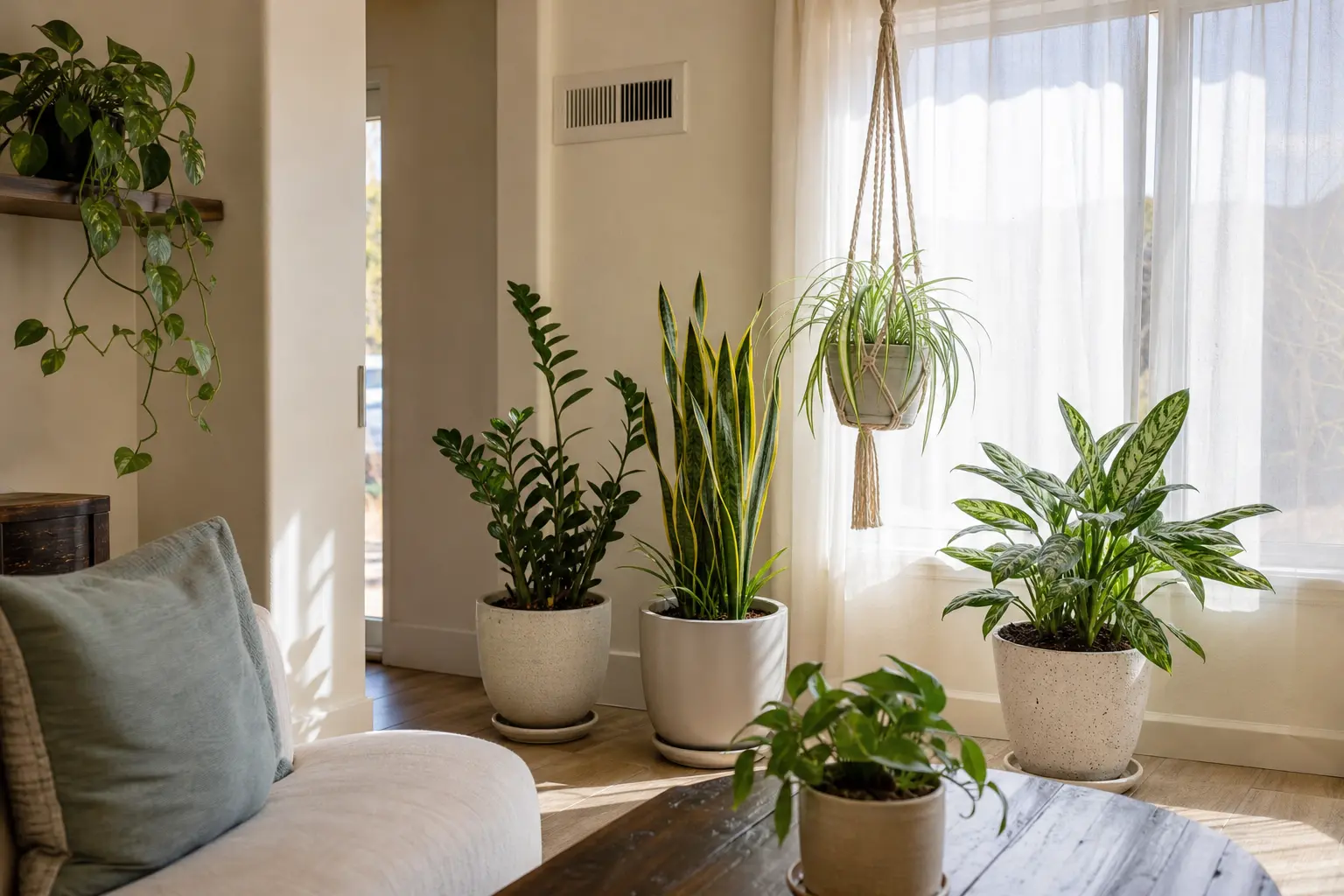
For most beginners, the best indoor plants for Nevada homes are snake plants, pothos, Chinese evergreens, ZZ plants, and spider plants. They are widely available, forgiving, and adaptable when placed in suitable light.
Start With Nevada’s Indoor Growing Conditions
Nevada homes can be demanding for plants: indoor air is often dry, windows can become intensely hot, and heating or air-conditioning vents create drying drafts. Start with resilient plants and provide stable basics: appropriate light, drainage, and watering based on soil dryness rather than a calendar.
Check Light Before Choosing a Plant
“Low light” does not mean no light. A room with a window but no direct sun can support low-light-tolerant plants; a windowless bathroom or interior hallway generally needs a grow light.
- Bright direct light: Sun reaches the plant for several hours. South- and west-facing windows can be especially intense in Nevada.
- Bright indirect light: The room is well lit, but direct rays do not hit the plant. This suits pothos and spider plants.
- Low light: Daylight is available, but direct sun does not reach the plant. Snake plants, ZZ plants, and Chinese evergreens can manage here.
- Very low light: The area stays dim or is far from windows. Use a grow light or artificial décor.
Low-light plants usually grow more slowly and use less water in dim rooms.
Account for Low Indoor Humidity and Heat
Dry air can cause brown tips or crispy edges, especially on thin-leaved plants such as spider plants. However, dry tips do not automatically mean the plant needs more water.
Overwatering is usually the greater risk. Roots need oxygen, and soil that stays wet too long can lead to root rot even in a dry home. Plants with thick leaves or water-storing roots, such as snake plants and ZZ plants, are especially practical choices.
Keep Plants Away From HVAC Vents and Hot Glass
Avoid direct airflow from heating and air-conditioning vents. Constant moving air dries foliage and makes watering needs unpredictable.
Also keep foliage from touching hot window glass. South- and west-facing windows can scorch leaves in summer. Move plants back, use a sheer curtain, or close blinds during strong afternoon sun. Keep plants away from frequently opened exterior doors and fireplaces as well.
Best Beginner-Friendly Indoor Plants for Nevada Homes
These plants tolerate average household humidity and occasional care mistakes better than many tropical houseplants.
| Plant | Best light | Watering approach | Why it suits beginners |
|---|---|---|---|
| Snake plant | Low to bright indirect light | Let soil dry thoroughly | Tolerates drought |
| Pothos | Bright indirect light | Water when upper soil dries | Fast-growing and expressive |
| Chinese evergreen | Low to medium indirect light | Let top portion dry | Good for lower-light rooms |
| ZZ plant | Low to bright indirect light | Let mix dry almost completely | Stores water in rhizomes |
| Spider plant | Bright indirect light | Water when surface dries | Adaptable and easy to propagate |
Snake Plant for Low-Maintenance, Lower-Light Spaces
Snake plant (Dracaena trifasciata, formerly Sansevieria) is among the easiest choices for Nevada beginners. Its upright leaves store moisture, so it can go longer between waterings than most houseplants.
It tolerates low light but grows best in medium to bright indirect light. It can take mild morning sun, but harsh afternoon sun through glass may scorch the leaves.
Water only after the potting mix has dried well below the surface. In a low-light room, that may mean every few weeks. Its most common problem is rot from soil that remains damp too long.
Pothos for Bright Indirect Light and Easy Growth
Pothos (Epipremnum aureum) is a trailing vine with heart-shaped leaves that works well on shelves, in hanging baskets, or on bookcases.
Place it near a bright window but out of strong direct sun. Filtered light near an east-facing window is often ideal; set it several feet back from south- or west-facing windows.
Water thoroughly when the upper inch or two of mix feels dry, then let excess water drain. Slightly limp leaves can signal thirst. Variegated varieties generally need brighter indirect light than solid-green pothos to retain their pattern.
Chinese Evergreen for Low-Light Rooms
Chinese evergreen (Aglaonema) is useful for bedrooms, offices, and living rooms with daylight but little direct sun. Its broad foliage gives a lush look while tolerating normal household humidity.
Keep it in low to medium indirect light. Strong direct sun can fade or burn the leaves. Water when the top section of potting mix feels dry, allowing excess water to drain fully. It can tolerate some drying, but it is less drought-resistant than snake plants and ZZ plants. Keep it away from chilly drafts.
ZZ Plant for Infrequent Watering
ZZ plant (Zamioculcas zamiifolia) is ideal for people who travel, work long hours, or forget to water. Its glossy leaves and thick underground rhizomes store moisture.
It handles low light but grows more actively in bright indirect light. Avoid sustained direct afternoon sun. Let the mix dry almost completely before watering again; if uncertain, wait several more days and check again.
ZZ plants grow slowly and rarely need frequent repotting. Move one to a slightly larger pot only when roots or rhizomes crowd or distort its container.
Spider Plant for Bright, Indirect Light
Spider plants (Chlorophytum comosum) are forgiving, arching plants suited to hanging baskets, stands, and bright kitchens. Mature plants often produce small plantlets that can be rooted.
They prefer bright indirect light and may tolerate mild morning sun. Water when the soil surface feels dry rather than allowing the entire pot to stay bone dry. Brown tips are common in dry homes and can also result from mineral buildup. Trim browned portions with clean scissors, following the leaf shape.
Match Each Plant to the Right Room and Care Routine
The easiest plant is the one that fits the conditions you already have and the care you can realistically provide.
Best Choices for Sunny Windows
Do not assume every houseplant wants direct desert sun. Most plants listed here prefer bright but filtered light.
- Pothos: Place back from a south- or west-facing window or behind a sheer curtain.
- Spider plant: Use an east-facing window or filtered light near a brighter exposure.
- Snake plant: Can handle brighter conditions if adjusted gradually.
- ZZ plant and Chinese evergreen: Keep out of direct afternoon sun.
If the glass is uncomfortably hot, move foliage farther away or filter the light.
Best Choices for Low-Light Bedrooms and Offices
For rooms with daylight but no direct sun, choose a snake plant, ZZ plant, or Chinese evergreen. They will grow slowly in low light but can remain attractive.
- Pick a ZZ plant or snake plant if you often forget watering.
- Choose a Chinese evergreen for fuller, broader foliage if you can check soil more regularly.
- Add a grow light if the room is genuinely dim or has no usable window light.
Do not compensate for low light with extra water. Plants use less moisture when light is limited.
Best Plants for People Who Forget to Water
ZZ plants and snake plants are the clearest choices for inconsistent watering. Both tolerate dry periods when planted in a draining container and an airy indoor mix.
Pothos can recover from occasional dryness, but repeated wilting weakens it. Spider plants prefer more regular moisture, while Chinese evergreens fall in the middle: forgiving, but not as drought-tolerant as ZZ plants.
Set a weekly reminder to inspect plants rather than automatically water them. Check the soil and water only plants that are dry enough.
Simple Watering, Potting, and Fertilizing Basics
- Use pots with drainage holes. Empty runoff from saucers or decorative cachepots.
- Water deeply, then drain. Add water until it runs through the pot, then discard excess.
- Check soil first. Use a finger or wooden chopstick below the dry surface.
- Use an airy indoor potting mix. Dense garden soil stays too wet indoors.
- Repot only when needed. Oversized pots hold excess wet mix around roots.
- Fertilize lightly during active growth. Follow the label and avoid fertilizing stressed plants.
Slower growth in winter or dim rooms is normal.
Can Indoor Plants or a Living Plant Wall Raise Humidity?
Plants release water vapor, so a group can add a small amount of moisture around nearby foliage. However, a few houseplants—or even a decorative living wall—will not meaningfully control humidity throughout a dry Nevada home.
A plant wall also requires sufficient light, irrigation, drainage, maintenance access, and protection for the wall behind it. Choose one for appearance, not as a whole-house humidity solution.
When a Group of Plants Can Create a Slightly More Humid Microclimate
A cluster of plants can create a modestly more humid pocket around the foliage, especially in a stable, well-lit area. The effect is local and limited.
Group plants with similar needs. Pothos, Chinese evergreens, and spider plants can share bright indirect light, while snake plants and ZZ plants generally need less frequent watering. Avoid packing plants into a dark corner with constantly wet soil.
Better Ways to Protect Humidity-Sensitive Plants
For plants that prefer humidity, improve their immediate environment:
- Run a clean humidifier nearby.
- Keep plants out of HVAC airflow.
- Use a kitchen or bathroom with reliable bright, indirect light.
- Group compatible plants together.
- Start with resilient species before trying fussier plants.
Misting offers only a brief moisture increase and is not a replacement for correct light, watering, or a humidifier.
Avoid Overwatering in an Attempt to Increase Humidity
Wet soil does not create healthy humidity for a plant. It can cause yellow leaves, drooping, fungus gnats, and root rot.
If leaf edges look dry, consider hot sun, vent exposure, mineral buildup, inconsistent watering, or aging foliage before adding water. Check soil moisture and roots first.
Common Beginner Mistakes With Indoor Plants in Nevada
Most houseplant problems come from care that is too frequent rather than too minimal.
- Watering on a fixed schedule. Needs change with light, season, pot size, and temperature.
- Using harsh direct sun. Desert light through glass can burn foliage quickly.
- Using containers without drainage. Trapped water commonly damages roots.
- Choosing only for appearance. A plant suited to bright light will struggle in a dim office.
- Moving plants repeatedly. Give them time to adjust.
- Overreacting to one yellow leaf. Look for repeated symptoms, wet soil, pests, or spreading spots.
- Ignoring pet and child safety. Keep common houseplants, including pothos, snake plants, ZZ plants, Chinese evergreens, and spider plants, out of reach if chewing or ingestion is a concern. Confirm suitability before bringing a plant home.
When troubleshooting, change one thing at a time and observe for several weeks.
Conclusion
The best beginner indoor plants for Nevada match the reality of dry air, bright windows, air conditioning, and busy schedules. Snake plants and ZZ plants suit infrequent watering and lower-light rooms. Pothos and spider plants prefer bright indirect light, while Chinese evergreens work well in softer daylight.
Start with one or two plants, use pots with drainage, and check soil before watering. Matching the plant to the room matters more than creating perfect tropical conditions.
FAQ
What is the easiest indoor plant to grow in Nevada?
A snake plant or ZZ plant is often the easiest choice for Nevada homes. Both tolerate average indoor humidity, missed watering, and lower light better than many houseplants. Choose snake plant for upright foliage or ZZ plant for glossy, fuller leaves.
How often should I water indoor plants in Nevada’s dry climate?
Water based on soil dryness, not a fixed number of days. Check the potting mix weekly. Snake plants and ZZ plants should dry substantially between waterings, while pothos, Chinese evergreens, and spider plants generally prefer water after the upper layer dries.
Do houseplants need a humidifier in Nevada?
Most beginner-friendly plants do not need a humidifier. Snake plants, ZZ plants, pothos, and Chinese evergreens usually adapt to typical Nevada indoor air. A humidifier can help especially humidity-sensitive plants, but it cannot replace proper light, drainage, and watering.
Which indoor plants can handle low light?
Snake plants, ZZ plants, and Chinese evergreens are the strongest low-light options in this group. They still need daylight from a nearby window. For rooms without natural light, add a grow light rather than relying on a low-light label alone.
You Might Also Like