Which Plants Work Best for Indoor and Outdoor Home Décor?
The best plants for indoor and outdoor décor are not necessarily the most fashionable ones. They are the plants that suit the light, temperature, available room, and level of care your home can realistically provide.
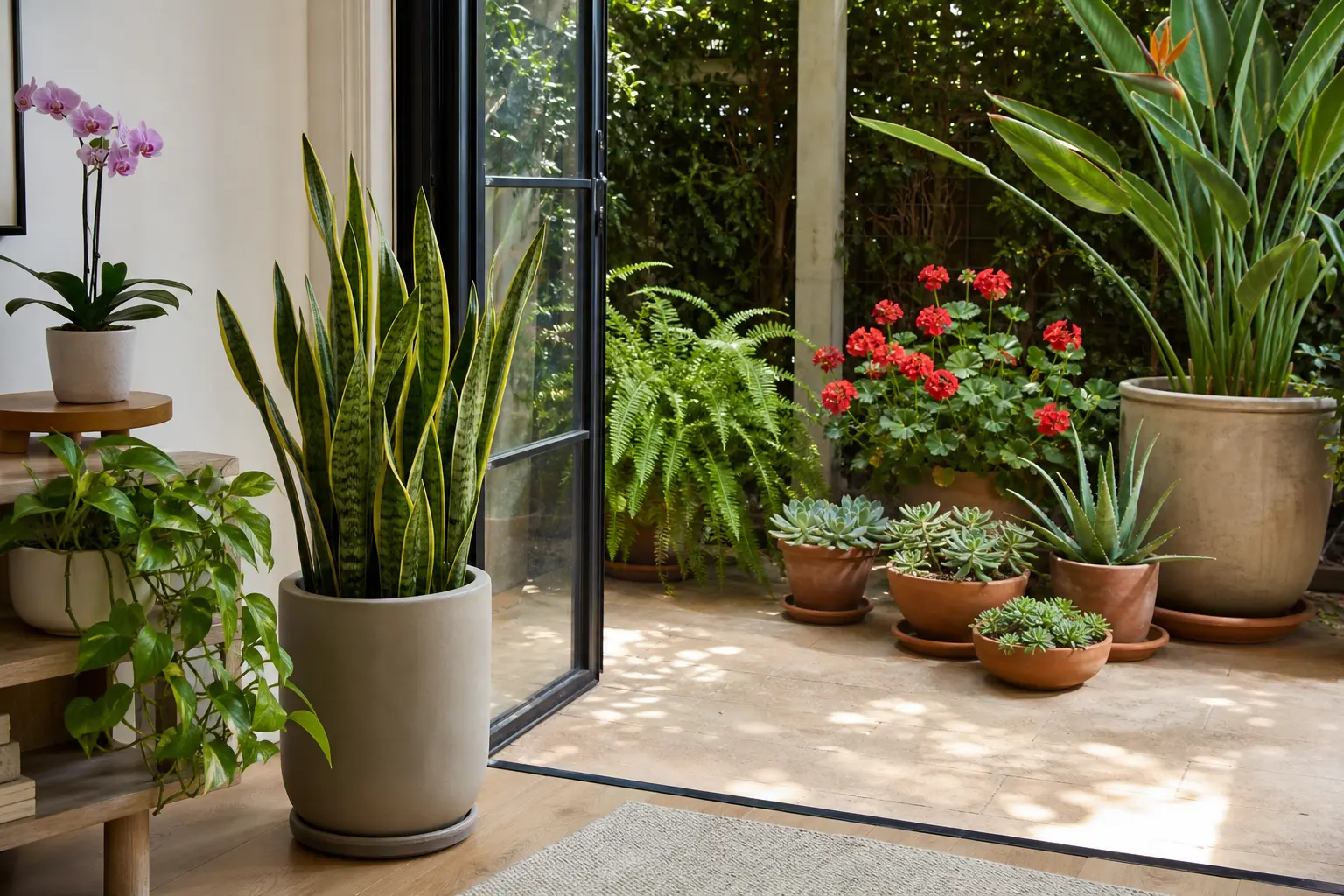
A sunlit patio can support flowering geraniums, succulents, and tropical statement plants through summer, while a dim hallway may need a tolerant snake plant or cast-iron plant. Some plants can travel between the house and a sheltered outdoor area seasonally; others should stay indoors unless you live in a frost-free climate.
Start with the growing conditions, then use foliage, flowers, and containers to create the look you want.
Choose Plants for Light, Climate, and Available Space
Match plants to indoor light levels
Indoor light is usually weaker than it appears. A bright room to the human eye may still be low light for a plant, especially if the window is small, shaded by trees, covered with blinds, or several feet away from the plant.
As a practical rule:
- Low light: A position well away from direct sun, such as a shaded north-facing room or interior corner with daylight.
- Bright indirect light: Near a bright window but protected from harsh midday or afternoon rays by a sheer curtain or distance from the glass.
- Direct sun: Several hours of sun falling directly on the leaves. South- and west-facing windows are often the brightest in the Northern Hemisphere.
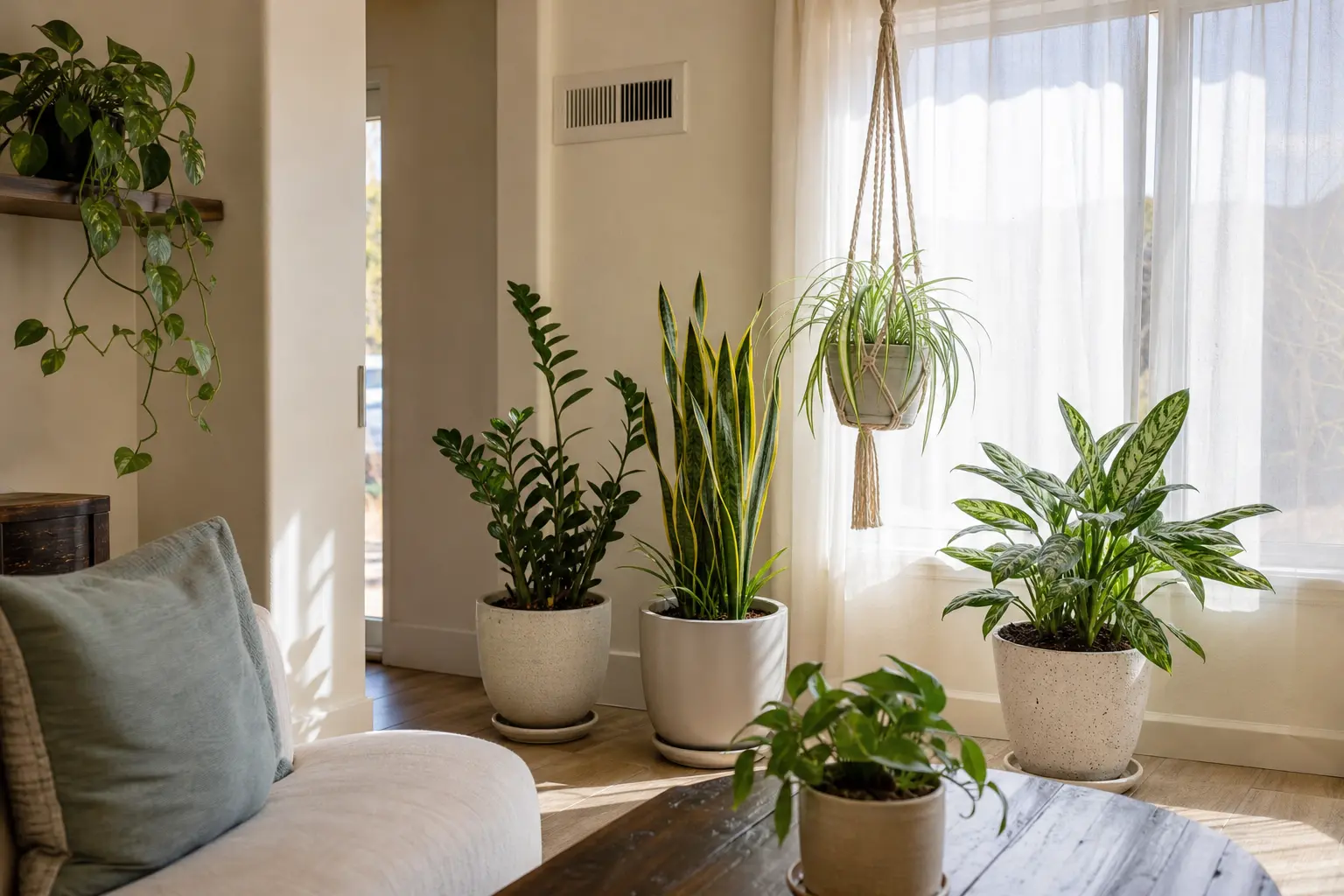
Snake plants, ZZ plants, Chinese evergreens, and cast-iron plants cope with low light, although they will grow more slowly there. Succulents, cacti, aloe, and jade need much brighter conditions. Without enough light, they become stretched, weak, and less colorful.
Account for outdoor sun, wind, rain, and frost
Moving a houseplant outdoors can be beneficial during warm weather, but a porch or patio is far more demanding than a windowsill. Outdoor plants contend with intense sun, wind that dries pots quickly, heavy rain, heat reflected from walls or paving, and sudden temperature drops.
Check your local hardiness zone if you want to leave a plant outside all year. Most familiar tropical houseplants—including pothos, peace lilies, caladiums, dracaenas, and bird of paradise—are not frost-hardy. In climates with freezing winters, they need to return indoors before cold weather arrives.
Even tender plants should not go straight from an indoor room into full outdoor sun. Leaves grown indoors can scorch in a day. Start them in deep shade outdoors and increase exposure gradually over one to two weeks.
Check mature size, drainage needs, and pet safety
A small nursery plant is not always a small plant. Bird of paradise, dracaena, hibiscus, and Boston fern can become substantial container specimens. Before buying, consider mature height and width, plus the space needed to walk around the plant and water it comfortably.
Drainage matters as much as the pot’s appearance. Most decorative plants need a container with drainage holes so excess water can escape. If you use a watertight basket, ceramic cachepot, or decorative bowl, keep the plant in a nursery pot inside it and empty any pooled water after watering.
Pet safety also affects placement. Many common décor plants can cause stomach upset or more serious problems if chewed. Keep plants out of reach of cats and dogs where possible, and confirm the safety of each individual species before bringing it home. Spider plants are often used in pet-accessible spaces, but no plant should be treated as safe for repeated chewing or digging.
Best Plants for Indoor and Outdoor Décor
Low-light indoor plants for shaded rooms
These plants are useful where decorative impact matters but natural light is limited.
-
Snake plant: Upright, architectural leaves make it ideal beside sofas, in bedrooms, and in narrow entryways. It tolerates missed watering better than most houseplants, but it dislikes constantly wet soil. It can spend warm months outdoors in bright shade, but frost will damage it.
-
ZZ plant: Glossy, dark leaflets bring a polished look to offices, halls, and low-light living rooms. ZZ plants grow slowly and prefer the potting mix to dry substantially between waterings. Keep them indoors when temperatures cool.
-
Pothos: A forgiving trailing plant for shelves, hanging baskets, and tall cabinets. It adapts to moderate or low light, though variegated varieties need brighter indirect light to retain their patterns. It is attractive on a shaded porch in summer but is not frost-tolerant.
-
Cast-iron plant: Broad, deep-green leaves give dim rooms a calm, traditional look. It is a strong choice for shaded entrances and protected porches, particularly where more delicate foliage plants struggle.
-
Chinese evergreen: Patterned leaves in green, silver, cream, pink, or red brighten shaded corners. It prefers warmth and does not tolerate cold drafts or chilly outdoor nights.
Low light does not mean no light. Plants still need enough daylight to photosynthesize, and watering should be lighter in a dim room because soil dries more slowly.
Sun-loving plants for bright interiors and patios
Bright windowsills, enclosed sunrooms, and sunny patios suit plants adapted to strong light and drier soil.
-
Aloe vera: Its sculptural rosettes complement modern, minimalist, and Mediterranean-style décor. Give it a gritty, fast-draining mix and allow the soil to dry well between waterings. Protect it from frost.
-
Jade plant: With thick stems and rounded leaves, jade works well as a long-lived tabletop specimen or a small “tree” in a substantial pot. It needs strong light and dislikes overwatering.
-
Echeveria and other succulents: Their compact rosettes work beautifully in shallow bowls, window boxes, and grouped patio pots. They need direct sun or very bright light; insufficient light leads to loose, elongated growth.
-
Cacti: Cacti offer striking form with relatively little watering, especially in bright, dry positions. Use pots with drainage and a porous mix. Not every cactus is hardy outdoors in winter, so identify the type rather than assuming it can survive freezing conditions.
-
Bird of paradise: Large paddle-shaped leaves create an instant tropical focal point in a sunny room or sheltered patio. It needs a large, heavy container, bright light, and regular watering during active growth. Bring it indoors before cold weather in most regions.
Leafy plants for entryways, balconies, and porches
Leaf texture can be as decorative as flowers, especially in small outdoor spaces where color changes through the season.
-
Spider plant: Arching green-and-white leaves soften shelves, hanging baskets, and porch rail displays. It appreciates bright indirect indoor light and shade to partial shade outside. Let the upper layer of soil dry before watering.
-
Boston fern: Full, feathery fronds suit covered porches, hanging baskets, and humid bathrooms with bright filtered light. Ferns are handsome but less forgiving of dry air and missed watering than snake plants or ZZ plants.
-
Coleus: Coleus supplies vivid foliage in lime, burgundy, copper, pink, and purple. It is usually grown outdoors as a warm-season annual in beds and containers, but it can brighten an indoor window if given strong light. Protect from frost.
-
Caladium: Heart-shaped leaves in dramatic color combinations make caladium a standout for shady patios and porch containers. It prefers warmth and evenly moist soil, then declines when conditions become cold.
-
Dracaena: Upright, strap-like foliage gives height without the visual weight of a broad-leaved shrub. Many types work indoors in bright indirect light and can spend summer in shade outdoors. Cold temperatures can quickly damage them.
Flowering plants for colorful indoor and outdoor displays
Flowering plants can make a dining table, windowsill, balcony, or front door feel more intentional—but they usually need brighter light and more consistent care than foliage plants.
-
Orchids: Moth orchids are elegant indoor display plants for bright, indirect light. They can enjoy a shaded, warm outdoor location in summer, but direct sun and cold temperatures can harm them.
-
Peace lilies: White spathes and glossy leaves suit low-to-medium-light interiors, though they flower best in brighter indirect light. They are better as indoor plants or shaded summer porch plants than as full-sun outdoor displays.
-
Begonias: Begonias offer flowers, colorful foliage, or both. Many thrive in bright shade or gentle morning sun, making them excellent for covered patios, balcony boxes, and bright rooms. Avoid waterlogged soil.
-
Geraniums: Geraniums are reliable choices for sunny window boxes, front steps, and patios. They need plenty of sun outdoors and should be protected from frost. Indoors, a very bright window is essential for good flowering.
-
Hibiscus: Tropical hibiscus produces large, bold flowers and makes a dramatic patio centerpiece. It wants warmth, sun, regular watering, and feeding during the growing season. It must be overwintered indoors in cold climates.
Use Plants to Style Indoor and Outdoor Spaces
Create focal points with tall floor plants and statement planters
One large plant often has more impact than several small plants scattered around a room. Use bird of paradise, a tall dracaena, a mature snake plant, or a large cast-iron plant to anchor an empty corner, flank an entryway, or soften a hard patio wall.
Choose a planter that is proportionate to the plant. A tall plant in a tiny pot can look unstable, while an oversized container can overwhelm a small room. Heavy ceramic, concrete, or weighted planters are useful outdoors where wind could topple lightweight pots.
Layer trailing, tabletop, and hanging plants
Layering creates the lushest displays. Combine:
- A vertical plant for height, such as dracaena or snake plant.
- A mounding plant at middle level, such as a fern, caladium, or begonia.
- A trailing plant such as pothos or spider plant to spill over an edge.
On a patio, this approach works well beside seating areas: a tall container at the back, a flowering pot in front, and a hanging basket above. Indoors, use a tabletop orchid or succulent beside a floor plant rather than lining every available surface with pots.
Coordinate pots and planters with the home’s décor
Pots can connect plants to the rest of the home. Terracotta suits rustic, Mediterranean, and warm natural schemes. Matte black, white, or charcoal containers feel modern. Woven baskets soften living rooms, while glazed ceramic adds color to a porch or kitchen.
For a cohesive display, repeat one or two materials or colors rather than matching every pot exactly. For example, use terracotta and cream ceramics indoors, then repeat terracotta on the patio with weather-resistant glazed pots.
Use affordable containers without sacrificing drainage or durability
Inexpensive containers can look excellent if they meet basic practical needs. Look for end-of-season garden stock, thrifted ceramic pieces, food-safe buckets or tubs adapted with drainage holes, and simple plastic nursery pots placed inside decorative covers.
Avoid leaving plants in containers without drainage simply because they are cheap or attractive. A low-cost pot with holes is usually a better choice than an expensive sealed planter. Outdoors, choose frost-resistant materials if pots will stay outside through winter; porous terracotta can crack when saturated soil freezes.
Care for Container Plants Indoors and Outdoors
Water according to light, season, and pot drainage
Watering schedules fail because conditions change. A pothos in a dim winter room may need water far less often than the same plant on a bright summer porch.
Check the soil before watering. For many leafy tropical plants, water when the top inch or so feels dry. For succulents, cacti, snake plants, and ZZ plants, wait until much more of the potting mix has dried. Then water thoroughly until it runs from the drainage holes, and discard excess water from saucers or outer pots.
Wilting is not always thirst. A plant in wet soil that is wilting may have stressed roots from overwatering.
Acclimate plants before moving them outdoors or bringing them inside
A gradual transition prevents shock. In spring, place indoor plants outdoors in a sheltered, shaded location for a few hours, extending the time outside over several days. Introduce morning sun before attempting stronger afternoon sun.
Before bringing plants back in, inspect leaves, stems, and the pot rim for pests. Rinse foliage if needed and isolate the plant from your main collection for a short period if you suspect insects. Indoor conditions are dimmer and drier, so expect some leaf drop while the plant adjusts.
Protect outdoor containers from cold weather and heat stress
Containers expose roots to more temperature change than garden soil. During heatwaves, move pots out of harsh afternoon sun where appropriate, water early in the day, and group containers together to reduce drying wind.
Before frost, bring tender plants indoors or move them to a protected, frost-free area. Hardy outdoor perennials in containers may still need protection because their roots can freeze more severely than plants in the ground. Raise pots slightly off cold paving and avoid allowing them to sit in winter water.
Prevent pet damage and choose safer placements
For pets that chew leaves, knock over pots, or dig in soil, placement is often more effective than deterrent products. Use tall plant stands, wall-mounted shelves, hanging baskets, or rooms that can be closed off.
Covering exposed soil with large smooth stones can discourage digging, but do not pack the surface so tightly that water cannot enter the pot. Secure top-heavy containers so they cannot fall if brushed by a pet. If a pet has eaten part of a plant and seems unwell, contact a veterinarian promptly and identify the plant if possible.
Help newly purchased or shipped plants recover from transit shock
New plants may arrive with bent leaves, dry soil, minor leaf loss, or temporary drooping after transport. Give them time before repotting or fertilizing.
Place the plant in suitable light, water only if the soil actually needs it, and keep it away from heating vents, cold windows, and direct sun while it settles. Remove only clearly damaged leaves. Most plants recover more reliably when their conditions remain stable for a couple of weeks.
Conclusion
The best plants for indoor and outdoor décor are those that match your conditions before they match a trend. Choose low-light foliage plants for shaded rooms, sun-loving succulents and flowering containers for bright windows and patios, and larger statement plants where space allows.
Use well-draining pots, move tender plants gradually between indoors and outdoors, and protect container plants from frost, extreme heat, and curious pets. With the right plant in the right place, even a small apartment window, narrow porch, or balcony can become a convincing green focal point.
FAQ
Can the same plant live indoors and outdoors?
Yes, many tropical houseplants can spend warm weather outdoors and return inside before temperatures become too low. Pothos, spider plants, snake plants, dracaenas, aloe, orchids, and bird of paradise are common examples. The key is gradual acclimation: move plants into shade first, then slowly increase outdoor light if the species can tolerate it. Do not leave frost-sensitive plants outside once cold nights begin.
What are the best low-maintenance plants for indoor and outdoor décor?
For indoors, snake plant, ZZ plant, pothos, cast-iron plant, jade plant, and certain cacti are among the least demanding choices. For warm-season patios, geraniums, succulents, and sturdy cacti can be relatively low-maintenance when given enough sun.
“Low maintenance” does not mean neglect-proof. Every plant still needs suitable light, drainage, and watering adjusted for the season.
Which plants are best for homes with little natural light?
Snake plant, ZZ plant, cast-iron plant, Chinese evergreen, pothos, and some dracaenas are dependable choices for rooms with modest daylight. Put them as close to the available window as practical without placing them in harsh direct sun. If a room has no natural light at all, consider adding an appropriate grow light rather than expecting even a low-light plant to thrive indefinitely.
How can I find inexpensive pots and planters for plant displays?
Check thrift stores, yard sales, local resale listings, end-of-season garden clearances, and discount home stores. Plain plastic nursery pots can also be slipped into baskets, fabric covers, or inexpensive ceramic cachepots for a more finished look.
Prioritize drainage, stability, and outdoor durability over decorative detail. If you repurpose a container, add drainage holes where appropriate and use a saucer indoors to protect floors and furniture.
You Might Also Like