Coleus vs. Basil: What’s the Difference Between These Plants?
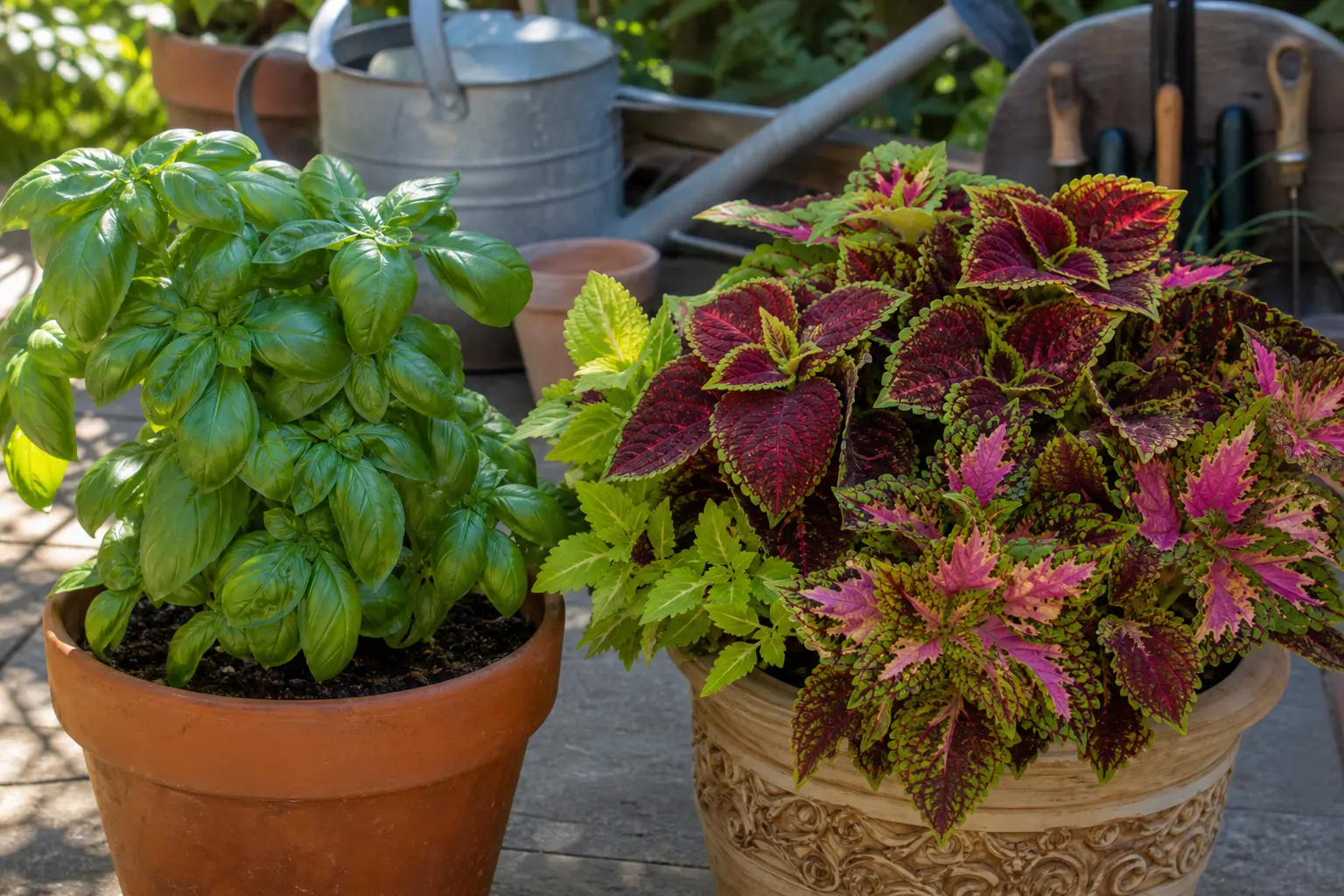
Coleus and basil may look vaguely alike at first glance: both belong to the mint family, often have square stems, and usually grow leaves in opposite pairs. But they serve very different purposes. Coleus is grown mainly for bold, colorful foliage, while basil is grown for its fragrant leaves in the kitchen.
| Feature | Coleus | Basil |
|---|---|---|
| Common purpose | Ornamental foliage plant | Culinary herb |
| Common species | Coleus scutellarioides | Ocimum basilicum |
| Plant family | Mint family (Lamiaceae) | Mint family (Lamiaceae) |
| Main attraction | Colorful, patterned leaves | Aromatic, edible leaves |
| Leaf scent | Usually mild or non-culinary | Strong, herbaceous, clove-like, or spicy |
| Best use | Containers, borders, houseplant displays | Cooking, herb gardens, containers |
| Harvested for | Appearance and cuttings | Repeated leaf harvests |
The simplest distinction is practical: basil is planted to be picked and eaten, while standard ornamental coleus is planted to be admired.
How to Tell Coleus and Basil Apart
Despite their shared family traits, coleus and basil are usually easy to identify once you know what to look for. Leaf color and fragrance are the quickest clues.
Leaf Color, Shape, and Texture
Coleus is famous for its foliage. Its leaves may combine green, cream, yellow, pink, red, burgundy, purple, orange, or nearly black—often several colors on one leaf. Many varieties have contrasting margins, veins, speckles, or irregular patterns. Leaves are commonly broad and pointed with noticeably scalloped or serrated edges.
Basil leaves are generally more uniform. Sweet and Genovese basil are usually medium to deep green, while purple basil types have burgundy or dark-purple foliage. Some varieties have narrower leaves, curled edges, or compact habits, but basil does not normally produce the dramatic multicolored patterns associated with coleus.
Both plants can have opposite leaf pairs and somewhat square stems, which are familiar features of mint-family plants. That shared structure can make young plants seem similar, especially when coleus has mostly green leaves. Still, a colorful leaf pattern strongly suggests coleus, while a plain green leaf with a recognizable herb scent points toward basil.
Aroma and Taste
Rub a leaf gently between your fingers and smell it. Basil releases a distinct culinary fragrance that may seem sweet, peppery, spicy, clove-like, anise-like, or herbaceous, depending on the variety. Thai basil, for example, often has a stronger spicy-anise character than standard sweet basil.
Ornamental coleus usually has little scent or an odor that does not resemble a familiar kitchen herb. It is not bred or sold as a culinary crop.
Do not assume a coleus leaf is edible simply because it belongs to the mint family or vaguely resembles basil. Plant-family relationships do not make all relatives interchangeable at the table. If a plant was purchased as decorative coleus for a patio pot, flower bed, or houseplant display, treat it as ornamental rather than as food.
Flowers and Growth Habit
Coleus produces small flowers on upright spikes, often in pale blue, lavender, or white tones. The flowers are modest compared with the foliage, so gardeners commonly remove the spikes to keep the plant focused on leaf growth and a tidy shape.
Basil also produces flower spikes, usually with small white, pink, or purple blooms. Once basil begins flowering, it shifts more energy toward seed production. The leaves remain usable, but plants often become less leafy and may develop a stronger or less sweet flavor. Gardeners growing basil for regular harvest usually pinch off flower buds early.
In habit, coleus is typically a bushy, branching ornamental that can be upright, mounded, or trailing depending on cultivar. Basil generally forms an upright, branching herb plant, though compact and columnar types are also available.
Uses: Ornamental Coleus vs. Culinary Basil
The difference between coleus and basil is less about which plant is “better” and more about what you need it to do.
Why Gardeners Grow Coleus
Coleus provides long-lasting leaf color in places where flowering plants may struggle to make an impact. It works especially well in:
- Mixed patio containers
- Shaded or partly shaded borders
- Bedding displays
- Window boxes
- Indoor plant groupings
- Seasonal combinations with ferns, impatiens, begonias, or trailing plants
Many modern coleus cultivars tolerate substantial sun, but others look best with afternoon shade. Their leaf colors can create contrast even when little is in bloom: lime-green foliage can brighten a dark corner, while burgundy or purple types add depth to a container planting.
Coleus cultivars are selected primarily for leaf shape, color, pattern, vigor, and growth habit—not for flavor. A named variety may have a specific combination of pink centers, dark edges, or lime-green veining that gardeners want to preserve from year to year.
Why Gardeners Grow Basil
Basil is a warm-season herb grown for fresh or dried leaves. It is especially useful because regular picking encourages more branching and provides an ongoing harvest.
Fresh basil is used in pesto, tomato sauces, salads, sandwiches, soups, pasta dishes, infused oils, and drinks. Different types suit different cooking styles:
- Sweet basil: A versatile everyday basil for sauces, salads, and fresh use.
- Genovese basil: A large-leaf type often chosen for pesto and Italian-style cooking.
- Thai basil: A more assertive, spicy basil that holds up well in stir-fries and Southeast Asian dishes.
- Purple basil: A decorative edible type with darker leaves; useful in salads, vinegars, and container gardens.
A few basil plants near the kitchen can provide far more useful harvest than a single occasional snip. However, basil needs warmth, adequate light, and regular trimming to stay productive.
Important Naming Note: “Coleus” Can Mean Different Plants
In most garden centers and landscaping conversations, “coleus” means ornamental coleus, usually Coleus scutellarioides. This is the colorful foliage plant used in containers and beds.
However, Coleus amboinicus is a different plant that is sometimes called Cuban oregano, Mexican mint, Spanish thyme, or Indian borage. It has thick, fuzzy, strongly aromatic leaves and is used as an herb in some cuisines.
The shared genus name can cause confusion. Cuban oregano is not the same plant as the vividly patterned ornamental coleus commonly sold in annual displays. Only use a plant in cooking when you have correctly identified it as an edible herb and know how it was grown. Do not substitute ornamental coleus for Cuban oregano.
Growing Coleus and Basil: Key Care Differences
Both plants appreciate warmth and well-drained soil, but their preferred locations and maintenance needs are not identical.
Light, Water, and Temperature
Basil generally performs best in full sun. Aim for a warm, open position with at least six hours of direct sunlight daily when possible. Strong light supports sturdy growth and aromatic leaves. In very hot climates, a little late-afternoon protection can reduce stress, but basil should not be placed in deep shade.
Coleus light needs depend heavily on the cultivar. Traditional varieties often prefer bright shade or morning sun with afternoon shade. Sun-tolerant types can handle more direct light, but even these may scorch or fade in intense heat if soil dries too much. Read the plant label rather than assuming every coleus belongs in full shade.
Both plants prefer evenly moist, well-drained growing media. Letting pots dry severely can cause wilting and leaf drop, while constantly saturated soil can damage roots. Check containers frequently in hot weather, especially small pots and hanging baskets.
Neither plant tolerates frost. Basil is particularly sensitive to chilly conditions and often stalls in cool spring weather. Wait until frost danger has passed and nights are reliably mild before planting it outdoors. Coleus should also be protected from cold; bring it indoors or take cuttings before autumn frost in frost-prone climates.
Pruning and Harvesting
Basil responds well to regular harvesting. Rather than removing only a few large leaves from the bottom, cut a stem just above a pair of leaves. New side shoots usually develop from that point, creating a fuller plant with more future harvests.
A practical approach is to begin light harvesting once the plant has several sets of true leaves and is growing strongly. Avoid stripping a young or stressed plant bare. Take a little from several stems rather than cutting one branch down to nothing.
Pinch off basil flower buds as they appear if your goal is leafy production. This delays flowering and encourages branching. If you want to collect seed or enjoy the blooms for pollinators, allow a few flower spikes to mature late in the season.
Coleus is pruned for shape rather than for kitchen harvest. Pinch off the soft growing tips above a leaf pair to encourage branching and prevent a leggy plant. Removing flower spikes also helps keep attention on foliage. Healthy stem tips can be rooted as cuttings to make new plants.
Seeds, Cuttings, and Color Stability
Basil is commonly grown from seed, and seed-grown plants generally provide predictable results when seed is fresh and properly labeled. Start seeds in a clean, well-draining seed-starting mix, keep the medium lightly moist rather than soggy, and provide warmth for germination. Once seedlings emerge, they need bright light to avoid becoming thin and stretched.
Coleus can also be grown from seed, particularly when you want many plants or enjoy a mixed range of colors. But seedlings may not reproduce the exact leaf pattern of a named parent plant. This is one reason gardeners are sometimes disappointed when seed-grown plants do not match a photo or a favorite mature specimen.
For reliable color and pattern, take stem cuttings from a healthy named coleus cultivar:
- Cut a non-flowering stem just below a leaf node.
- Remove leaves from the lower portion of the cutting.
- Place the stem in water or a moist propagation medium.
- Pot it up once roots are established.
Cuttings create a clone of the parent plant, so they are the better choice when you want to preserve a particular leaf color or pattern.
Common Problems
Coleus sometimes produces greener leaves than expected or loses some variegation. This can happen because of the cultivar’s natural variability, reduced light, very strong sun, excessive fertilizer, or stress from heat and inconsistent watering. New leaves often reveal the problem first. Before making major changes, confirm the cultivar’s light preference and compare the plant’s current placement with its label recommendations.
If a coleus has become tall and sparse, pinch it back gradually. A hard cutback can be useful for a vigorous plant, but avoid severe pruning when it is already stressed by heat, drought, root problems, or cold.
Basil seed-starting failures are often linked to cold conditions, poor drainage, or inadequate light after germination. Start with fresh seed and a light seed-starting mix rather than heavy garden soil. Keep the medium consistently moist, not waterlogged, and move seedlings into strong light as soon as they emerge.
As autumn approaches, basil is usually best treated as a seasonal crop. Coleus offers more flexibility: you can move a compact plant indoors to a bright window or take cuttings before cold weather arrives. Indoor coleus may slow down during winter, but healthy cuttings can provide replacement plants for spring.
Which Plant Should You Choose?
Choose basil if you want a warm-season herb to harvest regularly for cooking. It belongs near a sunny kitchen garden, vegetable bed, or bright patio container where you can pick it often.
Choose coleus if you want bold foliage for pots, borders, shaded spaces, or indoor displays. Its value is visual: colorful leaves, contrasting textures, and dependable seasonal impact.
Grow both if you have separate spaces for their strengths. Put basil in the sunniest warm location available, and use coleus to brighten a shaded porch, soften a mixed container, or add leaf color where flowers are less reliable.
Conclusion
Coleus and basil are related mint-family plants, but they are grown for very different reasons.
Coleus is primarily valued for colorful ornamental foliage, while basil is grown for fragrant, edible leaves. The easiest way to distinguish them is by purpose and scent: basil belongs in the kitchen, while typical coleus belongs in decorative plantings.
FAQ
Is coleus related to basil?
Yes. Both belong to the mint family, Lamiaceae, which helps explain their square stems and opposite leaf arrangement. They are different genera and are grown for different reasons: basil as an edible herb and coleus mainly as an ornamental foliage plant.
Can you eat coleus leaves?
Do not treat standard ornamental coleus as a culinary herb. A separate plant sometimes called Coleus amboinicus—Cuban oregano or Indian borage—is edible, but it is not the same as common ornamental coleus. Confirm the exact plant identity before using any “coleus” in food.
Does coleus need more sun than basil?
Usually no. Basil generally performs best in full sun and warm weather. Coleus light needs vary by cultivar; many types prefer partial shade, while newer sun-tolerant types can handle more direct light. A coleus label is the best guide for placement.
Is it better to grow coleus from seed or cuttings?
Seeds are useful when you want many plants or a varied mix of colors. However, cuttings are better for preserving the exact appearance of a named coleus cultivar. A cutting will reproduce the parent plant’s growth habit and foliage pattern more predictably than seed.
You Might Also Like