How Do Plants Influence Human Behavior?
Plants influence human behavior by changing the conditions around us: what we notice, how calm or alert we feel, where we spend time, and what routines we build. Their influence is usually subtle. A windowsill herb pot will not fix a stressful life, but repeated contact with plants can shape mood, attention, stress, social interaction, movement, food choices, and how people treat a space.
The strongest effects happen through regular interaction: walking on a tree-lined street, tending vegetables, keeping houseplants alive, sitting near greenery at work, or sharing cuttings with neighbors. The effect depends on the person, setting, plant, and meaning attached to it. A fern may soothe one person and feel like another chore to someone else.
The phrase plants influence on humans can sound as if plants directly control behavior. In practice, plants create cues, sensory experiences, rhythms, and responsibilities that nudge people toward calmer, more observant, more social, or more environmentally aware behavior.
The Main Ways Plants Affect People
Plants affect people through sensory, psychological, and behavioral pathways. They change what we see, smell, touch, hear, and do. A leafy room feels different from a bare one. A shaded path invites slower walking. A tomato plant on the patio asks to be checked, watered, and harvested.
| Area of influence | How plants can affect behavior | Everyday example |
|---|---|---|
| Mood | Add color, texture, and a sense of life | Flowers make a kitchen welcoming |
| Attention | Offer soft visual focus | Looking at trees between tasks |
| Stress | Encourage slower moments | Sitting near a garden after work |
| Routine | Require observation and care | Checking soil moisture weekly |
| Social behavior | Create shared topics and gifts | Trading cuttings with friends |
| Environmental choices | Make seasons, wildlife, and water visible | Planting for pollinators |
Emotional responses to plants and greenery
People often respond emotionally to plants before they think about them. Green leaves, flowers, scent, shade, and seasonal change can make a place feel softer and more alive. This is why one large plant can make a waiting room feel less sterile, or why a tree outside a window can become part of someone’s daily comfort.
Plants also carry memory and identity. A rose from a grandparent’s garden, basil grown for family meals, or a houseplant received after moving may affect mood because of personal meaning, not only because it is green.
The response is not always positive. A messy, dying, pest-ridden, or allergy-triggering plant can create irritation. Plant influence depends on the relationship between plant, person, and context.
Attention, focus, and mental restoration
Plants can support attention by giving the mind a gentler focus than screens, deadlines, traffic, or dense information. Watching leaves move, noticing a new bud, or seeing light change through branches gives attention a low-pressure place to rest.
In practical terms, this might mean taking a short break near a planted balcony, walking through a park at lunch, or placing a plant where your eyes naturally pause between tasks. The plant does not do the work for you, but it can make breaks more restorative.
For gardeners, attention becomes more active. You learn to notice soil dryness, leaf color, pest damage, new shoots, and weather patterns. This habit of observation can encourage patience because plants rarely respond instantly.
Physical surroundings and behavior cues
Plants influence behavior by shaping space. A hedge creates privacy. A shade tree makes a hot patio usable. Herbs by the kitchen door can encourage cooking. A fruit tree can make harvest season part of family routine.
Design matters. Plants can guide people along a path, define a seating area, soften a hard edge, or signal that a place is cared for. In public spaces, well-kept greenery may encourage people to linger and treat the area more respectfully. Neglected plantings can send the opposite message.
Indoors, plant placement also changes behavior. A desk plant may encourage brief visual breaks. A nearby watering can makes care easier. These cues are small, but daily behavior is often built from small cues.
Plants, Stress, and Mental Well-Being
Plants, gardens, forests, and indoor greenery may support relaxation by offering sensory variety without overwhelming the mind. They introduce natural shapes, gentle movement, fragrance, shade, and seasonal change. For many people, this creates a feeling of refuge.
Plants are not a substitute for mental health care, rest, medication, social support, or safer working conditions. They are one possible layer in a healthier environment. Watering seedlings, walking under trees, or sitting in a courtyard garden can interrupt stress patterns and invite slower attention.
Why natural settings feel restorative
Natural settings often feel restorative because they contain complexity without the same pressure as many human-made demands. A garden has many things to notice—leaf shapes, birds, soil texture, flowers opening—but it usually does not require an immediate response.
Plants also improve physical conditions: shade, cooler surfaces, filtered light, wind movement, and some sound absorption. A leafy courtyard can feel calmer than a concrete one because it reduces heat, glare, noise, and visual harshness.
Scale matters too. Large trees, woodland paths, meadows, and gardens can make personal worries feel less consuming for a moment. Watching a perennial return in spring or a seedling mature reminds people that life moves in longer rhythms.
Indoor plants and everyday mood
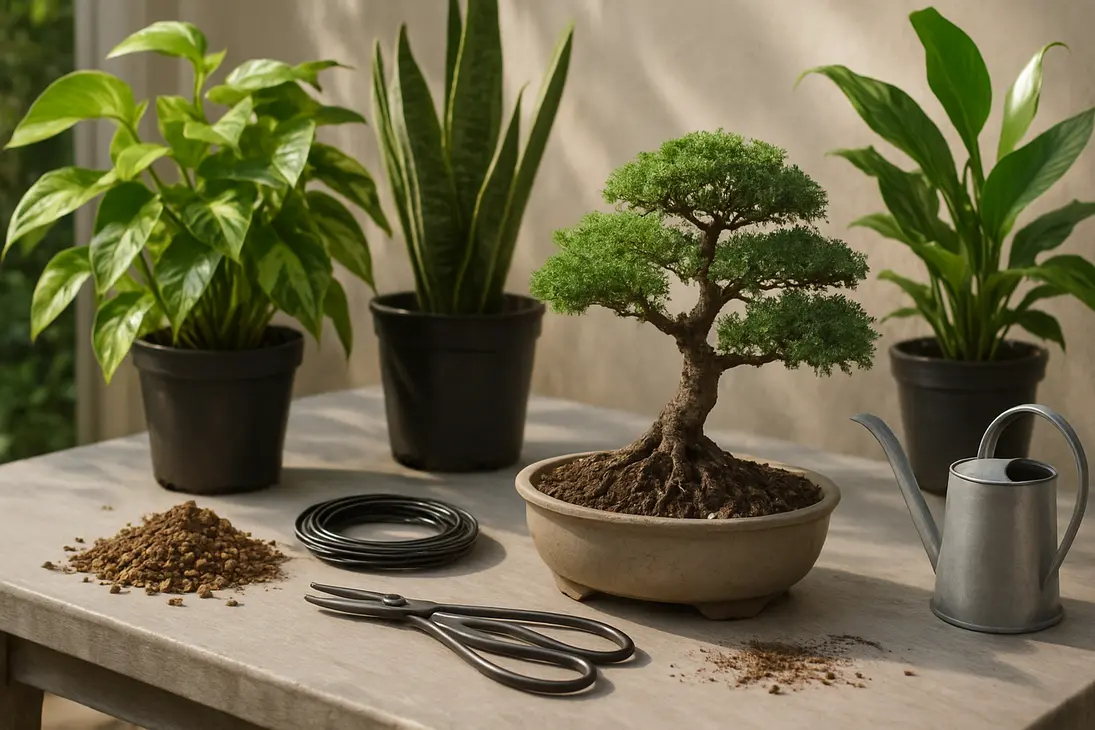
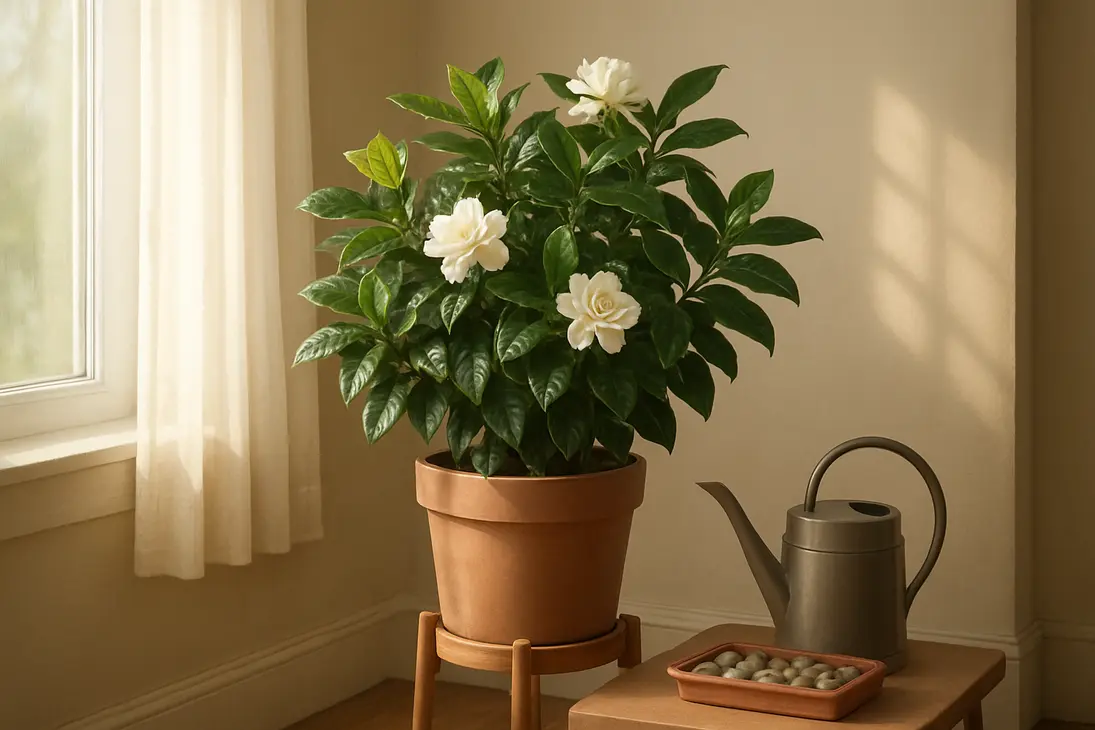
Indoor plants may improve mood by making rooms feel warmer, softer, and more personal. A pothos on a shelf, a plant on a windowsill, or herbs by the sink can make ordinary spaces feel more cared for.
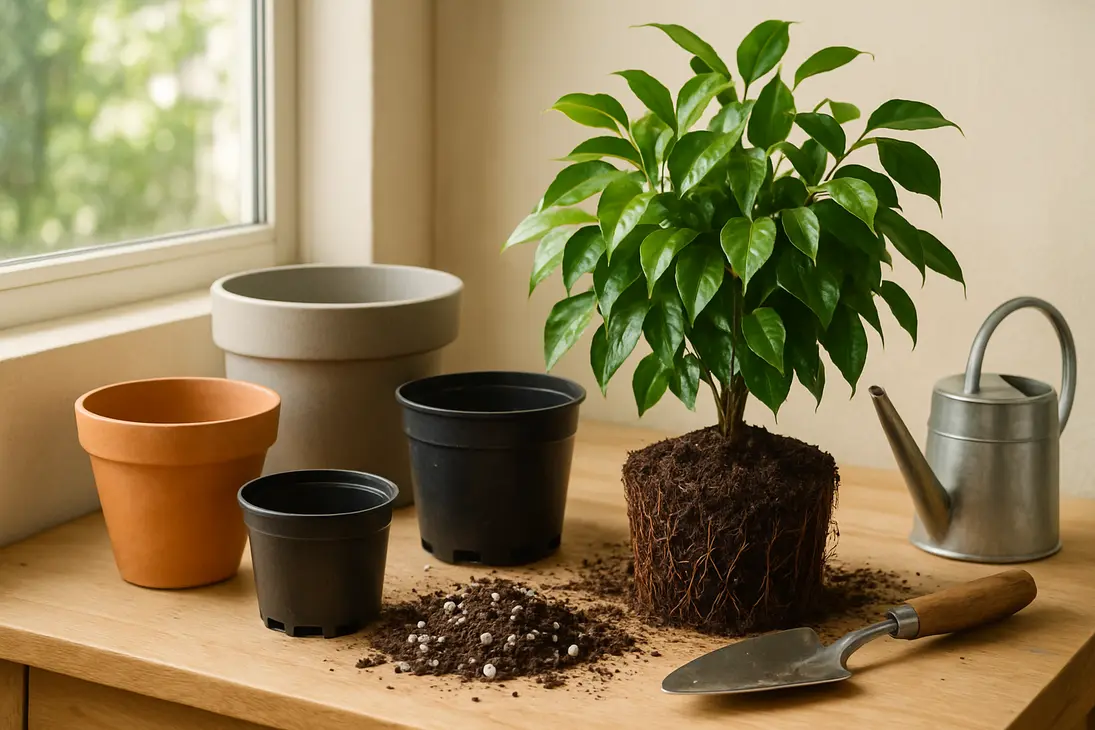
The benefit depends on fit. A thriving low-maintenance plant can be reassuring; a demanding plant in poor light can become stressful. The best plant is not always the rarest one. It is the plant suited to your light, watering habits, temperature, pets, and available space.
Good beginner options often include pothos, snake plant, ZZ plant, spider plant, peace lily, or heartleaf philodendron, though pet and child safety should always be checked. The realistic benefit is simple: indoor plants can make spaces more pleasant and create small moments of care.
Gardening as an active form of stress relief
Gardening differs from simply viewing plants because it involves the body. Digging, watering, pruning, sowing, mulching, harvesting, and weeding give stress somewhere to go. The work is physical but adjustable: ten minutes with containers can still matter.
The stress-relieving effect often comes from movement, attention, and tangible progress. Pulling weeds, deadheading flowers, or planting lettuce seedlings has a clear result. Many modern tasks are abstract; gardening is concrete.
Gardening can also become stressful if the scale is too large or expectations are unrealistic. A calmer garden usually starts with fewer beds, mulch, durable plants, wider paths, and species matched to local conditions.
How Plants Shape Human Habits and Daily Routines
Plants influence behavior strongly when they become part of a routine. Unlike decorations, living plants change. They grow, wilt, flower, shed leaves, attract insects, need water, or enter dormancy. That change asks people to notice.
This is one reason plants can build responsibility and patience. They do not respond well to panic care. Overwatering, overfertilizing, and constant moving often create more trouble than careful observation.
Plant care as a routine-building behavior
A simple plant routine can anchor a day or week. Checking soil moisture, turning pots toward light, pruning dead leaves, or harvesting herbs before dinner creates repeated moments of attention.
Useful routines are specific but not obsessive:
- Check indoor plants weekly rather than watering automatically every day.
- Water based on soil moisture and plant type.
- Keep a watering can and pruners nearby.
- Remove dead leaves so problems are easier to see.
- Adjust care by season.
Plant care works best when it is based on observation, not anxiety. More action is not always better.
Gardening, movement, and time outdoors
Gardening encourages movement that feels purposeful. A gardener bends to plant bulbs, carries compost, stretches to tie tomatoes, walks to check rain, or squats to harvest greens. These small movements make outdoor time feel natural rather than forced.
Plants also draw people outside at specific times. Seedlings need checking, flowers open, pollinators appear, tomatoes ripen, and leaves change color. A garden creates reasons to step away from screens and notice weather, light, and season.
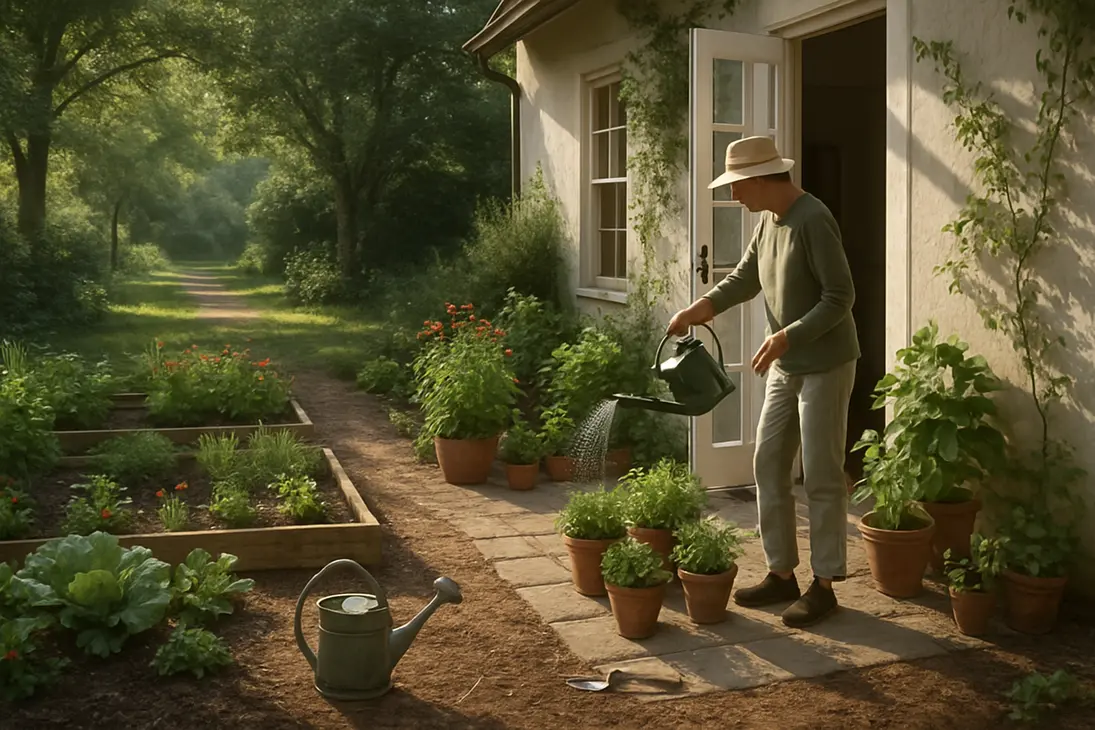
Even a balcony with herbs and a cherry tomato can change an evening pattern: step outside, water if needed, pinch basil, check for pests, breathe for a minute, and return indoors with something fresh.
The misconception that gardens are always “too much work”
Some gardens are too much work, especially if they are designed to look flawless year-round. Large lawns, thirsty annual beds, high-maintenance hedges, and poorly matched plants can create endless chores.
But gardening is scalable. A garden can be one raised bed, a few native shrubs, a pollinator strip, an herb pot, or a container of lettuce by the door.
To reduce workload:
- Choose plants suited to your climate, light, and soil.
- Mulch exposed soil.
- Group plants with similar water needs.
- Start smaller than your enthusiasm suggests.
- Use perennials and shrubs for structure.
- Accept seasonal imperfection.
A modest, manageable garden often influences behavior more positively than an ambitious one that becomes a burden.
Social and Cultural Effects of Plants
Plants influence social behavior because they are easy to share, discuss, gift, trade, and gather around. A person who would not normally start a conversation may still ask, “What tomato is that?” or “How did you get your monstera to climb?”
Plants also carry cultural meaning. Flowers mark grief, celebration, apology, romance, and hospitality. Food plants connect people to family recipes, seasonal festivals, migration histories, and local landscapes.
Gardening as a way to find community
Gardening can reduce isolation by giving people a shared practical interest. Community gardens, seed swaps, plant societies, school gardens, houseplant groups, allotments, and neighborhood plant stands all create opportunities for connection.
For beginners, plants offer low-pressure reasons to ask for help. Questions about slugs, watering, compost, pruning, or yellow leaves can become conversations. Experienced gardeners often share cuttings, seeds, divisions, and local knowledge because gardening produces abundance.
Not every plant community is automatically welcoming or accurate, and advice can be contradictory. Still, plants give people something concrete to care about together.
Plants in homes, workplaces, and public spaces
In homes, plants influence identity and hospitality. A room full of houseplants may signal creativity, nurturing, collecting, or connection to nature. A vase of flowers may make guests feel expected. Healthy porch containers can make a home feel tended.
In workplaces, plants can soften formal environments and make shared spaces feel more human. They may also create small social interactions: someone waters the office fern, another notices a new leaf, someone brings cuttings.
In public spaces, plants affect behavior at a larger scale. Shade trees encourage walking and sitting. Green buffers make streets feel less harsh. Parks provide places for exercise, play, rest, and gathering. Maintenance matters: dead shrubs do not send the same message as cared-for planting.
Food plants and human decisions
Food plants may be especially behavior-shaping because they connect directly to daily choices. Growing even a small amount of food changes how people think about meals, seasons, waste, and value.
A person who grows basil may cook more with fresh herbs. Someone with lettuce outside the kitchen may build dinner around what is ready. A child who watches peas swell in a pod may be more willing to taste them.
Food gardening also changes timing. People begin to notice frost dates, harvest windows, ripening fruit, and preservation needs. This can make eating feel more seasonal, though it can also create pressure if the garden is too large.
Limits: How Strong Is the Influence of Plants on Humans?
Plants influence humans, but they do not control behavior. Their effects are indirect, context-dependent, and shaped by personal experience. A garden may calm one person and overwhelm another. A houseplant may support focus for someone who likes care routines and feel like clutter to someone else.
Several factors affect the strength of the influence:
- Personal preference: Not everyone likes the same plants, scents, textures, or styles.
- Culture and memory: Plants tied to family, religion, food, grief, or place may carry stronger meaning.
- Access: Safe parks, balconies, yards, and community gardens increase chances for positive contact.
- Plant health: Thriving plants usually feel more positive than dying or pest-infested ones.
- Maintenance burden: Too many plants can create stress instead of relief.
- Setting: A quiet garden, busy office, hospital room, and city street shape plant experience differently.
- Allergies and safety: Pollen, mold, thorns, toxicity, and mobility issues matter.
Plants can support relaxation, attention, social connection, and healthier routines, but they are one part of a wider environment. Sleep, income, safety, relationships, workload, health, and housing conditions also matter. The most reliable benefits come from matching plant contact to the person: herbs for cooks, low-maintenance greenery for busy people, tree-lined walks for non-gardeners, or community gardens for those seeking connection.
Conclusion
Plants can influence human behavior by shaping mood, attention, stress, routines, social connection, and environmental choices. They do this quietly: by changing how a room feels, inviting people outdoors, giving the hands useful work, and connecting people through food, gifts, and shared spaces.
The influence is real but subtle. Plants do not automatically make people calmer, kinder, healthier, or more productive. Their effect depends on context, care, access, culture, and personal preference. The practical lesson is simple: start small, choose plants suited to your conditions, and notice how they affect your daily behavior.
FAQ
Can plants really change human behavior?
Yes. Plants can change behavior through gentle influence rather than direct control. They may affect mood, attention, stress, movement, routines, and social interaction. A shaded garden may encourage people to sit outside, while a kitchen herb pot may encourage more home cooking.
Do indoor plants improve mood and productivity?
Indoor plants may improve mood by making spaces feel more pleasant, cared for, and visually restful. They may support productivity indirectly by offering short mental breaks and softening stressful environments. Healthy, easy-care plants are more likely to help than demanding plants that create worry.
Why do people feel calmer around plants?
People often feel calmer around plants because greenery provides gentle sensory stimulation, natural patterns, shade, seasonal change, and a sense of life. Natural settings can give the mind a break from intense demands. Gardening can also calm people by combining movement, focus, and visible progress.
Is gardening good for social connection?
Yes. Community gardens, plant swaps, seed sharing, houseplant groups, and food growing all give people practical reasons to talk and cooperate. Plants are easy to share, and gardening questions often become conversations. The strongest social benefits come when plant activities are accessible, welcoming, and realistically maintained.
You Might Also Like