What Are the Best Beginner Indoor Plants for Oregon Homes?
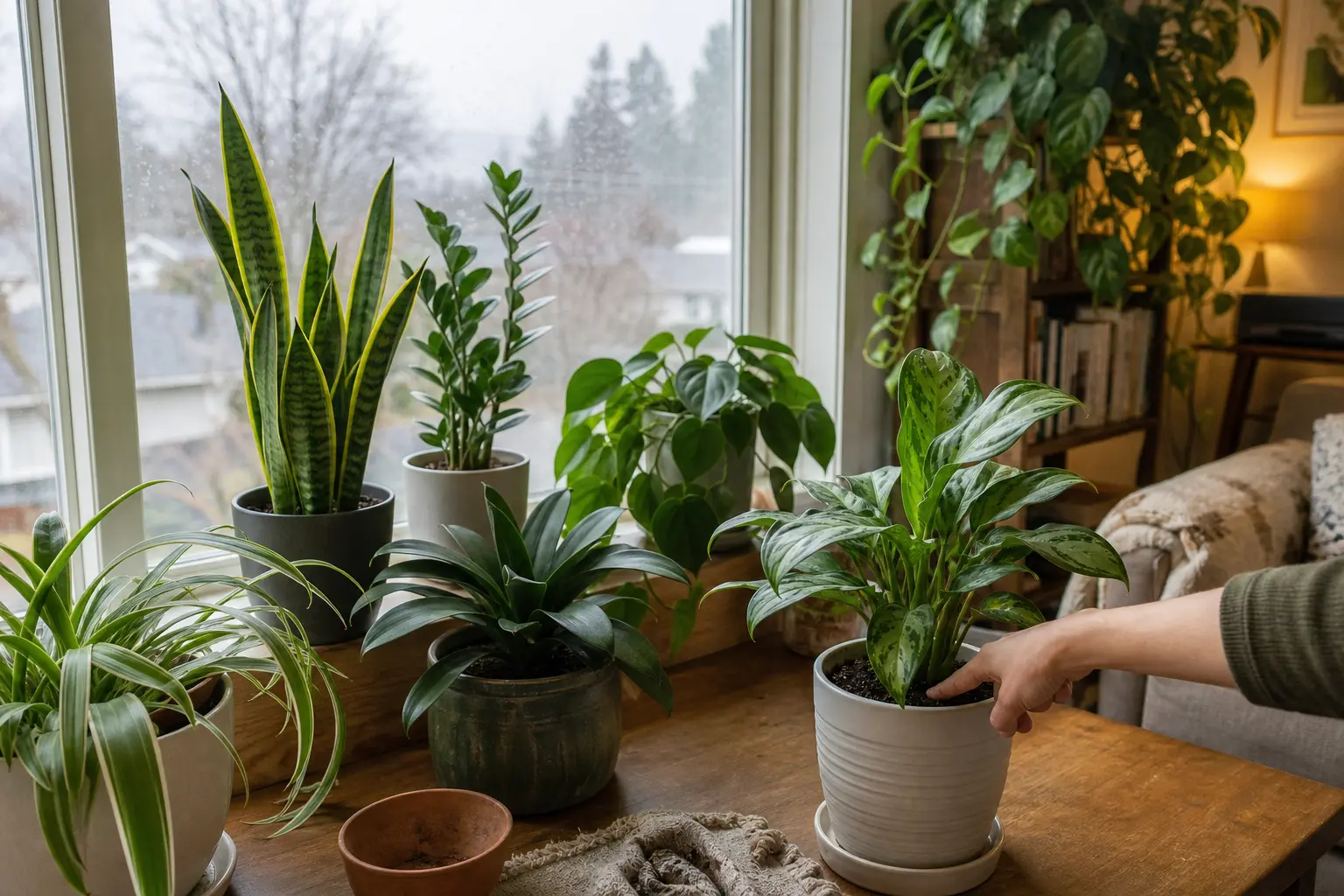
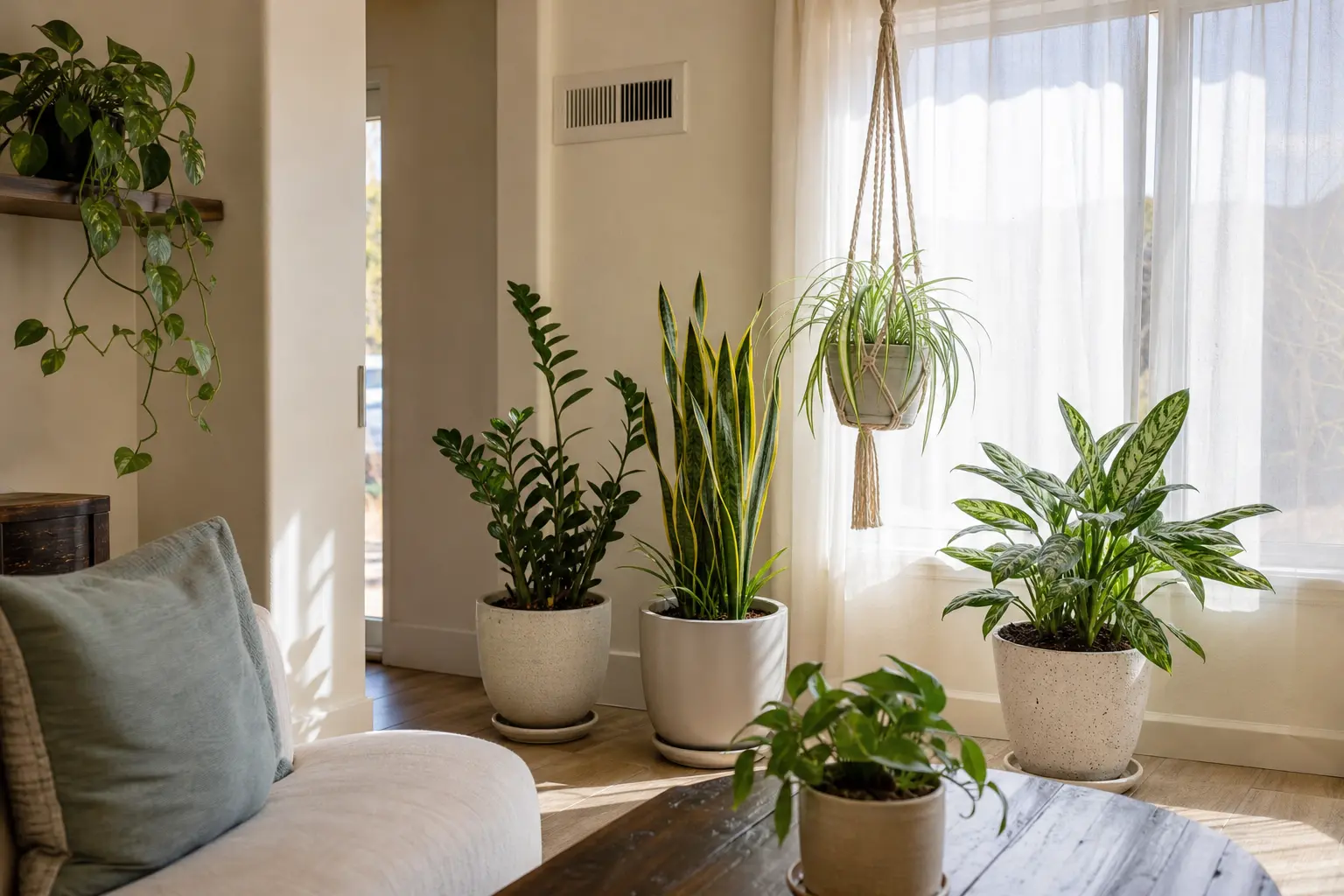
The best beginner indoor plants for Oregon homes tolerate lower winter light, occasional missed watering, and dry indoor heat. Snake plant, pothos, ZZ plant, heartleaf philodendron, spider plant, cast-iron plant, and Chinese evergreen are all practical choices when planted in pots with drainage and matched to your available light.
Oregon’s outdoor climate matters less than conditions inside your home. A bright Portland apartment, cool Eugene bungalow, and heated Bend house can all create different growing environments. Start with a forgiving plant and learn its signals instead of following a rigid watering schedule.
What Makes an Indoor Plant Beginner-Friendly in Oregon?
A beginner-friendly houseplant tolerates some variation in watering, ordinary household temperatures, and less-than-perfect light without declining quickly.
For Oregon homes, look for plants that handle low or medium indirect light, can dry somewhat between waterings, and recover from common care mistakes. They still need natural light and proper drainage, but they give you time to correct problems.
Look for plants that tolerate lower light
Oregon winters are often cloudy, especially west of the Cascades. A room that seems bright may provide modest light for plants in December and January.
“Low light” does not mean no light. Most houseplants do best in bright, indirect light near a window, but low-light-tolerant plants can remain healthy farther away from direct sun.
If your home is dim, choose solid-green plants over heavily variegated cultivars. Variegated pothos and philodendrons generally need brighter conditions to maintain their coloring and compact growth.
Choose plants that forgive missed waterings
Overwatering is usually a bigger beginner problem than underwatering. Soil may look dry at the surface while roots remain wet deeper in the pot, particularly in winter.
Snake plants and ZZ plants store moisture and can wait longer between waterings. Pothos and spider plants need more regular watering, but they still do better when you check the soil rather than water automatically each week.
Start with pots that have drainage holes
Most indoor plants need drainage. A hole at the bottom lets excess water escape instead of collecting around roots.
Decorative pots without holes can work as cachepots: leave the plant in its nursery pot, place it inside the decorative container, and empty any collected water after watering. A layer of rocks at the bottom does not create drainage; it raises the wet zone closer to the roots.
Best Beginner Indoor Plants for Oregon’s Climate
These plants handle average room temperatures and variable light. Choose one that fits your window and watering habits rather than buying several plants at once.
| Plant | Best light | When to water | Why it suits beginners |
|---|---|---|---|
| Snake plant | Low to bright indirect light | After soil dries well | Extremely drought tolerant |
| Pothos | Medium to bright indirect light; tolerates lower light | When upper soil dries | Fast-growing and communicative |
| ZZ plant | Low to medium indirect light | After mix dries thoroughly | Tolerates missed watering |
| Heartleaf philodendron | Medium to bright indirect light | When upper soil dries | Adaptable trailing plant |
| Spider plant | Bright indirect light | When top portion of soil dries | Easy to observe and propagate |
| Cast-iron plant | Low to medium indirect light | After upper soil dries | Handles shade and cooler rooms |
| Chinese evergreen | Low to medium indirect light | When upper soil dries | Attractive foliage with modest needs |
Snake plant
Snake plant (Dracaena trifasciata, often sold as Sansevieria) is ideal for forgetful owners. Its firm leaves store water, so it can go several weeks between waterings, especially during a cool, dim Oregon winter.
Place it in low to bright indirect light and let the mix dry substantially before watering. The main risk is excess moisture: soft yellowing leaves or a mushy base usually indicate overwatering.
Pothos
Pothos (Epipremnum aureum) is a reliable trailing plant for shelves, hanging pots, and tables near a window. Solid-green varieties tolerate lower light, though they grow faster in medium to bright indirect light.
Water when the upper inch or two of mix feels dry, then let the pot drain. Slightly limp leaves are often an early sign it needs water. Long, bare vines usually mean it needs brighter indirect light.
ZZ plant
ZZ plant (Zamioculcas zamiifolia) has glossy leaflets and water-storing underground rhizomes. It works well in low- to medium-light rooms and is highly forgiving of missed waterings.
Let the potting mix dry thoroughly before watering. It grows slowly, so a lack of rapid new leaves is normal. Yellowing leaflets often mean the roots are staying too wet.
Heartleaf philodendron
Heartleaf philodendron (Philodendron hederaceum) is an easygoing vine with heart-shaped leaves. It prefers medium or bright indirect light but handles lower light better than many colorful foliage plants.
Water once the upper portion of the mix has dried. Do not let it stay bone-dry for long periods. If it becomes leggy, move it closer to a bright window and trim stems just above a leaf node to encourage fuller growth.
Spider plant
Spider plant (Chlorophytum comosum) prefers bright, indirect light and may produce small plantlets on long stems once mature.
It needs more consistent moisture than snake plant or ZZ plant. Water when the top section of soil dries instead of allowing the root ball to remain dry for weeks. Brown leaf tips are common and may result from inconsistent watering, dry heated air, mineral buildup, or crowded roots.
Cast-iron plant
Cast-iron plant (Aspidistra elatior) tolerates low to medium indirect light and can suit a cooler room away from direct drafts.
Water after the upper part of the mix dries and allow excess water to drain. It grows slowly, but its strength is steady, low-maintenance foliage. Keep it out of strong direct sun, which can scorch its leaves.
Chinese evergreen
Chinese evergreen (Aglaonema species and hybrids) offers patterned foliage with modest care needs. Darker green varieties generally tolerate lower light better than pink, red, or pale cultivars.
Give it low to medium indirect light, warm indoor temperatures, and water when the top portion of mix dries. Avoid cold glass, drafty doors, and abrupt changes in placement.
How to Set Up Indoor Plants for Success
Good setup prevents more problems than frequent fertilizer or complicated routines. Before buying a plant, identify its location, confirm that its pot drains, and decide how you will check soil moisture.
Match the plant to the available window light
Observe your windows before choosing a plant.
- North-facing windows: Gentle, lower light. Cast-iron plant, snake plant, ZZ plant, Chinese evergreen, and green pothos can work close to the window.
- East-facing windows: Soft morning light that suits nearly every plant listed here.
- South-facing windows: Strongest light, especially when unobstructed. Set plants back from the glass or filter summer sun with a sheer curtain.
- West-facing windows: Bright, hot afternoon light in summer. Avoid pressing foliage against the glass.
Distance matters: a plant six feet from a window receives much less light than one near it. In winter, moving a plant closer to a suitable window is often more helpful than watering or fertilizing more.
Use a well-draining potting mix and a drainage pot
Use a quality indoor potting mix that retains some moisture without staying soggy. Snake plants and ZZ plants benefit from a faster-draining mix or added perlite or orchid bark.
When repotting, choose a pot only slightly larger than the root ball. Oversized pots hold excess wet soil around small root systems. Use a saucer and empty it after watering.
Check soil before watering
Use a schedule only as a reminder to inspect plants. Check soil with a finger or wooden chopstick before watering.
- Feel the upper inch or two of potting mix.
- If it is still moist, wait a few days and check again.
- If it is dry to the depth appropriate for that plant, water slowly until water drains out.
- Empty the saucer or cachepot after draining.
Snake plants and ZZ plants should dry much more thoroughly than pothos, philodendron, spider plant, cast-iron plant, or Chinese evergreen.
Adjust care during Oregon’s darker winter months
Lower winter light means slower growth and slower water use. A plant that needed water weekly in July may need it every two or three weeks, or less often, in January.
During winter:
- Water less frequently, but water thoroughly when needed.
- Stop routine fertilizing if plants are not actively growing.
- Wipe dust from broad leaves.
- Rotate plants occasionally for even growth.
Indoor heating can dry the air, but dry air does not automatically mean dry soil. Check the mix before watering.
Keep plants away from cold windows, heaters, and drafts
Many houseplants tolerate normal indoor temperatures but struggle with sudden extremes. Common problem locations include chilly window ledges, exterior doors, heating vents, woodstoves, and radiators.
Keep leaves from touching cold glass in winter, especially tropical foliage plants such as pothos, philodendron, and Chinese evergreen. Do not place plants directly above heaters where hot, dry air repeatedly strikes their leaves.
Common Beginner Houseplant Problems and How to Avoid Them
Most houseplant problems come from light, soil moisture, drainage, temperature, or pests. Check those conditions before adding products or changing several things at once.
Overwatering and root rot
Overwatering usually means watering again before the root zone has dried and received air, not necessarily using too much water in one session.
Warning signs include:
- Yellowing lower leaves
- Soft stems despite wet soil
- Potting mix that stays wet for many days
- Sour-smelling soil
- Brown, soft roots
If you suspect root rot, stop watering, confirm the pot drains, empty standing water, and move the plant to brighter indirect light if suitable. If roots are dark and mushy, remove wet soil, trim dead roots with clean tools, and repot into fresh, lightly moistened mix.
Yellow leaves and slow growth
One older yellow leaf can be normal, especially after a plant is moved. Multiple yellow leaves require closer observation.
Wet soil plus yellow leaves usually suggests overwatering or insufficient light. Dry, crispy leaves may indicate prolonged dryness, hot air, or excessive direct sun. Slow growth in an Oregon winter is normal for many plants, particularly ZZ plants, snake plants, and cast-iron plants.
Do not immediately fertilize a yellowing plant. Fertilizer cannot fix poor drainage, dim light, root damage, or cold drafts.
Soil that smells sour or musty
Healthy potting mix smells earthy. Sour or musty soil usually means it has stayed too wet and oxygen-poor.
Check for a blocked or missing drainage hole and empty water from saucers or outer pots. If the smell persists, the soil is compacted, or roots are damaged, repot into fresh mix. Do not mask the odor with additives; correct the moisture problem.
Mealybugs and other common indoor pests
Inspect new plants before adding them to your collection. Check beneath leaves and along stems. Mealybugs look like white cottony clusters, scale resembles fixed brown or tan bumps, and spider mites may leave fine webbing.
Isolate suspicious plants promptly. Wipe visible pests away, rinse foliage where practical, and inspect weekly. Severe infestations may require a product labeled for the specific pest and indoor use; follow label directions carefully.
Conclusion
For most Oregon beginners, the simplest choice is a low-light-tolerant, drought-forgiving plant in a pot with drainage. Snake plant and ZZ plant are especially forgiving if you tend to overwater or forget watering. Pothos and heartleaf philodendron are good choices if you want faster growth and clearer signs that they need attention.
Choose a plant for your available light, check soil before watering, and reduce watering during Oregon’s darker winter months. Those habits matter more than a complicated care routine.
FAQ
What is the easiest indoor plant to grow in Oregon?
Snake plant is often the easiest choice because it handles lower light, dry indoor air, and missed waterings better than most houseplants. ZZ plant is similarly forgiving.
For brighter indirect light and quicker growth, choose pothos. It is easy to care for but needs water more regularly than snake plant or ZZ plant.
How often should beginners water indoor plants?
There is no single weekly schedule. Water when the soil reaches the dryness level appropriate for the plant. For pothos, heartleaf philodendron, spider plant, cast-iron plant, and Chinese evergreen, check when the upper inch or two feels dry. For snake plants and ZZ plants, let the mix dry much more deeply.
Expect to water less often during Oregon winters.
Do indoor plants need grow lights during Oregon winters?
Not always. Many of these plants can manage winter near an appropriate window, including snake plant, ZZ plant, cast-iron plant, pothos, and Chinese evergreen.
A grow light can help if your home is consistently dim, your plants are far from windows, or you want stronger winter growth. It should supplement natural light, not prompt more frequent watering.
Which beginner houseplants are safe for pets?
Spider plants and cast-iron plants are generally better choices for homes with cats or dogs. Still, pets should not chew any houseplant, since foliage can cause digestive upset.
Snake plant, pothos, ZZ plant, heartleaf philodendron, and Chinese evergreen are not good choices for pets that chew plants. Keep plants out of reach and contact a veterinarian promptly if you suspect a pet has eaten a potentially harmful plant.
You Might Also Like