Why Do Flowering Plants Appear in Higher Layers of the Fossil Record?
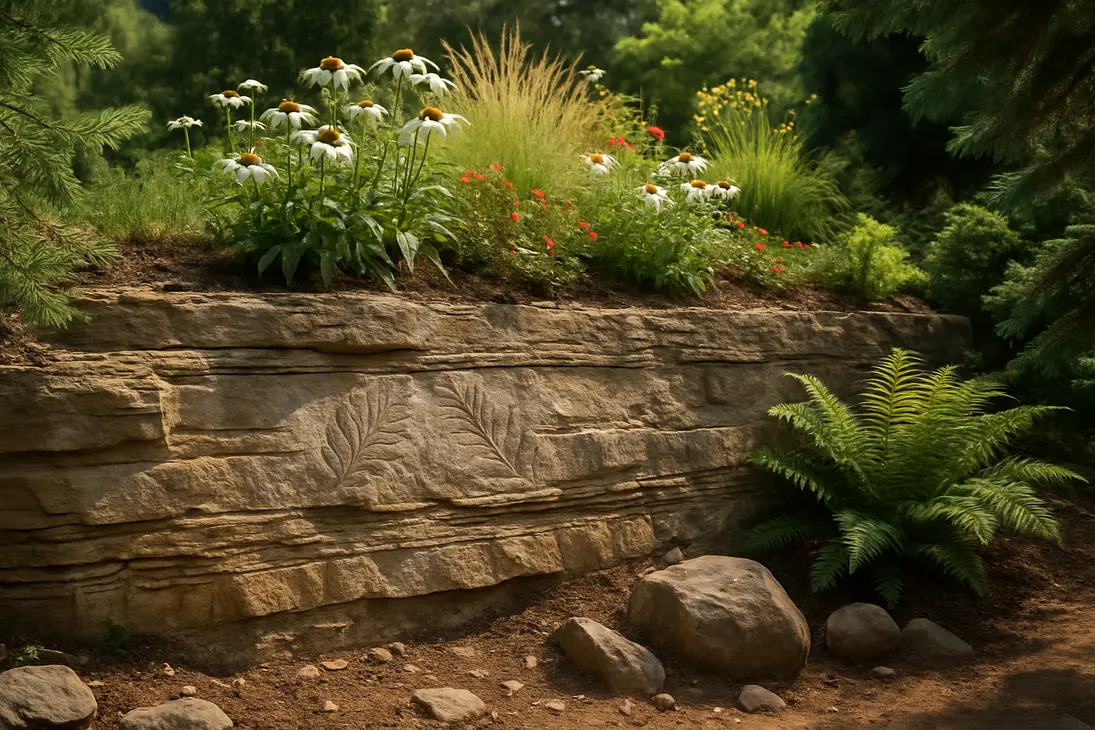
Flowering plants appear in higher layers of the fossil record mainly because they evolved later than many other major plant groups. In geology, higher sedimentary rock layers usually represent younger periods of Earth history, while deeper layers usually represent older periods. Since flowering plants, or angiosperms, became common relatively late, their fossils are found mostly in younger rocks rather than in the oldest fossil-bearing layers.
The pattern also reflects preservation. Angiosperms appeared after algae, early land plants, ferns, horsetails, conifers, cycads, and many extinct seed plants. But flowers, leaves, and other soft plant parts do not fossilize evenly. So the fossil record reflects both when flowering plants evolved and which plant parts were likely to survive.
Flowering Plants Appear Higher Because They Evolved Later
Flowering plants are not among the earliest plants in Earth’s history. Their major expansion happened during the Cretaceous Period, the same broad interval that includes many familiar dinosaurs.
Older fossil layers contain earlier life forms: marine microorganisms, algae, early land plants, seedless vascular plants such as ferns and horsetails, and later gymnosperms such as conifers and cycads. Flowering plants enter the record much later, so their fossils naturally appear in higher, younger strata.
This does not mean every upper layer contains flowering plants or every lower layer lacks plant fossils. Rock layers form in different environments, and not all environments preserve plants well. But globally, the pattern is clear: angiosperms are late arrivals compared with many other plant groups.
Where flowering plants fit in plant history
A simplified plant timeline looks like this:
| Plant group or stage | General place in plant history | Notes |
|---|---|---|
| Algae and photosynthetic microorganisms | Very early | Mostly aquatic |
| Early land plants | Later | Small, simple land plants |
| Ferns, horsetails, and clubmoss relatives | Before seed plants dominated | Reproduce by spores |
| Seed plants | Later | Reproduce with seeds |
| Gymnosperms, including conifers and cycads | Before flowering plants | Seeds are not enclosed in fruits |
| Flowering plants, or angiosperms | Later still | Seeds are enclosed; flowers and fruits are key features |
Angiosperms are seed plants whose seeds develop enclosed within structures that become fruits. They also produce flowers, specialized reproductive structures that helped them diversify. Roses, grasses, oaks, beans, tomatoes, orchids, and daisies are all angiosperms.
The earliest widely accepted angiosperm fossils
The earliest widely accepted flowering plant fossils are generally from the Early Cretaceous, roughly around 130 million years ago, though some evidence may be close to or somewhat earlier than that depending on interpretation.
Pollen is especially important because it has tough outer walls and fossilizes better than delicate flowers. Some early fossil pollen has features associated with angiosperms, making it one of the first signs that flowering plants were present.
Leaves, seeds, fruits, and rare flowers become more common later in the Cretaceous. Reports of older possible angiosperm-like fossils from Jurassic or earlier rocks are debated. Some may belong to extinct seed plants with similar features, and others are too incomplete to identify confidently.
Why “higher layers” usually means “younger rocks”
The principle of superposition says that in an undisturbed sequence of sedimentary rocks, younger layers are deposited on top of older layers. So a fossil in an upper layer is usually younger than one in a lower layer.
There are complications. Layers can be folded, faulted, eroded, overturned, or disturbed. Fossils can also be reworked from older rocks into younger sediments. Geologists use surrounding rocks, layer sequences, volcanic ash beds when present, and nearby fossils to interpret age correctly.
Even with these exceptions, the broad answer remains straightforward: flowering plants appear higher because those layers usually represent younger times, and angiosperms evolved and became abundant in those younger times.
What the Fossil Record Shows About Early Flowering Plants
The flowering plants fossil record includes pollen, leaves, wood, flowers, fruits, seeds, and reproductive structures. These remains rarely give a perfect picture alone, but together they show a strong pattern: angiosperms appear relatively late, then become increasingly common through the Cretaceous.
Early flowering plants were not necessarily showy like many modern garden flowers. Many may have had small flowers and lived along wetlands, stream margins, disturbed ground, or forest edges.
Early pollen and leaf evidence
Pollen is one of the most useful fossil clues for early angiosperms. It is tiny, abundant, and resistant, so it can survive when softer tissues decay. Early angiosperm pollen tends to be small and simple compared with many later forms. As flowering plants diversified, pollen shape, wall structure, and openings became more varied.
Leaves also matter, but they can be harder to interpret. Fossil leaves may show vein patterns, margins, and shapes associated with angiosperms. Many flowering plant leaves have branching, netted veins, unlike the needle-like or scale-like leaves of many conifers. However, leaf shape alone is not always definitive because some extinct plants had superficially similar leaves.
The strongest conclusions come when several kinds of evidence agree: pollen, leaves, reproductive structures, seeds, fruits, and geological context.
Cretaceous diversification of flowering plants
During the Cretaceous, flowering plants changed from relatively uncommon plants into major parts of many plant communities. Their fossil record becomes richer, with more pollen types, leaf forms, seeds, fruits, and occasional preserved flowers.
This diversification did not happen everywhere at once. In some regions, conifers, cycads, ferns, and other older groups remained important. In others, angiosperms became increasingly dominant. By the later Cretaceous, many recognizable angiosperm lineages were present or emerging.
This helps explain why modern landscapes are so full of angiosperms. Most vegetables, fruit trees, broadleaf trees, shrubs, meadow plants, and ornamental garden plants are flowering plants.
Why fossils of flowers themselves are uncommon
Flowers are among the least likely plant parts to fossilize well. They are often soft, thin, short-lived, and easily destroyed by decay, water, insects, and physical damage. A leaf may leave an impression in mud, pollen may survive as microscopic grains, and wood may mineralize, but a flower can collapse quickly.
Flower fossils do exist and can be valuable when preserved in fine sediment, amber, or other exceptional conditions. Still, scientists usually identify early flowering plants from tougher or more abundant remains, including:
- Pollen grains
- Leaves and leaf impressions
- Seeds
- Fruits
- Wood and stems
- Rare reproductive structures
This is why the fossil record of flowering plants is not filled with obvious fossil blossoms. A tiny pollen grain or seed can be more useful than a crushed flower.
Why Flowering Plants Became So Successful
Flowering plants did not become successful because of one single trait. Their rise likely involved enclosed seeds, flowers, efficient reproduction, animal relationships, flexible growth, and the ability to occupy many niches.
Not every flowering plant uses the same strategy. Wind-pollinated grasses, insect-pollinated orchids, aquatic plants, and fruiting trees reproduce and disperse in different ways. But angiosperms as a group evolved a flexible set of tools that helped them spread widely.
Flowers and animal pollination
Flowers are reproductive structures, not decorations for people. Their colors, shapes, scents, nectar, and pollen can attract animals that move pollen between flowers. Insects are especially important, though birds, bats, and other animals also pollinate some species.
Animal pollination can be efficient because pollen is delivered more directly between compatible plants. Instead of releasing huge amounts of pollen into the wind, a plant may rely on an animal partner.
This strategy has trade-offs. A plant that depends on a specific pollinator may suffer if that pollinator declines, and wind pollination works very well for many plants. Still, flower-pollinator relationships gave many angiosperms a powerful way to reproduce in varied habitats.
Fruits and seed dispersal
Angiosperm seeds are enclosed, and the structures around them can become fruits. Fruits protect seeds and help move them away from the parent plant.
Some fruits are fleshy and attract animals, which eat the fruit and disperse the seeds. Others are dry, split open, float, stick to fur, catch the wind, or fall nearby. Seed dispersal matters because seedlings often do poorly directly under the parent, where shade, competition, pests, and diseases may be intense.
Competition with older plant groups
Flowering plants did not simply “defeat” all older plants. Ferns, conifers, cycads, mosses, liverworts, and horsetails still exist. Conifers dominate many northern and high-elevation forests, ferns thrive in shaded moist places, and mosses occupy habitats where many seed plants struggle.
But angiosperms competed strongly in many settings. Some grow quickly, reproduce fast, and respond well to disturbance. Others form forests, grasslands, shrublands, wetlands, or seasonal plant communities.
Important advantages included:
- Flexible growth forms, from herbs to giant trees
- Efficient water-conducting tissues in many lineages
- Close pollination relationships with animals
- Protective fruits and varied dispersal methods
- Rapid life cycles in many herbaceous species
- Ability to colonize open or disturbed habitats
The result was not the disappearance of older plant groups, but a major reshaping of plant communities.
Why the Fossil Record Can Look Incomplete or Uneven
The fossil record is not a perfect archive. Flowering plants’ late appearance is real, but the exact timing and setting of their origin are harder to pin down.
A fossil can form only under certain conditions. The plant must be buried quickly enough to avoid decay, preserved in sediment, resin, or mineral-rich water, and then survive heat, pressure, erosion, and geological change. Finally, the rock must be exposed and found.
Soft plant parts do not fossilize easily
Plants are mostly soft tissue. Leaves, petals, roots, and young stems decay quickly. Flowers are especially fragile, and even buried plants may be flattened or distorted.
Harder or more resistant parts have better odds. Pollen walls, seeds, fruits, wood, and cuticles may survive when flowers do not. This is why early angiosperm evidence often comes from pollen and leaves rather than complete flowering shoots.
This bias can make early flowering plants seem rarer than they were. If early angiosperms were small herbs or lived where fossilization was unlikely, they may have existed for some time before leaving abundant fossils. That does not mean they belong in the oldest layers; it means first fossil appearances are often later than true biological origins.
Some environments preserve fossils better than others
Plant fossils are most often preserved where sediment accumulates gently and quickly, such as lake beds, floodplains, river deltas, swamps, lagoons, and volcanic ash deposits. Dry uplands, fast streams, well-drained forests, and oxygen-rich soils are less likely to preserve delicate plant remains.
This creates a sampling problem. If early flowering plants lived mainly in uplands, seasonally dry areas, or disturbed stream margins, they may be underrepresented. Their pollen might enter sediments, while leaves and flowers did not.
Regions also differ in their rock records. Some time periods are well exposed; others are buried, metamorphosed, or eroded away. A missing fossil can reflect missing rocks, not missing organisms.
New discoveries can shift dates, but not erase the overall pattern
New fossils can refine the timeline. A newly discovered pollen type, seed, fruit, or reproductive structure may push the known record of angiosperms earlier. Better microscopes, improved dating, and reanalysis of museum specimens can also change interpretations.
But refinement is not the same as overturning the pattern. Even if older possible angiosperm fossils are accepted, flowering plants still appear late compared with algae, ferns, horsetails, clubmoss relatives, and gymnosperms. They still become abundant mainly in Cretaceous and younger rocks.
For the flowering plants fossil record, the big picture remains steady: angiosperms appear after many older plant groups and then diversify dramatically in younger strata.
What Extinct Plants Teach Us About Flowering Plant Origins
Extinct plants help fill the background around flowering plant origins. Before angiosperms became common, the world included many seed plants that no longer exist, including seed ferns, bennettitaleans, and other groups with complex reproductive structures.
Some extinct seed plants had features that invite comparison with flowering plants, such as protected ovules, specialized reproductive organs, or similar-looking leaves. These similarities are important, but they do not always prove direct ancestry. Evolution can produce partial similarities in related or separate lineages.
Extinct plants show that flowering plants did not appear as a sudden jump from simple plants to modern flowers. Angiosperms emerged within a broader world of seed plant experimentation. Many lineages evolved different ways to protect ovules, move pollen, and disperse offspring. Flowering plants combined enclosed seeds, flowers, fruits, and ecological flexibility in a particularly successful way.
They also show that replacement was gradual. Older plant communities did not vanish overnight. Ferns and gymnosperms continued alongside angiosperms, while some extinct groups declined over time.
Conclusion
Flowering plants appear in higher fossil record layers because they evolved and diversified later than many other plant groups. The oldest fossil layers contain much earlier life forms, while angiosperms become visible and then increasingly common in younger rocks, especially during the Cretaceous.
The evidence is not based only on fossil flowers. Flowers are delicate and rarely preserved. Much of the flowering plants fossil record comes from pollen, leaves, seeds, fruits, wood, and occasional reproductive structures.
Preservation also matters. Soft tissues decay, some environments preserve fossils better than others, and many rocks have been eroded or remain undiscovered. New finds can adjust details near the early origin of the group, but they do not change the broad pattern: flowering plants are latecomers compared with algae, ferns, horsetails, conifers, cycads, and other older plant groups.
FAQ
Are flowering plants found in the oldest fossil layers?
No. The oldest fossil layers contain much earlier life forms, including marine microorganisms and ancient algae-like organisms. Flowering plants appear much later, mainly in Cretaceous and younger rocks.
What came before flowering plants?
Many groups came before flowering plants, including algae, early land plants, clubmoss relatives, ferns, horsetails, seed ferns, conifers, cycads, and other gymnosperms. Some still exist; others are extinct.
Why are flower fossils rare?
Flowers are delicate, short-lived structures that decay quickly. Pollen, leaves, wood, seeds, and fruits usually fossilize more readily.
Does finding older flowering plant fossils change the timeline?
It can refine the timeline if the fossil is well preserved and clearly identified. But it does not change the broad pattern: flowering plants still appear late compared with many other plant groups and become abundant mainly from the Cretaceous onward.
You Might Also Like