Differences Between Shrubs and Trees—and How to Tell Other Plant Types Apart
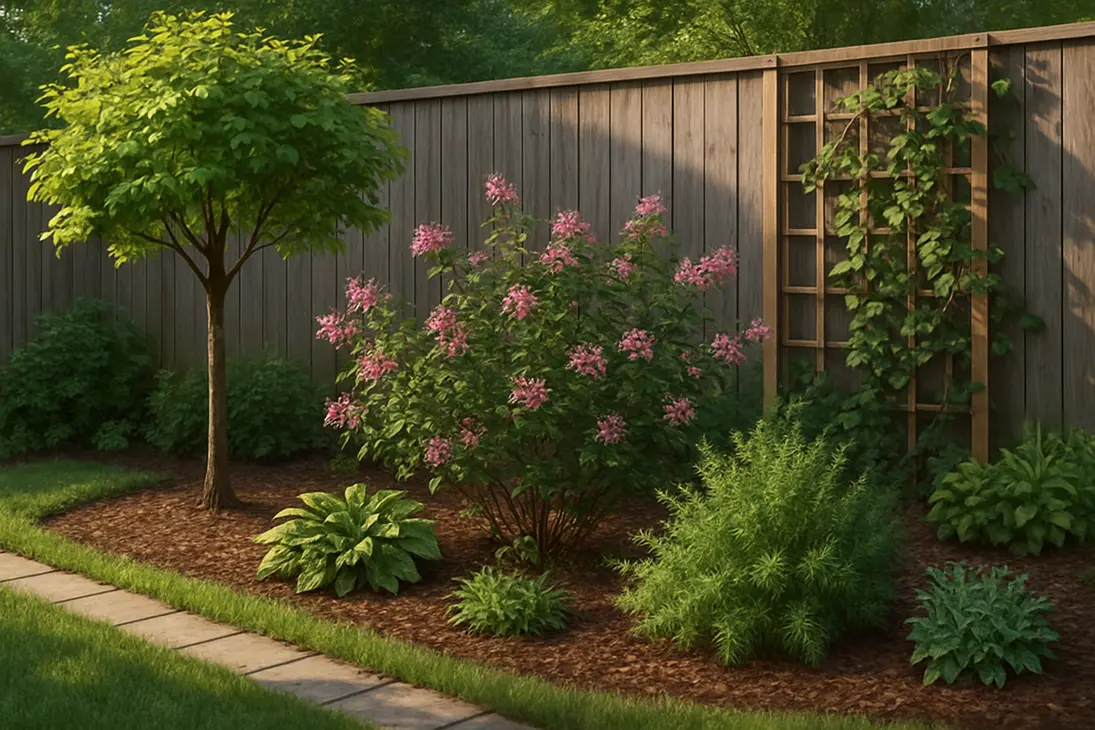
The differences between shrubs and trees are usually easiest to see at the base: trees often have one main trunk, while shrubs usually have several woody stems rising from or near the soil. Trees also tend to branch higher and form a raised crown; shrubs branch lower and often look rounded, dense, arching, or spreading.
There are exceptions. Some trees are naturally multi-stemmed, and some shrubs can be trained into “tree form.” To identify plant types more reliably, look at stem texture, branching pattern, support, and mature shape.
Quick Definitions: Tree, Shrub, Bush, Herb, Vine, and Plant
A plant is the broad category. Trees, shrubs, herbs, vines, grasses, ferns, mosses, and many other organisms are plants. Words like “tree” and “shrub” describe a plant’s growth habit: how it supports itself, branches, and occupies space.
These terms are practical rather than perfectly rigid, but they help gardeners choose plants, prune correctly, and predict mature size.
What Is a Tree?
A tree is a woody plant that usually has one dominant trunk and a crown of branches held above the ground. Trees are generally taller than shrubs at maturity, though size varies by species and conditions.
Common examples include maple, oak, birch, apple, cherry, pine, spruce, and magnolia.
Typical tree traits:
- One main trunk, or a few large trunks
- Woody growth that persists year after year
- Branches that usually begin above ground level
- A raised crown or canopy
- Long-term growth over many years or decades
Exceptions are common. Japanese maples may be small and multi-stemmed. Crape myrtles may be grown as shrubs or trained as small trees. Structure and maintenance both matter.
What Is a Shrub?
A shrub is a woody plant that is generally shorter than a tree and usually has several stems arising from near the base. Shrubs branch close to the ground and may be rounded, upright, arching, mounded, or spreading.
Common examples include rose, hydrangea, boxwood, azalea, lilac, spirea, viburnum, and many hollies.
Typical shrub traits:
- Multiple woody stems
- Low branching, often at or near soil level
- Dense growth useful for borders, hedges, screens, and foundation plantings
- A permanent woody framework, even if leaves drop in winter
Some shrubs become large. Lilacs, viburnums, and hollies can reach small-tree size, but their low, multi-stemmed structure often still identifies them as shrubs.
What Is a Bush?
A bush is a casual term for a dense, shrubby plant. In everyday gardening, “bush” and “shrub” often mean the same thing.
Shrub is the more formal horticultural word. Bush is conversational: a gardener might buy a “flowering shrub” but say, “That bush by the porch needs pruning.”
A bush is usually imagined as dense, low to medium in height, multi-stemmed, rounded, and informal.
What Is an Herb?
An herb, in plant-form terms, is usually a plant with soft, non-woody stems. These are often called herbaceous plants. Many die back to the ground in winter and regrow from roots, bulbs, crowns, or seed.
Examples include basil, parsley, mint, lily, hosta, daylily, peony foliage, and many annual flowers and perennials.
The word “herb” can also mean a flavoring plant in cooking. Some culinary herbs, including rosemary, lavender, and sage, can become woody and shrub-like in mild climates. Basil is typically a soft-stemmed annual or tender perennial herb, not a shrub.
What Is a Vine?
A vine is a plant with a climbing, trailing, or twining habit. Vines usually do not hold themselves upright like trees or shrubs. They climb supports, cling to surfaces, twine around other plants, or sprawl along the ground.
Examples include ivy, clematis, grape, wisteria, morning glory, honeysuckle vine, and climbing beans.
Vines may be woody or herbaceous. Grapes and wisteria are woody vines; morning glory and many annual climbing vegetables are herbaceous vines. The key feature is the climbing or trailing habit.
Shrub vs. Tree: The Main Visual Differences
The best clues are trunk structure, branching height, and overall form. Height helps, but it is not enough: a young tree may be shorter than a mature shrub, and a large shrub may be taller than a small ornamental tree.
| Feature | Tree | Shrub |
|---|---|---|
| Main support | Usually one dominant trunk | Usually several stems |
| Branching point | Often higher above ground | Often near ground level |
| Mature height | Usually taller | Usually shorter, though some get large |
| Shape | Raised crown or canopy | Dense, rounded, upright, mounded, or spreading |
| Garden role | Shade, height, focal point, structure | Screens, borders, hedges, flowers, foundation planting |
Single Trunk vs. Multiple Stems
The clearest difference is usually stem number.
A typical tree has one main trunk that supports large limbs, smaller branches, and leaves. A maple, oak, or apple tree usually has a structure you can trace from trunk to canopy.
A typical shrub has multiple stems coming from the base. Roses, hydrangeas, lilacs, and spireas send up several canes or woody stems rather than building one high trunk.
This affects pruning. Tree pruning often focuses on canopy health, branch spacing, and clearance. Shrub pruning often focuses on thinning old stems, shaping, flowering wood, or renewal growth from the base.
There are exceptions. River birch, serviceberry, crape myrtle, and some Japanese maples are often grown with multiple trunks. Some shrubs are trained as “standard” or “tree-form” plants. A tree-form hydrangea is still a shrub trained into a tree-like shape.
Taller Crown vs. Low, Spreading Growth
Trees usually create vertical structure. Their crowns sit above nearby plantings and may provide shade, frame views, screen upper windows, or give a garden height and permanence.
Shrubs usually fill the middle and lower layers. Their leaves and flowers are closer to eye level or below, and many spread outward as much as upward. They soften foundations, fill borders, hide fences, define paths, and provide wildlife cover.
Look at where leafy growth begins. If the plant is bare or trunk-like for several feet before branching into a canopy, it is probably a tree. If leaves and branches begin close to the ground, it is probably a shrub.
Woody Growth in Both, but Different Forms
Both trees and shrubs are woody plants, meaning their stems persist and thicken over time. But “woody” does not automatically mean “tree.”
Roses, blueberries, boxwoods, and hydrangeas are woody shrubs. Grapes and wisteria are woody vines. The difference is how the woody framework is arranged:
- Trees build a trunk and raised crown.
- Shrubs build multiple lower stems.
- Woody vines build long climbing or trailing stems.
If you are unsure, look at the plant in winter, when leaves are gone and the permanent framework is easier to see.
Shrub vs. Bush: Are They the Same Thing?
In normal gardening conversation, yes, shrubs and bushes often overlap. Someone may call the same dense woody plant a shrub or a bush, and both words will usually be understood.
The difference is mainly context.
When “Shrub” Is the Better Term
Use shrub when you want clarity, especially in plant shopping, landscape planning, and maintenance.
For example:
- “I need evergreen shrubs for privacy.”
- “This border needs flowering shrubs.”
- “Prune spring-flowering shrubs after bloom.”
Nurseries, plant tags, designers, and horticultural references tend to use “shrub” because it describes a recognized growth habit: a woody plant, generally smaller than a tree, often with several stems from near the ground.
When People Say “Bush”
People often say bush when they mean a plant that looks dense, informal, or rounded.
For example:
- “The bush by the mailbox is overgrown.”
- “The rose bush is blooming.”
- “There’s a bird nesting in that bush.”
“Bush” can describe appearance rather than strict category. A shrub may look bushy, a young tree may become bushy if cut back, and even a perennial can form a bushy mound.
For labels and planting plans, use shrub. In casual speech, bush is usually fine.
How to Identify a Plant Type Without Prior Knowledge
You do not need to know a plant’s name to make a good first guess. Start with what you can see: stem texture, branching pattern, support, and size.
Look at the Stem: Woody or Soft?
First, examine the stems.
A woody stem is firm, persistent, and often brown, gray, or bark-covered. It remains after the growing season. Trees, shrubs, and woody vines all have woody stems.
A soft stem is green, flexible, fleshy, or easily crushed. It may die back after flowering, frost, or the end of the season. Herbaceous plants usually have soft stems.
Ask:
- Does the stem have bark?
- Does old growth remain from previous years?
- Is there a permanent trunk, cane, or woody framework?
- Does the plant die back completely and regrow from the ground?
If it is soft-stemmed, it is probably herbaceous. If it is woody, look next at structure and support.
Look at the Growth Habit: Upright, Spreading, or Climbing?
Next, see how the plant holds itself.
An upright plant with a high crown may be a tree. A lower, self-supporting plant with many stems may be a shrub. A plant that climbs, twines, clings, trails, or sprawls is likely a vine.
Vines can be confusing when old stems become woody. Wisteria develops thick stems but still climbs and twines. Grapes form woody trunks and canes but remain vines. Ivy may look shrubby when clipped, but its natural habit is climbing or trailing.
Look at Size and Branching From the Ground
Branching point is one of the most useful clues.
If the plant has one main trunk, branches starting above the ground, and a raised canopy, it is probably a tree.
If it has several stems from the base, leaves close to the ground, and dense growth from bottom to top, it is probably a shrub.
If it has soft seasonal stems and no lasting woody framework, it is probably an herbaceous plant.
If it has long flexible stems that climb, cling, trail, or sprawl, it is probably a vine.
Use Examples: Rose, Basil, Lily, Ivy, and Maple
Rose is usually a shrub. Most roses have woody canes from near the base. Climbing roses have long canes that need support, but they do not twine or cling like true vines.
Basil is an herb. It has soft green stems and is commonly grown as an annual. Older plants may become slightly woody near the base, but garden basil is still treated as an herb.
Lily is an herbaceous perennial. A true lily grows from a bulb, sends up soft flowering stems, then dies back.
Ivy is a vine. It climbs or trails, even when older stems become woody.
Maple is a tree. Most maples form a trunk and crown, though some ornamental Japanese maples are small, spreading, or multi-stemmed.
Choosing Between Shrubs and Trees in a Garden
Understanding the difference helps you choose the right plant for the right job. A tree planted where a shrub belongs may outgrow the space, cast too much shade, crowd overhead lines, or interfere with paving. A shrub planted where a tree is needed may never provide enough height, shade, or structure.
Use Trees for Height, Shade, and Structure
Choose a tree when you need vertical presence or an overhead canopy.
Trees are useful for:
- Shade over patios, lawns, and seating areas
- Framing a house or view
- Creating a focal point
- Adding height to a flat landscape
- Screening upper stories or distant views
- Supporting wildlife with flowers, fruit, seeds, bark, and nesting space
- Giving a garden long-term structure
Before planting a tree, think in three dimensions: height, spread, and root space. Avoid large-growing trees under power lines or too close to roofs. In small gardens, a compact ornamental tree may be better than a full-size shade tree.
Use Shrubs for Borders, Screens, Foundation Plantings, and Flowers
Choose shrubs when you need lower structure, seasonal interest, or dense growth from the ground up.
Shrubs are useful for:
- Privacy screens and hedges
- Foundation plantings
- Mixed borders
- Flowering displays
- Evergreen structure
- Wildlife cover
- Defining paths, patios, and garden rooms
- Filling the middle layer between trees and perennials
Shrubs add body below trees, behind perennials, along fences, and around buildings. Maintenance varies: some need only occasional thinning, while others need shaping, deadheading, or renewal pruning. Flowering time matters, too, because pruning at the wrong time can remove next season’s buds.
Check Mature Height Before Planting
A common mistake is choosing a plant by its size at purchase. A small nursery shrub may mature at 8 feet wide. A young tree may eventually shade half the yard.
Check:
- Mature height and spread
- Growth rate
- Sun and soil needs
- Evergreen or deciduous habit
- Natural shape
- Pruning tolerance
- Distance from buildings, paths, fences, and utilities
Do not rely on constant pruning to keep a large plant small. It often creates extra work and poor form. Choose a plant whose natural mature size fits the space.
Conclusion
The simplest difference is this: trees are usually taller woody plants with one main trunk and a raised crown; shrubs are usually shorter woody plants with several stems branching from near the ground.
Bushes are generally shrubs in everyday language, though “bush” is more casual. Herbs are usually soft-stemmed plants. Vines climb, trail, twine, or cling rather than standing upright on their own.
When unsure, look at the base. One trunk and a high canopy suggest a tree. Many woody stems from the ground suggest a shrub. Soft seasonal stems suggest an herbaceous plant. Long climbing or trailing stems suggest a vine.
FAQ
What are the two biggest differences between a shrub and a tree?
The two biggest differences are trunk structure and branching height. A tree usually has one main trunk with branches starting higher up. A shrub usually has several woody stems from near the ground.
Height helps, but it is less reliable because young trees can be short and mature shrubs can become large.
Are shrubs and bushes the same thing?
In everyday gardening, yes. Shrub is the more formal term for a woody plant that is generally smaller than a tree and often multi-stemmed. Bush is more casual and usually describes a dense, rounded, informal shrub.
Is every woody plant a tree?
No. Many woody plants are shrubs or vines. Roses, hydrangeas, boxwoods, blueberries, and lilacs are woody shrubs. Grapes and wisteria are woody vines. A tree is defined more by structure—a trunk and raised crown—than by woodiness alone.
Is basil an herb or a shrub?
Basil is an herb. It is typically grown as a soft-stemmed annual or tender perennial. Older basil may become slightly woody near the base, but common garden basil is still treated as an herb, not a shrub.
You Might Also Like