What Happens When Desert Succulents Are Overwatered?
Desert succulents are built for long dry stretches, not constant moisture. When they receive more water than their roots can use, saturated potting mix pushes oxygen out of the root zone. Fine roots weaken, rot organisms spread, and the plant can decline quickly.
That decline can be misleading. An overwatered succulent may look limp, as if it needs water, even though its roots are already failing. Watering again usually makes the damage worse.
Understanding the process helps you water correctly, spot early warning signs, and prevent root rot before it becomes fatal.
Why Desert Succulents Struggle With Too Much Water
Desert succulents include plants such as echeveria, aloe, agave, haworthia, jade plants, cacti, and desert rose-type plants. They store water and use it slowly.
In dry habitats, rain often comes in short bursts. Water drains through sandy, rocky, or gritty soil, then the ground dries again. Succulent roots are adapted to brief wet periods, not days or weeks in damp soil.
Water storage in leaves, stems, and roots
Succulents store water in thick tissue. Aloe and echeveria store much of it in their leaves. Cacti store it mainly in stems. Jade plants store water in leaves and stems. Desert rose stores water in its swollen caudex and roots.
This storage helps the plant survive drought, but it also means it does not need frequent watering like many tropical houseplants. Once its tissues are full, it cannot keep “drinking” endlessly. If more water is added before the soil dries, the excess stays around the roots.
Why constantly wet soil deprives roots of oxygen
Roots need oxygen as well as moisture. Healthy potting mix contains air spaces, and after watering, excess water should drain away so air returns to the root zone.
In heavy or wet soil, those spaces stay filled with water. Fine feeder roots are damaged first. They stop absorbing water and nutrients, then may die and rot.
This causes a confusing symptom: an overwatered succulent can wilt because its roots no longer work. Adding more water does not fix that. It further reduces oxygen and increases the risk of rot.
How desert conditions shape succulent watering needs
Desert conditions involve fast drainage, bright light, dry air, and repeated wet-dry cycles. Even indoors, desert succulents still prefer that rhythm.
A windowsill succulent is not growing in rocky desert soil. Indoor light is often weaker, airflow is lower, and evaporation is slower. Dense soil, oversized pots, decorative containers, and low light can keep roots wet much longer than expected.
Good care is not neglect. It is watering thoroughly when needed, then letting the full root zone dry before watering again.
Signs Your Desert Succulent Is Being Overwatered
Overwatering symptoms vary by plant, but common signs include soft tissue, yellowing leaves, damp soil, blackened stems, fungal growth, and collapse.
Soft, mushy, or translucent leaves
Soft, mushy leaves are one of the clearest signs of overwatering. Leaves may feel swollen, limp, squishy, or jelly-like. Some turn translucent.
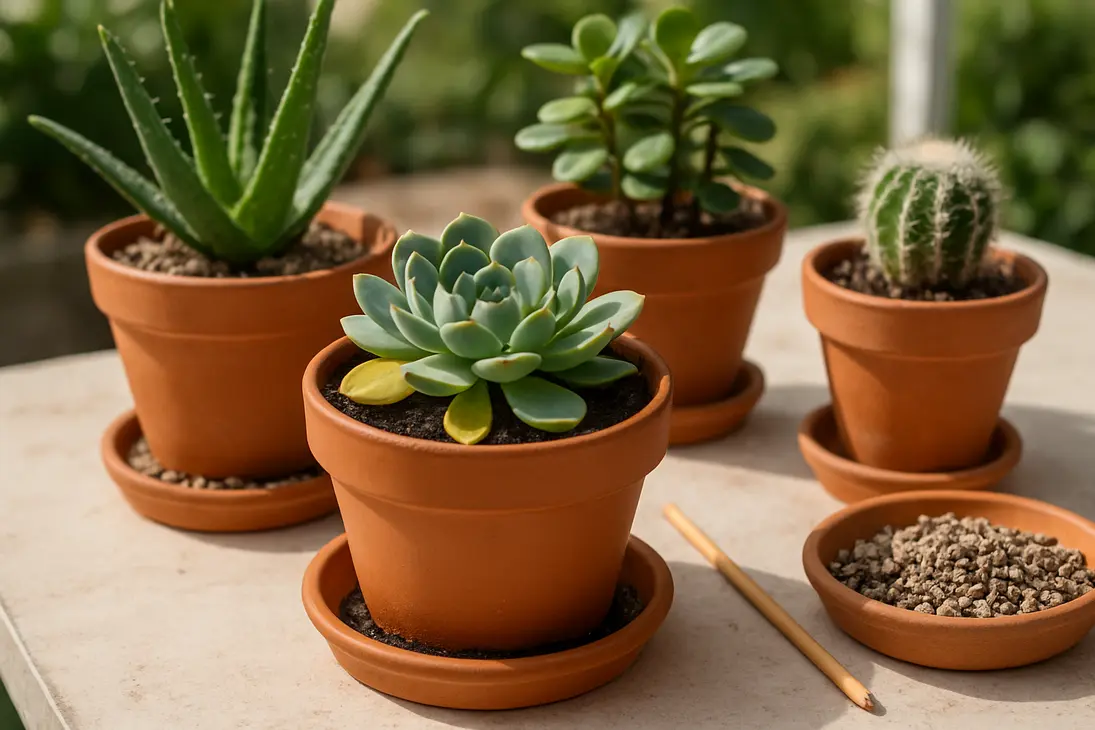
In rosette succulents, lower leaves often show this first. Jade leaves may soften and drop easily. Aloe leaf bases may become watery or collapse.
Do not confuse this with normal leaf aging. An old leaf usually dries, wrinkles, and crisps. An overwatered leaf is more often soft, yellowish, translucent, or mushy.
Yellowing, wilting, or dropping leaves
Yellow leaves can have several causes, but yellowing with damp soil is a warning sign. Overwatered leaves often drop while still plump or soft. Underwatered leaves usually wrinkle, shrink, or dry before falling.
Wilting can also mislead you. If the pot feels heavy and the soil is damp, the plant is probably not thirsty. Its roots may be damaged. If the pot is very light and the leaves are thin or puckered, underwatering is more likely.
Check the soil before reacting. If a succulent looks wilted but the mix is still wet several days after watering, do not water again.
Blackened stems or a collapsing base
A black, brown, soft, or collapsing stem base is serious. It often means rot has moved beyond the roots into the crown, stem, or caudex.
A cactus base may darken and soften. An echeveria rosette may fall apart. A desert rose caudex may feel soft, hollow, or unstable. Once rot reaches the main stem, recovery becomes much harder.
At this stage, waiting for the soil to dry may not be enough. You may need to remove the plant, cut away rotten tissue, and salvage healthy offsets, leaves, or stem cuttings if possible.
Algae, fungus, or persistent dampness on the soil surface
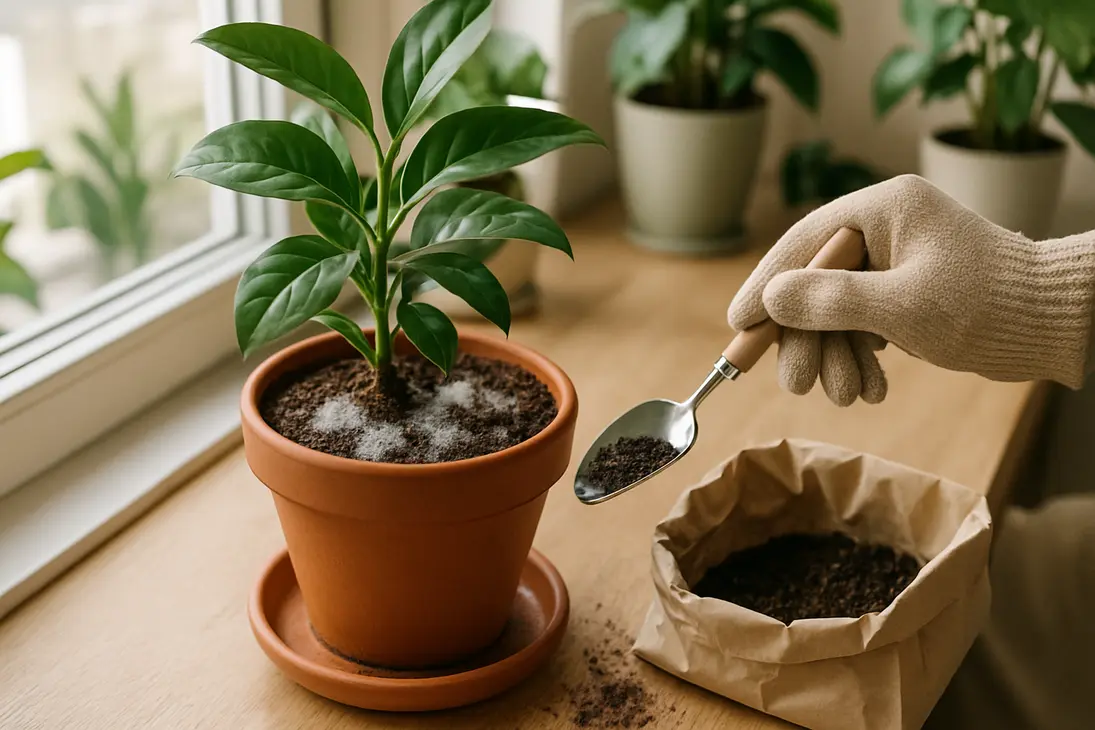
Green algae, fuzzy mold, sour odors, and fungus gnats suggest the growing environment is staying too wet. These problems are common in pots without drainage, dense soil, or containers with decorative top dressing that slows evaporation.
Algae itself usually is not the main danger. It is a warning sign that the surface is staying moist long enough to support growth. If the top remains damp for many days, the lower root zone is probably wetter.
What Overwatering Does to Desert Succulents
Overwatering affects the whole plant, but damage usually begins at the roots. Once roots decline, the plant loses its ability to absorb water, take up nutrients, and resist disease.
Root rot and stem rot
Root rot is the most common serious result of overwatering desert succulents. It happens when roots die in wet, low-oxygen soil and decay spreads through weakened tissue.
Healthy roots are usually firm and pale to tan. Rotten roots are often brown or black, soft, slimy, stringy, or foul-smelling. They may break away when touched.
If rot is limited to some roots, the plant may recover after damaged tissue is removed and the succulent is repotted into dry, fast-draining mix. If rot has entered the crown, stem, or caudex, the chances are lower. Stem rot is especially dangerous because it cuts off the connection between roots and leaves.
Reduced nutrient uptake
Damaged roots cannot absorb nutrients well. This may cause pale growth, yellowing, weak new leaves, and stalled growth. Fertilizer usually does not help while the root system is stressed, and it can make wet soil worse.
The priority is to restore root health: stop watering, check drainage, remove rotten roots if needed, repot into an airy mix, and resume watering only after the plant has stabilized and the soil dries properly.
Pest and fungal problems
Wet, stagnant soil encourages fungus gnats, mold, algae, and some fungal diseases. Mealybugs and scale are not caused by overwatering, but a weakened succulent may tolerate pests poorly.
Removing visible mold or gnats is not enough if the conditions remain unchanged. Correct the watering routine, pot drainage, and soil texture first.
Permanent tissue damage and plant collapse
Some damage cannot be reversed. A mushy leaf will not become firm again. A rotted stem section will not turn back into healthy tissue. A collapsed crown cannot be fixed by drying the pot.
What may be saved is firm, healthy tissue. Many succulents can be propagated from leaves, offsets, or stem cuttings. Cacti and jade plants may regrow from healthy cut portions after the cut end calluses.
A useful rule: firm tissue has a chance; mushy, blackened, foul-smelling tissue is usually lost.
How Often Should You Water Desert Succulents?
There is no universal schedule. A succulent in bright outdoor sun in a terracotta pot may dry quickly. The same plant indoors in a glazed pot may stay damp for two weeks or more.
Instead of asking how often to water, ask whether the soil has dried fully through the root zone.
Water only after the soil dries fully
For most potted desert succulents, water when the potting mix is dry all the way down, not just at the surface. Then water thoroughly until excess drains from the bottom. This mimics a desert rain followed by a dry period.
A proper watering routine is simple:
- Confirm the mix is dry through the pot.
- Water deeply so the root ball is moistened.
- Let excess water drain completely.
- Empty saucers or cachepots.
- Wait for the mix to dry fully before watering again.
Be especially careful with desert rose-type plants during cool or low-light periods, when wet soil can lead to rot quickly.
Adjust for season, pot size, temperature, and light
Drying time changes with conditions. Soil dries faster with strong light, warmth, low humidity, airflow, small pots, terracotta, gritty soil, and active growth.
Soil stays wet longer with low light, cool temperatures, large pots, plastic or glazed containers, dense soil, no drainage hole, decorative top dressing, and dormancy.
This is why “water every Saturday” is risky. A schedule may remind you to check the plant, but the plant’s actual conditions should decide.
Why frequent light watering causes problems
Frequent light watering often causes more trouble than occasional deep watering. Small splashes keep the surface damp, encourage shallow roots, prevent a proper dry cycle, and may allow salts to build up because water never flushes through the pot.
Desert succulents generally prefer infrequent, thorough watering followed by drying. A little water every day or two is more likely to create rot-prone conditions than a deep watering at the right time.
How to Prevent Overwatering
Preventing overwatering is partly restraint and partly setup. The right pot and soil make proper watering easier. The wrong setup can keep roots wet even if you water carefully.
Use fast-draining succulent or cactus soil
Use a mix that drains quickly. Commercial cactus or succulent soil is usually better than general houseplant mix, though some brands still hold too much moisture.
Many growers improve drainage with pumice, perlite, coarse sand, lava rock, or fine gravel. The goal is an airy, gritty mix that wets evenly, drains quickly, and does not compact into a soggy mass.
If your mix stays wet for a week or more in normal indoor conditions, it may be too moisture-retentive for many desert succulents.
Choose pots with drainage holes
Drainage holes are essential. Without them, excess water collects at the bottom of the pot, where roots are most vulnerable.
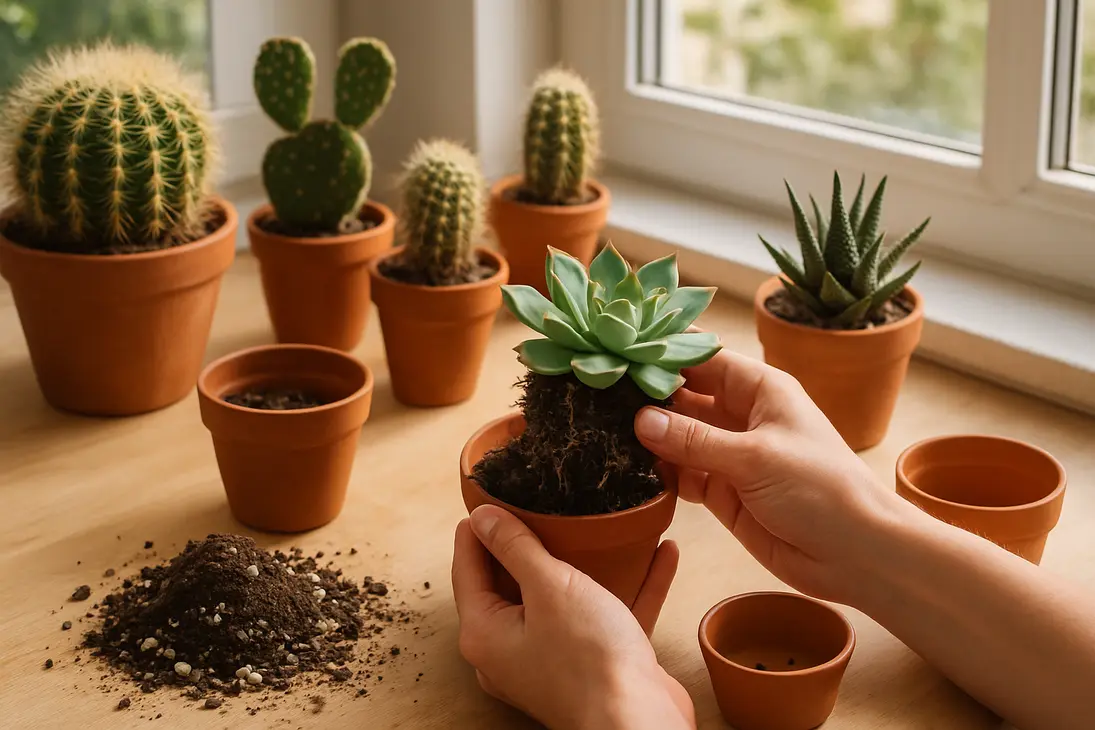
If you like a decorative container without a hole, use it as a cachepot. Keep the succulent in an inner pot with drainage, water it outside the decorative pot, let it drain fully, then return it.
Terracotta is helpful because it allows moisture to evaporate through the sides. Plastic and glazed pots can work, but they hold moisture longer, so watering must be less frequent.
Avoid overly rich, moisture-holding soil
Succulents do not need rich, compost-heavy soil. Dense, spongy mixes often hold too much water and may encourage weak growth.
General potting soil is usually made for plants that prefer more consistent moisture. If your succulent is in dark, heavy soil—especially indoors, in a large pot, or in low light—consider repotting into a faster-draining mix.
Check soil depth before watering again
The top of the soil can look dry while the lower pot remains wet. Check deeper before watering.
Useful methods include:
- Finger test: Push a finger into the mix if the pot is large enough.
- Wooden skewer: Insert it and check whether it comes out damp.
- Pot weight: Learn how the pot feels dry versus freshly watered.
- Moisture meter: Use cautiously, especially in gritty mixes.
For small pots, weight is often easiest. If the pot still feels heavy, wait.
Conclusion
Desert succulents fail in wet conditions because their roots need oxygen-rich soil and regular dry periods. Constant moisture suffocates roots, encourages rot, reduces nutrient uptake, and can cause soft leaves, yellowing, blackened stems, and collapse.
The safest approach is to water deeply only after the soil has dried fully, use a fast-draining mix, choose pots with drainage holes, and adjust watering to light, temperature, season, and pot size. With desert succulents, a dry pause between waterings is necessary care.
FAQ
Can an overwatered succulent recover?
Yes, if the problem is caught early and rot has not spread far. If leaves are slightly yellow or soft but the stem and roots are mostly firm, stop watering and let the soil dry. If the soil is dense or the pot lacks drainage, repot into dry, fast-draining mix.
If root rot is present, remove the plant, trim away soft or blackened roots with clean tools, and let healthy tissue dry before repotting. If the main stem, crown, or caudex is mushy, recovery is less likely, but firm cuttings or offsets may still be salvageable.
Should I water desert succulents on a schedule?
No. A schedule can remind you to check, but it should not decide when to water. Water when the soil has dried fully through the root zone.
Drying time changes with season, light, temperature, pot material, soil type, and growth rate. In winter or low light, a succulent may need water far less often than in warm, bright conditions.
Is it better to underwater than overwater desert succulents?
In most cases, yes. Desert succulents usually tolerate short dry periods better than constantly wet soil. Underwatered plants may wrinkle or pause growth, but they often recover after proper watering.
Overwatered succulents risk root rot and stem rot, which can become irreversible. Water deeply when needed, then let the soil dry before watering again.
Why are my succulent leaves mushy but the plant still looks dry?
This usually means the roots have been damaged by overwatering. Leaves may be mushy from waterlogged tissue, while the plant wilts because rotten or oxygen-starved roots can no longer absorb water.
Check the soil before watering again. If it is damp below the surface, do not add more water. Remove the plant if needed and inspect the roots. Firm, pale roots are good; black, slimy, soft, or foul-smelling roots indicate rot.
You Might Also Like