Best Palm Trees for Containers
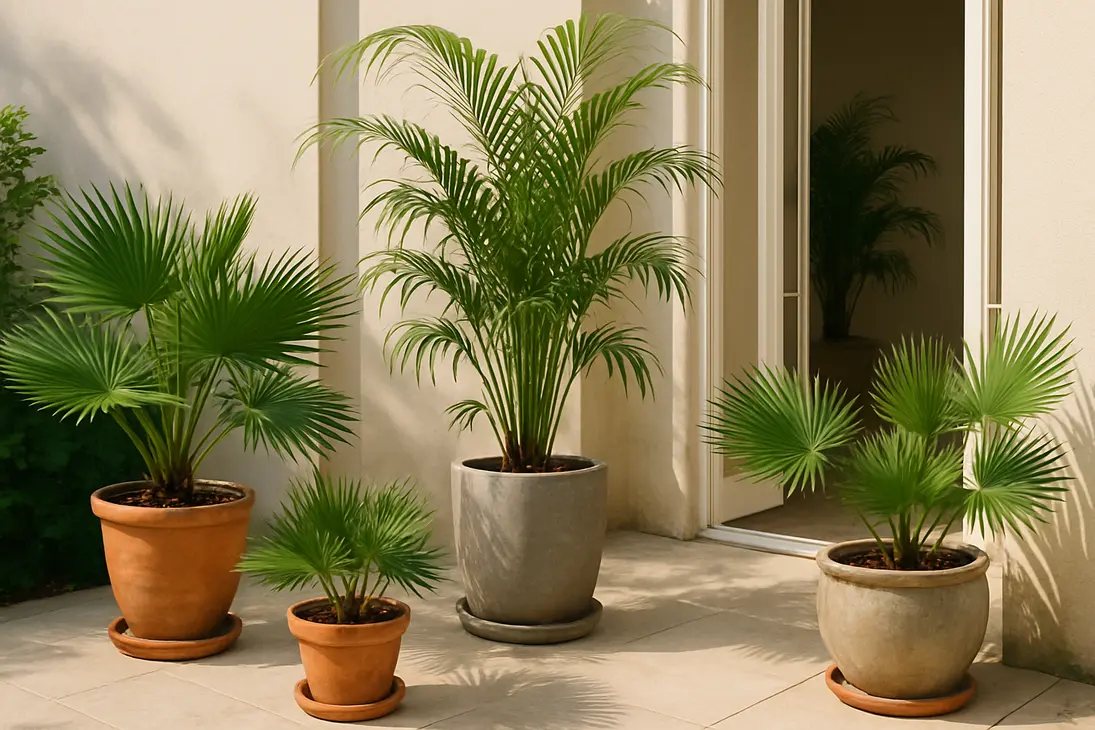
Container palms can make a patio, balcony, entryway, or bright room feel tropical without needing a warm-climate garden. The key is choosing palms that stay manageable, grow slowly, tolerate some root restriction, and match your light and temperature conditions.
The best palm trees for containers include pygmy date palm, European fan palm, windmill palm, lady palm, parlor palm, kentia palm, areca palm, and bamboo palm. Some suit sunny outdoor pots, while others are better indoors.
Best Palm Trees to Grow in Containers
| Palm | Best Use | Light | Container Notes |
|---|---|---|---|
| Pygmy date palm | Sunny patios, bright rooms | Bright light to part sun | Attractive but spiny |
| European fan palm | Outdoor containers | Full sun to part sun | Tough, compact, spiny |
| Windmill palm | Outdoor pots in cool regions | Sun to part shade | Cold-hardy but gets tall |
| Lady palm | Indoors, shaded patios | Bright indirect to shade | Slow, clumping, elegant |
| Parlor palm | Small indoor pots | Low to medium indirect light | Easy and compact |
| Kentia palm | Large indoor containers | Medium to bright indirect light | Slow, graceful, long-lived |
| Areca palm | Bright rooms, warm patios | Bright indirect light | Lush but thirstier |
| Bamboo palm | Indoors, screened patios | Medium to bright indirect light | Upright, clumping, good for corners |
Pygmy Date Palm
Pygmy date palm (Phoenix roebelenii) gives a classic palm-tree shape in a container-friendly size. Its fine, arching fronds and slender trunk suit patios, pool decks, and bright entries.
It prefers bright light and performs best outdoors in warm climates. Indoors, it needs a very bright window and is not a true low-light houseplant.
Its main drawback is the sharp spines near the frond bases. Keep it away from narrow paths, doors, play areas, and places where pets may brush against it.
European Fan Palm
European fan palm (Chamaerops humilis) is one of the best outdoor container palms for a tough, compact, architectural look. It forms fan-shaped leaves and often grows as a multi-trunked clump.
It tolerates sun, wind, and some cold better than many tropical palms. In very hot locations, afternoon shade can help potted plants avoid stress.
This palm grows slowly, which is useful in containers, but its leaf stalks are spiny. Give it space where people do not need to squeeze past.
Windmill Palm
Windmill palm (Trachycarpus fortunei) is a good container choice for cooler climates. It has a fibrous trunk and rounded fan leaves, giving it a hardy but refined look.
In a pot, it grows more slowly than in the ground, but it can still become large. Use it in substantial outdoor containers where you want height, such as beside steps, gates, or patios.
Although windmill palm is cold-hardy, potted roots are more exposed than in-ground roots. Protect the container from hard freezes, icy wind, and repeated freeze-thaw cycles.
Lady Palm
Lady palm (Rhapis excelsa) is an elegant container palm for interiors and shaded outdoor spaces. It grows in upright clumps with divided, fan-like leaves and a tidy appearance.
It tolerates lower light better than many palms but looks best in bright indirect light. Indoors, it works well in living rooms, offices, and covered porches. Outdoors, it prefers shade or filtered light.
Lady palm is slow-growing and forgiving, but it dislikes soggy soil. It can cost more than common indoor palms, yet its slow growth helps it stay container-friendly for years.
Parlor Palm
Parlor palm (Chamaedorea elegans) is usually the best palm for small indoor containers. It has soft, fine-textured fronds and stays compact for a long time.
It tolerates lower indoor light better than most palms, though it still needs some natural or supplemental light. Avoid hot direct sun through glass, which can scorch the leaves.
Because it grows slowly, parlor palm rarely needs repotting and is unlikely to overwhelm a room. It is one of the safest beginner palms.
Kentia Palm
Kentia palm (Howea forsteriana) is a classic indoor palm with long, graceful fronds and an airy shape. It is slow-growing, tolerant of indoor conditions, and ideal when you want a larger, refined container plant.
It does best in medium to bright indirect light. It can tolerate lower light, but growth will be slower and more open. Use a free-draining mix and a pot with drainage holes because kentia palms dislike overwatering.
The trade-off is cost and size. Kentia palms are often pricier than parlor or areca palms, and mature plants need large containers.
Areca Palm
Areca palm (Dypsis lutescens) is popular for its full, feathery look. It grows as a clump of cane-like stems with arching fronds, making it useful as a living screen or large indoor accent.
It needs bright indirect light and consistent moisture without waterlogging. Brown tips are common when humidity is low, watering is irregular, or salts build up.
Areca palm can outgrow small containers faster than slower palms. Choose it for a lush effect, not for a low-maintenance palm that stays small.
Bamboo Palm
Bamboo palm (Chamaedorea seifrizii) is a clumping indoor palm with upright, bamboo-like stems and soft green fronds. It works well in bright corners, offices, screened porches, and narrow spaces.
It grows best in medium to bright indirect light and appreciates steady moisture, though it should never sit in water. Thin, weak growth usually means it needs more light.
Bamboo palm is a good middle option when parlor palm feels too small and kentia palm is too large or costly.
How to Choose the Right Palm for Your Container
Choose a palm for your actual conditions, not just its nursery appearance. Mature size, growth rate, light, winter temperatures, and maintenance needs matter most.
For sunny outdoor patios, consider European fan palm, pygmy date palm, or windmill palm. For indoor rooms, parlor palm, lady palm, kentia palm, bamboo palm, and areca palm are usually better. A common mistake is buying a sun-loving palm for a dim room and trying to fix the decline with extra water or fertilizer. Low light cannot be solved that way.
Think about climate. European fan palm and windmill palm handle cooler outdoor conditions better than tropical palms, but containers reduce cold protection because roots are surrounded by air rather than insulated soil. If winter temperatures approach the palm’s limit, move the pot to shelter, wrap the container, or bring the plant into a cool, bright space.
Also consider safety and placement. Pygmy date palm and European fan palm have sharp spines, so avoid tight walkways, doorways, and play areas. Do not confuse container palms with sago palm, which is not a true palm and is highly toxic if eaten.
Pots, Soil, and Planting Basics
A healthy container palm starts with drainage. Use a pot with drainage holes, and do not rely on gravel at the bottom to fix a poorly draining container. If using a decorative cachepot, keep the palm in a nursery pot inside it and empty collected water after watering.
Pot material affects watering and stability. Terracotta dries faster but may need more frequent watering in heat. Plastic and glazed ceramic hold moisture longer. Large outdoor palms often need heavy containers to prevent tipping.
Best Container Size for Palm Trees
Move palms up gradually. For most small and medium plants, choose a new pot 2 to 4 inches wider than the current root ball. Oversized pots hold too much wet soil and can cause root problems.
Small indoor palms such as parlor palm may stay in 6- to 10-inch pots for a long time. Larger indoor palms such as kentia, areca, bamboo, and lady palm may eventually need 12- to 18-inch containers or larger. Outdoor palms such as European fan palm and windmill palm often need broad, stable containers in the 18- to 24-inch range or more as they mature.
Stability matters as much as root room. A tall palm in a narrow pot can be unsafe on a windy balcony or exposed patio.
Best Soil Mix for Potted Palms
Use a well-draining potting mix, not heavy garden soil. Garden soil compacts in containers, drains poorly, and can suffocate roots.
A good palm mix should hold some moisture while letting excess water drain freely. Many quality indoor potting mixes work if amended with pine bark fines, perlite, pumice, or coarse coco coir.
For outdoor palms in hot climates, avoid mixes that dry instantly. For indoor palms, avoid dense mixes that stay wet for many days. The goal is soil that can be watered thoroughly, then begins to dry within a reasonable time.
When and How to Repot a Container Palm
Repot when the palm is clearly rootbound, dries out very quickly, becomes top-heavy, or has dense circling roots. Many palms prefer being slightly snug, so annual repotting is usually unnecessary.
Spring or early summer is best. Slide the palm out gently, loosen only the outer circling roots if needed, and replant at the same depth. Do not bury the trunk.
After repotting, water thoroughly and keep the palm in suitable light while it settles. Avoid heavy fertilizing right away, especially if the new mix already contains fertilizer.
Care Tips for Healthy Potted Palm Trees
Container palms are less buffered than palms in the ground, so problems from watering, fertilizer, heat, and cold show up faster.
Watering Container Palms
Water deeply until water runs from the drainage holes, then let the mix partially dry before watering again. For many indoor palms, water when the top inch or two of soil feels dry. In large pots, check deeper with a finger or wooden skewer instead of watering by calendar.
Outdoor palms may need frequent summer watering, especially in terracotta pots or windy sites. Indoors in winter, the same palm may need much less.
Never let palms sit in standing water. Chronic wet soil is a common cause of yellow leaves, decline, and root rot.
Fertilizing Potted Palm Trees
Container palms need nutrients because watering flushes minerals from the mix. Use a palm fertilizer or balanced slow-release fertilizer with micronutrients.
Fertilize during active growth, usually spring through summer. Reduce or stop in winter, especially for indoor palms. Overfertilizing can burn roots, worsen brown tips, and create salt buildup.
If white crust appears on the soil or pot rim, flush the pot occasionally by watering thoroughly and letting excess drain away.
Sunlight and Temperature Needs
Give each palm the light it prefers. Sun palms decline in dim rooms, while shade-tolerant indoor palms can scorch if moved suddenly into direct outdoor sun.
When moving an indoor palm outside for summer, acclimate it gradually. Start in shade, then increase light over a week or two if the species can handle it.
Protect tropical palms from cold drafts, frosty nights, and cold window glass. For outdoor pots, move containers against a wall, into a garage, or under cover during severe weather.
Pruning and Cleaning Up Fronds
Prune only dead, badly damaged, or fully brown fronds. Green fronds feed the palm, and removing too many can weaken it. Yellowing older fronds may still be transferring nutrients back to the plant.
Use clean, sharp pruners, and be careful around spiny palms. Never cut into the growing point at the crown.
Dust indoor palm leaves with a damp cloth or rinse them occasionally if the pot is manageable. Clean leaves photosynthesize better and make pests easier to spot.
Common Problems With Container Palms
Yellowing leaves are often caused by overwatering, poor drainage, low light, nutrient deficiencies, or natural aging. One old yellow frond is normal; several yellowing fronds plus wet soil suggests a watering or drainage issue.
Brown tips are common indoors. Causes include low humidity, inconsistent watering, fertilizer salts, mineral-heavy water, or root stress. If trimming tips, leave a thin brown margin instead of cutting into healthy green tissue.
Rootbound palms may dry out rapidly, push roots through drainage holes, or become unstable. Repot one size up rather than jumping to a huge container. If the plant is already too large, refresh the top layer of mix and decide whether it has outgrown the space.
Pests include spider mites, scale, and mealybugs, especially indoors. Check undersides of fronds and stems. Isolate affected plants, wipe leaves, and use an appropriate houseplant-safe treatment if needed.
Poor drainage is a major cause of failure. Decorative pots without holes should be used only as outer sleeves. Heavy soil, blocked drainage holes, and water-filled saucers all leave roots sitting in stale, wet conditions.
Avoid palms that are poor long-term container choices for average homes and patios, such as coconut palms, queen palms, royal palms, and large date palms. They usually need more heat, light, root space, or height than containers can provide.
Conclusion
The best palm trees for containers depend on where you plan to grow them. For small indoor spaces, parlor palm is the easiest and most compact choice. For elegant indoor height, kentia palm and lady palm are excellent with bright indirect light and patient care. Areca palm and bamboo palm can work in bright rooms when you want a fuller tropical look.
For outdoor containers, European fan palm is tough, compact, and suited to sunny patios. Windmill palm is a good choice for cooler climates if the pot is large and winter protection is available. Pygmy date palm is beautiful in warm, bright spaces but needs careful placement because of its spines.
Choose a palm that fits your light, pot size, climate, and maintenance style. Then provide drainage, a free-draining mix, careful watering, and modest feeding.
FAQ
What is the best palm tree for a small container?
Parlor palm is usually the best palm for a small indoor container. It stays compact, grows slowly, and tolerates lower light better than most palms. For a small sunny outdoor pot, a young European fan palm can work but will eventually need more space.
Can palm trees live in pots permanently?
Some palms can live in pots for many years, especially slow-growing species. Long term, they may become rootbound, top-heavy, or too large to manage. Repotting, refreshing soil, removing dead fronds, and careful feeding become more important as they age.
How often should you fertilize palm trees in containers?
Fertilize during the active growing season, usually spring through summer, following the label. Slow-release palm fertilizer is often easiest. Indoor palms usually need lighter feeding than outdoor palms. Avoid heavy fertilizing in winter or when a palm is stressed, dry, or newly repotted.
What palm trees grow best indoors?
The best indoor palms include parlor palm, kentia palm, lady palm, bamboo palm, and areca palm. Parlor palm is best for smaller or lower-light rooms. Kentia and lady palms are elegant, slower-growing choices. Areca and bamboo palms need brighter light and steadier moisture but provide a fuller tropical look.
You Might Also Like