Can You Propagate Plants From Pruned Cuttings?
Yes, you can often propagate plants from pruned cuttings—but not every pruning scrap is worth saving. Successful pruned cuttings propagation depends on the plant, the stem’s health, the stage of growth, and how quickly you prepare the cutting before it dries out or rots.
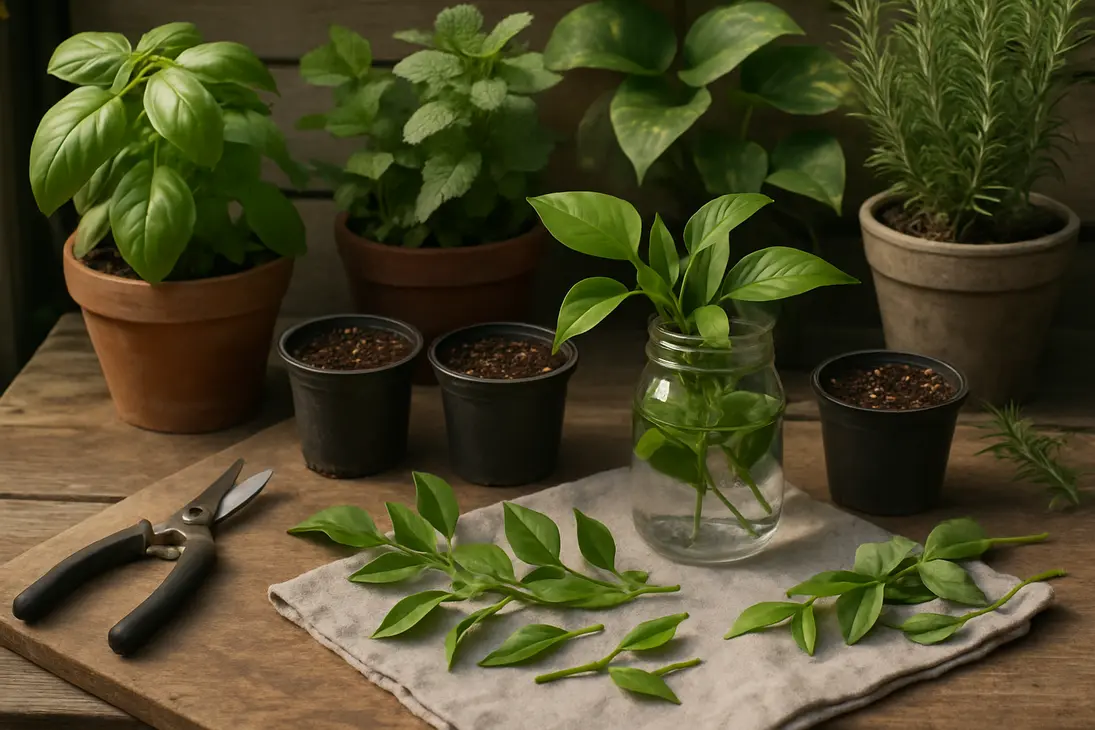
A fresh, leafy tip from basil, coleus, pothos, mint, rosemary, hydrangea, or many houseplants may root well. A dry, diseased, flowering, or leafless twig from the wrong plant usually will not. Treat pruning waste as possible propagation material, not guaranteed new plants.
When Pruned Cuttings Are Worth Propagating
The best cuttings come from healthy, actively growing plants. Stems should be firm enough to stay upright after cutting, but not so old and woody that they resist rooting. Most also need at least one node—the point where leaves, buds, or side shoots emerge—because many plants root from or near nodes.
Timing matters. Soft spring and early summer growth roots quickly for many herbs, perennials, and shrubs. Semi-ripe summer growth suits rosemary, lavender, camellia, and some evergreen shrubs. Dormant hardwood cuttings work for certain deciduous shrubs, vines, and fruits, but they take longer.
Best types of pruned stems to try
Save cuttings that are:
- Freshly cut and not dried out.
- Free from pests, mildew, rot, and damage.
- Taken from non-flowering shoots when possible.
- Long enough to include 2–4 nodes.
- From plants known to root from cuttings.
Good candidates include pothos, philodendron, tradescantia, coleus, basil, mint, geranium, fuchsia, rosemary, lavender, hydrangea, fig, grape, willow, and many salvias. Succulents such as jade plants and sedums can also be propagated from stem or leaf pieces, though they need drier handling.
If a cutting still looks plump an hour after pruning, that is a good sign. Limp, crushed, or hollow stems are less promising.
Cuttings that usually fail
Discard pieces that are:
- Diseased, moldy, pest-infested, or badly damaged.
- Very old, dry, brittle, or leafless unless you are taking hardwood cuttings.
- Weak, pale, and stretched from poor light.
- Covered in flowers or fruit.
- From plants usually propagated by division, seed, bulbs, grafting, or tissue culture.
- From grafted plants when you need the original rootstock traits.
A cutting from a grafted fruit tree may root, but it will not keep the dwarfing, disease resistance, or soil tolerance provided by the rootstock. Some patented or protected varieties may also be restricted from propagation, especially for sale.
Softwood, semi-hardwood, hardwood, basal, and leaf cuttings
Different pruning scraps root differently:
| Cutting type | What it looks like | Best timing | Common uses |
|---|---|---|---|
| Softwood | Flexible green shoots | Spring to early summer | Herbs, tender perennials, many shrubs |
| Semi-hardwood | Firmer, partly mature stems | Mid to late summer | Rosemary, lavender, evergreen shrubs |
| Hardwood | Dormant woody stems | Late fall to winter | Grapes, figs, currants, willows |
| Basal | Young shoots from the crown | Early spring | Delphinium, lupine, phlox |
| Leaf cuttings | A leaf or leaf section | Active growth | Snake plant, African violet, begonias, succulents |
For most gardeners, softwood and semi-hardwood cuttings are the most useful. Hardwood cuttings can work well, but they usually need more time.
How to Prepare Cuttings After Pruning
Once cut from the plant, a stem starts losing moisture. Prepare cuttings promptly: make a clean cut, keep the useful nodes, remove excess leaves, and place the stem in water or a rooting medium before it wilts.
If you are pruning first and propagating afterward, keep promising stems in shade, wrap them in a damp towel, or stand them in a cup of water. Do not leave them lying in sun.
Basic tools you need
A simple setup is enough:
- Sharp, clean pruners, scissors, or a knife.
- Small pots, jars, or cell trays.
- Fresh potting mix, seed-starting mix, perlite, vermiculite, or cutting mix.
- Labels and a pencil or waterproof marker.
- Clear plastic bag, humidity dome, or propagator lid if needed.
- Optional rooting hormone.
Clean tools matter more than expensive tools. Wipe blades before use, especially after pruning diseased plants. Use containers with drainage for soil propagation and clean jars for water propagation.
Where to cut: nodes, length, and leaf removal
A practical stem cutting is usually 3–6 inches long, depending on the plant. Large-leaved plants may need shorter cuttings with fewer leaves; small-leaved herbs can be slightly longer.
Prepare the cutting like this:
- Choose a healthy stem with 2–4 nodes.
- Cut just below a node.
- Remove leaves from the lower third to half.
- Keep 1–3 small leaves at the top.
- Trim large remaining leaves in half if needed.
- Remove flowers, buds, or fruit.
The buried or submerged section should be bare stem. Leaves trapped in water or soil rot quickly.
Should you use rooting hormone?
Rooting hormone can help with reluctant woody or semi-woody cuttings such as rosemary, lavender, camellia, and some shrubs. Easy plants such as pothos, tradescantia, basil, mint, coleus, and willow often root without it.
Use hormone lightly. Dip only the lower end, tap off excess powder, and insert the cutting into a pre-made hole so the coating is not scraped away. More is not better.
If propagating edible herbs, check the product label. When in doubt, skip hormone on easy herbs and focus on freshness, moisture, and light.
Preventing rot, drying out, and contamination
Most failures come from either drying out before roots form or sitting in wet, airless conditions until the stem rots.
To reduce both risks:
- Use a free-draining medium, not heavy garden soil.
- Keep the medium moist, not soggy.
- Provide humidity for leafy cuttings, with some airflow.
- Keep cuttings in bright indirect light.
- Remove black, mushy, or moldy cuttings.
- Avoid overcrowding.
Succulents are different. Many should callus for a day or several days before planting. Fresh succulent cuts placed directly into wet soil can rot.
Rooting Pruned Cuttings in Water or Soil
Both water and soil propagation can work. Water is easy to monitor and suits many soft-stemmed houseplants and herbs. Soil is often better for woody plants, succulents, and cuttings that dislike the move from water to potting mix.
Water roots and soil roots are not identical, so water-rooted cuttings need a gentle transition when potted.
Water propagation: when it works best
Water propagation works best for plants that root quickly from nodes and tolerate wet stems, including pothos, philodendron, monstera, tradescantia, mint, basil, coleus, and some hoyas.
Steps:
- Place the prepared cutting in a clean jar.
- Submerge at least one node.
- Keep leaves above the water.
- Put the jar in bright indirect light.
- Change water every few days, or when cloudy.
- Rinse the jar if slime or algae builds up.
- Pot the cutting once roots are large enough to handle.
Do not submerge more stem than necessary. One or two nodes underwater is usually enough.
Soil propagation: when it is the safer choice
Soil or soilless mix is usually better for rosemary, lavender, many shrubs, perennials, succulents, and hardwood cuttings. It also avoids transplant shock from water to soil.
Steps:
- Fill a small pot with moist, free-draining mix.
- Make a hole with a pencil or dibber.
- Insert the cutting with at least one node below the surface.
- Firm the mix gently.
- Water lightly.
- Cover with a clear bag or dome if humidity is needed.
- Keep in bright indirect light and check moisture.
The pot must drain freely. If the mix stays swampy, the cutting may rot before roots form.
Moisture, humidity, warmth, and light
Cuttings need moisture without waterlogging. Bright indirect light is best for most leafy cuttings because it supports gentle growth without severe water loss. Hot direct sun can wilt a cutting quickly.
Warmth helps, especially for houseplants and summer cuttings, but avoid overheating. Outdoor cuttings should be protected from wind, heavy rain, and midday sun.
Humidity helps leafy cuttings. A clear plastic bag over the pot can work, but open it occasionally for airflow. If condensation is constant and leaves look slimy, reduce humidity.
How long roots usually take to appear
Rooting time varies:
- Easy herbs and houseplants: 1–3 weeks.
- Tender perennials and many softwood cuttings: 2–6 weeks.
- Semi-hardwood shrubs: 4–10 weeks.
- Hardwood cuttings: several months.
- Succulent leaves: weeks to months.
Do not judge too soon. Some cuttings sit unchanged for weeks before rooting or failing. New top growth is encouraging, but it does not always mean strong roots have formed.
Helping Rooted Cuttings Grow Into Strong Plants
Rooting is only the first stage. A cutting with tiny roots is still fragile. The goal is to help it adjust to potting mix, build a stronger root system, and begin growing steadily.
When to move water-rooted cuttings into soil
Move water-rooted cuttings when roots are about 1–2 inches long and beginning to branch, or when several shorter roots have formed. Very long water roots are harder to pot without damage.
Use a small pot. A tiny root system in a large amount of wet soil is more likely to rot. Fill the pot with lightly moist potting mix, make a hole, settle the roots gently, and firm the mix just enough to hold the cutting upright.
For the first week or two, keep the mix slightly more evenly moist than you would for a mature plant. Water roots are used to constant moisture.
Early care after potting
Place newly potted cuttings in bright indirect light. Avoid direct sun until they are clearly growing. Keep them away from cold drafts, strong wind, and extreme heat.
Water carefully. The mix should be moist but not saturated. If the cutting wilts after potting, increase humidity briefly instead of soaking the soil.
If the plant will eventually live outside, harden it off over 7–10 days. Start in shade and shelter, then gradually increase exposure to outdoor sun and wind.
When to start feeding young plants
Do not fertilize cuttings while they are trying to root. Fertilizer does not create roots, and excess salts can stress tender tissue.
Start feeding only after the cutting has rooted, been potted, and begun producing new growth. Use a diluted balanced fertilizer or mild organic feed if needed. Fresh potting mix often contains enough nutrients at first.
Common Propagation Mistakes and How to Avoid Them
Most propagation failures are ordinary and fixable. The basics matter most: choose suitable material, keep leaves from rotting, provide bright indirect light, and avoid disturbing cuttings constantly.
Leaves rotting in water or soil
Leaves below the waterline or buried in potting mix usually break down. Rotting leaves cloud water, encourage bacteria, and can infect the stem.
Strip lower leaves before rooting. In water, submerge only bare nodes. In soil, bury clean stem only. If water smells bad or turns cloudy, replace it and rinse the container. If soil cuttings turn mushy, discard affected pieces and reduce moisture.
Cuttings wilting before they root
Wilting happens when leaves lose water faster than the cut stem can replace it. It is common with large leaves, soft growth, or cuttings left in sun.
To reduce wilting:
- Take cuttings during the cool part of the day.
- Prepare and plant them promptly.
- Remove lower leaves and trim large leaves.
- Use humidity for leafy cuttings.
- Keep them in bright shade.
- Avoid heaters, vents, and dry wind.
A little wilting may pass. A cutting that collapses and does not recover overnight is unlikely to succeed.
Roots forming but plants failing after transplant
A water-rooted cutting may fail after potting if roots are too delicate, soil stays too wet or too dry, or the plant is moved into strong light too soon.
Prevent this by potting when roots are modest, using a small container, and keeping the mix evenly moist during the transition. Do not tug the cutting to check it. Look for new growth, gentle resistance after several weeks, or roots at drainage holes.
Expecting every pruning scrap to become a plant
Propagation is partly selection. A pruning pile may include excellent cuttings, average cuttings, and compost material. Trying every scrap increases rot, crowding, and disappointment.
If you want three new plants, start with six to ten good cuttings rather than thirty weak ones. Label them with the plant name and date so you learn what works.
Conclusion
Pruned cuttings can become new plants, making propagation one of the cheapest ways to multiply plants you already grow. The key is choosing good material, not trying to root every scrap.
Use healthy stems with nodes, prepare them before they wilt, and root them in water or soil depending on the plant. Keep conditions moist but not stagnant, bright but not hot, and patient enough for roots to form.
FAQ
Can any pruned cutting be propagated?
No. Some root readily, but others are too old, too soft, diseased, flowering, dried out, or from plants that do not propagate well from stem pieces. Healthy stems with nodes are the best candidates.
Is it better to root cuttings in water or soil?
It depends on the plant. Water works well for many soft-stemmed houseplants and herbs, such as pothos, tradescantia, basil, and mint. Soil or free-draining mix is often better for woody herbs, shrubs, succulents, and cuttings that dislike transplanting from water.
Do cuttings need fertilizer while rooting?
No. Wait until roots have formed, the cutting has been potted, and new growth appears. Then feed lightly if needed.
How long should roots be before planting a cutting?
For water-rooted cuttings, roots about 1–2 inches long are usually enough, especially if several roots or small branches are forming. Very long water roots can be harder to plant and may be damaged during transplanting.
You Might Also Like