Can You Grow Black Bamboo in a Pot?
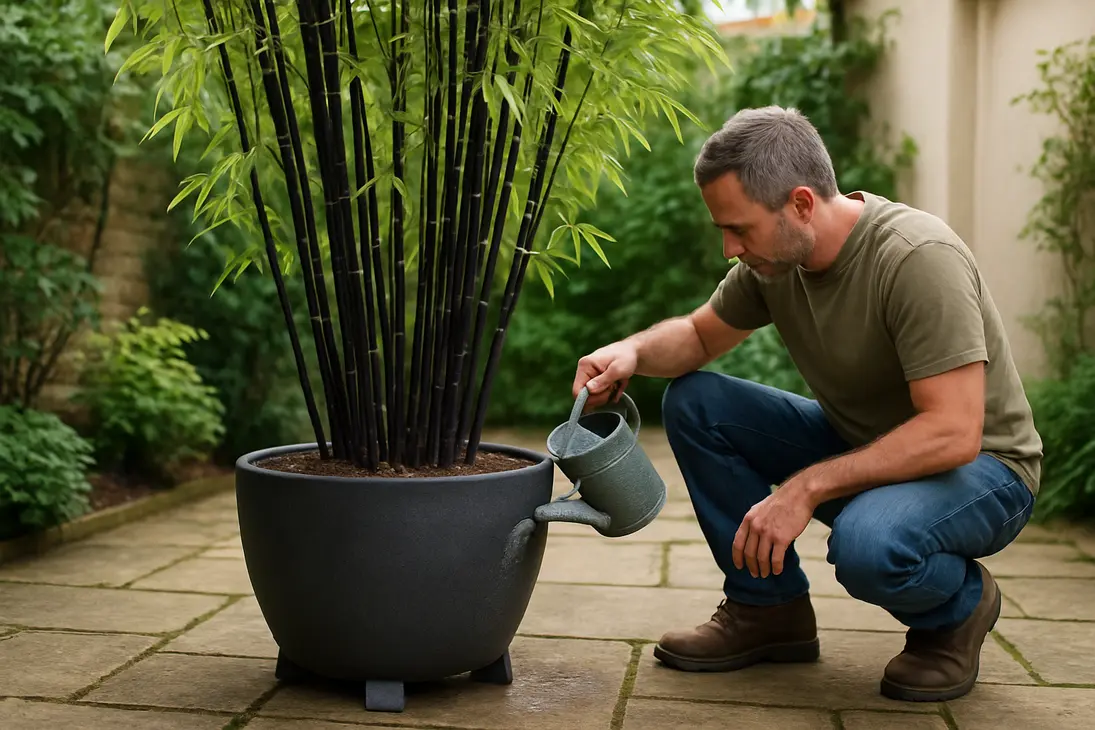
Yes, you can grow black bamboo in a pot, and for many gardens it is the safest way to grow it. Black bamboo is elegant, useful for screening, and striking on patios, but it needs a large strong pot, steady watering, good drainage, and periodic root control.
The key point is that black bamboo is usually a running bamboo. A pot can contain it, but only if the container is robust and checked regularly. Neglected in a small pot, it can dry out, become rootbound, lose vigour, split its container, or send rhizomes through drainage holes.
Is Black Bamboo Suitable for Containers?
Black bamboo is suitable for containers if you treat the pot as a managed growing space. Its underground stems, called rhizomes, are vigorous and naturally spread outward. In open ground, this can become difficult to control. In a pot, spread is restricted, but the plant still needs room and regular maintenance.
For patios, small gardens, rented gardens, and sites close to neighbours, container growing is often more sensible than planting black bamboo directly in the soil.
Black bamboo is usually a running bamboo
The plant commonly sold as black bamboo is Phyllostachys nigra. It is known for upright canes that darken with age, but it belongs to the running bamboo group.
Running bamboos spread by sending rhizomes through the soil. These rhizomes can produce new shoots away from the original plant. In a large site this may be manageable, but in a small garden, near paving, drains, lawns, fences, or neighbouring boundaries, it can become a problem.
A container does not change the plant’s nature. It simply gives those rhizomes a boundary.
Why pots are often safer than planting in the ground
A pot gives you a visible barrier that can be inspected. In the ground, black bamboo should only be planted with serious thought and, where needed, a properly installed rhizome barrier. In a container, you can control its size more easily and keep it away from open soil.
In a pot, you can:
- Keep rhizomes away from borders and neighbours.
- Move the plant if the position is wrong.
- Inspect the base for escaping roots.
- Repot, divide, or root prune when needed.
- Use bamboo as a screen without giving it free access to the garden.
However, a pot is not foolproof. Thin plastic can split, rhizomes can push through drainage holes, and a pot placed directly on soil can allow roots to escape unnoticed. Keep the container visible and accessible.
What to expect from potted black bamboo: height, spread, and black canes
In the ground, black bamboo can become tall and broad. In a pot, it is usually more restrained. A well-grown container plant may reach around 2–4 metres, sometimes taller in a very large pot in a mild, sheltered position. Smaller pots usually produce shorter plants and thinner canes.
New shoots do not emerge black. They usually start green and darken over one to three seasons. The best colour develops on mature canes in good light, so young plants need patience.
In a pot, black bamboo often looks like a dense upright clump, even though it is botanically a running bamboo. The rhizomes circle inside the container, eventually making the rootball congested.
Choosing the Right Pot, Soil, and Position
The initial setup matters. Bamboo is leafy, thirsty, and vigorous, so it needs enough compost volume to hold moisture, enough weight to stay upright, and enough strength to withstand root pressure.
Best pot size for black bamboo
Choose the largest practical pot you can manage. For a young plant, a container around 45–60 cm wide and deep is a sensible starting point. For a long-term specimen or screen, aim for 60–90 cm wide, or use a substantial deep trough.
A pot that is too small leads to:
- Fast drying in summer.
- Thin or weak canes.
- Crispy or curled leaves.
- Earlier root congestion.
- A top-heavy plant in wind.
| Situation | Practical container choice |
|---|---|
| Young plant on a patio | 45–60 cm wide and deep |
| Long-term feature plant | 60–90 cm wide, heavy, frost-resistant pot |
| Screening along a boundary | Deep, strong troughs or several large pots |
| Windy exposed site | Heavy container with a broad base |
| Rented garden | Large movable pot on paving, not open soil |
Drainage and pot material considerations
Drainage is essential. Bamboo likes moisture, but not stagnant, waterlogged compost. Use a pot with several generous drainage holes.
Good materials include:
- Thick plastic or resin: Light enough to move, but choose rigid types.
- Fibreglass or composite: Durable and useful for large planters.
- Terracotta: Attractive, but dries quickly and may crack in frost.
- Glazed ceramic: Moisture-retentive and decorative, but heavy.
- Wooden planters: Useful for screens, though they eventually age.
Avoid flimsy pots. Also avoid placing the container directly on bare soil. Use pot feet, bricks, slabs, or paving so drainage holes stay visible and roots cannot enter the ground unnoticed.
Soil mix for container-grown bamboo
Use a fertile, moisture-retentive but free-draining mix. A loam-based compost is a good foundation because it holds moisture and nutrients better than very light multipurpose compost alone.
A practical mix is:
- Two parts loam-based potting compost.
- One part multipurpose compost or well-rotted organic matter.
- Some horticultural grit, perlite, or fine bark for drainage.
The mix should hold water without becoming airless. Do not use heavy garden soil on its own, as it can compact, drain poorly, and become difficult to re-wet.
Sun, shade, and wind exposure
Black bamboo grows best in sun or partial shade. Full sun encourages strong growth and better cane colour, but it also increases watering needs. In hot gardens, light afternoon shade can help prevent stress.
Wind is often more damaging than shade. Bamboo leaves lose moisture quickly in drying winds, especially when the roots are confined to a pot. Choose a sheltered position if possible.
Good positions include a bright courtyard, sheltered patio, large planter near seating, or boundary screen set on paving with access behind it. Avoid narrow windy passages, small pots in hot sun, roof terraces without shelter, and planters placed directly on soil near a fence.
How to Plant and Care for Black Bamboo in a Pot
Once the container is right, care is mostly about consistency. Potted black bamboo suffers when it swings between drought and saturation, or when it is left rootbound for too long.
Planting steps
Plant in spring or early autumn if possible. Spring gives the bamboo a full growing season to establish. Avoid planting just before severe cold or during hot, dry weather.
- Water the bamboo before planting. Soak the nursery pot thoroughly.
- Prepare the container. Check drainage and raise the pot on feet if needed.
- Add compost mix. Set the plant at the same depth it was growing before.
- Remove the plant from its nursery pot. Gently loosen tight circling roots.
- Position the bamboo. Face the best canes outward.
- Backfill firmly. Fill gaps and firm gently.
- Water deeply. Water until it drains from the holes.
- Mulch the surface. Use bark, leaf mould, or compost, keeping it away from the canes.
Leave a watering gap at the top of the pot so water can soak in rather than run off.
Watering needs, especially in summer
Watering is the most important part of growing black bamboo in a pot. Container compost dries much faster than garden soil, and bamboo has a large leaf area.
In spring and autumn, water when the top few centimetres of compost begin to dry. In summer, especially in hot or windy weather, a large potted bamboo may need daily watering. Smaller pots dry out even faster.
Water deeply rather than giving a quick splash. If water runs straight down the sides and out of the bottom, the compost may be too dry and shrunken. Water slowly in stages, or stand the pot briefly in a shallow tray until the compost rehydrates. Do not leave it sitting in water permanently.
Signs that black bamboo needs water include:
- Leaves curling lengthwise.
- Dry leaf tips.
- Dull, stressed canes.
- Poor shoot extension.
- Compost pulling away from the pot edge.
Some leaf curling on hot afternoons can be temporary, but if the plant does not recover after watering or by evening, it is under stress.
Feeding and mulching in spring and summer
Container bamboo depends on you for nutrients. Feed in spring as growth begins, then again in early summer if growth is strong. Use a balanced slow-release fertiliser or general-purpose liquid feed according to the label. Avoid heavy feeding late in the season, as soft late growth is more vulnerable to cold and stress.
Mulch helps conserve moisture and keeps the root zone cooler. Fine bark, leaf mould, compost, and composted woodchip all work well. Keep the mulch shallow enough for water to penetrate, and do not pile it tightly around the canes.
Pruning old, weak, or overcrowded canes
Black bamboo does not need clipping like a hedge, but selective thinning keeps it attractive and shows off the dark stems.
Remove:
- Dead canes.
- Thin or weak canes.
- Damaged or leaning canes.
- Very old crowded canes.
- Low side branches if you want clearer stems.
Cut unwanted canes at ground level with sharp secateurs or loppers. Avoid cutting every cane to the same height unless you deliberately want a topped look. Bamboo canes do not grow taller once they have emerged; each cane reaches its height in its first season, then matures and darkens.
Keeping Potted Black Bamboo Under Control Long Term
Long-term success depends on root management. A container may keep black bamboo tidy for a few years, but rhizomes eventually fill the space. If ignored, the plant may decline, distort the pot, or try to escape.
Repotting and root pruning
Expect to repot or root prune black bamboo every two to four years, depending on pot size and growth rate. Smaller pots may need attention sooner.
Signs it is time include:
- Water runs straight through.
- The plant dries out very quickly.
- New canes are smaller or fewer.
- The pot bulges or distorts.
- Roots are visible at the surface or drainage holes.
You can either move the bamboo into a larger container or remove it, cut back the rootball, and replant it into the same pot with fresh compost. Root pruning is hard work but effective. Use a sharp saw or spade to remove congested outer sections, then replant a healthy section.
If dividing the plant, make sure each piece has roots and viable canes. Water well afterwards and protect it from hot sun and drying wind while it recovers.
Checking for rhizomes escaping through drainage holes
Running bamboo can exploit drainage holes, especially if the pot stands on soil or gravel. At least twice a year, lift or tilt the pot if possible and inspect underneath. Look for pale or woody rhizomes emerging from the holes. Cut any off immediately and check whether they have rooted into the ground.
To reduce risk:
- Keep pots on paving, slabs, or pot feet.
- Avoid placing containers directly on open soil.
- Keep the base visible.
- Rotate or move pots occasionally if manageable.
- Use strong containers with visible drainage holes.
If a rhizome has entered the ground, remove it promptly. Early action is much easier than dealing with established spread.
Managing bamboo near boundaries, patios, and paths
Black bamboo is often grown for privacy, so it is commonly placed near boundaries. Even in a pot, leave room for watering, pruning, and inspection. Do not wedge a heavy planter tightly against a fence where you cannot see behind or beneath it.
Near neighbours, be especially careful. A maintained container is far less risky than planting in open ground, but escape is still possible if the pot cracks or roots find soil. If using several pots as a screen, leave small gaps so each container can be checked.
On patios and paths, consider mature height and wind movement. Tall bamboo can sway, so a heavy pot with a wide base is safer than a narrow, top-heavy one.
Winter care and protection from stress
Black bamboo is generally hardy in many temperate gardens, but container plants are more exposed. Roots in pots experience sharper cold than roots in the ground, and winter wind can dry foliage when compost is cold or frozen.
In winter:
- Keep compost moist but not waterlogged.
- Move smaller pots to shelter in severe weather.
- Raise pots to improve drainage.
- Wrap pots with hessian, fleece, or bubble wrap in very cold areas.
- Avoid feeding until spring.
- Gently remove heavy snow if canes bend.
Cold damage may show as brown leaf tips or leaf drop. The plant can recover in spring if roots and canes remain healthy.
Common Problems With Black Bamboo in Pots
Most problems come from water stress, root congestion, or unrealistic expectations. If the foliage looks poor, check watering, drainage, and root space before assuming disease.
Yellowing or dropping leaves
Some yellowing and leaf drop is normal, especially in spring when bamboo replaces older leaves. If the plant is otherwise vigorous, this is not usually a concern.
More serious yellowing may be caused by:
- Drought.
- Waterlogged compost.
- Lack of nutrients.
- A severely rootbound pot.
- Sudden changes in light or temperature.
Check the compost first. If it is dry, water deeply and adjust your routine. If it is constantly wet and sour-smelling, drainage may be poor. If the plant has been in the same pot for years, root congestion is likely.
Dry, curled, or crispy foliage
Curled leaves usually mean the plant is conserving moisture. This is common in hot sun, drying wind, or frozen conditions. If leaves uncurl after watering or cooler weather, the stress is temporary. If they turn crispy, the plant has been too dry or too exposed.
Improve conditions by watering more deeply, mulching, moving the pot out of harsh afternoon sun, sheltering it from wind, or repotting if the rootball is too congested to hold moisture.
Do not solve drought stress by leaving the pot permanently in water. Aim for evenly moist, well-drained compost.
Bamboo becoming rootbound
A rootbound black bamboo may look acceptable for a while, but it will lose vigour. New canes become smaller, leaves look tired, and water may not penetrate the dense rootball.
Feeding alone will not fix this. Repot into a larger container if you want a bigger plant, or root prune and refresh the compost if you want to keep it the same size. This is the main trade-off of container growing: you gain control, but you must manage the roots.
Canes not turning black quickly
New black bamboo canes usually start green and darken with age. Depending on light, climate, and plant health, this can take one or more seasons.
Poor cane colour can be due to:
- Young canes.
- Too much shade.
- Weak growth from congestion.
- Drought or poor nutrition.
Give the plant time, provide bright light or partial sun, water consistently, and thin older crowded canes so the best stems are visible. Do not scrape or scrub the canes; the colour develops naturally.
Conclusion
You can grow black bamboo in a pot successfully, and container growing is often the safest choice for this beautiful but vigorous running bamboo. Use a large, strong, well-drained container, fill it with fertile moisture-retentive compost, and water consistently during dry weather.
A pot limits spread, but it does not remove the need for control. Check drainage holes for escaping rhizomes, keep the container away from open soil, and repot or root prune every few years. With that routine, black bamboo can be a striking and manageable plant for patios, courtyards, and garden screens.
FAQ
How big a pot does black bamboo need?
For a young plant, start with a pot at least 45–60 cm wide and deep. For long-term growth, a larger container of 60–90 cm wide is better. Choose something heavy, strong, and well-drained.
Will black bamboo in a pot still spread?
It will still produce rhizomes inside the pot, but the container restricts how far they can go. Over time, they circle and fill the compost, so repotting or root pruning is needed. Check drainage holes in case rhizomes try to escape.
Is black bamboo invasive if kept in a container?
It is much less risky in a container than in open ground, but it should still be treated as a running bamboo. It can become a problem if the pot cracks, rhizomes grow through drainage holes, or the container is placed directly on soil and not inspected.
How often should I repot black bamboo?
Most potted black bamboo needs repotting or root pruning every two to four years. Act sooner if the plant dries out very quickly, produces smaller canes, bulges the pot, or has roots pushing through drainage holes.
You Might Also Like