Can You Use Roundup Before Planting Seeds or Seedlings?
The Short Answer: When It Is Safe to Plant After Roundup
Yes, you can sometimes use Roundup before planting seeds or seedlings, but the safe planting interval depends on the exact product, its active ingredients, and its label directions.
The key distinction is:
- Glyphosate-only products kill weeds that are already growing. They generally do not provide long-term soil weed prevention, so they are commonly used to clear a bed before planting.
- Products containing pre-emergent or residual herbicides may remain active in soil and prevent seeds from germinating or injure seedlings. They can require a much longer wait and may be unsuitable for future vegetable beds.
Do not rely on the word Roundup alone. It is a brand name used on products with different ingredients. Read the label and follow its crop-specific planting instructions.
Check the Roundup Product Before You Spray
Before treating a future garden bed, find the product’s active ingredients panel. Then check label sections such as:
- “Directions for Use”
- “Planting” or “Replanting”
- “Seeding”
- “Garden beds”
- “Restrictions”
- “Do not apply”
The label tells you whether the product is approved around food crops, whether it leaves residual activity in the soil, and how long to wait before sowing or transplanting.
If the container is old, damaged, or missing its label, do not guess. Use a product whose ingredients and directions you can confirm.
Glyphosate-Only Products
Glyphosate is a systemic, non-selective herbicide. It is absorbed through green leaves and moves through the plant to kill roots as well as top growth. It works best on actively growing weeds.
Glyphosate-only products are often used before planting because they target existing vegetation rather than creating a long-term barrier against new seeds. However, formulations, approved sites, and planting instructions differ. Follow the directions for your specific container, especially for vegetables, herbs, and fruiting plants.
Products With Pre-Emergent or Residual Herbicides
Some Roundup products include ingredients intended to stop weed seeds from sprouting or provide “extended” or “long-lasting” control. These products are the most likely to create problems before planting.
Pre-emergent herbicides work in the upper soil layer, where seeds begin to grow. They may be useful in driveways, paths, gravel, or some ornamental areas, but they are a poor choice for beds where you plan to sow vegetables, flowers, or wildflowers.
Residual products can also affect transplants. Plants may initially survive but later stall, yellow, develop poor roots, or fail to establish.
If the label mentions extended control, weed prevention, pre-emergent action, soil activity, or a long replanting interval, examine it carefully. Do not assume compost, deep tilling, or heavy watering will deactivate a residual herbicide; those measures can spread treated soil instead.
Why “Roundup” Is Not One Single Formula
Gardeners often use “Roundup” to mean glyphosate, but the brand includes products with different ingredients and purposes.
| Label wording | What it may indicate | What to do before planting |
|---|---|---|
| “Kills weeds and grasses” | Often a post-emergent product | Check active ingredients and planting directions |
| “Extended control” or “prevents weeds” | May contain a residual herbicide | Do not plant until the label allows it |
| “Weed and grass killer” | Could contain more than glyphosate | Read the active-ingredient panel |
| “For driveways, patios, paths, or gravel” | Often unsuitable for food or seed beds | Choose another method for garden areas |
| “Ready to use” | Mixing convenience, not planting safety | Read restrictions as with concentrates |
Bottle color, familiar packaging, and brand name are not reliable ways to identify a formula.
How Long to Wait Before Planting Seeds or Transplants
The safest rule is: wait for the interval on your product label, then plant only after the sprayed weeds have fully died back.
Glyphosate-only products may have relatively short planting intervals. Residual products can have much longer restrictions. This matters especially for direct-sown crops and small seedlings.
Do not treat “the spray is dry” as planting guidance. Droplets can dry quickly, while systemic herbicides still need time to move through weeds and reach their roots.
Planting Seeds After a Glyphosate-Only Application
Direct seeding requires careful timing because seeds need moist soil and delicate new roots must establish quickly. Preparing the bed too soon can reduce weed control and leave living roots to compete with the crop.
For a bed treated with a glyphosate-only product:
- Follow the label’s planting interval.
- Allow treated weeds to show complete dieback.
- Remove or flatten dead vegetation if it will interfere with sowing.
- Prepare a fine, level seedbed.
- Sow at the depth recommended on the seed packet and keep the seed zone evenly moist.
This is especially important for small or slow-growing crops such as carrots, onions, lettuce, parsley, and many flowers.
If you need to sow immediately, use a non-herbicide method instead, such as hand-pulling, shallow hoeing, opaque tarping, or light cultivation.
Planting Seedlings and Transplants After Treatment
Transplants are generally more resilient than germinating seeds, but they can still be harmed by unsuitable herbicide residues or poor soil conditions.
With a glyphosate-only product, wait for the required interval and confirm that the target weeds are dead before planting. Then check for problems spraying does not solve:
- Dense dead roots may make planting difficult.
- Tall stems can shade small transplants.
- Thick debris can shelter slugs and other pests.
- Soil may be too cold, dry, compacted, or waterlogged.
Clear enough dead material to create open planting space. Make sure each root ball contacts loose, moist soil rather than sitting in dry debris.
Waiting Until Weeds Are Fully Dead Before Preparing the Bed
Do not judge success by the first yellow spots. Systemic herbicides need time to move from leaves to roots. Cutting, mowing, pulling, or tilling immediately after spraying can interrupt that process.
Wait until weeds are clearly dead according to product directions. Perennial weeds with deep roots, rhizomes, or runners often take longer than tender annual weeds.
Cultivating too soon can allow weeds to recover, creating more work after your crop is planted.
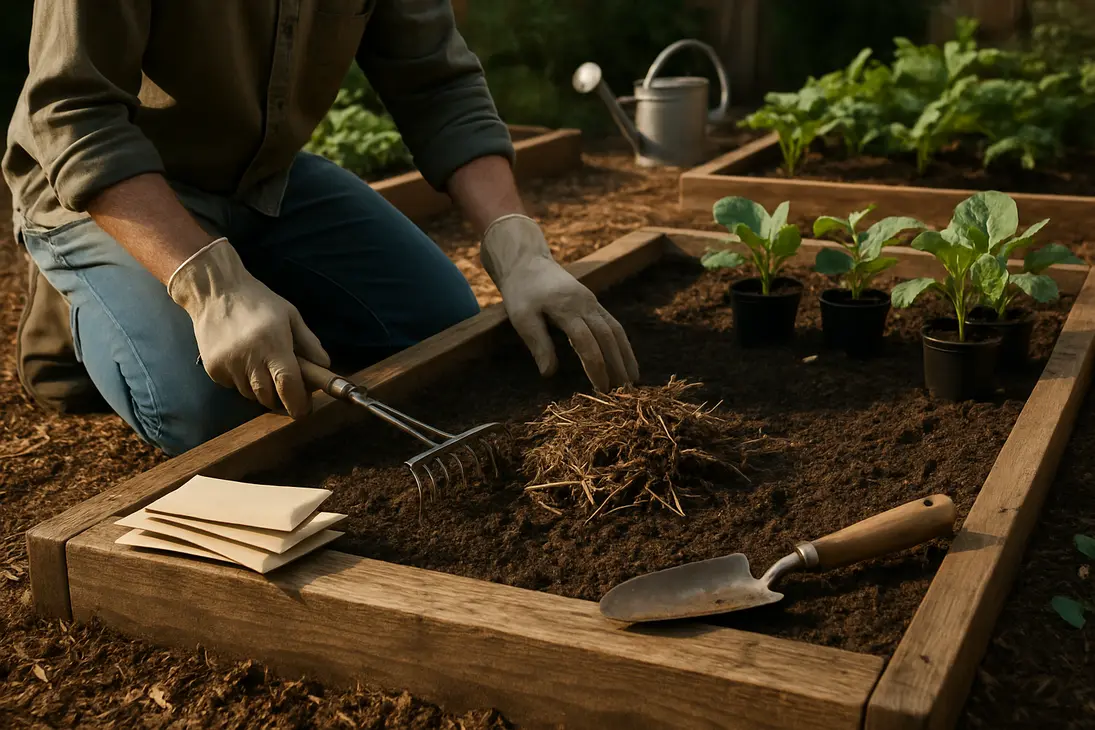
How to Prepare a Garden Bed After Spraying Roundup
For a label-approved glyphosate-only treatment, follow this sequence:
- Spray actively growing weeds on a calm, dry day, following label directions.
- Leave weeds undisturbed for the specified period.
- Confirm dieback and check for fresh green regrowth.
- Manage dead vegetation by pulling, raking, cutting, or leaving a thin surface mulch where appropriate.
- Prepare the planting area by removing large roots and stones, loosening compacted soil as needed, and leveling the surface.
- Plant when conditions suit the crop. Herbicide timing does not replace attention to soil warmth and moisture.
You do not need to sterilize the bed after a label-approved glyphosate-only application. The goal is to let the herbicide finish working, then create good conditions for seeds or transplants.
Avoid Tilling or Pulling Weeds Too Soon
Cleaning up a sprayed bed too quickly can be counterproductive. For systemic products, leaves are the entry point and roots are part of the target. Removing the plant early may prevent full root kill.
After the label interval has passed and vegetation is dead, shallow cultivation can help smooth the bed. Avoid repeated aggressive rototilling unless necessary. Excessive tillage can damage soil structure, bring buried weed seeds to the surface, and spread pieces of perennial roots that may resprout.
When It Is Okay to Cultivate, Compost, or Mulch
After the required waiting period and full weed death, manage dead material as needed:
- Cultivate lightly for a smooth seedbed.
- Pull or rake out large weeds that interfere with planting.
- Compost dead plant material if the product label does not prohibit it and your compost is properly managed.
- Use clean mulch after planting to reduce new weeds and conserve moisture.
For direct-seeded beds, keep mulch away from the row until seedlings are established. Thick mulch can prevent small seeds from reaching soil or make emergence difficult.
Check Soil Temperature and Moisture Before Sowing
A weed-free bed is not automatically ready to plant. Seeds can fail in soil that is cold, saturated, crusted, or dry.
Warm-season crops such as beans, cucumbers, squash, melons, and basil need warm soil for good germination. Cool-season crops tolerate lower temperatures but still need consistent moisture and good seed-to-soil contact.
Before sowing:
- Soil should feel moist but not drip water or form a sticky smear.
- Break up large clods for small seeds.
- Avoid working muddy soil.
- Check the seed packet for planting season and spacing.
- Water gently after sowing.
Avoid Common Mistakes When Using Roundup Before Planting
Most problems come from using the wrong product, spraying at the wrong time, or overlooking bed preparation.
Do Not Spray on Windy Days
Wind can carry droplets onto lawns, shrubs, fruit trees, flowers, and vegetables. Non-selective herbicides can damage nearly any green plant they contact.
Spray only in calm conditions, use the application method directed on the label, and keep the spray low and targeted. Check what is downwind before applying.
Do Not Apply It to Weeds Growing Among Desired Plants
A non-selective herbicide cannot distinguish weeds from vegetables, flowers, or perennials growing beside them. Shields such as cardboard may help in limited situations, but accidental contact is easy.
When weeds are mixed with wanted plants, hand-pulling, cutting, shallow hoeing, or very careful spot treatment is usually safer. This is especially important around new seedlings, which may not recover from minor herbicide contact.
Follow Crop-Specific and Edible-Garden Label Directions
Do not assume a weed killer is suitable for a vegetable garden because it works on lawn or driveway weeds. Labels may restrict use around edible plants, name specific crops, or require planting intervals.
If you change plans, read the label again. A product acceptable for clearing an ornamental bed may not be approved for lettuce, herbs, root vegetables, or berries.
If you cannot identify a past treatment or suspect an extended-control product was used, avoid direct-seeding valuable crops in that soil. Use containers, an untreated bed, or a temporary raised bed with clean growing medium until you know what was applied.
Conclusion
Using Roundup before planting can be practical when you have a glyphosate-only product and follow its label directions. Let weeds absorb the treatment, wait through the stated planting interval, confirm they are dead, and then prepare the soil.
The brand name alone is not enough. Some Roundup products contain residual weed preventers that can interfere with germination and damage new plants long after visible weeds are gone. Check active ingredients and planting restrictions before spraying, especially in edible gardens.
FAQ
Can I plant seeds the day after spraying Roundup?
Only if the label for your exact product specifically permits planting that soon. Do not assume one day is enough because the spray has dried or weeds have started yellowing.
Glyphosate-only products may allow planting after a relatively short interval, but weeds still need time to die. Products with residual or pre-emergent ingredients may injure seedlings or prevent germination.
Will Roundup kill seeds already in the soil?
A glyphosate-only treatment works through green, actively growing foliage and does not generally act as a long-term seed killer in soil.
However, products containing residual or pre-emergent herbicides are designed to interfere with germinating weed seeds and may also affect vegetable, flower, and lawn seed.
Can I use Roundup before planting a vegetable garden?
You may be able to use a glyphosate-only product to kill existing weeds before planting a vegetable garden if its label allows the use and you follow all restrictions.
Avoid products marketed for extended weed prevention unless the label clearly states they are suitable for your planned vegetable crops. Hand removal, smothering, and shallow cultivation are lower-risk alternatives.
Is it better to pull weeds instead of spraying Roundup before planting?
It depends on the area, weed species, planting schedule, and your preference.
Hand-pulling is often best for small beds, weeds near desired plants, or gardeners avoiding herbicides. Spraying can be useful for large areas or persistent perennial weeds when digging would badly disturb the soil. The trade-off is that you must choose the correct product, prevent drift, wait for it to work, and follow the label exactly.
You Might Also Like