Do Plants Grow Faster in Light or Dark?
Short Answer: Plants Need Both Light and Darkness
Plants often look like they grow faster in the dark because their stems stretch upward in search of light. But this is not healthy growth. Dark-grown plants are usually tall, pale, thin, and weak because they are using stored energy instead of making new food.
For strong growth, plants need light for photosynthesis and darkness for normal daily cycles. Light helps plants make sugars, build leaves, thicken stems, and stay green. Darkness helps many plants regulate hormones, move stored sugars, repair tissues, and respond to seasonal cues.
So in the question of plants growth light vs dark, the answer depends on what you mean by “grow.” If you mean getting taller quickly, darkness can cause stretching. If you mean growing well, with sturdy stems, healthy leaves, roots, flowers, or fruit, plants need the right amount of light plus a regular dark period.
What Light Does for Plant Growth
Light is the main energy source that makes plant growth possible. A plant in suitable light can produce food, maintain its structure, and build new tissue. A plant kept in darkness can survive only as long as its stored energy lasts.
Different plants need different light levels. A tomato seedling, pothos, and cactus do not want the same conditions. But all green plants rely on light to some degree.
Photosynthesis and Food Production
Photosynthesis is the process plants use to turn light energy, carbon dioxide, and water into sugars. Those sugars support new leaves, roots, stems, flowers, fruit, and seeds.
When a plant gets enough usable light, it can make more energy than it spends staying alive. That surplus supports visible growth: broader leaves, sturdier stems, and stronger roots.
When light is too low, the plant may survive but cannot produce enough sugars for strong growth. You may see small leaves, long gaps between leaves, weak roots, slow growth, or a plant that seems unchanged for weeks.
Fertilizer does not fix a low-light problem. Nutrients are building materials, not energy. If a plant cannot photosynthesize well, extra fertilizer may build up in the potting mix and damage roots.
Light Intensity, Duration, and Color Spectrum
Plant lighting has three main parts: intensity, duration, and spectrum.
Light intensity is how strong the light is. A plant near a bright window receives far more light than one across the room, even if the room looks bright to you.
Light duration is how many hours of light the plant receives each day. Many indoor plants grow well with 10 to 16 hours of light, depending on the plant and light strength.
Light spectrum refers to the colors of light available to the plant. Plants use much of the visible spectrum, especially red and blue wavelengths. Full-spectrum grow lights are popular because they provide a balanced range for many plants.
The best setup is not always the brightest possible one. Too much direct sun can scorch shade-adapted houseplants, while too little light weakens sun-loving herbs and vegetables.
What Happens When Plants Grow in the Dark
A plant grown in darkness behaves differently from one grown in adequate light. Instead of building green leaves and strong stems, it uses an emergency growth pattern to try to reach light.
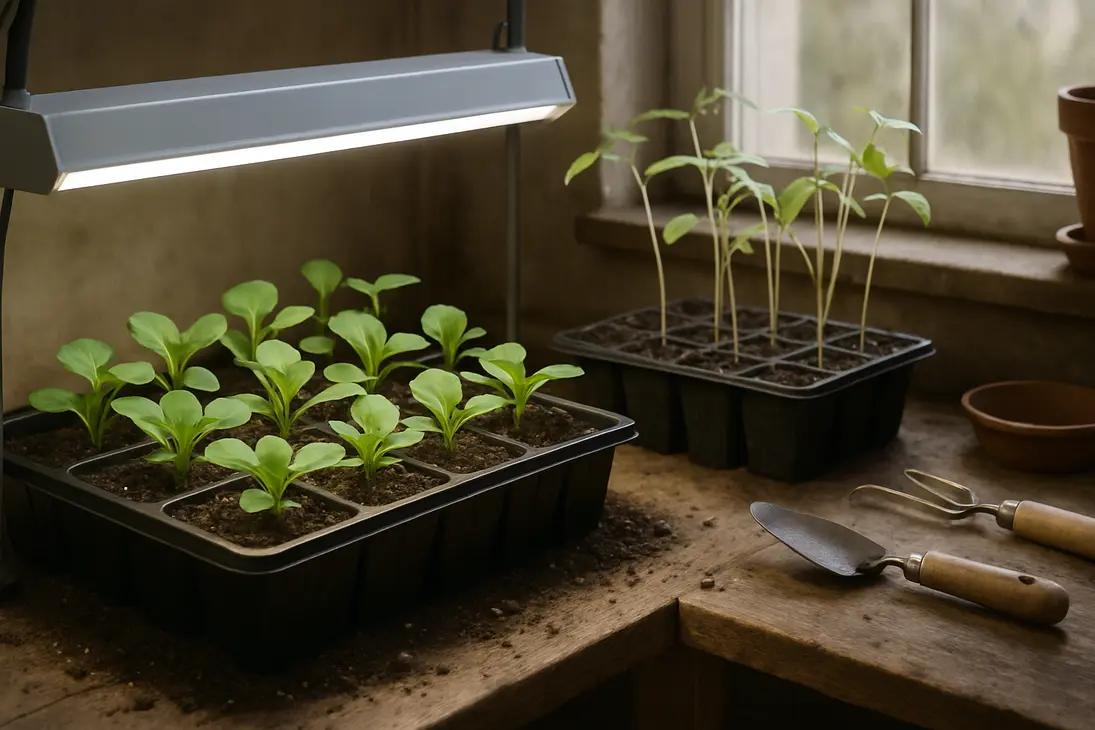
This is most obvious in seedlings. A seedling that sprouts in darkness may shoot upward quickly, but it is often pale yellow or white, with a thin stem and tiny undeveloped leaves. This is called etiolation. It is a survival response, not a sign that the plant is thriving.
Why Plants May Look Like They Grow Faster in Darkness
Dark-grown plants can look like they are growing faster because they get taller quickly. But most of that “growth” is stem elongation, not healthy development.
In darkness, a young plant uses stored food from the seed, bulb, tuber, or root. Instead of making broad green leaves, it invests energy in lengthening its stem to find light before stored energy runs out.
Dark-grown seedlings are often:
- Tall and thin
- Pale yellow, cream, or white
- Weak-stemmed and floppy
- Slow to form true leaves
- More likely to collapse after watering or transplanting
Once the plant reaches light, it may turn green and begin normal growth. But if it has stretched too much, it may remain weak or need support. Very leggy vegetable and annual flower seedlings are often better restarted.
So darkness can make a plant stretch faster, but it does not help the plant grow better.
When Darkness Is Normal or Helpful
Darkness is not bad. Plants evolved with day and night cycles, and many need a dark period for normal growth.
During darkness, plants continue to respire, move resources, and regulate growth. Some plants use the length of the night as a seasonal signal, especially for flowering.
Darkness is also normal in several situations:
- Some seeds germinate best covered by soil.
- Bulbs and tubers begin growth from stored energy underground.
- Roots naturally grow in darkness.
- Short-day plants may flower only when nights are long enough.
- Newly transplanted plants may benefit from temporary bright shade rather than harsh sun.
The key is that darkness should be part of a balanced cycle, not the plant’s entire environment once it has leaves.
Light vs. Dark at Different Growth Stages
Plants respond to light and darkness differently depending on their growth stage. A seed has different needs than a seedling, and a leafy houseplant has different needs than a flowering crop.
Germination and Early Sprouting
Seeds do not all need light to germinate. Many germinate well in darkness because they rely on stored energy inside the seed. In nature, seeds may be in soil, under leaf litter, or lightly covered by debris.
Some seeds prefer darkness and should be covered. Others need light or only a shallow covering. Tiny seeds are often sown near the surface because they do not have enough stored energy to push through deep soil.
A practical rule is to follow the seed packet depth. If no information is available, sow very small seeds shallowly and cover larger seeds more deeply.
Once the seed sprouts and the first leaves emerge, light becomes urgent. A sprout kept too long in darkness will stretch and weaken. If starting seeds indoors, place them under a grow light or in very bright light as soon as they germinate.
Seedling Growth
Seedlings need more light than many beginners expect. A bright windowsill may be enough for some houseplant cuttings, but vegetables and many annual flowers usually need stronger, more consistent light.
When seedlings do not get enough light, they become leggy. The stem lengthens, the seedling leans toward the light, and the leaves stay small.
For stronger seedlings:
- Move them into bright light immediately after germination.
- Keep grow lights close enough to be effective without heating or bleaching leaves.
- Rotate trays near windows so seedlings do not lean.
- Provide gentle air movement to encourage sturdier stems.
- Avoid overwatering, which makes weak seedlings more likely to collapse.
If a seedling stalls, check light before adding fertilizer. Slow growth under dim light is common because the plant cannot make enough energy.
Vegetative Growth, Flowering, and Fruiting
During vegetative growth, plants focus on leaves, stems, and roots. Leafy herbs, lettuce, pothos, philodendron, and many foliage plants need enough light to keep producing healthy leaves, though not all need full sun.
Flowering and fruiting plants usually need more light because flowers and fruit require a lot of energy. Tomatoes, peppers, cucumbers, citrus, and many flowering houseplants may stay alive in dim conditions but fail to bloom, drop buds, or produce weak fruit.
Day length also matters for some plants. Some flower in response to long nights, others to short nights, and many are day-neutral. For fruiting crops indoors, stronger light is usually more useful than extra fertilizer.
How to Set a Healthy Light Cycle for Indoor Plants
Indoor plants do best with a light cycle that is bright enough, long enough, and consistent. You do not need to copy outdoor sunlight exactly, but you should avoid weak light, random schedules, and sudden major changes.
A timer is one of the easiest ways to improve indoor plant care. It keeps grow lights consistent and prevents lights from being left on too long or changed every few days.
Typical Daily Light Ranges for Common Plants
The right daily light period depends on light strength, plant type, season, and growth goal. These are practical starting points, not rigid rules.
| Plant type | Typical daily light range | Notes |
|---|---|---|
| Low-light tolerant houseplants, such as snake plant or ZZ plant | 8–12 hours | Tolerate low light but grow better in bright indirect light. |
| Medium-light foliage plants, such as pothos, peace lily, or philodendron | 10–14 hours | Bright indirect light supports fuller growth. |
| Succulents and cacti | 12–16 hours | Need strong light; weak light causes stretching. |
| Seedlings for vegetables and annual flowers | 14–16 hours | Bright light helps prevent legginess. |
| Leafy greens and herbs indoors | 12–16 hours | Strong light improves compact growth. |
| Flowering and fruiting plants indoors | 14–16 hours, depending on species | Many need high intensity, not just long hours. |
Most plants also benefit from several hours of darkness each day. Running lights 24 hours a day is usually unnecessary and can disrupt normal rhythms. If unsure, start with 12 to 14 hours for houseplants and 14 to 16 hours for seedlings or edible crops, then adjust.
Signs a Plant Needs More Light
A plant that needs more light often changes gradually. Look at the newest growth first because it reflects current conditions.
Common signs include:
- Long, thin stems with wide spaces between leaves
- Leaning strongly toward a window or lamp
- Smaller new leaves than older leaves
- Pale green growth or loss of variegation
- Slow growth during the active season
- Few or no flowers on a plant that should bloom
- Lower leaves yellowing and dropping after stretching
If you see these signs, increase light gradually. Move the plant closer to a bright window, add a grow light, extend the light period, or choose a brighter location. Do not move a shade-grown plant straight into intense direct sun, which can burn leaves.
Signs a Plant Is Getting Too Much Light
Too much light can also be stressful, especially with heat, low humidity, or dry soil. Shade-loving houseplants are most likely to suffer near hot windows or intense grow lights.
Signs of too much light include:
- Brown, crispy patches on leaves
- Bleached or faded areas on upper leaves
- Leaves curling, folding, or pointing away from the light
- Soil drying much faster than usual
- Wilting during bright periods even when soil is moist
- Yellowing on the sun-facing side of the plant
If this happens, move the plant back from the window, use a sheer curtain, raise the grow light, or shorten the light period. Also check temperature, because heat buildup near glass or lamps can worsen damage.
Common Mistakes That Slow Growth
A common mistake is assuming more of everything means faster growth: more light, more water, more fertilizer, and longer hours. Growth is limited by the factor most out of balance.
Common light-related mistakes include:
- Leaving seedlings too long in darkness after germination. They stretch quickly and may never become sturdy.
- Using a weak grow light too far away. The lamp may be on for 16 hours, but the plant still receives too little usable light.
- Changing light cycles constantly. Frequent changes may disrupt growth and flowering.
- Trying to fix low light with fertilizer. Fertilizer cannot replace photosynthesis.
- Moving plants suddenly from shade to full sun. Low-light leaves are not prepared for intense light.
- Ignoring the plant’s natural preference. A fern and a tomato plant do not need the same light.
If you need to change a plant’s light conditions, do it gradually when possible, especially when moving plants into direct sun or stronger artificial light.
Conclusion
Plants may appear to grow faster in darkness because they stretch in search of light, but that growth is usually weak and temporary. Light allows green plants to make food, build strong tissues, maintain healthy color, and support flowers and fruit.
Darkness still matters. Plants use dark periods for normal daily processes, and some rely on night length to time flowering. The healthiest growth comes from balance: enough light for the plant type and growth stage, plus a consistent period of darkness.
For most indoor gardeners, the best approach is simple: give seedlings bright light as soon as they sprout, match houseplants to their preferred light level, use a timer for grow lights, and adjust gradually when conditions change. In the debate of plants growth light vs dark, darkness may create fast stretching, but light creates real growth.
FAQ
Can plants grow without any light?
Most green plants cannot grow for long without light. They may survive briefly by using stored energy in seeds, bulbs, tubers, or roots, but they cannot keep making new food without photosynthesis.
Once leaves develop, the plant needs light for healthy growth. Without it, growth becomes pale, weak, and eventually stops.
Why do seedlings get tall and skinny in the dark?
Seedlings get tall and skinny in the dark because they are trying to reach light. This stretched growth is called etiolation. The seedling uses stored energy to lengthen its stem quickly instead of making strong green leaves.
It may look like fast growth, but it is a stress response. To prevent it, give seedlings bright light immediately after they germinate.
Do plants need darkness every day?
Most plants benefit from a daily dark period. Darkness supports normal plant rhythms and helps the plant use and move sugars made during the day. Some plants also depend on the length of the dark period to flower properly.
A few plants can tolerate very long light periods for a time, but 24-hour lighting is usually unnecessary for home gardening.
Can changing a plant’s light cycle stress it?
Yes. Sudden or frequent changes can stress some plants, especially seedlings, flowering plants, and plants adapted to a stable indoor routine. Irregular lighting can cause stretching, stalled growth, bud drop, or delayed flowering.
If adjusting a light schedule, change it gradually when possible and use a timer to keep the new cycle consistent.
You Might Also Like