How to Grow a Money Plant Indoors
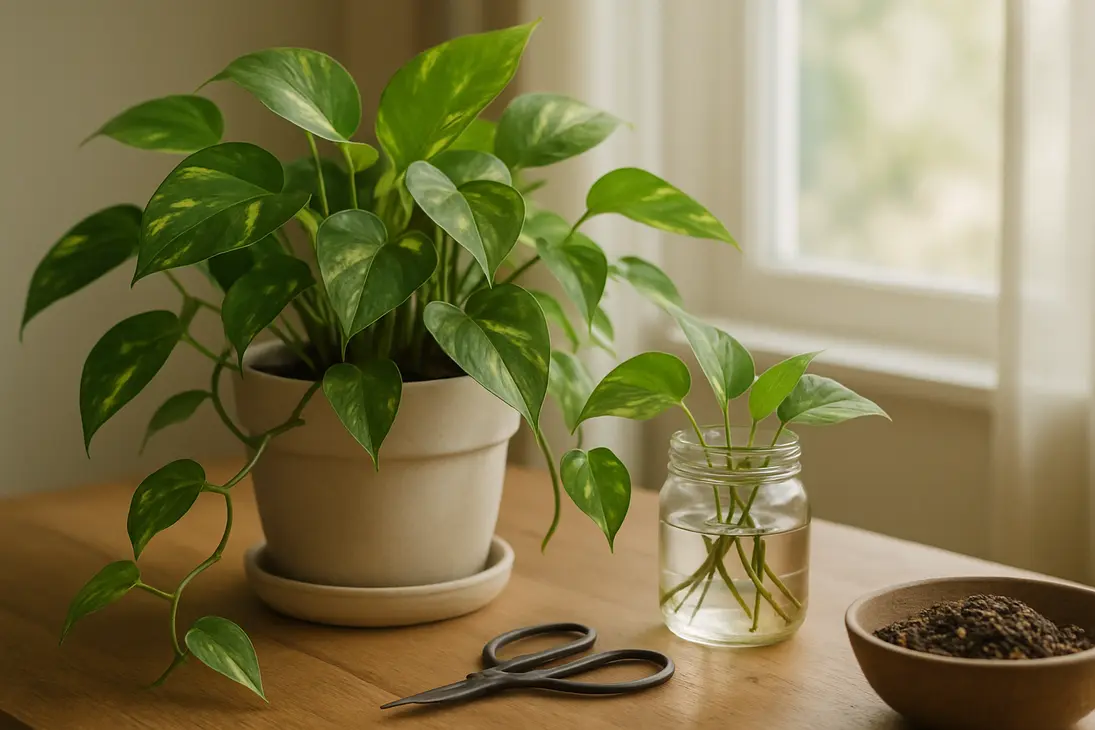
The easiest way to grow money plant indoors is to give it bright, indirect light, water only when the soil starts to dry, and keep its roots in either clean water or a loose, well-draining potting mix.
In many homes, “money plant” means pothos, botanically known as Epipremnum aureum. It is also sold as golden pothos, devil’s ivy, or simply money plant. This guide focuses on that plant, not jade plant or money tree.
Money plant is popular because it tolerates average indoor conditions, roots easily from cuttings, and forgives occasional missed watering. Most problems come from too little light, too much water, poor drainage, or stale water in jars.
Know What a Money Plant Needs Indoors
A money plant is a tropical evergreen vine. Indoors, it grows best with warm air, moderate humidity, and filtered light. It can trail from a shelf, climb a pole, grow in water, or fill a hanging basket, but its basic needs stay the same.
It is tolerant, not indestructible. It may survive in low light or irregular care, but it grows fuller and healthier when conditions are stable.
Best indoor location
Choose a bright spot without hours of harsh direct sun. Good locations include:
- Near an east-facing window
- A few feet from a south- or west-facing window
- Beside a bright window with a sheer curtain
- On a shelf in a bright room
- In a bathroom with a window
- On a desk near natural light
Avoid dark corners and hot windowsills. If the leaves feel hot, the location is too intense. Rotate the pot every week or two so growth stays even.
Ideal temperature and humidity
Money plants do well at typical indoor temperatures, about 65–85°F. Growth slows in cooler rooms.
Keep the plant away from cold drafts, air-conditioning vents, radiators, heating vents, hot glass, and sudden temperature changes.
Average household humidity is usually fine, but very dry air can cause brown tips or crisp edges. If needed, group plants together, use a pebble tray with water below the pot base, or run a humidifier. Misting only raises humidity briefly.
Why bright, indirect light works best
Bright, indirect light helps money plant produce new leaves, longer vines, and stronger variegation. Direct morning sun is usually fine, but strong afternoon sun through glass can burn leaves.
Signs of too much sun include faded leaves, dry patches, brown marks, and soil that dries too fast. If variegated leaves become mostly green, the plant may need more light because green tissue captures light more efficiently in dim conditions.
Can a money plant grow in low light?
Yes, but low light usually means slower growth, smaller leaves, longer gaps between leaves, and less variegation. Soil also stays wet longer, which increases the risk of root rot.
A low-light room can work if there is still enough natural light to read comfortably during the day. A windowless room needs a grow light. For faster, fuller growth, move the plant closer to a bright window.
Grow Money Plant in Soil or Water
Money plant can grow in soil or water. Water is simple and decorative for cuttings, while soil is better for a larger, longer-lasting plant.
Growing in soil
Soil-grown money plants are usually the most vigorous indoors because roots get better airflow, support, and nutrients.
To grow money plant in soil:
- Choose a pot with drainage holes.
- Use a loose indoor potting mix.
- Plant rooted cuttings or a nursery plant at the same depth.
- Water until excess drains out.
- Let the top layer dry before watering again.
- Place the pot in bright, indirect light.
Do not use dense garden soil or pack the mix tightly. Soggy, compacted soil damages roots quickly indoors.
Growing in water
Growing money plant in water is easy for small spaces, desks, shelves, and propagation.
To grow money plant in water:
- Take a healthy stem cutting with at least one node.
- Remove leaves below the waterline.
- Place the node in clean water.
- Keep the container in bright, indirect light.
- Change the water every 5–7 days.
- Rinse the container if algae builds up.
- Top up water as it evaporates.
A node is the small bump where a leaf and aerial root may emerge. Roots grow from nodes, not from a leaf alone. A single leaf without a node may stay green for a while, but it will not become a full vine.
Which is better for long-term growth?
For long-term indoor growth, soil is usually better. Water can keep cuttings alive and attractive, but soil-grown plants usually form stronger roots, fuller vines, and more consistent growth.
| Growing method | Best for | Main advantage | Main drawback |
|---|---|---|---|
| Soil | Long-term plants | Stronger growth | Needs drainage and careful watering |
| Water | Cuttings and décor | Easy to start | Needs water changes; limited nutrients |
| Soil after water rooting | Permanent plants | Easy rooting plus stronger growth | Transplant shock if delayed too long |
If you want a large, full plant, move rooted cuttings into soil. If you keep it in water, change the water regularly and watch for algae or weak roots.
When to move a water-grown cutting into soil
Move a water-rooted cutting into soil when roots are about 1–2 inches long and beginning to branch. At this stage, the cutting is rooted but not overly adapted to water.
Do not wait until roots are long, tangled, and fragile. After planting, keep the mix lightly moist for one to two weeks, not soggy. Once you see new growth, water normally.
Indoor Money Plant Care Routine
A simple routine works best. Most problems come from watering too often, using pots without drainage, or constantly moving the plant. Check the plant weekly, but only act when it needs something.
How often to water a money plant
Watering frequency depends on light, pot size, soil, temperature, and season. A plant in a bright warm room may need water every 5–7 days. In lower light or a larger pot, it may need water every 10–14 days or less.
Check the soil instead of following a fixed calendar:
- Push your finger 1–2 inches into the mix.
- If it feels dry, water.
- If it feels damp, wait.
- If leaves are limp and soil is dry, water thoroughly.
- If leaves are yellow and soil is wet, stop watering and check roots.
Water deeply until excess drains from the bottom, then empty the saucer. Avoid small sips and constant soaking.
Best pot and drainage setup
Use a pot with at least one drainage hole. Indoors, trapped water evaporates slowly and can rot roots.
A good setup includes a draining pot, saucer, fresh airy mix, and a pot only slightly larger than the root ball. If using a decorative pot without holes, keep the plant in a plastic nursery pot inside it. Remove the inner pot to water, let it drain fully, then return it.
Avoid oversized pots because excess soil stays wet too long.
Soil mix for indoor money plants
Money plant needs a loose mix that drains well but holds some moisture. A practical mix is:
- 2 parts indoor potting mix
- 1 part perlite or pumice
- 1 part coco coir, orchid bark, or fine bark chips
The goal is airflow and moisture balance. Do not use dense garden soil indoors because it can compact, drain poorly, and introduce pests.
Fertilizing for faster growth
Money plant does not need heavy feeding, but fertilizer helps during active growth. Use a balanced liquid houseplant fertilizer diluted according to the label.
Feed about once a month in spring and summer. Reduce or stop in fall and winter if growth slows. Do not fertilize a severely dry, rotting, or stressed plant; fix the care issue first.
Too much fertilizer can cause brown tips, crusty soil, or weak growth. If you suspect buildup, flush the soil with clean water and let it drain.
Cleaning and rotating the plant
Dust blocks light and makes leaves look dull. Wipe leaves with a soft damp cloth every few weeks. Rotate the pot regularly so all sides get light. While cleaning, check for pests, yellow leaves, mushy stems, and dry soil.
How to Propagate and Help It Grow Faster
Money plant is easy to propagate from stem cuttings as long as each cutting has a node. Propagation is also the best way to make a thin plant fuller: root cuttings and plant them back into the same pot.
How to propagate money plant cuttings in water
Use clean scissors and choose a healthy vine.
Steps:
- Cut a section with 2–4 leaves.
- Cut just below a node.
- Remove the lowest leaf.
- Place the node in clean water.
- Keep leaves above the waterline.
- Put the jar in bright, indirect light.
- Change the water weekly.
- Pot the cutting once roots are 1–2 inches long.
You can root several cuttings in one jar to create a fuller pot later.
How long roots and new growth usually take
Roots often appear in 1–3 weeks in warm, bright indoor conditions. New leaves may take several more weeks. In cool rooms or low light, rooting and growth take longer.
If the stem is firm, leaves are not collapsing, and water is clean, give it time. Growth speed depends mainly on light, temperature, cutting health, season, and whether the plant is in water or soil.
How to encourage fuller, longer vines
For a fuller plant, prune regularly and replant rooted cuttings. Money plant vines can become long and sparse in low light.
Try this:
- Trim long bare vines just above a node.
- Root the cut pieces in water.
- Plant several rooted cuttings around the mother plant.
- Move the pot to brighter indirect light.
- Feed lightly during active growth.
- Rotate the pot for even growth.
Do not prune heavily if the plant is weak. Improve light and watering first.
Training the vines on a moss pole, wall, or hanging basket
Money plant can trail or climb.
For a hanging basket, let vines cascade and trim long stems to keep growth dense near the top. Hanging plants may dry faster, so check moisture more often.
For a moss pole, tie stems loosely with soft plant ties and guide aerial roots toward the support. Climbing vines may produce larger leaves in good conditions.
For a wall or shelf, use clips or hooks that do not crush stems. Avoid taping stems directly to painted walls, and remember that aerial roots may attach to textured surfaces.
Common Indoor Money Plant Problems
Most money plant problems are reversible if caught early. One yellow older leaf is normal. Several yellow leaves, wet soil, and a sour smell suggest a care problem.
Yellow leaves
Yellow leaves are often caused by overwatering, poor drainage, or low light. Other causes include underwatering, old age, cold drafts, or sudden changes.
What to do:
- Check soil before watering.
- Make sure the pot drains.
- Move the plant to brighter indirect light.
- Remove fully yellow leaves.
- Check roots if soil smells bad or stays wet.
If only the oldest leaf yellows occasionally, it may be natural aging.
Brown leaf tips
Brown tips can come from dry air, inconsistent watering, fertilizer buildup, or mineral-heavy water.
Fixes include watering when soil dries, avoiding long dry spells followed by soaking, flushing soil occasionally, reducing fertilizer, keeping the plant away from heating vents, and improving humidity in very dry rooms.
You can trim brown tips with clean scissors, following the leaf shape.
Leggy or slow growth
Leggy growth means long spaces between leaves, smaller leaves, and vines reaching toward light. The usual cause is insufficient light.
To improve growth, move the plant closer to a bright window, prune long bare vines, root and replant cuttings, feed lightly in spring and summer, and avoid overwatering in low light. Use a grow light in dark rooms.
Slow growth in winter is normal. Do not force growth with extra water or heavy fertilizer.
Root rot
Root rot happens when roots stay too wet for too long. It is common in pots without drainage, dense soil, oversized pots, and low-light rooms.
Warning signs include:
- Yellowing leaves
- Wilting despite wet soil
- Mushy stems near the soil
- Sour smell
- Black, brown, or slimy roots
To save the plant, remove it from the pot and inspect the roots. Trim mushy roots with clean scissors. Repot healthy sections into fresh airy mix and a pot with drainage. If most roots are gone, take healthy stem cuttings and root them in water.
Dusty or dull leaves
Wipe dusty leaves gently with a damp cloth, supporting each leaf from underneath. Avoid heavy leaf-shine products. If leaves are also limp or dull, check soil moisture and roots; cleaning improves appearance but does not fix watering or light problems.
Conclusion
To grow money plant indoors successfully, keep care simple: bright indirect light, water only when the top soil dries, and use breathable soil in a pot with drainage. If growing it in water, keep the water clean and move cuttings into soil for stronger long-term growth.
Prune occasionally, root cuttings, and plant them back into the pot for a fuller look. With warmth, moderate humidity, and steady care, money plant is one of the easiest indoor vines to grow.
FAQ
How many days does it take for a money plant to grow indoors?
Cuttings usually start rooting in 1–3 weeks in water, depending on light, warmth, and cutting health. New leaves may take several more weeks. Established potted plants grow fastest in spring and summer and slow down in winter or low light.
Is it better to grow a money plant in water or soil?
Soil is usually better for long-term growth because it supports stronger roots and fuller vines. Water is useful for propagation and decorative cuttings, but it needs regular water changes and offers limited nutrients.
Can a money plant grow inside a bedroom?
Yes, if the bedroom has enough natural light. Place it near a bright window, away from harsh afternoon sun, cold drafts, and heating or cooling vents. A dark bedroom needs a grow light.
Does a money plant need sunlight indoors?
It needs light, not strong direct sun. Bright, indirect sunlight is ideal. Low light slows growth and can make variegated leaves greener, while hot direct sun can scorch leaves.
You Might Also Like