Why Do Drought-Tolerant Seedlings Grow Better After Rain Than Watering?
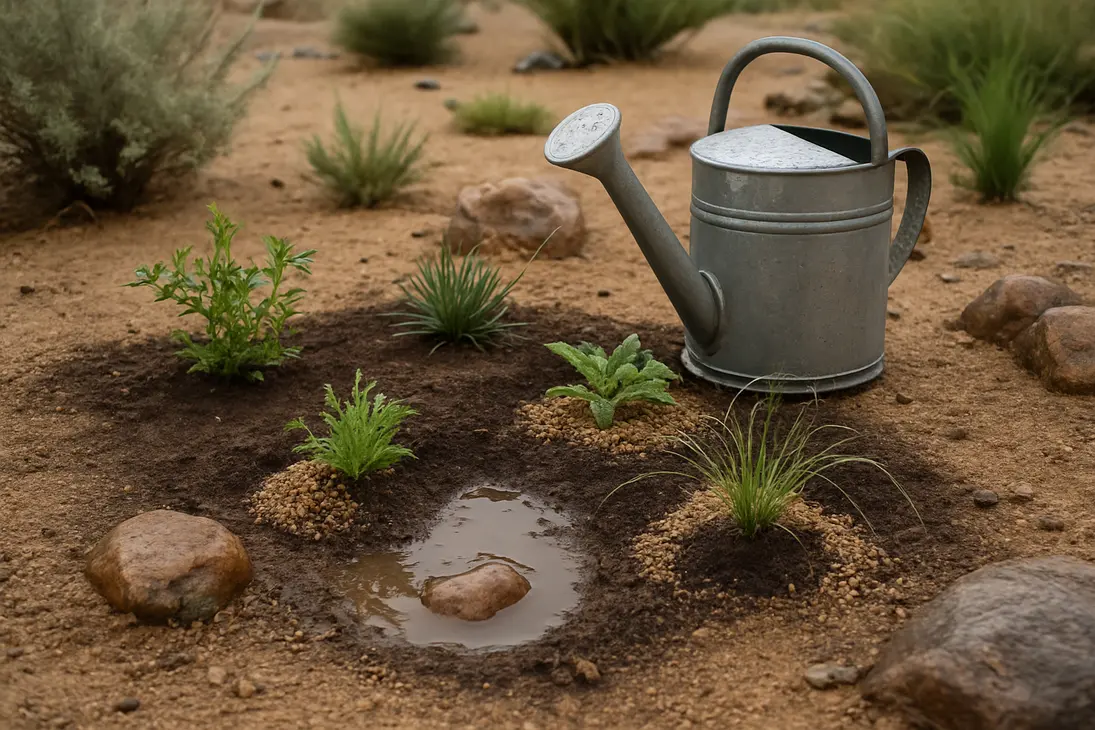
Drought-tolerant seedlings often surge after rain: leaves perk up, growth resumes, and plants that looked stalled suddenly improve. The reason is that rain changes more than soil moisture.
A soaking storm wets a larger soil volume, dilutes salts, cools air and soil, raises humidity, and usually arrives with cloud cover. Hand-watering may keep a seedling alive, but it often wets too small or too shallow an area to create the same low-stress growth window.
“Drought-tolerant” also does not mean “drought-proof when young.” Mature desert-adapted plants survive dry periods because they have deeper roots, stored reserves, seasonal dormancy, or tough foliage. Seedlings have small root systems and need reliable moisture until they establish.
Rain vs. Watering: Why Seedlings Often Respond Differently
Rain and irrigation can both supply water, but they rarely affect desert soil the same way. A storm may soak the whole planting area over several hours. A watering can, hose, or short drip cycle may wet only the surface or the original root ball.
Deeper, More Even Soil Moisture
Rain usually wets soil more evenly than quick hand-watering. Instead of concentrating water in one small basin, it spreads across the surface and moves downward, giving roots more usable soil.
Roots grow where moisture, oxygen, and temperature are favorable. If only the top inch is damp, seedlings form shallow roots that dry quickly. If water reaches deeper, roots are encouraged downward and outward, which is essential for later drought tolerance.
A brief sprinkle may not help much, especially on crusted or water-repellent soil. A steady soaking rain can soften the surface and wet the root zone more uniformly than rushed irrigation.
Lower Salt Buildup Around Young Roots
Many arid soils contain salts, and irrigation water can add more dissolved minerals. As water evaporates, salts remain near the surface and in the upper root zone.
Young roots are sensitive to this. Salty soil makes water harder to absorb, so a seedling can look drought-stressed even when the soil feels damp.
Rainwater is usually low in salts. When enough rain falls, it leaches accumulated salts downward and away from fine young roots. This is one major reason seedlings often look better after storms than after repeated shallow watering.
Cooler Temperatures and Higher Humidity After Storms
Rain usually comes with cooler air, cloud cover, cooler soil, and higher humidity. For a desert seedling, that combination matters.
Hot, dry air pulls water from leaves faster than small roots can replace it. When humidity rises and temperature falls, the seedling loses less water and can spend more energy on growth. Cooler soil also protects fine roots and supports new root growth.
Rainwater Chemistry vs. Tap or Irrigation Water
Rainwater is typically softer than many desert tap or well waters. It contains fewer dissolved minerals, so it is gentler on young roots and less likely to add to salt buildup.
Tap water quality varies. If you see white crusts on soil, pots, emitters, or mulch, your water may be leaving minerals behind. Rain also washes dust from leaves, but its biggest benefits are cleaner water, broader wetting, cooler conditions, and salt dilution.
What Drought-Tolerant Seedlings Need to Establish in Desert Conditions
Drought tolerance is usually an adult trait. Seedlings may have drought-adapted genetics, but they do not yet have the root system that makes those traits useful.
Root Establishment Comes Before True Drought Tolerance
A new seedling may have roots only a few inches deep. If it came from a nursery cell, those roots may still be confined to potting mix. After planting, they must grow into surrounding soil before the plant can handle dry periods.
The goal is not constant wetness. The root zone should stay moist enough for root tips to grow, but not so wet that oxygen is excluded. If the root ball dries completely, fine roots die. If only the root ball is watered, roots may not move into native soil.
Timing Growth Around Seasonal Rain
Planting season strongly affects success. Seedlings planted before or during a rainy, cooler season usually establish more easily than seedlings planted at the start of extreme heat.
For many desert-adapted plants, fall, winter, or early spring planting is easier than midsummer planting, though the best timing depends on region and species. Direct-sown seeds also often perform better when germination matches natural rainfall and suitable temperatures.
Soil Texture, Drainage, and Mulch
Desert soils vary widely. Sandy soils drain fast. Clay soils hold water but may compact or drain poorly. Gravelly and disturbed urban soils may shed water or contain hard layers.
Drought-tolerant seedlings usually need drainage, not bone-dry soil. Water should move through the root zone without leaving roots suffocated.
A thin mulch layer can reduce evaporation and moderate soil temperature. Gravel, wood chips, leaf litter, or other suitable mulches can help, but keep mulch slightly away from the seedling stem to reduce rot and pest problems.
Protection From Heat, Wind, and Sun Stress
Even sun-loving desert plants can struggle as seedlings in full afternoon sun, reflected heat, and dry wind. Mature plants tolerate these stresses because they have deeper roots and tougher foliage.
Temporary protection can help:
- Light shade cloth during the hottest hours
- A rock or nurse plant to reduce afternoon sun
- A low wind screen
- Planting away from hot walls, pavement, or reflective gravel
The goal is not deep shade. It is to reduce extreme stress while roots establish.
How to Water Seedlings So It Works More Like Rain
You cannot control storms, but you can water in ways that copy some rain benefits. Focus on moistening the root zone, not just wetting the stem area.
Water Deeply Instead of Lightly
Deep watering means applying enough water to moisten soil below the current roots. For a small seedling, that may mean the top 6 inches. As roots grow, the target depth should increase.
Apply water slowly so it soaks in instead of running off. Use a gentle watering can, slow hose trickle, or drip irrigation long enough to wet both the root ball and nearby native soil. Roots need moisture beyond the original planting hole so they have a reason to spread.
Avoid Frequent Shallow Sprinkling
Frequent shallow watering keeps the surface damp while leaving deeper soil dry. This encourages shallow roots, increases evaporation, and can concentrate salts near the surface.
Tiny germinating seedlings may need light, frequent moisture at first. But once seedlings have true leaves and active root growth, shift gradually toward deeper, less frequent watering.
Water at the Right Time of Day
Early morning is usually best in desert conditions. Water can soak in before heat peaks, and wet foliage dries quickly.
Evening watering can reduce evaporation, but it may leave stems and soil surfaces damp overnight. Avoid watering during the hottest part of the day unless a seedling is in immediate distress. In severe heat, temporary shade plus careful deep watering is usually more helpful than repeated surface sprinkling.
Check Moisture Below the Surface
The soil surface can be misleading. It may look dry while the root zone is moist, or look damp after a quick watering while deeper soil remains dry.
Check with:
- A finger near small seedlings
- A narrow trowel 3–6 inches deep
- A wooden chopstick or dowel
- A moisture meter, used cautiously in salty or mineral soils
Water when the root zone is drying, but before the root ball becomes completely dry.
Reduce Salt Stress With Occasional Deep Soaking
If you irrigate with hard or salty water, occasional deep soaking can move salts below the active root zone. This only works in soil that drains.
Apply water slowly over a broader area, not just at the stem. If you see white crusting, water beading on the surface, or leaf-edge burn despite adequate moisture, salt stress may be involved.
Choosing and Caring for Drought-Tolerant Seedlings
“Drought-tolerant” is not one category. A cactus, native grass, Mediterranean herb, desert shrub, and young tree may all need different establishment care.
Choose Native or Desert-Adapted Species
Native and regionally adapted plants often establish better because they match local rainfall, soils, and temperatures. Good candidates may include native shrubs, bunchgrasses, succulents, wildflowers, or small trees suited to your area.
Still, native does not always mean easy everywhere. A plant from sandy washes may fail in compacted clay, and a higher-elevation species may struggle in low-desert heat. Match the plant to the exact site.
Match Seedlings to the Site, Not Just the Climate
One yard can contain several microclimates.
| Site condition | Risk | Adjustment |
|---|---|---|
| Afternoon sun near a wall | Reflected heat | Use tougher species or temporary shade |
| Heavy low spot | Wet roots | Improve drainage or choose tolerant plants |
| Slope or berm | Runoff | Water slowly or build a basin |
| Sandy exposed area | Fast drying | Mulch lightly and water deeply |
| Wind corridor | High water loss | Add temporary wind protection |
Site matching often determines whether a planting becomes low-maintenance or needs constant rescue.
Use Smaller, Hardened-Off Seedlings When Possible
Large nursery plants look impressive, but smaller healthy seedlings often establish faster if they are not root-bound. They may suffer less transplant shock and adapt roots more readily to native soil.
Harden plants off before exposing them to full desert sun and wind. Gradual exposure over several days to two weeks helps prevent scorch. Avoid seedlings with circling roots, sour potting mix, severe yellowing, or weak stretched stems.
Watch for Early Stress Signals: Yellowing, Browning, Wilting, and Dieback
Stress signs include wilting, yellowing, brown edges, scorched tips, leaf drop, stalled growth, and dieback. These can come from drought, overwatering, salt, heat, wind, transplant shock, or root damage.
Do not automatically add more water to a wilted plant. First check the soil below the surface. If the root zone is already wet, more water may worsen the problem.
Common Mistakes That Limit Seedling Growth During Drought
When drought-tolerant seedlings fail, the problem is often not the plant label. It is usually timing, watering depth, drainage, or stress exposure.
Assuming Drought-Tolerant Plants Need No Establishment Water
A drought-tolerant seedling still needs establishment water. It may need less than a thirsty annual, but it cannot access deep moisture until roots grow.
Water more consistently at first, then gradually increase the interval as the plant roots into the surrounding soil. Do not stop watering abruptly because the label says drought-tolerant.
Planting During the Hottest or Driest Window
Planting during extreme heat makes establishment harder. Soil dries faster, leaves lose more moisture, and roots grow under stress.
If possible, plant when temperatures are moderating and rain is more likely. If you must plant in heat, use temporary shade, water deeply, and expect slower growth.
Overwatering in Poorly Drained Soil
Many desert-adapted species dislike soggy roots. In clay, compacted soil, or planting holes filled with moisture-holding mix, water can linger too long.
Overwatering can look like drought stress: wilting, yellowing, leaf drop, and poor growth. If the root zone is wet, do not keep watering. Improve drainage, reduce frequency, and avoid creating a “bathtub” planting hole.
Using Containers or Grow Bags That Dry Too Fast
Containers and fabric grow bags dry quickly in desert heat. Fabric bags allow air through the sides, which can be useful in mild climates but punishing in hot, dry wind.
For container seedlings:
- Use a large enough pot.
- Avoid dark pots in afternoon sun.
- Mulch the surface.
- Check moisture often during heat.
- Give young plants morning sun or light shade.
A plant that becomes drought-tolerant in the ground may still need regular irrigation in a pot.
Expecting All Drought-Tolerant Plants to Have the Same Water Needs
Drought tolerance works in different ways. Some plants store water, some go dormant, some grow deep roots, and some shed leaves. They do not all need the same schedule.
Learn the plant’s natural pattern. Does it grow in cool seasons or warm seasons? Does it come from rocky slopes, washes, grasslands, or sandy flats? Care that matches the plant’s origin usually works best.
Conclusion
Drought-tolerant seedlings often grow better after rain because rain creates a low-stress growth window. It wets soil deeply and evenly, dilutes salts, cools air and soil, raises humidity, and helps roots function more effectively.
You can copy part of that effect by watering deeply, avoiding shallow sprinkling, checking moisture below the surface, and occasionally soaking well-drained soil to reduce salts. Planting at the right season, choosing species suited to the site, and protecting seedlings from heat and wind are just as important.
Once seedlings build strong roots, they can begin to show real drought tolerance. Until then, they still need careful establishment.
FAQ
Why do seedlings grow faster after rain than after I water them?
Rain often wets a wider and deeper soil area, dilutes salts, cools the ground, raises humidity, and reduces heat stress. Hand-watering may dampen the root ball without improving the whole root zone.
Can drought-tolerant seedlings survive without irrigation?
Sometimes, if rain arrives at the right time and conditions are mild. In desert gardens, exposed sites, sandy soils, or containers, most drought-tolerant seedlings need establishment water.
How often should I water drought-tolerant seedlings in desert conditions?
There is no universal schedule. Water when the root zone is partly dry but before the root ball dries completely. Check a few inches below the surface instead of relying on surface appearance.
What are the signs that a drought-tolerant seedling is struggling?
Common signs include wilting, yellowing, brown leaf edges, scorched tips, leaf drop, stalled growth, and dieback. Check soil moisture, drainage, heat exposure, wind, and salt buildup before deciding how to respond.
You Might Also Like