Why Are Domesticated Species Often More Fertile Than Their Wild Ancestors?
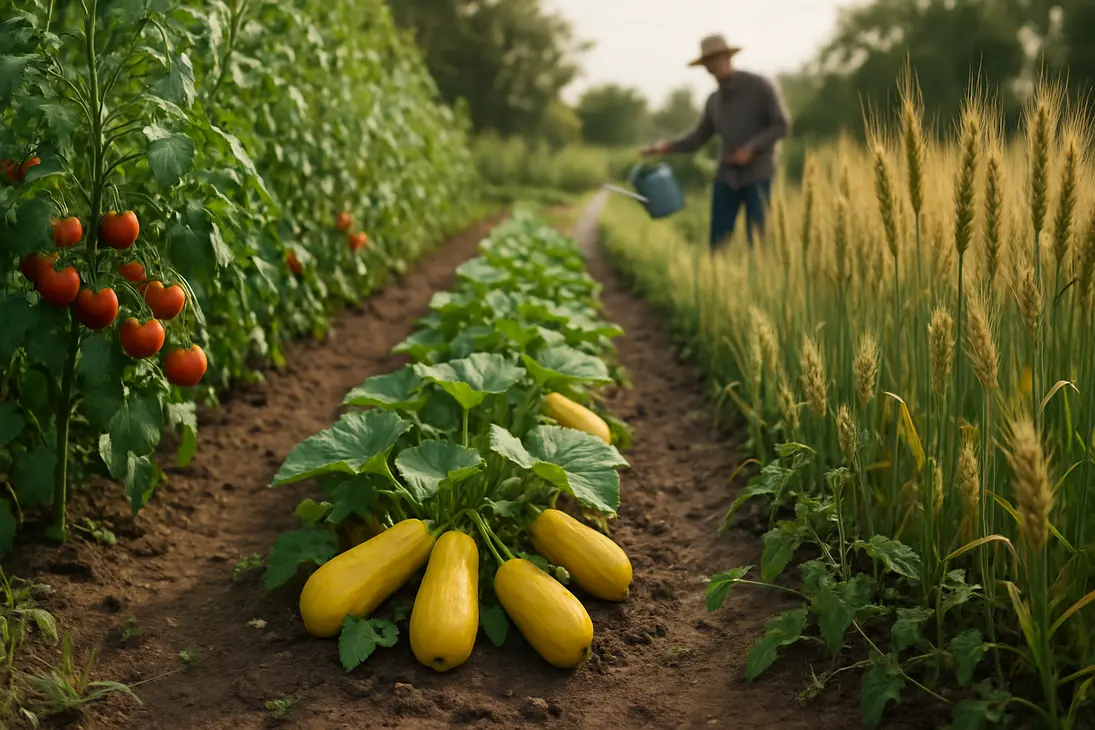
Domesticated species are often more fertile than their wild ancestors because humans have spent many generations favoring animals and plants that reproduce reliably. A cow that calves regularly, a hen that lays many eggs, a wheat plant with full grain heads, or a squash vine that sets abundant fruit is more useful to people than one that reproduces poorly.
But domestication does not make every species more fertile in every way. “Fertility” can mean age at first reproduction, number of eggs or seeds, litter size, conception rate, survival of young, or total lifetime reproductive success. Domesticated species often outperform wild relatives under human care, but may be less successful without that care.
The short answer is: humans selected for reproduction, then created environments where reproduction was easier.
Domestication Favors Animals and Plants That Reproduce Well
Domestication is not just taming. It is a long-term evolutionary process in which humans influence which individuals reproduce. Over many generations, those choices change the population.
In the wild, reproductive traits are shaped by food supply, predators, disease, weather, competition, and seasonal timing. In domesticated populations, humans shift the balance. Individuals that are useful, manageable, productive, and reliable are bred, planted, saved, or propagated. Individuals that are aggressive, unproductive, slow-maturing, or unreliable are less likely to leave descendants.
That creates a strong filter. If people consistently breed animals with larger litters, save seed from plants with heavier seed heads, or propagate fruit trees that bear well, fertility-related traits become more common.
Artificial selection for higher reproductive output
Artificial selection is human-directed selection. Instead of nature alone determining which individuals leave the most descendants, people choose animals and plants that serve human needs.
For animals, humans may select for:
- More eggs per year
- Larger litters
- Better conception rates
- Stronger mothering ability
- More frequent breeding cycles
- Calmer temperaments that make breeding easier
For plants, humans may select for:
- More seeds per plant
- Larger fruits
- Less seed shattering before harvest
- More uniform flowering
- More reliable pollination and seed set
Many crops are, in practical terms, selected reproductive organs. Tomatoes are fruits, wheat and corn are seeds, peas are seeds, and apples are fruits. Humans have repeatedly favored plants that put more energy into the parts people harvest.
In livestock, fertility matters because herds and flocks grow only when animals reproduce. A ewe that twins reliably, a sow that raises many piglets, or a hen that lays steadily gives people more food and more breeding stock.
Earlier sexual maturity and shorter generation intervals
Domesticated species are often selected to mature earlier than their wild relatives. Earlier maturity shortens the time between generations and increases reproductive opportunities.
In animals, this can mean a young female can conceive sooner. In plants, earlier flowering or fruiting can help a crop fit a shorter growing season, avoid drought, or allow more than one planting per year.
Shorter generation intervals also speed selection. If a plant flowers quickly, people can choose the best seed again and again. The same is true for animals with short reproductive cycles, such as chickens, pigs, rabbits, annual vegetables, and cereal crops.
There are tradeoffs. Earlier reproduction can reduce body development, longevity, or resilience if pushed too far. Good breeding balances output with health.
Reduced seasonality in breeding or flowering
Wild animals and plants often reproduce seasonally because timing affects survival. Young born in the wrong season may starve or freeze. Flowers that open when pollinators are absent may fail. Seeds that ripen during drought may not survive.
Domestication often reduces strict seasonality. Humans favor animals and plants that reproduce more predictably under managed conditions, such as poultry that lay across much of the year, livestock with more regular breeding cycles, crops that mature within a predictable harvest window, and greenhouse plants whose flowering can be influenced by light, temperature, and irrigation.
Biology still matters. Many species respond strongly to day length, temperature, nutrition, and stress. But domestication can broaden the conditions under which reproduction can happen.
Managed Environments Remove Many Limits on Fertility
Genetics is only part of the answer. Domesticated species also reproduce well because humans remove obstacles that wild species face constantly.
In the wild, an animal may be capable of producing many young but fail because food is scarce, predators are common, disease is high, or weather is harsh. A wild plant may produce many seeds, yet only a small fraction germinate and survive. Domesticated species are usually raised in environments where people reduce many of those losses.
More reliable nutrition and body condition
Reproduction is expensive. Producing eggs, seeds, milk, embryos, fruit, or tubers requires energy, water, minerals, and time. Animals in poor condition may delay breeding, fail to conceive, produce fewer eggs, or lose pregnancies. Stressed plants may abort flowers, produce fewer seeds, or make smaller fruits.
Managed environments improve fertility through regular feed or grazing, balanced rations, supplemental minerals, irrigation, fertile soil, weed control, and protection from severe stress during reproduction.
Genes set potential. Environment determines how much of that potential is expressed. A well-fed sow can support a larger litter than a wild pig struggling through a poor food year. A tomato plant with steady moisture and nutrients can set more fruit than a wild relative growing under drought and competition.
Lower losses from predators, disease, and climate stress
Wild reproduction includes enormous losses. Eggs are eaten. Seedlings dry out. Young animals are taken by predators. Parasites weaken mothers. Frost kills flowers. Disease spreads through stressed populations.
Domestication reduces many of these losses through fencing, housing, shelters, veterinary care, parasite control, nursery care, irrigation, frost protection, protected cropping, and timely harvest.
This matters because fertility is often confused with reproductive success. A wild plant may produce many seeds, but if almost none survive, its successful reproduction is low. A domestic crop may produce fewer total seeds than a wild weed, but because people plant, water, protect, and harvest it, far more offspring may survive under cultivation.
Human control of mating, planting, and reproduction timing
Humans also increase fertility by controlling when and how reproduction occurs.
In animals, this can include choosing breeding pairs, separating males and females until the desired time, using artificial insemination in some systems, avoiding breeding animals that are too young or unhealthy, and providing care around birth or hatching.
In plants, farmers and gardeners choose planting dates, space plants properly, save seed from desired individuals, hand-pollinate some crops, graft fruit trees, divide perennials, and use greenhouses or row covers to extend seasons.
This makes reproduction more efficient than in the wild. A farmer does not wait for seeds to fall randomly and hope they land in good soil. A breeder does not rely only on chance mating when trying to improve a line.
Fertility Comes With Tradeoffs
Higher fertility is not free. When domesticated species are selected for more reproduction or higher yield, energy and genetic emphasis may shift away from traits that matter in the wild.
A domestic breed may be highly fertile in a barn, coop, field, orchard, or garden, yet struggle outside human care.
More offspring can mean greater dependence on human care
Producing many offspring can create vulnerability. A sow with a large litter needs enough milk and body reserves. A high-laying hen needs sufficient calcium, protein, and energy. A crop plant bred for large fruit needs steady water and nutrients or it may abort flowers, split fruit, or suffer disease.
In wild conditions, producing too many offspring can be risky. If food becomes scarce, the parent may suffer and many young may die. Natural selection tends to favor reproductive strategies that fit the environment. Artificial selection often pushes reproduction toward what humans can support.
Remove feed, shelter, irrigation, pruning, pest control, and veterinary care, and the fertility advantage may shrink quickly.
Selection for production may weaken natural survival traits
When people strongly select for one useful trait, other traits can decline if they are not also protected.
Possible tradeoffs include:
- Reduced predator avoidance
- Poorer independent foraging
- Weaker escape behavior
- Lower heat, cold, or drought tolerance
- Greater need for assisted birth in some breeds
- Lower disease resistance in narrow lines
- Plant structures useful to humans but poor for wild dispersal
For example, many cereal crops have been selected so their seeds stay attached until harvest. This is excellent for farming because grain does not shatter before collection. In the wild, seed shattering helps plants spread. A non-shattering crop may be more productive for humans but less able to maintain itself without cultivation.
Inbreeding and narrow breeding lines can reduce fertility in some cases
Domestication can increase fertility, but careless breeding can reduce it. If a breed or variety comes from too few individuals, harmful recessive traits can become more common. Genetic diversity matters.
Inbreeding can lead to lower conception rates, smaller litters, higher embryo loss, birth defects, weaker offspring, reduced vigor in plants, and poorer disease resistance.
Hybrid vigor, by contrast, can sometimes improve growth and reproductive performance when genetically different lines are crossed. Good breeding programs consider output, health, longevity, structure, and genetic diversity.
Examples Across Domesticated Species
Not every domesticated species is more fertile in every way, but many show changes in reproductive output, timing, or reliability compared with wild relatives.
| Domesticated group | Common fertility-related change | Important caution |
|---|---|---|
| Chickens | Much higher egg production than wild junglefowl | High production depends on nutrition and care |
| Pigs | Larger litters and managed breeding | Very large litters may require more support |
| Cereal crops | More seeds retained for harvest | Often less able to disperse naturally |
| Fruit crops | Larger or more desirable fruits | Some are propagated by grafting, not seed |
| Dogs and cattle | Fertility varies widely by breed | Some specialized breeds have reproductive problems |
Chickens and egg production compared with wild junglefowl
Domestic chickens descend primarily from junglefowl, which are seasonal birds that lay clutches for reproduction. A wild hen does not benefit from laying hundreds of eggs a year. Egg production requires energy, and eggs are vulnerable to predators and weather.
Domestic chickens, especially egg-laying strains, have been selected for far more frequent laying. Humans also provide feed, collect eggs, protect hens, and manage lighting in some systems. Together, genetics and management allow egg output far beyond what would be useful or sustainable for a wild bird.
This is a clear example of domestication increasing one form of fertility: egg production. It does not mean every chicken is equally fertile or that high-laying hens would thrive in the wild.
Pigs and larger litters compared with wild boar
Domestic pigs have often been selected for larger litters, faster growth, and reliable reproduction. Wild boar are also capable breeders, but their reproductive success depends heavily on food, climate, predation, and disease.
In managed conditions, domestic sows receive steady feed and protection. Breeding can be timed, piglets can be monitored, and losses can be reduced. This makes larger litters more practical than they would be in harsher environments.
The tradeoff is that very large litters can stretch a sow’s ability to nurse and care for all piglets. More offspring is only useful if survival and health are maintained.
Crop plants selected for seed, fruit, or tuber yield
Many domesticated plants are more fertile or more productive because humans selected plants that gave the largest harvest.
Examples include grains selected for seed yield, beans and peas selected for pods and seeds, tomatoes and squash selected for fruit set and fruit size, potatoes and sweet potatoes selected for tubers or storage roots, sunflowers selected for larger seed heads, and fruit trees selected for fruit quality, size, and regular bearing.
In crops, “fertility” often overlaps with “yield.” A plant may produce larger seeds, bigger fruits, or more harvestable tissue rather than simply more offspring.
Seedless fruits are an important exception. A seedless grape may be valuable to people while having reduced fertility by seed. Such plants are maintained by cuttings, grafting, or other propagation methods. This shows why definitions matter.
Dogs, cattle, and other cases where fertility varies by breed
Domestication does not affect every breed equally. In dogs, fertility varies with body size, anatomy, genetic diversity, and breed history. Some breeds reproduce naturally with few issues, while others may have smaller litters or need more assistance.
Cattle also vary. Some breeds are selected for milk, others for beef, heat tolerance, grazing ability, calving ease, or fertility under low-input conditions. A high-producing dairy cow may require excellent nutrition to maintain fertility. A hardy range breed may produce less milk but breed more reliably under rough conditions.
The same pattern appears across sheep, goats, horses, rabbits, and cultivated plants: domestication creates potential, but breed goals and management shape the result.
Are Domesticated Species Always More Fertile?
No. Domesticated species are often more fertile in human-managed environments, but not always. Some wild species are naturally prolific. Some domesticated breeds have reduced fertility. Some crops are selected for traits that reduce natural reproduction.
The statement “domesticated species are more fertile” is a common pattern, not a universal law.
Fertility vs. reproductive success
Fertility usually means the ability to produce offspring: eggs, sperm, seeds, embryos, litters, or viable young. Reproductive success asks how many offspring survive and reproduce themselves.
A wild plant may scatter thousands of seeds, but if only a few survive, its reproductive success may be modest. A domesticated plant may produce fewer seeds, but humans may plant them in prepared soil, water them, protect them, and save the best offspring.
Likewise, a wild animal may conceive easily but lose many young to predators or weather. A domestic animal may have fewer survival skills but raise more young because humans provide shelter and care.
When comparing wild and domestic species, ask what is being measured: conception, eggs laid, seeds produced, litter size, survival to weaning, harvest yield, or long-term survival without people.
Highly specialized breeds with reduced natural breeding ability
Some domesticated breeds have been selected so strongly for appearance, production, or body shape that natural fertility suffers. Problems can include difficulty mating, difficulty giving birth, poor maternal behavior, low sperm quality, or pregnancy loss.
In plants, some cultivated varieties produce little viable seed, require a pollination partner, depend on grafting, or are propagated clonally because seed-grown offspring do not come true to type. Bananas, seedless grapes, many fruit trees, and ornamental plants show how human usefulness can become separated from natural fertility.
These cases show that humans do not always select for natural reproduction. Sometimes we select for fruit quality, flower form, meat yield, milk production, coat type, compact growth, or uniform harvest instead.
Wild species that already reproduce rapidly
Many wild species are already extremely fertile. Weeds, rodents, insects, fish, and many annual plants can reproduce rapidly without domestication. High fertility is one reason some wild species become pests.
Domestication often redirects fertility toward human goals. A wild grass may produce many small, easily scattered seeds. A domesticated grain crop may produce larger seeds that stay on the plant until harvest. A wild bird may lay enough eggs to replace itself in a risky environment. A domestic hen may lay far more because humans feed and protect her.
Conclusion
Domesticated species are often more fertile than their wild ancestors because humans repeatedly selected individuals that reproduced well: earlier maturity, larger litters, more eggs, more seeds, reliable flowering, or heavier fruiting. At the same time, domesticated animals and plants usually live in safer, richer environments where food, water, shelter, veterinary care, irrigation, pest control, and planned breeding reduce the limits faced by wild populations.
But higher fertility comes with tradeoffs. Productive animals and crop plants may depend heavily on human care. Narrow breeding lines can lose vigor. Some specialized breeds and varieties have reduced natural reproductive ability. And some wild species are already highly prolific.
Domestication does not automatically make life more fertile. Humans select for the kinds of reproduction they value, then create conditions that allow those traits to show.
FAQ
Why would humans select for fertility during domestication?
Humans selected for fertility because reproduction determines supply. More fertile animals and plants produced more meat, milk, eggs, fiber, seed, fruit, tubers, or future breeding stock.
A farmer saving seed would favor plants that produced well. A herder would keep animals that bred reliably and raised healthy young. Over many generations, those choices increased fertility-related traits in many domesticated lines.
Is higher fertility caused by genetics or by better living conditions?
Usually both.
Genetics sets the potential. A chicken bred for egg production has different reproductive potential from a wild junglefowl. A modern grain crop has been selected for traits that increase harvestable seed yield.
Living conditions determine how much of that potential is reached. Poor feed, heat stress, disease, drought, overcrowding, or mineral deficiencies can reduce fertility even in selected domestic breeds. Good management improves nutrition, health, timing, and offspring survival.
Do domesticated animals lose fertility if returned to the wild?
They may not lose fertility immediately, but their reproductive success often drops without human care. A domestic animal might still breed, lay eggs, or give birth, yet struggle to find food, avoid predators, resist disease, or protect its young.
Some domesticated species can become feral and reproduce successfully, such as pigs, goats, cats, and some poultry in suitable environments. Others are too dependent on people or too specialized to thrive. The outcome depends on species, breed, climate, predators, food supply, and remaining survival ability.
Is domestication the same as genetic modification?
No. Domestication and genetic modification are different processes.
Domestication is long-term selection across generations. Humans choose which animals or plants reproduce, and natural genetic variation shifts over time.
Modern genetic modification directly alters genetic material using laboratory techniques. Both can affect fertility-related traits, but domestication is much older and usually works through repeated selection rather than direct gene editing.
You Might Also Like