Agriculture vs Plants: What’s the Difference?
The difference between agriculture vs plants is simple: plants are living organisms, while agriculture is the human practice and system of producing useful goods from plants, animals, and other farm resources.
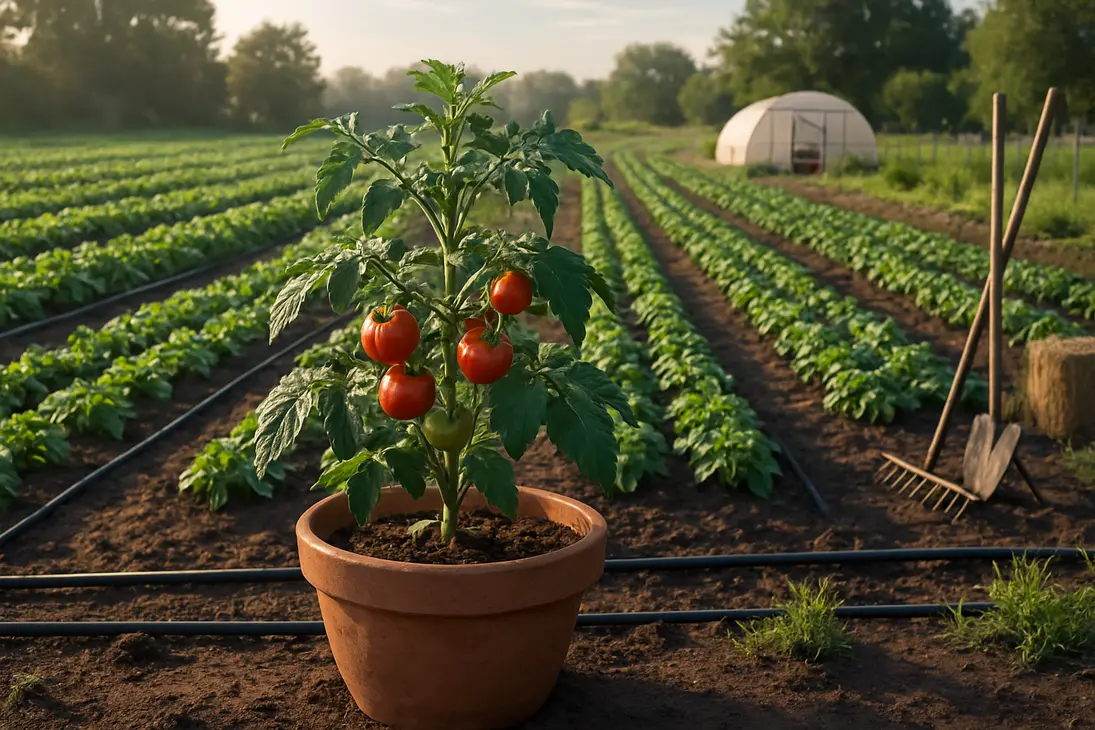
A tomato plant growing in a pot is a plant. A farm that grows tomato plants, manages soil, irrigation, pests, harvest, labor, storage, and sales is agriculture. They are closely connected, but they are not the same thing.
Core Concepts
What Does “Plants” Mean?
Plants are living organisms in the plant kingdom. They include trees, grasses, flowers, shrubs, vegetables, herbs, crops, mosses, ferns, vines, aquatic plants, and wild plants.
Most plants make their own food through photosynthesis, using sunlight, water, carbon dioxide, and minerals. Depending on the species, they may have roots, stems, leaves, flowers, seeds, spores, bulbs, tubers, or runners.
Plants grow in many places:
- Forests, meadows, wetlands, and deserts
- Farms, gardens, orchards, and greenhouses
- Pots, balconies, homes, and public landscapes
- Rivers, ponds, and other aquatic environments
The key point is that a plant is a living thing, whether humans use it or not. A plant becomes part of agriculture only when people intentionally cultivate, manage, harvest, or produce it for a purpose.
What Does “Agriculture” Mean?
Agriculture is the human practice, science, business, and industry of cultivating plants and raising animals for human use. It includes producing food, fiber, fuel, medicine, ornamentals, livestock feed, and raw materials.
Agriculture can involve soil, water, crops, animals, machinery, labor, storage, processing, markets, regulations, and risk management. It is not just planting seeds; it is an organized production system.
Examples include:
- Growing wheat for flour
- Raising cattle for milk or meat
- Producing cotton for fabric
- Managing an apple orchard
- Growing herbs commercially
- Running a greenhouse that sells seedlings
Agriculture may be small-scale, large-scale, organic, conventional, regenerative, hydroponic, mechanized, or labor-intensive. What makes it agriculture is organized production for human needs.
Agriculture vs Plants: The Key Difference
The key difference is:
Plants are organisms. Agriculture is an activity or system that may use plants.
A plant can exist without agriculture. Forest trees, prairie grasses, pond algae, and wild berries grow in natural ecosystems. Agriculture is something humans do. It usually involves plants, but it may also involve animals, fungi, aquaculture, and other managed products.
| Point of comparison | Plants | Agriculture |
|---|---|---|
| What it is | Living organisms | Human practice, science, and industry |
| Human involvement | May be absent or present | Always involves management |
| Purpose | Growth, survival, reproduction | Producing useful goods or income |
| Examples | Tomato plant, oak tree, grass | Tomato farming, wheat production, dairy farming |
Category: Living Organism vs Human Practice
A plant is a biological organism. It grows, uses water and nutrients, responds to light and temperature, and reproduces.
Agriculture is not an organism. It is a human practice involving choices: what to grow, when to plant, how to irrigate, how to manage pests, when to harvest, and how to sell or use the product.
For example, lettuce is a plant. Lettuce farming is agriculture because it involves selecting varieties, preparing soil or growing media, planting, watering, protecting the crop, harvesting, cooling, packing, and transporting.
Purpose: Natural Life vs Production for Human Use
Plants grow as part of their own life cycle. A wild apple tree produces flowers and fruit for reproduction, not because it is trying to feed people.
Agriculture directs plant or animal growth toward human use: food, clothing, shelter materials, fuel, medicine, decoration, trade, or profit.
This changes the priorities. In nature, a plant needs to survive and reproduce. In agriculture, people often want higher yield, uniform size, better flavor, disease resistance, longer storage life, predictable harvest dates, or marketable appearance.
Scope: Individual Plants vs Large-Scale Systems
The word “plant” can refer to one organism or to plants as a group: one pepper plant, a row of lavender plants, or all flowering plants.
Agriculture usually refers to a broader system. Even a small farm connects soil health, irrigation, seed sourcing, pest management, labor, equipment, weather risk, storage, regulations, and customers.
Agriculture does not have to be huge. A two-acre vegetable farm is still agriculture if it produces crops for sale or organized human use.
Examples: A Tomato Plant vs Tomato Farming
A tomato plant is a plant. It has roots, stems, leaves, flowers, and fruit. You might grow one in a balcony container and harvest tomatoes for your kitchen.
Tomato farming is agriculture. It may involve variety selection, soil testing, irrigation, trellising, pest monitoring, fertilization, harvest planning, packing, transport, and sales. The tomato plant is the living organism; tomato farming is the system built around producing tomatoes.
How Plants Are Used in Agriculture
Plants are central to much of agriculture. Farms grow crops for food, animal feed, textiles, fuel, medicine, ornamentals, and industrial materials. Still, agriculture is broader than plants because it can also include livestock, poultry, dairy, aquaculture, and other farm enterprises.
Food Crops
Food crops are plants grown so people can eat their roots, stems, leaves, flowers, seeds, or fruits.
Common examples include:
- Grains: wheat, rice, corn, barley, oats
- Vegetables: tomatoes, lettuce, carrots, onions, peppers
- Fruits: apples, oranges, bananas, grapes, berries
- Legumes: beans, peas, lentils, chickpeas, soybeans
- Roots and tubers: potatoes, sweet potatoes, cassava, beets
- Nuts, seeds, herbs, and spices: almonds, sunflower seeds, basil, ginger, cumin
A rice paddy, wheat field, greenhouse tomato operation, and small vegetable farm are all agriculture, but each requires different skills, tools, and conditions.
Fiber, Fuel, and Industrial Crops
Not all agricultural plants are grown for direct eating. Many are raw materials.
Fiber crops such as cotton, flax, hemp, and jute can become fabric, rope, paper, or other materials.
Fuel crops include plants used for bioenergy, such as corn for ethanol, oilseed crops for biodiesel, or grasses and woody plants for biomass.
Industrial crops may supply oils, starches, dyes, resins, rubber, waxes, or sugar. Examples include soybeans, canola, sugarcane, rubber trees, and oil palms, depending on the region.
These crops show that agriculture is not limited to food. It produces many plant and animal materials used throughout daily life.
Feed Crops for Livestock
Many agricultural plants are grown to feed animals rather than people directly. Livestock agriculture depends heavily on plant production.
Feed crops include:
- Hay from grasses, alfalfa, or clover
- Corn silage and grain corn
- Soybean meal
- Barley, oats, and sorghum
- Pasture grasses
- Grazed cover crops
A dairy farm may manage cows while also growing or buying forage and grain. A cattle operation may involve animal husbandry, pasture management, hay production, water systems, soil fertility, and crop rotations. Agriculture is often a linked system, not a single activity.
Ornamental and Specialty Crops
Agriculture also includes ornamental and specialty plant production. These crops may not feed people, but they still require cultivation, planning, labor, and markets.
Examples include:
- Cut flowers
- Nursery trees and shrubs
- Bedding plants and houseplants
- Turfgrass
- Christmas trees
- Medicinal and culinary herbs
- Specialty crops for cultural, culinary, or craft uses
A greenhouse growing poinsettias for holiday sales is agriculture. So is a nursery producing fruit trees, landscape shrubs, or vegetable seedlings. The plants are organisms; the production system around them is agriculture.
Related Terms Often Confused With Agriculture and Plants
People often confuse agriculture with botany, horticulture, gardening, or simply growing plants. These terms overlap, but they are not identical.
| Term | Main meaning |
|---|---|
| Plants | Living organisms in the plant kingdom |
| Agriculture | Production of plants, animals, and farm products for human use |
| Botany | Scientific study of plants |
| Horticulture | Intensive cultivation of garden and specialty crops |
| Gardening | Growing plants, often at home or in landscapes |
| Plant cultivation | Intentionally growing plants for many possible purposes |
Agriculture vs Botany
Botany is the scientific study of plants. It examines plant structure, classification, physiology, reproduction, genetics, and ecology.
Agriculture applies plant knowledge, animal knowledge, soil science, economics, engineering, and management to production.
A botanist may study tomato flower anatomy or disease-resistance genetics. A farmer uses practical knowledge, including botany, to produce a tomato crop. Botany’s main goal is understanding plants; agriculture’s main goal is producing usable goods.
Agriculture vs Horticulture
Horticulture is a branch of agriculture focused on intensive cultivation of garden and specialty crops. It commonly includes fruits, vegetables, flowers, ornamental plants, nursery crops, herbs, and landscape plants.
Agriculture is broader. It includes horticulture, but also grain farming, livestock, dairy, poultry, fiber crops, feed crops, and broad-acre field crops.
A simple way to think about it:
- Agriculture is the larger field.
- Horticulture is a specialized part of plant agriculture.
Examples of horticulture include apple orchards, greenhouse cucumbers, cut flowers, nurseries, and intensive herb or vegetable production. Examples of agriculture outside typical horticulture include wheat farming, cotton farming, cattle ranching, dairy farming, and large-scale hay production.
There is gray area. Vegetable farming can be both agriculture and horticulture. A commercial greenhouse can also be both.
Agriculture vs Gardening
Gardening is growing and caring for plants, usually on a small scale, often for personal food, beauty, enjoyment, or household use. It can happen in a backyard, balcony, community garden, school garden, greenhouse, or indoor space.
Gardening overlaps with agriculture because both involve plant cultivation. The difference is usually purpose, scale, and organization.
For example:
- Growing five tomato plants for your family is gardening.
- Growing five acres of tomatoes for sale is agriculture.
- Planting flowers for beauty is gardening.
- Producing thousands of bedding plants for retail sale is agriculture, often horticulture.
The line can blur. A market gardener selling vegetables from a small plot may be practicing small-scale agriculture. A community garden that donates large amounts of produce may also have agricultural features.
Growing Plants vs Practicing Agriculture
Growing plants means helping plants live and develop. You can grow plants for decoration, food, education, research, habitat, therapy, hobby, business, or conservation.
Practicing agriculture means growing plants or raising animals as part of a purposeful production system.
If you start basil seeds on a windowsill for fresh herbs, you are gardening. If you produce basil in a greenhouse, manage disease pressure, harvest weekly, package it, and sell it to restaurants, you are practicing agriculture.
In short: all agriculture involves management, but not all plant growing is agriculture.
Why the Difference Matters
Understanding the difference between agriculture and plants is useful in school, careers, gardening, farming, and everyday communication.
In school, plant cells, photosynthesis, flowers, and classification belong mostly to biology or botany. Crop production, livestock, irrigation, farm economics, food supply, and soil management belong to agriculture.
For careers, “loving plants” can lead to botany, horticulture, landscape design, plant breeding, agronomy, forestry, ecology, greenhouse management, nursery production, or agricultural business. Each works with plants differently.
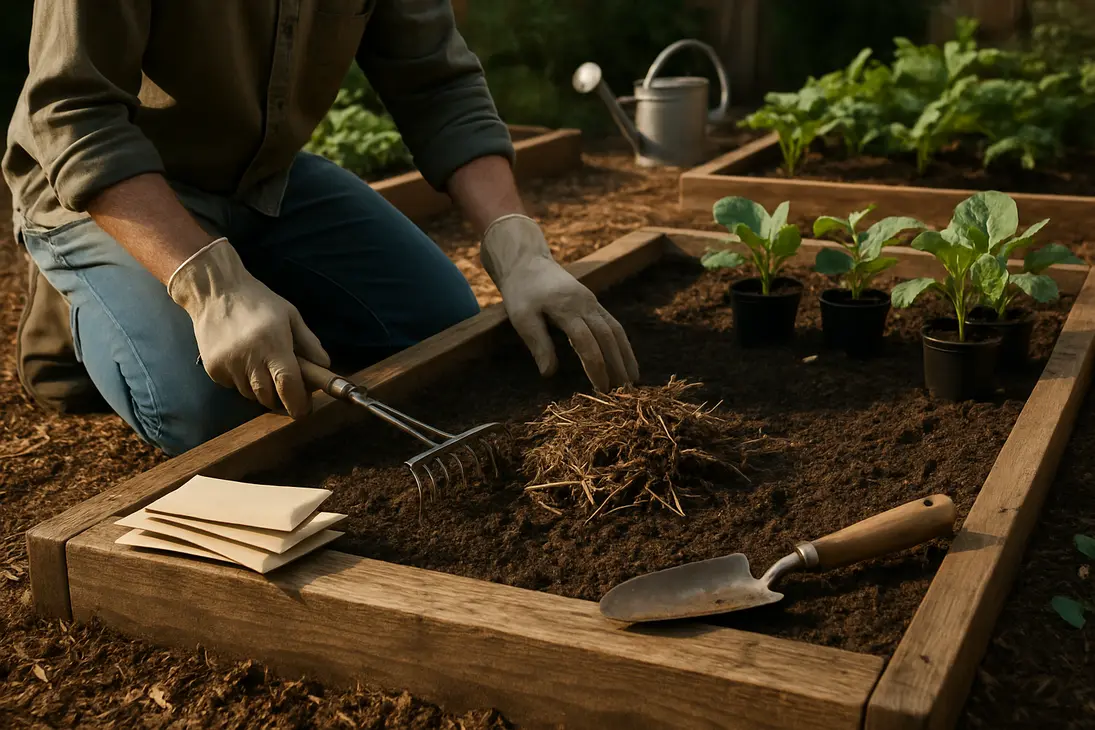
For gardeners, the distinction prevents unrealistic comparisons. Caring for raised beds is not the same as running a commercial vegetable farm. A home gardener may choose varieties for flavor or beauty, while a farmer must also consider labor, equipment, yield, timing, storage, regulations, and market price.
For farmers, the distinction clarifies that plants are only one part of agriculture. A crop farm also depends on soil, water, climate, machinery, labor, finance, market access, and risk management.
It also helps public conversations. “Plants” may refer to ecology, gardening, houseplants, native species, or biology. “Agriculture” may refer to food systems, rural economies, land use, livestock, environmental impacts, or technology.
Conclusion
Plants and agriculture are closely connected, but they are not the same.
Plants are living organisms—trees, grasses, flowers, vegetables, crops, wild species, and houseplants. They grow in forests, gardens, farms, wetlands, deserts, homes, and many other environments.
Agriculture is the organized human practice of producing plants, animals, and other farm products for human needs. It may involve crops, livestock, fiber, fuel, feed, medicine, ornamentals, soil management, water systems, markets, machinery, and labor.
A tomato plant is a plant. Tomato farming is agriculture. A wild grass is a plant. A managed hayfield is agriculture. A rose bush is a plant. A nursery producing roses for sale is agriculture, specifically horticulture.
In simplest terms: plants are what may be grown; agriculture is the system people use to grow, raise, harvest, and produce useful goods from living resources.
FAQ
Are plants the same as agriculture?
No. Plants are living organisms. Agriculture is the human practice and system of cultivating plants and raising animals for food, fiber, fuel, feed, medicine, and other products.
A tree in a forest or a wildflower in a meadow is a plant, but it is not agriculture unless people manage it as part of a production system.
Can agriculture exist without plants?
Agriculture can include animal production, such as dairy, poultry, sheep, goats, pigs, cattle, and aquaculture, so it is not limited to plants alone.
However, agriculture rarely exists completely apart from plants. Livestock systems usually depend on pasture, hay, forage crops, feed grains, or managed landscapes.
Is gardening considered agriculture?
Sometimes, but not always.
Gardening is usually small-scale plant growing for personal food, beauty, relaxation, or household use. Agriculture is organized production, especially when it involves sales, larger scale, livestock, or farm management systems.
A backyard vegetable bed is usually gardening. A small market garden selling produce can be agriculture. The difference depends on purpose, scale, organization, and whether the plants are part of a production enterprise.
What is the difference between agriculture and horticulture?
Agriculture is the broader field of producing plants, animals, and farm products for human use. Horticulture is a branch of agriculture focused on intensively grown crops such as fruits, vegetables, flowers, ornamentals, herbs, nursery crops, and landscape plants.
All horticulture fits within agriculture in a broad sense, but not all agriculture is horticulture. Wheat farming, cattle ranching, dairy production, and cotton farming are agriculture, but they are not usually called horticulture.
You Might Also Like