Why Aeration Matters for Potted Plants
Aeration for potted plants is the balance of air and water inside the potting mix. A plant may have enough light and regular watering, but if the mix stays dense, soggy, or compacted, roots cannot function well.
Good aeration does not mean dry soil. It means the mix has pore spaces that hold some moisture while letting excess water drain and oxygen return to the roots. This matters more in pots than in the ground because roots are confined to a small soil volume.
What Aeration Means in a Potted Plant
Soil aeration is the movement of air through spaces between potting mix particles such as peat, coir, bark, compost, perlite, pumice, sand, or rice hulls.
When you water, water fills many of those spaces. As excess water drains, air moves back in. A good mix has small pores that hold moisture and larger pores that drain and refill with air. Poorly aerated soil has too few open spaces because it is too fine, compacted, decomposed, or wet for too long.
Why roots need oxygen
Roots are living tissue. They absorb water and nutrients, grow new tips, and support leaves and stems. To do that, root cells need oxygen.
When oxygen is limited, roots slow down or die. The plant may wilt even though the soil is wet because damaged roots cannot move water upward properly. Wet soil plus wilting leaves is often a warning sign, not a reason to water more.
How pots make aeration harder than garden soil
Garden soil has depth, natural cracking, soil organisms, and room for water to move sideways and downward. Roots may escape a temporarily wet area.
A pot has sides, a bottom, and limited soil volume. If the mix is saturated, roots cannot move to a drier, oxygen-rich zone. Without drainage holes, excess water has nowhere to go. Even with holes, a dense mix can stay wet around the roots.
Potting mixes also settle over time. Organic ingredients break down into finer particles, roots fill the container, and air pockets collapse. A mix that started well can become poorly aerated later.
Why Poor Aeration Harms Potted Plants
Poor aeration changes the root zone from moist and breathable to wet, dense, and oxygen-poor. Roots need water, but they also need air.
Waterlogged soil and root suffocation
Waterlogged mix is soil where excess water has displaced much of the air. Oxygen moves slowly, roots weaken, and new growth may become smaller, paler, or delayed.
If the problem continues, root tips can die. Weak roots are more vulnerable to root rot organisms that thrive in wet, stagnant conditions. Water alone does not cause rot, but wet, airless soil makes rot much more likely.
Compaction and blocked air pockets
Compaction happens when particles are pressed together or break down until pore spaces shrink. In containers, common causes include:
- Heavy garden soil
- Potting mix packed too firmly
- Old, collapsed mix
- Fine compost or silt settling in the pot
- Peat-heavy mix drying hard
- Roots filling the container tightly
Compacted soil may drain slowly, pool water on the surface, or send water down the sides without wetting the root ball evenly. In each case, roots lose the normal wet-dry-air cycle they need.
How poor aeration affects growth and plant health
Poor aeration can look like underwatering, nutrient deficiency, or general weakness. Common signs include:
- Yellowing lower leaves
- Wilting while soil is wet
- Slow or stalled growth
- Leaf drop
- Weak stems
- Brown, black, mushy, or hollow roots
- Fungus gnats
- Sour or swampy soil smell
Fertilizer usually will not fix the problem. Stressed roots cannot absorb nutrients efficiently, and extra fertilizer can add salt stress in a poorly draining pot.
Signs Your Potted Plant Needs Better Aeration
Look at the plant and soil together. Before watering again, check the mix with a finger or wooden skewer, lift the pot to judge weight, watch how fast water drains, and smell near the drainage holes if rot is suspected.
Yellowing leaves or wilting despite wet soil
Wilting often makes people water immediately, but if the soil is already wet, more water can make things worse. Wet-soil wilting suggests roots are oxygen-starved, damaged, or starting to rot.
Yellowing lower leaves can also appear when roots struggle, but it may have other causes such as low light, nutrient issues, seasonal changes, or natural aging. Always check moisture and drainage before diagnosing.
Slow growth, leaf drop, or weak stems
A plant in poorly aerated soil may stay alive but barely grow. It may produce smaller leaves, drop older leaves, or develop weak stems because roots cannot support steady water and nutrient movement.
This is especially common indoors when low light, frequent watering, and dense mix occur together. Low light slows water use, so the pot stays wet longer.
Sour-smelling soil, fungus gnats, or mushy roots
Healthy potting mix usually smells earthy. Sour, rotten, swampy, or stagnant odors suggest the mix has been wet and low in oxygen too long.
Fungus gnats are another clue. A few gnats are not proof of root damage, but they are attracted to consistently moist organic matter. If gnats appear with slow drainage and plant decline, aeration and watering need attention.
If you remove the plant, healthy roots are usually firm and pale to tan. Rotten roots may be brown or black, mushy, hollow, or easy to pull apart.
Water sitting on the surface or draining too slowly
If water sits on top before soaking in, the mix may be compacted, crusted, hydrophobic, or too fine. If water takes a long time to exit the drainage hole, the mix may be holding too much moisture.
If water runs instantly down the sides while the root ball stays dry, the mix may have pulled away from the pot or become hard to rewet. A good mix should accept water, hold some moisture, and release the excess.
How to Improve Aeration in Potted Plants
Improving aeration usually means using a better mix, choosing a draining pot, watering correctly, and repotting when the mix breaks down.
Use a well-draining potting mix
Avoid plain garden soil for most potted plants. Use a container mix that stays light enough for water and air movement.
| Plant type | Better mix texture | Notes |
|---|---|---|
| Tropical foliage plants | Light, moisture-retentive, with perlite or bark | Good for pothos, philodendron, peace lily, and many calatheas |
| Succulents and cacti | Gritty, fast-draining | Needs more air space and less water retention |
| Herbs in pots | Free-draining | Basil likes more moisture than rosemary or thyme |
| Orchids | Chunky, bark-based | Many need air around roots |
| Large indoor plants | Structural mix with bark, pumice, or coarse material | Resists compaction longer |
If a bagged mix feels heavy, muddy, or mostly fine compost, amend it before using it in containers.
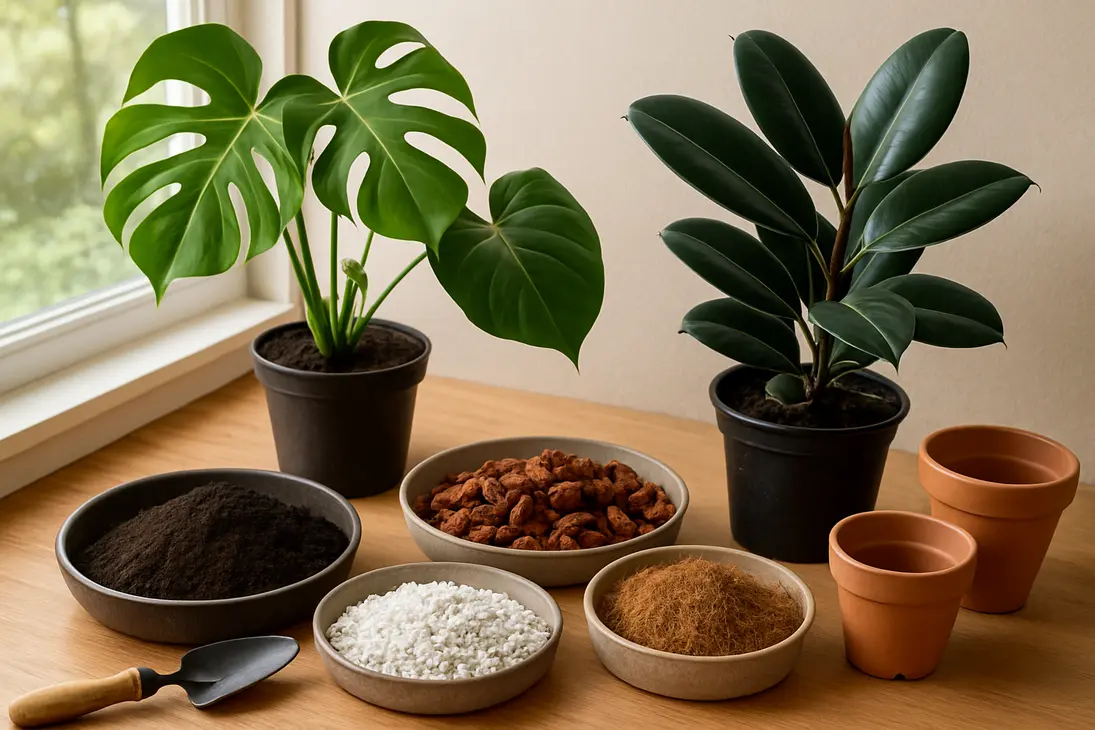
Add aerating materials like perlite, pumice, bark, or rice hulls
Aerating amendments create larger pore spaces.
- Perlite is light, common, and improves drainage, though it can float upward.
- Pumice is heavier and more stable, useful for succulents and long-term plantings.
- Orchid bark or pine bark fines add structure and chunkiness, especially for aroids.
- Rice hulls improve texture and reduce compaction for a time, but they break down.
For many houseplants, adding perlite, pumice, or bark to standard potting mix is enough. Succulents and cacti need a much grittier mix than tropical foliage plants. Rice hulls should be treated as an aeration and structure aid, not a meaningful fertilizer source.
Choose pots with drainage holes
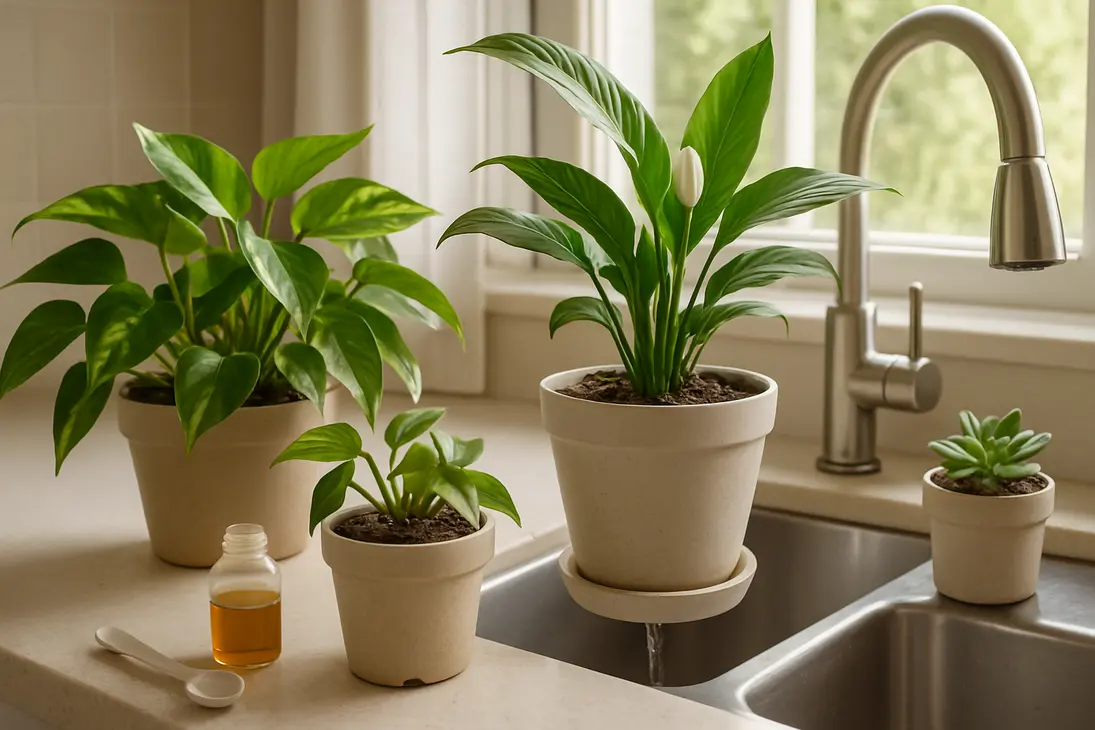
Drainage holes are essential for most potted plants. Without them, excess water collects at the bottom and creates a saturated zone even when the top looks dry.
Decorative cachepots are fine if the plant stays in a nursery pot inside them. Remove the inner pot to water, let it drain fully, and empty water from the outer pot.
A gravel layer does not replace a drainage hole. It reduces root space while water can still remain trapped above or within the container.
Water deeply, then let the mix partly dry
Good watering supports aeration. Shallow, frequent sips keep the top damp and can encourage fungus gnats. Constant watering prevents air from returning to the mix.
For most potted plants, water thoroughly until excess drains from the bottom. Then wait until the plant reaches its preferred dryness before watering again. Many tropical plants can dry in the top inch or two; succulents and cacti usually need most of the pot to dry.
Do not rely on a strict calendar. Pot size, light, temperature, humidity, plant size, and mix type all affect drying time.
Repot when soil becomes compacted or roots are crowded
Even good mix ages. Organic ingredients decompose, particles become finer, and the soil settles. If water drains slowly, the plant dries unevenly, or roots circle tightly, repotting may be needed.
Repotting does not always mean a much bigger pot. Often, the best fix is fresh airy mix and only one pot size up. Oversized pots can stay wet because there is more soil than the roots can use.
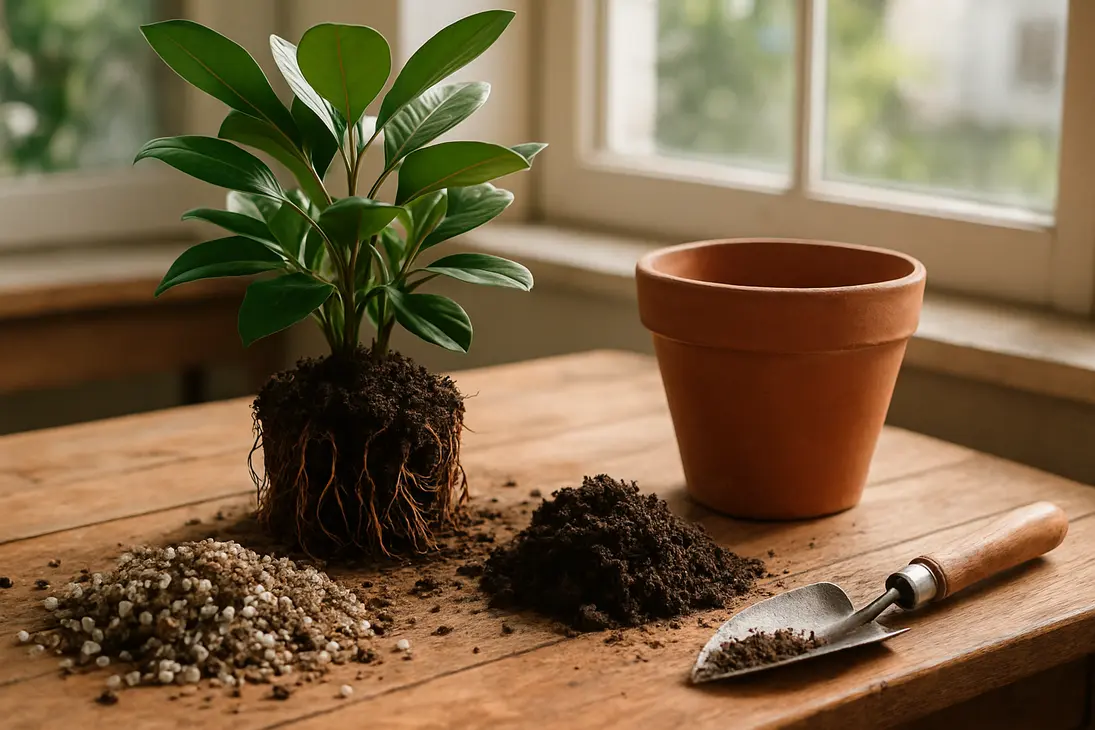
When repotting:
- Loosen circling outer roots gently.
- Remove sour or collapsed mix where practical.
- Use fresh mix suited to the plant.
- Firm lightly, not tightly.
- Avoid pressing the mix into a hard block.
Common Aeration Mistakes to Avoid
Most aeration problems come from well-intentioned habits: watering too often, packing soil firmly, or using garden soil because it seems natural.
Keeping the soil constantly wet
Many plants like even moisture, but evenly moist does not mean airless. Soil that never partially dries becomes oxygen-poor. If unsure, wait and check again. A slightly dry plant is often easier to save than one with rotting roots.
Using heavy garden soil in containers
Garden soil may work in the ground but compact badly in pots. It can drain slowly and become heavy after watering. Container mixes are designed to maintain pore space in a limited volume.
Packing soil too tightly when potting
A plant should be stable, but the mix should not be compressed hard. Tap the pot to settle the mix, then firm lightly around the root ball. Watering will settle it further; add more mix if the level drops.
Treating rice hulls as a nutrient source instead of an aeration aid
Rice hulls can help keep a mix open, but they are not a fertilizer replacement. Because they break down, they are less permanent than pumice or some mineral amendments. Use them for texture, not feeding.
How to Save a Waterlogged Potted Plant
If a plant is in muddy, oxygen-poor soil, remove excess water, restore air, and decide whether repotting is needed.
Empty standing water and remove the saucer overflow
Empty the saucer, tray, cachepot, or decorative outer container. If the pot is sitting in water, lift it out immediately.
Do not fertilize a waterlogged plant or keep adding water. The priority is oxygen.
Let the pot drain and dry in a bright, airy spot
Move the plant to bright, indirect light with good air movement. Avoid harsh direct sun while roots are stressed.
If the pot is very wet, tilt it slightly so water can leave the drainage holes. You can also set it briefly on a towel or newspaper to wick moisture from the bottom.
Gently aerate the surface if the plant is stable
If the plant is secure, gently loosen the top layer with a chopstick, skewer, or small fork. Avoid tearing major roots.
Poking a few channels can help surface crusting, but it will not fix rotten roots or a dense, collapsed mix. Treat it as temporary help.
Repot if the soil smells bad or roots are rotting
If the soil smells sour or roots are mushy, remove the plant and inspect the roots. Trim roots that are clearly dead, mushy, or hollow with clean tools. Keep firm, healthy roots.
Repot into fresh, airy mix in a container with drainage holes. Choose a pot only slightly larger than the remaining healthy root system. Water lightly to settle the mix if needed, then give the plant time to recover.
Conclusion
Good aeration keeps potted plant roots alive by letting oxygen move through the mix while excess water drains. Use a well-draining mix, add aerating materials when needed, choose pots with drainage holes, and water only when the plant is ready. Repot when the mix collapses or roots become crowded.
FAQ
How often should I aerate soil in potted plants?
Most potted plants do not need routine manual aeration if they are in good mix and a draining pot. Watch for slow drainage, crusting, sour smell, or wilting while wet.
Refreshing or repotting every year or two is common for many houseplants, but timing depends on growth rate, pot size, and mix ingredients.
Can I poke holes in potting soil to improve aeration?
Yes, you can gently poke holes with a chopstick, skewer, or similar tool to loosen compacted surface soil. Be careful around roots.
This is temporary. If the whole pot is dense, waterlogged, or sour-smelling, repotting into fresher, airier mix is usually better.
Are rice hulls good for aerating indoor potted plants?
Rice hulls can improve aeration and reduce compaction in indoor potting mixes. They are lightweight and help create a more open texture.
They break down over time and should not be treated as fertilizer. For longer-lasting structure, consider pumice, perlite, or bark.
Is poor aeration the same as overwatering?
No, but they are closely related. Overwatering fills air spaces with water, causing poor aeration. Poor aeration can also come from compacted, decomposed, fine-textured soil or a pot without drainage.
Healthy roots need both moisture and oxygen.
Sources
- Quora discussion on common potted plant mistakes: https://www.quora.com/What-are-some-careless-ignorant-but-common-mistakes-people-make-with-their-plants
- Quora discussion on rice hulls for indoor potted plants: https://www.quora.com/How-do-I-properly-use-rice-hulls-to-increase-nutrients-and-aeration-in-soil-for-indoor-potted-plants-How-can-I-effectively-counter-nitrogen-depletion-as-the-rice-Hulls-break-down
- Quora discussion on saving waterlogged potted plants: https://www.quora.com/How-do-you-save-waterlogged-potted-plants
You Might Also Like