How Should You Water Bonsai Trees Without Following a Strict Schedule?
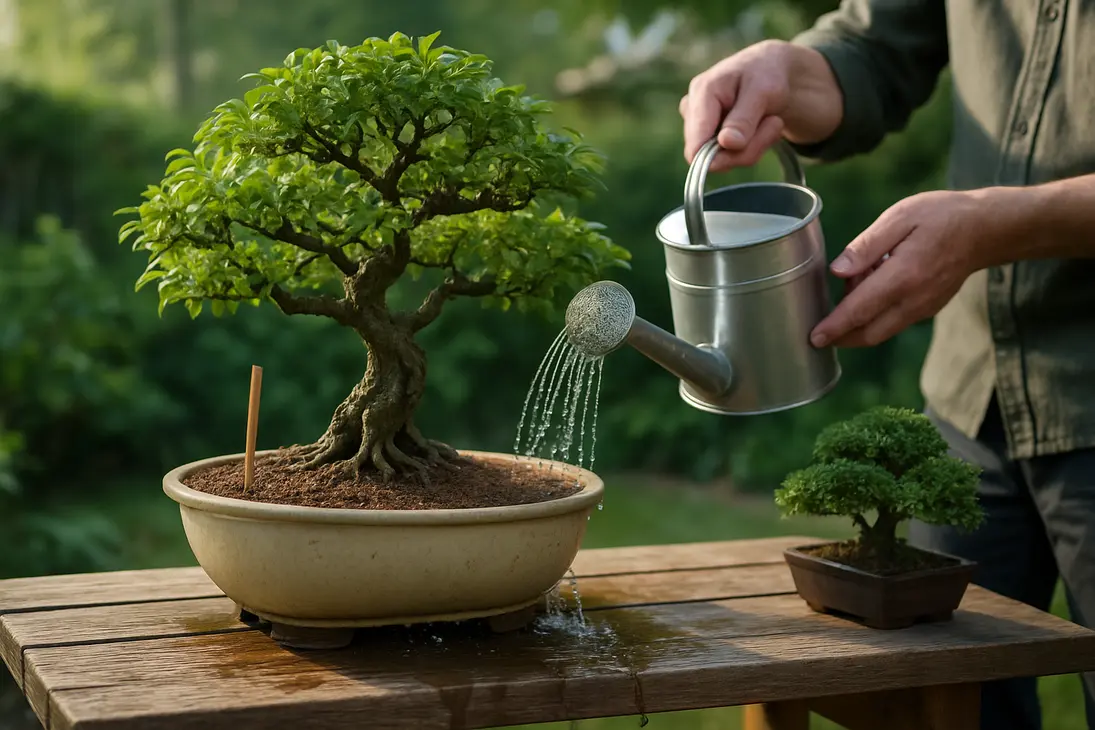
Watering bonsai well is not about choosing a fixed day or time. It is about reading the soil, tree, pot, and weather. A bonsai in a shallow pot can dry quickly, but it should not be watered automatically every morning. Some days it may need water twice. Other days it may not need water at all.
The safest habit is simple: check the soil regularly, water thoroughly when needed, and let excess water drain away.
Why Bonsai Watering Schedules Don’t Work
A strict schedule sounds helpful, but bonsai do not use water at the same rate every day.
Water needs change with:
- Species: Junipers, ficus, maples, elms, pines, and serissas behave differently.
- Pot size: Small, shallow pots dry faster than larger training pots.
- Soil mix: Granular bonsai soil dries differently from dense potting soil.
- Season: Active growth usually increases water use; winter dormancy reduces it.
- Sun, heat, and wind: Bright, hot, windy conditions dry pots quickly.
- Tree health: Weak, repotted, defoliated, or stressed trees may use water differently.
- Indoor conditions: Heating, air conditioning, and low humidity can dry soil indoors.
This is why one person’s watering routine can kill another person’s tree. A ficus indoors in a plastic pot may stay moist for days, while a small outdoor maple in fast-draining soil may dry in a hot afternoon.
A better rule is: water when the soil shows the tree is ready, not when the calendar says it is time.
How to Tell When a Bonsai Tree Needs Water
The goal is to water as the soil begins to dry, before the tree is stressed. Do not wait for leaves to wilt, curl, or turn crispy; those are late warning signs.
Most bonsai should be watered when the top layer is starting to dry but the root ball has not become bone dry. The exact timing depends on the tree and soil, so regular checking matters.
Check the Soil, Not the Calendar
Look at and touch the soil surface. If it is dark, cool, and moist, wait. If it is lighter, barely damp, or dry, check a little deeper.
Useful methods include:
- Pressing a fingertip gently into the top 1/2 inch of soil.
- Using a wooden chopstick or bamboo skewer as a moisture probe.
- Watering if the probe comes out mostly dry.
- Waiting if it comes out damp with soil particles sticking to it.
This helps prevent watering because the surface looks dry while the middle of the pot is still wet. Be gentle with shallow pots, fine feeder roots, and recently repotted trees.
Learn the Weight of a Wet vs. Dry Pot
Pot weight is one of the best watering clues. After watering thoroughly and letting the pot drain, lift it and notice the weight. Later, when the soil has dried, lift it again.
| Pot feel | Usual meaning | What to do |
|---|---|---|
| Heavy and cool | Still moist | Wait |
| Moderately light | Approaching watering time | Check soil |
| Very light | Likely too dry | Water soon |
This works best with smaller trees, but even with larger bonsai you can lift one side slightly. Combined with a soil check, pot weight becomes reliable.
Signs Your Bonsai May Be Too Dry
Foliage symptoms are not ideal watering reminders, but they are useful warnings.
A bonsai may be too dry if you notice:
- Dull, limp, or drooping leaves
- Curling or crispy leaf edges
- Wilting new shoots in warm weather
- Soil pulling away from the pot edge
- Water running straight through without soaking in
- An unusually light pot
- Dry or brittle surface roots
Different species show drought stress differently. Ficus may droop and recover after watering. Junipers may show damage later, when foliage fades or turns brittle. Deciduous trees often show thirst more clearly than conifers.
If the root ball is extremely dry, water may run off the surface or down the sides. A quick splash may not rehydrate it.
The Best Way to Water a Bonsai Tree
When a bonsai needs water, water it thoroughly. Light sprinkling can leave dry pockets: the surface looks damp, but the middle and lower roots remain dry.
A good watering wets the full root system and then drains freely.
Water Until It Drains Freely
Use a watering can with a fine rose, a gentle hose setting, or another soft stream that will not blast soil out of the pot. Water the entire surface, not just one area.
A simple method:
- Water the full soil surface gently.
- Pause briefly so water can soak in.
- Water again until it flows from the drainage holes.
- Repeat once more if the soil was very dry or fast-draining.
Water from the drainage holes does not mean you overwatered in that moment. It usually means the root ball was wetted and excess water is leaving. The danger is soil that stays saturated too long or is watered again before roots regain oxygen.
Make Sure the Whole Root System Gets Wet
Bonsai pots are shallow, but they can still dry unevenly. Water may follow channels through compacted soil or around a dense root mass.
To avoid dry pockets:
- Water slowly enough for absorption.
- Move the water over the full surface.
- Pay attention to corners and the area near the trunk.
- Rewater after a short pause if water runs through too quickly.
- Check whether the pot still feels unusually light afterward.
If water beads on the surface or immediately escapes from the drainage holes, the root ball may not be absorbing water well. In that case, soaking can help.
When Bottom Watering or Soaking Can Help
Top watering should be the normal method because it flushes the soil, refreshes air in the root zone, and helps prevent salt buildup. But a short soak can help when the root ball is very dry, water runs off, dense soil resists wetting, or you are rehydrating a neglected tree.
To soak a bonsai, place the pot in a basin with water deep enough to cover the drainage holes. Remove it once the soil surface is moist and bubbles have mostly stopped rising. Then let it drain completely.
Do not leave bonsai sitting in water for long periods. Soaking is a corrective technique, not a daily habit.
Avoiding Overwatering, Underwatering, and Root Problems
Bonsai roots need both water and oxygen. Good watering means watering thoroughly, then allowing the soil to drain and regain air spaces.
A tree can be harmed by too much water, but it can also be harmed by frequent shallow watering that never reaches the full root system.
Why Overwatering Is Usually About Frequency and Poor Drainage
Overwatering is usually not caused by one thorough watering. It is caused by watering too often, using soil that stays soggy, or keeping the pot where water cannot escape.
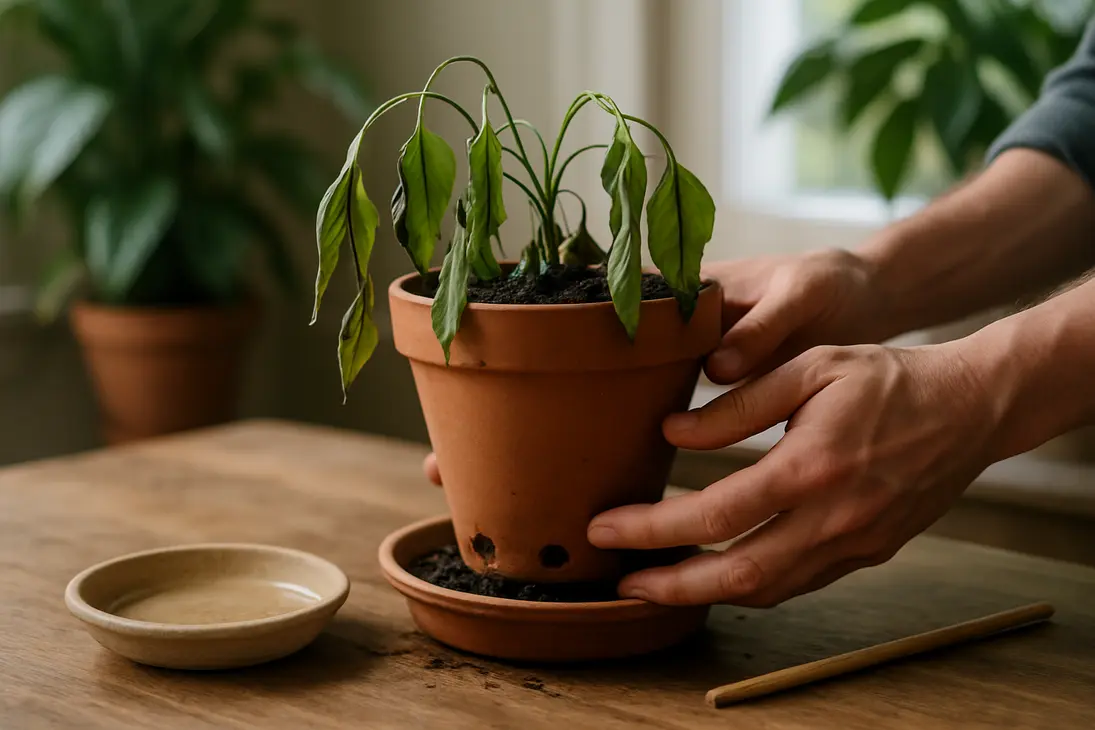
When soil remains waterlogged, air spaces fill with water. Roots lose oxygen, weaken, die back, and become vulnerable to rot.
Warning signs can include:
- Soil staying wet for many days
- Sour or swampy smell
- Yellowing leaves while soil is wet
- Weak growth
- Black, mushy, or dead roots at repotting
- Algae or slime on the soil surface
These symptoms can overlap with other problems, so check the soil, drainage, light, and recent care before deciding.
Why Underwatering Can Happen Even When You Water Often
A bonsai can be underwatered even if you water every day. This usually happens when watering is too light.
A quick splash may wet moss or surface particles while the central root ball stays dry. Underwatering can also happen when soil repels water, roots fill the pot, the pot is very small, the tree is exposed to hot sun and wind, the mix drains extremely fast, or a recently repotted tree has fewer working roots.
The fix is not constant panic-watering. Water thoroughly when needed and confirm the whole root zone is wetted.
How Soil Mix and Pot Drainage Affect Watering
Bonsai soil is often granular so it can hold some moisture while still draining well and preserving air spaces. A bonsai pot should also have drainage holes. Without them, water collects at the bottom and roots are much more likely to suffer.
Different conditions change watering behavior:
| Condition | Effect | Main risk |
|---|---|---|
| Granular bonsai soil | Dries faster | Underwatering |
| Dense organic soil | Holds water longer | Root problems |
| Small shallow pot | Little water reserve | Rapid drying |
| Large training pot | More moisture buffer | Staying wet too long |
| Poor drainage | Water cannot escape | Waterlogged roots |
| Root-bound pot | Water bypasses center | Dry root ball |
If soil stays wet for a long time, do not simply withhold water until the tree is severely dry. Improve soil structure, drainage, and pot choice at the next appropriate repotting.
What Changes How Often You Need to Water
There is no universal answer to “how often.” The same tree may need water daily in summer, every few days in mild weather, and much less in winter.
Build a checking routine instead of a watering schedule. In warm or windy weather, check once or twice a day. In cooler conditions, check less often but still regularly.
Indoor vs. Outdoor Bonsai
Outdoor bonsai usually experience more sun, wind, and temperature variation, so they often dry faster. A small outdoor bonsai in full sun can lose moisture quickly in summer.
Indoor bonsai are protected from wind and harsh sun, so they often need water less frequently. However, heating, air conditioning, low humidity, and sunny windowsills can still dry pots quickly.
Species matters too. Tropical bonsai such as ficus are commonly grown indoors in bright light and generally should not dry completely. Temperate bonsai such as junipers, maples, elms, and pines usually do best outdoors, where they receive proper light and seasonal cues.
Hot, Dry, or Windy Weather
Heat increases evaporation and tree water use. Wind can be even more drying, especially for small pots with little reserve.
During hot, dry, or windy spells:
- Check early in the day.
- Check again later if pots are small or soil drains fast.
- Move vulnerable trees to afternoon shade if appropriate.
- Group pots to reduce drying.
- Protect from strong wind when possible.
- Do not assume yesterday’s watering is enough today.
In extreme weather, some bonsai may need water more than once per day.
Fast-Draining Bonsai Soil
Fast-draining soil helps prevent roots from sitting in stagnant water, but it may require more frequent checking. A very inorganic, granular mix can dry much faster than dense organic soil.
This is why bonsai watering advice often conflicts. One grower may water daily because their trees are outside in small pots with fast-draining soil. Another may water every few days because their tree is indoors in a moisture-retentive mix. Both can be right for their own conditions and wrong for yours.
Recently Repotted or Weak Trees
Recently repotted bonsai need careful watering, not constant saturation. Their roots may have been reduced or disturbed, so they may take up water less efficiently. At the same time, a reduced root system may use less water than before.
Check moisture gently and avoid letting the root ball dry completely. Do not keep the soil soggy out of fear. Good aftercare means stable moisture, protection from harsh conditions, and patience while new roots develop.
Weak trees also need observation. A tree that has lost leaves, has poor roots, or is recovering from damage may dry more slowly than a vigorous tree in full growth.
Can Automatic Watering Systems Work for Bonsai?
Automatic watering systems can help, especially for outdoor collections, hot climates, or short trips. Drip irrigation, micro-sprayers, and timers can be useful when you cannot check trees at the right moment.
They are not “set and forget.” Emitters clog, timers fail, weather changes, and trees dry at different rates. A small tree in full sun may need more water than a larger one in partial shade.
If you use automatic watering:
- Test it for several days while you are home.
- Confirm every pot is actually getting wet.
- Make sure water reaches more than one spot.
- Adjust for heat, rain, and seasonal changes.
- Keep drainage clear.
- Treat it as support, not a replacement for observation.
For valuable or sensitive trees, a trusted person who can check soil moisture is better than a timer alone.
Conclusion
Water bonsai trees when they need water, not because a schedule says so. A fixed routine cannot account for species, pot size, soil mix, season, weather, light, wind, humidity, or tree health.
Check the soil, learn the pot’s weight, water thoroughly when the top layer begins to dry, and let excess water drain away. Aim for a full soak followed by air returning to the root zone.
FAQ
How often should I water my bonsai tree?
There is no universal schedule. Check the soil regularly and water when the top layer starts to dry. Outdoor bonsai in small pots may need water daily or more in summer, while indoor bonsai in moisture-retentive soil may need less.
Should bonsai soil always stay wet?
No. Bonsai soil should be moist when the tree needs water, but not constantly waterlogged. Roots need oxygen as well as moisture. Water thoroughly, let the pot drain, and water again when the soil begins to dry.
Is it better to underwater or overwater a bonsai?
Neither is good. Underwatering causes dehydration and root dieback. Frequent overwatering in poor-draining soil can cause root rot. Water thoroughly only when the soil indicates it is needed.
Do indoor bonsai need less water than outdoor bonsai?
Often, yes, because indoor trees are usually protected from wind and intense sun. But heating, air conditioning, low humidity, small pots, sunny windowsills, and species differences can still dry them quickly. Check the soil rather than assuming indoor trees need little water.
You Might Also Like