Does Song of India Need Direct Sunlight?
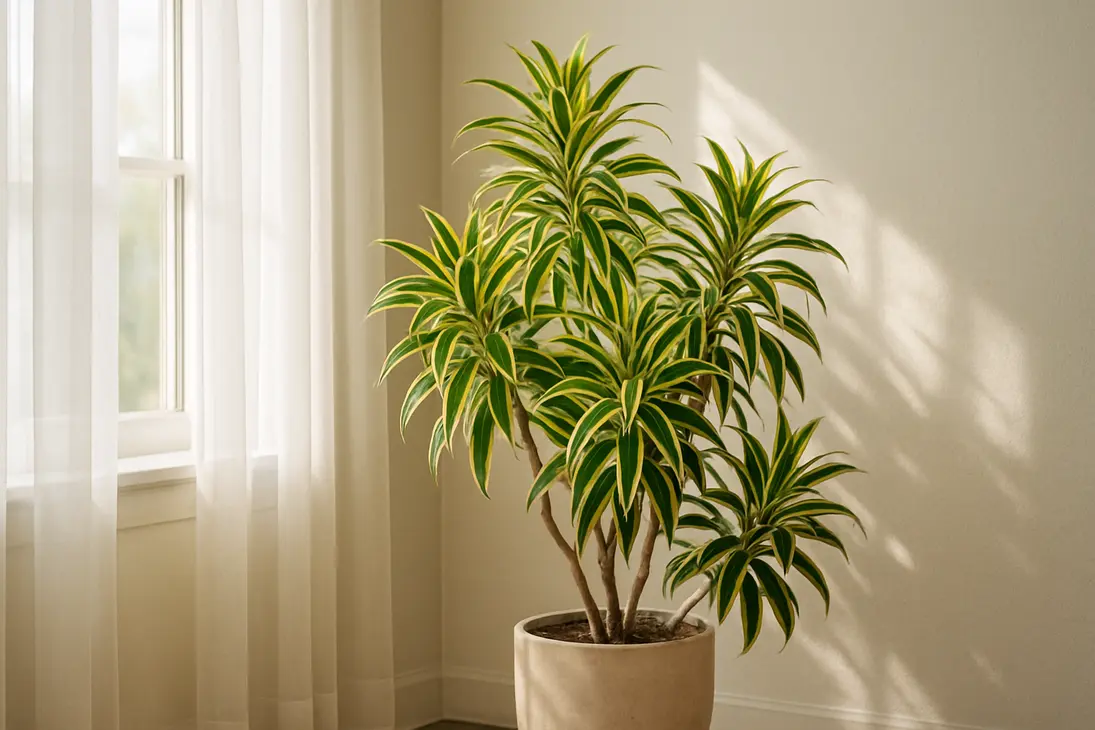
Song of India does not need direct sunlight to grow well indoors. Its best growth usually happens in bright, indirect light—the kind of light near a sunny window where rays are softened by distance, a sheer curtain, or reflected brightness.
That said, “no direct sun” does not mean “no strong light.” Song of India, also known as Dracaena reflexa ‘Song of India’, is valued for narrow green leaves edged in yellow or chartreuse. That variegation depends on light. In a dim corner, the plant may stay alive, but it often becomes slower, thinner, and less colorful.
The simple answer: Song of India can grow without direct sun, but it still needs bright ambient light to look its best.
Ideal Light Requirements for Song of India
The ideal Song of India light requirements are bright, indirect light for most of the day. Indoors, this means placing the plant close enough to a window for strong natural brightness, but not where harsh sun beats directly on the foliage for hours.
A healthy Song of India in good light will usually have:
- Clear yellow or lime-yellow leaf margins
- Compact, leafy growth
- Leaves that hold their color rather than turning dull green
- New growth that is sturdy, not stretched
- Slow to moderate growth, depending on season and conditions
This plant is often described as tolerant of lower light, and that is partly true. It can handle imperfect indoor light better than many sun-loving plants. But “tolerant” does not mean “thrives anywhere.” Variegated plants have less chlorophyll in their pale leaf sections, so they generally need brighter conditions than fully green plants.
Filtered sun is often excellent. Light through a sheer curtain, dappled light from a tree outside, or bright light a few feet back from a sunny window can all work well. The key is to avoid long exposure to intense midday or afternoon rays, especially through glass, which can heat and scorch leaves quickly.
If choosing between direct sunlight and bright indirect light, choose bright indirect light. A little gentle direct sun can be fine, but it is not required.
Can Song of India Grow Without Direct Sun?
Yes, Song of India can grow without direct sun. Many indoor plants never receive direct rays, and Song of India can do well as long as the room is bright enough.
The important distinction is between:
| Light situation | What it means for Song of India |
|---|---|
| No direct sun, but bright room | Usually ideal; strong growth and good variegation are possible |
| Low light | Plant may survive, but growth slows and color may fade |
| Dark corner | Usually unsuitable long-term; expect thinning, leaning, leaf drop, or decline |
A plant near a large, unobstructed north-facing window may receive no direct sunlight but still get enough steady brightness. A plant ten feet from a small window with closed blinds is very different. Both may technically have “no direct sun,” but only one is likely to support healthy growth.
You can use a simple shadow test. During the brightest part of the day, hold your hand between the plant and the light source:
- Soft but visible shadow: Often good bright indirect light
- Very faint shadow: Lower light; the plant may survive but grow slowly
- Sharp, dark shadow with hot sun on leaves: Direct light; may be too intense
- Almost no shadow: Likely too dim for strong variegation
Think of Song of India as a bright-window plant, not a full-sun plant.
Best Indoor Placement for Song of India
The best indoor placement is near a bright window where the plant receives plenty of daylight without harsh rays burning the leaves. In many homes, this means an east-facing window, a bright west-facing room with afternoon protection, or a position a few feet back from a south-facing window.
Good placement options include:
- Near an east-facing window, where it can receive gentle morning sun
- Near a west-facing window, but protected from hot afternoon rays
- A few feet back from a bright south-facing window
- Beside a window with sheer curtains
- In a bright room where light reflects off pale walls or nearby surfaces
Placement also depends on climate and window conditions. A south-facing window in a cool northern climate may be comfortable, while the same exposure in a hot summer region can be too intense. Glass can magnify heat, and leaves pressed close to the window may scorch or dry out faster.
Seasonal changes matter too. A spot that is perfect in winter may become too hot in summer, while a bright summer room may become dim during short winter days. Song of India does not need constant moving, but it benefits from occasional reassessment.
Near a Bright Window
Near a bright window is usually the easiest way to meet Song of India light requirements indoors. The best distance depends on window direction.
For an east-facing window, Song of India can often sit quite close, even on or near the sill if temperatures are stable. Morning sun is gentler and less likely to scorch leaves. One to three hours of early sun followed by bright indirect light is usually a very good setup.
For a south-facing window, start the plant a few feet back rather than directly against the glass. South-facing windows provide excellent brightness, but midday sun may be strong. If leaves feel warm or you see pale brown scorch marks, move the plant farther back or add a sheer curtain.
For a west-facing window, watch afternoon sun carefully. Late-day sun can be intense, especially in summer. Song of India may handle filtered west light, but direct hot rays for several hours can cause crispy edges and brown patches.
For a north-facing window, direct sun is usually minimal or absent. This can work if the window is large and the room is bright. If the plant leans, loses yellow variegation, or drops lower leaves, it probably needs stronger light.
A practical starting point:
| Window direction | Suggested placement |
|---|---|
| East | Close to the window; gentle morning sun is usually fine |
| South | 2–6 feet back, or closer with a sheer curtain |
| West | Near the window only if afternoon sun is filtered or softened |
| North | Close to the window; monitor for slow growth or fading color |
Avoid placing leaves against hot glass or where cold drafts hit in winter. Temperature stress can cause browning tips or leaf drop that may be mistaken for light problems.
In Lower-Light Rooms
Song of India can survive in lower-light rooms, but survival is not the same as good growth. In dim conditions, it often slows down and may lose the crisp yellow edging that makes it attractive.
In lower light, you may notice:
- Smaller new leaves
- Longer gaps between leaves
- A stretched, open shape
- More green and less yellow in the foliage
- Growth leaning toward the nearest window
- Soil staying wet much longer after watering
That last point is important. Light affects water use. A Song of India in bright light uses water more actively. In a dim room, the same watering schedule can leave soil soggy and increase the risk of root problems. Many struggling indoor plants need more light, not more water.
If your lower-light room is still bright enough to read comfortably during the day without a lamp, the plant may be okay, though slower. If you need artificial light most of the day, the room is probably too dim unless you add a grow light.
A lower-light placement may be acceptable if your goal is simply to keep the plant alive. But if you want a full, colorful Song of India with strong variegation, give it brighter indirect light.
Signs Your Song of India Is Getting the Wrong Light
Light problems can be easy to misread because symptoms overlap with watering stress, temperature changes, low humidity, and normal leaf aging. A few older lower leaves dropping now and then is not automatically a light problem.
Use the plant’s overall behavior as your guide. Look at where it is placed, how quickly the soil dries, what the newest growth looks like, and whether symptoms appeared after a move.
Too Little Light
When Song of India receives too little light, it usually declines gradually. The plant may look alive for months, but its form and color weaken.
Common signs of too little light include:
- Fading variegation: Yellow margins become dull, narrow, or less distinct.
- Sparse growth: Stems look bare or thin, with fewer leaves.
- Leaning toward the window: The plant stretches toward the strongest light source.
- Slow or stalled growth: New leaves appear rarely, especially outside winter dormancy.
- Leggy stems: Spaces between leaves become longer.
- Leaf drop: Lower leaves may yellow and fall, especially if soil stays wet.
Loss of variegation is one of the most common clues. Variegated plants may produce greener leaves in lower light because green tissue captures light more efficiently. This does not always mean the plant has changed permanently, but it does mean current conditions are encouraging greener growth.
If the plant is leaning, rotate it, but do not treat rotation as the main fix. Rotation evens out the shape; it does not solve insufficient light. Move the plant closer to the light source or supplement with a grow light.
Also check your watering habits. A plant in low light needs less frequent watering. If the soil stays damp for a week or more, reduce watering and improve light before assuming the plant needs fertilizer or a larger pot.
Too Much Direct Sun
Too much direct sun usually causes faster, more visible damage. Song of India leaves are fairly tough, but intense rays—especially through a hot window—can burn the foliage.
Signs of too much direct sun include:
- Scorched leaf tips
- Dry, crispy edges
- Tan or brown patches on leaves
- Bleached or washed-out foliage
- Leaves that feel hot or papery
- Damage mostly on the side facing the window
Sunburned tissue will not turn green again. Once a leaf has a brown scorched patch, that part is permanently damaged. However, the plant can recover and produce healthy new growth if you correct the light.
Direct sun problems are most likely when:
- The plant is placed directly in a south- or west-facing window
- It was moved suddenly from a dim spot into full sun
- Leaves touch hot glass
- It receives several hours of summer afternoon sun
- Reflected light from pavement, walls, or glass intensifies exposure
Washed-out foliage is not the same as healthy bright variegation. Healthy variegation looks clear and defined. Sun-stressed foliage may look pale or bleached, often followed by browning.
If you see scorch, move the plant out of direct rays immediately, but do not put it into a dark corner as a correction. Shift it to bright indirect light instead.
How to Improve Light Conditions Indoors
If your Song of India is not getting the right light, make changes gradually. Leaves adjust to their environment, and a sudden move from a dim room to strong sun can cause shock or scorch.
Practical ways to improve light indoors include:
- Move the plant closer to a window. If it is across the room, try placing it within a few feet of the brightest window.
- Use sheer curtains. This turns harsh direct sun into bright filtered light.
- Rotate the pot regularly. Turn the plant a quarter turn every week or two so it does not lean heavily.
- Avoid sudden full-sun exposure. Increase light gradually over one to two weeks.
- Clean the leaves gently. Dusty leaves receive less light. Wipe them with a damp cloth as needed.
- Open blinds during the day. A plant near a covered window may still be in low light.
- Consider a grow light. In rooms with limited natural light, a full-spectrum grow light can help maintain color and growth.
When using a grow light, place it close enough to be useful but not so close that it heats or dries the leaves. Many household lamps are not strong enough unless designed for plant growth. A simple full-spectrum LED grow light used for part of the day can make a noticeable difference in darker apartments or winter conditions.
If you are moving the plant to a brighter location, watch it for the first two weeks. A good transition might look like this:
| Week | Adjustment |
|---|---|
| Week 1 | Move plant closer to bright indirect light, avoiding direct midday sun |
| Week 2 | Allow gentle morning sun if available, or keep behind a sheer curtain |
| Week 3 onward | Monitor new growth, variegation, soil drying time, and leaf edges |
Do not judge success by old damaged leaves. Existing scorched, yellowed, or stretched leaves may not improve. Look at the newest growth. If new leaves are brighter, more compact, and healthier, the plant is responding well.
Light adjustments also affect watering. After moving Song of India to brighter light, the soil may dry faster. Check the soil before watering rather than following a fixed calendar.
Conclusion
Song of India does not require direct sunlight. Its preferred light is bright, indirect light, with strong filtered brightness that supports healthy growth and maintains green-and-yellow variegation.
A little gentle morning sun is usually fine, and filtered sun can be very beneficial. What the plant does not want is prolonged harsh midday or afternoon sun, especially through hot glass. A dark corner is not a good substitute for indirect light either. The plant may survive there for a while, but it is likely to grow slowly, lose color, become leggy, or drop leaves.
For most homes, the best placement is near an east-facing window, near a bright filtered west-facing window, or a few feet back from a sunny south-facing window. If natural light is limited, a grow light can help.
Think of Song of India as a plant that wants brightness without harshness. Give it that balance, and it can stay colorful, upright, and attractive indoors without needing direct sun.
FAQ
Can Song of India live in low light?
Song of India can live in low light for a time, but it usually will not look its best. Growth slows, stems may become leggy, and yellow variegation can fade. If the room is dim most of the day, use a grow light or move the plant to a brighter spot.
How many hours of light does Song of India need?
Song of India does best with several hours of bright ambient light each day—ideally a full day of bright, indirect indoor light. It does not need hours of direct sun. Place it where the room is naturally bright for much of the day, such as near an east-facing window or near a filtered south- or west-facing window.
Can Song of India get morning sun?
Yes, Song of India can usually handle gentle morning sun. An east-facing window is often one of the best placements because morning light is bright but not as harsh as afternoon sun. If leaves look bleached, crispy, or scorched, filter the light or move the plant slightly farther from the glass.
Why is my Song of India losing its yellow variegation?
Loss of yellow variegation is often a sign that the plant is not receiving enough light. In dim conditions, new growth may become greener because green tissue captures limited light more efficiently. Move the plant gradually into brighter indirect light, rotate it regularly, and avoid overwatering while it adjusts. New growth is the best place to look for improvement.
You Might Also Like