Why Is My Stevia Plant Wilting Even Though I Water It?
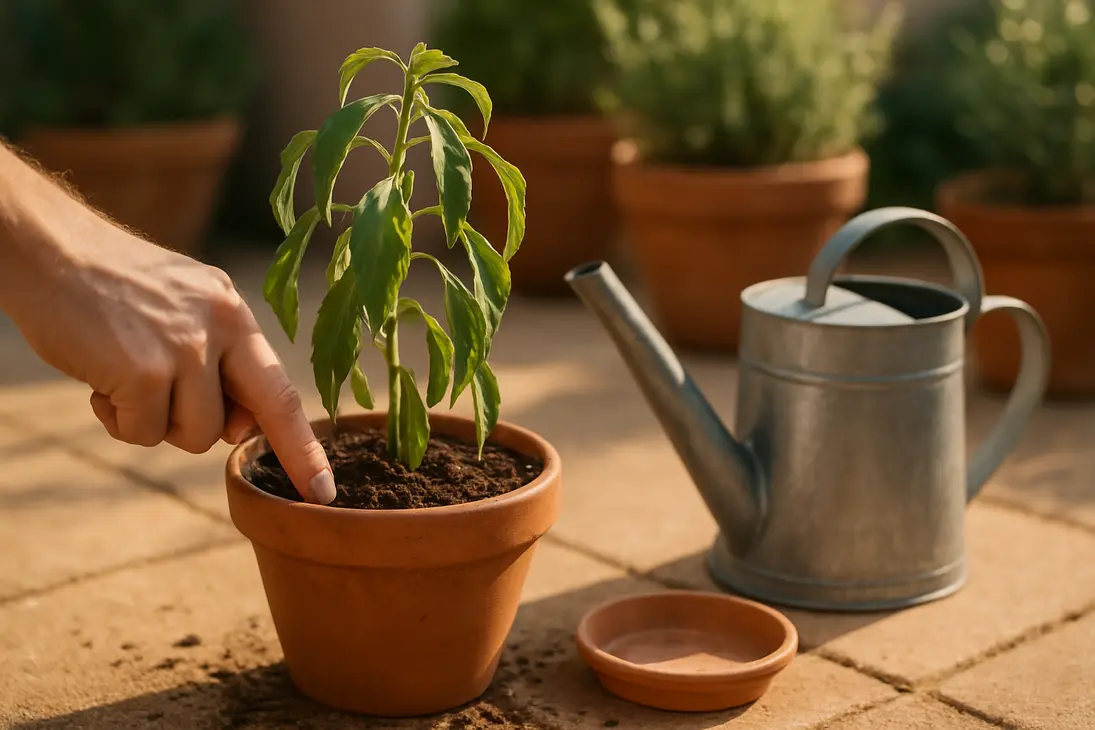
A stevia plant can wilt even after watering because the problem is not always lack of water. Water may not be reaching healthy roots in a usable way. The soil may be too wet, dry in the center, compacted, hydrophobic, overheated, or hiding damaged roots.
Stevia is a tender warm-season herb with fine roots. It likes steady moisture but not soggy soil, and it can droop in hot afternoon sun, dry wind, or after transplanting. Before watering again, diagnose the root zone and growing conditions.
Start With a Quick Wilt Diagnosis
Wilting means leaves are losing moisture faster than roots can replace it. That can happen in dry soil, but also in wet soil if roots are suffocating or rotting.
Check the soil moisture below the surface
Do not rely on the soil surface. The top can look dry while the lower root zone is still wet, especially in plastic pots, glazed containers, or dense mixes.
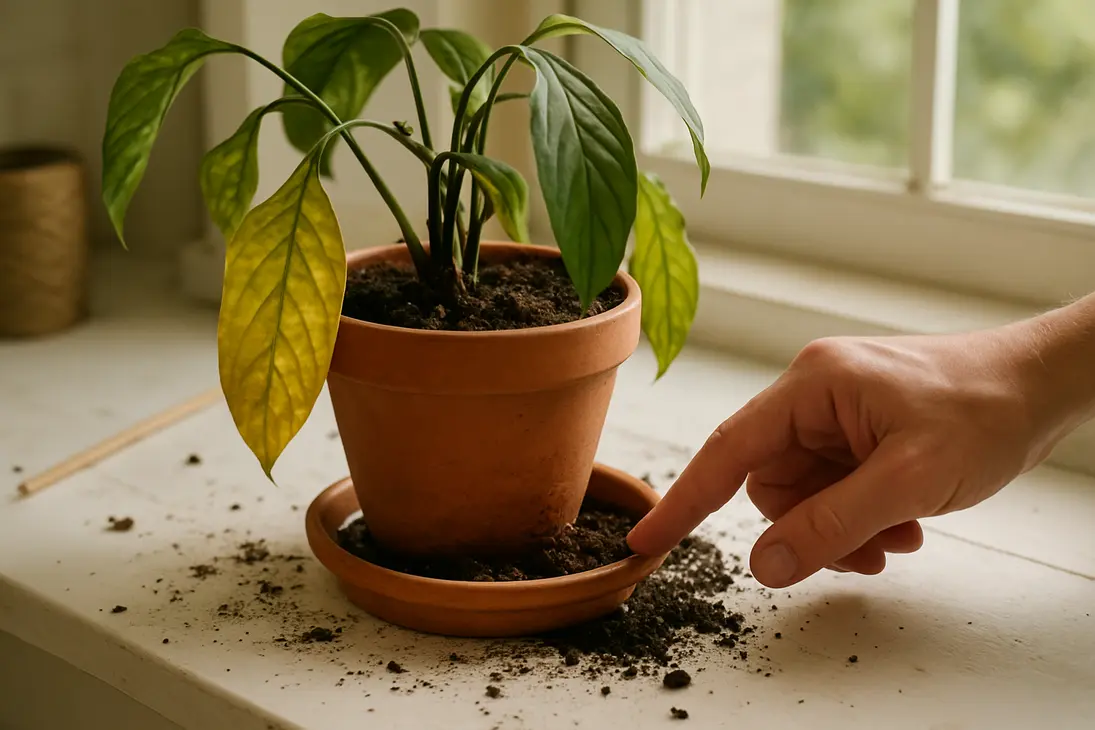
Push your finger 1 to 2 inches into the soil near the roots. In a larger pot, use a wooden skewer, chopstick, or moisture meter.
| What you find | Likely meaning | What to do |
|---|---|---|
| Top dry, lower soil lightly moist | Normal drying | Wait |
| Soil wet or sour-smelling | Overwatering or poor drainage | Improve drainage |
| Soil bone dry and pulling from pot edges | Underwatering or hydrophobic mix | Rehydrate slowly |
| Water runs straight through | Dry mix, channels, or rootbound plant | Soak and inspect |
| One side wet, one side dry | Uneven watering or compacted mix | Water slowly; consider repotting |
Stevia prefers evenly moist soil, not constantly wet soil. If the lower soil is already wet, more water usually makes wilting worse.
Look at leaf texture, color, and stem firmness
A thirsty stevia often has limp, thin leaves, dry edges, and dry soil below the surface. If the roots are healthy, it may perk up within a few hours after deep watering.
An overwatered stevia can also droop, but leaves may feel soft rather than crisp. Lower leaves may yellow, stems may soften near the base, and the pot may feel heavy.
Heat-stressed stevia often wilts in the afternoon and recovers by evening. Firm green stems are a better sign than blackened, mushy, or collapsing stems.
Inspect the pot, drainage holes, and root zone
Lift the pot. A heavy pot may be holding too much water; a feather-light pot is usually too dry. Make sure drainage holes are open and the pot is not sitting in water inside a saucer or decorative cachepot.
For in-ground stevia, check the site. Clay soil, low spots, roof runoff, or very sandy soil can all cause moisture problems.
If the plant keeps declining, slide it gently from the pot. Healthy roots are usually pale, firm, and earthy-smelling. Troubled roots may be brown, black, mushy, sparse, or sour-smelling.
Fix Watering and Drainage Problems First
Most stevia wilting problems start in the root zone. The goal is steady moisture plus air. Roots need both.
Overwatering and root rot
Overwatering is not just watering too often. It also includes soil that stays wet too long. When soil pores remain filled with water, roots cannot get oxygen. Fine roots die, and the plant wilts because the remaining roots cannot supply the leaves.
Signs of overwatering include:
- Wet soil below the surface
- Heavy pot for several days
- Yellowing lower leaves
- Soft or dark stems near the soil line
- Stalled growth
- Sour or swampy smell
If you suspect overwatering, stop watering on a fixed schedule. Let the top inch or two dry slightly before watering again. Keep the plant in bright light but out of harsh sun while it recovers, and make sure the pot drains freely.
For mild cases, better watering may be enough. For severe cases, repot into fresh, airy mix and trim only clearly rotten roots.
Underwatering or soil that repels water
Stevia can wilt because it is not getting usable water, especially in small pots, terracotta, hanging baskets, raised beds, windy balconies, and hot patios.
Dry potting mix can become hydrophobic. Water runs down the sides and out the drainage holes while the center of the root ball stays dry.
Signs include:
- Soil pulling from pot edges
- Very light pot
- Limp or slightly crisp leaves
- Brown dry leaf edges
- Water running through immediately
- Plant perking up after a thorough soak
To rehydrate a dry potted stevia, water slowly in several passes. If the root ball is very dry, set the pot in a shallow basin of water for 15 to 30 minutes, then drain completely. Do not leave it soaking for hours.
For in-ground plants, water deeply around the root zone instead of sprinkling the leaves. Mulch can help keep moisture steady, but keep it slightly away from the crown to reduce rot risk.
Pot size, drainage, and soil mix
A tiny pot dries too fast; an oversized pot with heavy mix may stay wet around a small root system.
Use a container with drainage holes. For a single young stevia, an 8- to 12-inch pot often works, depending on plant size. If repotting, move up only one size rather than jumping to a huge container.
Use a light, well-draining potting mix. A quality mix amended with perlite or fine bark can work well. Avoid garden soil in pots because it compacts and drains poorly.
In the ground, stevia prefers fertile, well-drained soil. In heavy clay, use a raised bed, mound, or better-drained location. Compost helps structure, but it will not fix a site where water stands after rain.
Reduce Heat, Sun, and Transplant Stress
If soil moisture seems reasonable, check light, heat, wind, and recent changes. Stevia likes warmth and bright light, but it can wilt under sudden intense sun or root disturbance.
Too much direct afternoon sun
Stevia grows best with plenty of light, but full sun in a mild climate is different from full sun on a hot patio beside brick or concrete.
If the plant wilts every afternoon and recovers by morning, heat and light stress are likely. Move potted stevia to morning sun with light afternoon shade. For in-ground plants, use temporary shade cloth, a patio umbrella, or taller companion plants. Avoid deep shade; the plant still needs bright light.
Heat stress and dry wind
Hot wind removes moisture from leaves and dries containers quickly. Black plastic pots, metal containers, stone patios, and south-facing walls can also overheat roots.
Feel the side of the pot in the hottest part of the day. If it is hot to the touch, move the container where the pot is shaded while the leaves still receive good light. Grouping pots can reduce drying.
During heat waves, check moisture more often, but do not water automatically every time leaves droop. If soil is moist, give shade and airflow. Water early in the morning when possible.
Wilting after transplanting or repotting
Stevia often wilts after transplanting because fine roots are disturbed. The plant may temporarily lose more water through leaves than damaged roots can replace.
To reduce transplant stress:
- Repot or transplant in morning or evening.
- Water before moving the plant.
- Keep the root ball intact.
- Plant at the same depth.
- Water thoroughly, then let excess drain.
- Give bright shade or morning sun for a few days.
Do not overcorrect by watering repeatedly, fertilizing heavily, or moving the plant from one extreme to another. Keep conditions steady and watch for new growth.
Check for Pests, Disease, and Root Damage
If watering and heat do not explain the wilt, inspect the plant closely. Pests, disease, and root damage can weaken stevia quickly.
Inspect leaves and stems for pests
Aphids, spider mites, whiteflies, and other sap-feeding pests can stress stevia, especially indoors or during hot weather.
Check new growth tips, undersides of leaves, leaf joints, sticky residue, fine webbing, and speckled, curled, or distorted leaves.
If you find pests, rinse the plant with a firm stream of water, especially under leaves. Remove badly infested tips if needed. Insecticidal soap can help with soft-bodied pests, but follow the label and avoid spraying in direct sun or extreme heat.
Because stevia leaves are edible, use only products labeled for edible plants and follow harvest-interval instructions.
Look for fungal or bacterial warning signs
Disease is more likely when stevia is crowded, watered overhead late in the day, kept soggy, or grown with poor airflow.
Warning signs include dark or water-soaked leaf spots, powdery or fuzzy growth, blackened stem bases, sudden stem collapse, yellowing that spreads upward, or a rotten smell from the crown or soil.
Remove affected leaves, improve airflow, and water at soil level. Avoid handling wet plants. If the crown is rotting or main stems are collapsing, recovery may be unlikely.
Examine roots if the plant keeps declining
If the plant keeps wilting despite reasonable care, inspect the root ball.
Possible problems include:
- Root rot: mushy, dark, bad-smelling roots
- Rootbound growth: tight circling roots and little soil
- Compacted soil: dense, airless mix
- Physical damage: torn roots after repotting or digging
- Pest damage: outdoor grubs or other soil pests chewing roots
Loosen circling roots gently and repot into a slightly larger container with fresh mix. Trim only clearly dead, mushy roots. If most roots are gone, recovery is uncertain; take cuttings from healthy stems if possible.
How to Revive a Wilting Stevia Plant
Reviving stevia means reducing stress while helping roots function again. Avoid trying to fix everything at once.
Immediate steps for a mildly wilted plant
If stems are firm and there is no obvious rot, start with a simple reset.
-
Check soil moisture below the surface.
Water only if the root zone is dry or drying. -
Move the plant to gentler light.
Use bright shade or morning sun for a few days. -
Water slowly and thoroughly if dry.
Moisten the whole root ball, then drain completely. -
Remove dead or badly damaged leaves.
Keep healthy green foliage. -
Pause fertilizer.
Fertilizer does not fix wilt and can stress damaged roots. -
Watch the pattern.
Afternoon wilt with evening recovery points to heat. Wilting in wet soil points to root trouble.
Thirst or heat stress may improve within a day. Root problems take longer.
What to do if roots are soggy or rotting
If the mix is wet, heavy, and sour-smelling, or roots are mushy, remove the plant from the pot. Tease away loose wet mix without stripping every root. Trim clearly rotten roots with clean tools.
Repot into a clean container with drainage holes and fresh, airy mix. Water lightly to settle the mix, then keep it just barely moist. A plant with fewer roots uses less water, so heavy watering can restart the problem.
Keep the plant in bright indirect light or morning sun. Avoid fertilizer until new growth appears. If the base is soft or blackened, recovery is unlikely.
When to prune, repot, or start over
Do not hard-prune a wilted stevia just because it looks tired. If roots are healthy and the plant is heat-stressed, removing too much foliage can slow recovery.
Light pruning is useful when stems are dead, leaves are diseased or badly infested, top growth is too large for damaged roots, or the plant has stabilized and needs shaping.
Use clean scissors and cut back to healthy green growth. Repot if the mix stays soggy, is compacted, repels water, or the plant is rootbound. Avoid repotting in midday heat or placing a newly repotted plant in harsh sun.
If roots are mostly rotten, the crown is mushy, or the plant has collapsed, replacement may be the practical choice. Try cuttings first if any stems remain healthy.
Conclusion
A stevia plant wilting even though you water it is not always asking for more water. Check moisture below the surface, drainage, heat exposure, pests, disease, and roots before watering again. With steady moisture, good drainage, and gentler conditions during stress, many wilted stevia plants can recover.
FAQ
Why is my stevia wilting after I watered it?
Your stevia may be wilting after watering because the soil was already too wet, the roots are damaged, or the water did not soak the root ball. Dry mix can repel water so it runs out while the center stays dry. Soggy soil can also suffocate roots and cause rot.
Check the soil 1 to 2 inches down. If it is wet and heavy, wait. If the center is dry, rehydrate slowly and thoroughly.
Can overwatering make stevia leaves droop?
Yes. Overwatering can make stevia droop because waterlogged soil blocks oxygen from the roots. Damaged roots cannot move water to the leaves, so the plant wilts even in moist soil.
Signs include yellow lower leaves, soft stems, a heavy pot, sour-smelling soil, and brown or mushy roots. Improve drainage, let the soil dry slightly between waterings, and repot if needed.
Does stevia prefer full sun or partial shade?
Stevia likes bright light, but in hot climates it often does better with morning sun and light afternoon shade. Containers and patio plants are especially prone to overheating.
If your stevia wilts every afternoon and recovers later, the sun may be too intense. Move it to gentler light or provide temporary shade.
Should I cut back a wilting stevia plant?
Remove dead, diseased, or badly damaged growth, but avoid heavy pruning until you know why it is wilting. If the issue is heat, shade and better watering may be enough. If roots are damaged, light pruning can reduce stress.
Use clean scissors, remove only failing growth, and wait for new growth before shaping the plant more heavily.
You Might Also Like