Safe Watering Methods for Plants: How to Water Without Overdoing It
Watering seems simple, but too much or too little can cause yellowing leaves, wilting, fungus, root rot, or dried-out roots. Safe watering is not a fixed daily routine. It means matching water amount, timing, and method to the plant, soil, container, weather, and season.
The safest approach keeps the root zone moist enough for the plant while still allowing oxygen to reach the roots.
What Makes a Watering Method Safe for Plants?
A safe watering method gives roots enough moisture without keeping soil saturated, splashing disease organisms onto leaves, shocking plants with extreme temperatures, or concentrating fertilizer salts.
Roots need both water and air. Waterlogged soil fills air spaces and can weaken or rot roots. Shallow watering can leave roots dry below the surface even when the top looks wet.
The goal: deep, even moisture
For most plants, moisten the active root zone evenly, then let the soil partly dry before watering again. This encourages stronger roots and reduces constant “topping up.”
In garden beds, water should move several inches into the soil. In pots, the mix should become evenly moist and excess water should drain out.
Seedlings are the main exception. They often need gentler, more frequent surface moisture until roots develop.
The main risks: overwatering, underwatering, wet foliage, and poor drainage
Most watering problems come from four issues:
- Overwatering: Soil stays wet too long, causing yellowing, fungus gnats, weak roots, or rot.
- Underwatering: Water never reaches the root zone, or the plant dries out repeatedly.
- Wet foliage: Damp leaves can encourage fungal and bacterial disease, especially in crowded plantings.
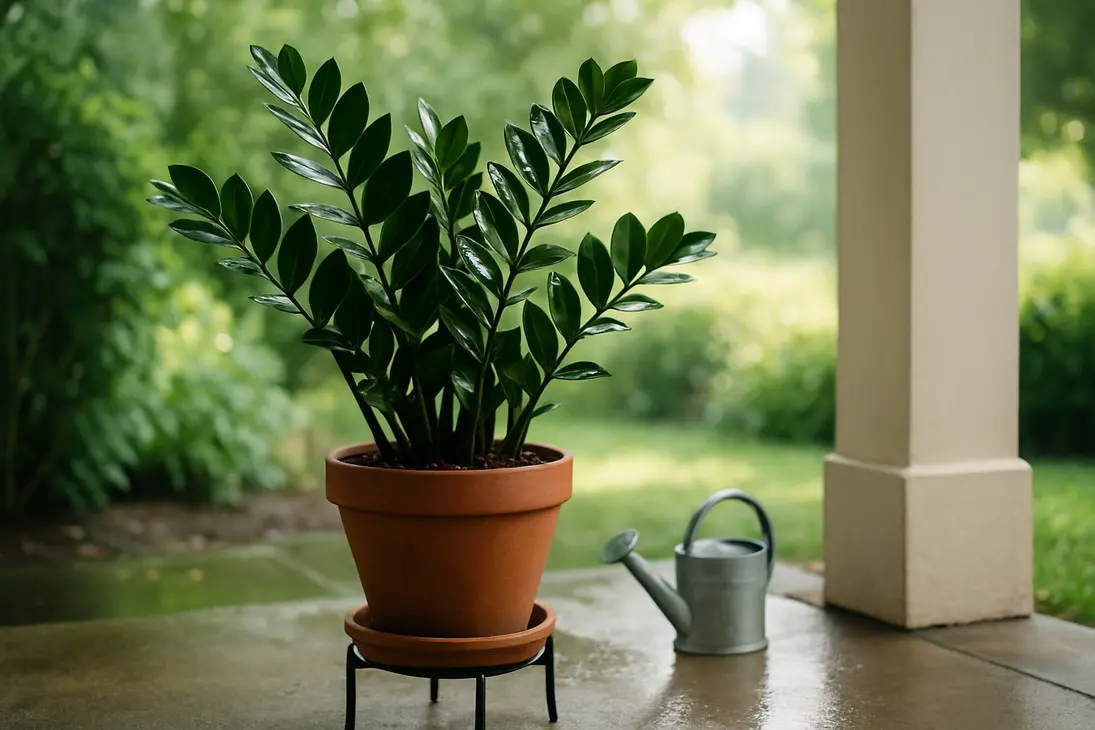
- Poor drainage: Water cannot escape from a pot, compacted soil, or a full saucer.
A watering method is only safe if drainage is adequate. A pot without drainage holes or a soggy bed can make even moderate watering harmful.
Why plant type, pot size, soil, season, and climate matter
No method is safe for every plant. A cactus, fern, tomato, lawn, basil plant, and hydrangea all use water differently.
| Factor | Why it matters |
|---|---|
| Plant type | Succulents store water; leafy plants often dry faster. |
| Pot size | Small pots dry quickly; oversized pots may stay wet. |
| Soil or mix | Sand drains fast; clay and dense mixes hold moisture. |
| Season | Plants use more water in growth and less in dormancy. |
| Heat, wind, and light | All can increase water loss. |
| Root development | New plants need monitoring until roots spread. |
This is why daily watering may help a hanging basket in July but harm a houseplant in a cool room.
The Safest Ways to Water Common Plants
Different methods work best in different situations. The safest choice depends on whether you are watering houseplants, containers, garden beds, shrubs, vegetables, or lawns.
Watering at the soil line
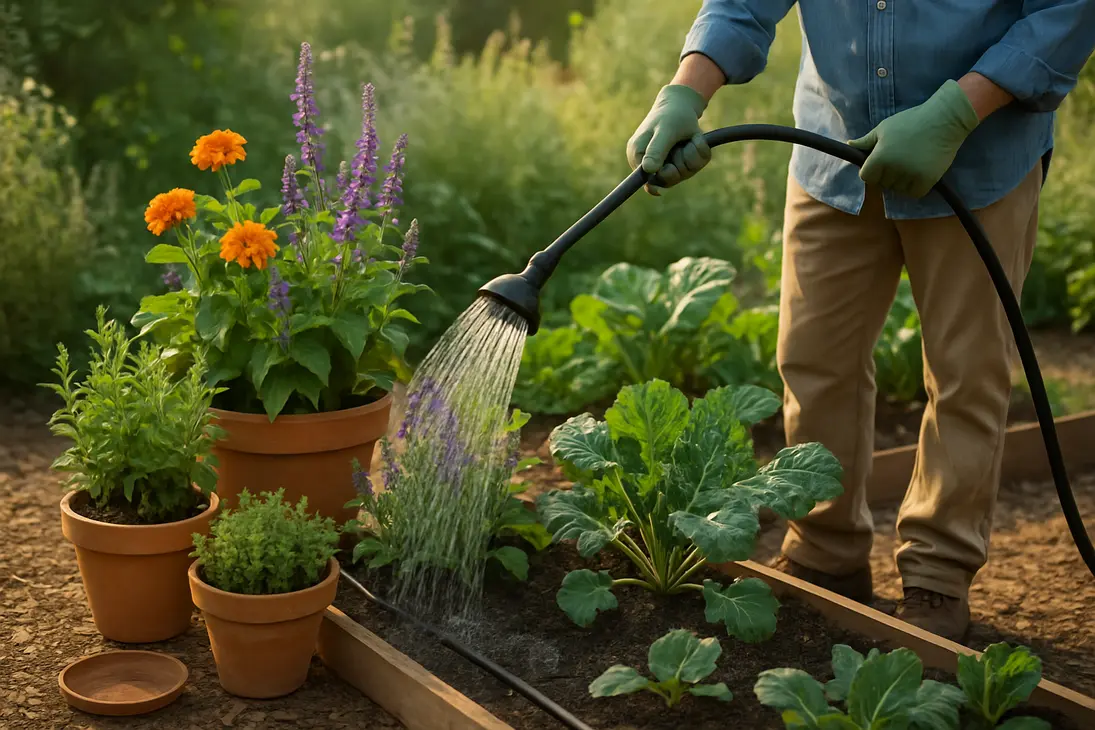
Watering at the soil line is one of the safest methods for many plants. Instead of spraying the whole plant, direct water to the base where roots can use it.
This works well for vegetables, annuals, perennials, shrubs, young trees, houseplants that dislike wet leaves, and disease-prone plants. It reduces splashing, keeps foliage drier, and wastes less water than broad overhead spraying.
Outdoors, water slowly enough that moisture soaks in instead of running off. If water pools or flows away, pause and continue. This “cycle and soak” approach is safer on dry, compacted, or sloped soil.
Bottom watering for potted plants
Bottom watering means placing a pot with drainage holes in a tray, sink, or basin of water so the mix absorbs moisture upward. Once the top feels lightly moist or the pot feels heavier, remove it and let it drain.
It can help seedlings, small houseplants, African violets and other plants sensitive to wet crowns, very dry mixes that repel water, and airy mixes that drain quickly.
Do not leave pots sitting in water. Bottom watering should not become permanent soaking. It also does not flush fertilizer salts as well as top watering, so occasionally water from the top until water drains through, then discard the drainage water.
Drip irrigation and soaker hoses
Drip irrigation and soaker hoses are among the safest methods for many garden beds because they deliver water slowly near the soil surface and keep leaves drier.
They work well for vegetable gardens, raised beds, hedges, shrub borders, perennial beds, foundation plantings, and rows of annuals. Timers can help maintain consistency.
Still, check the system. Emitters can clog, shift, or miss the root zone. After watering, dig a small test hole occasionally to see how deeply moisture has moved.
Hand watering with a watering can or hose
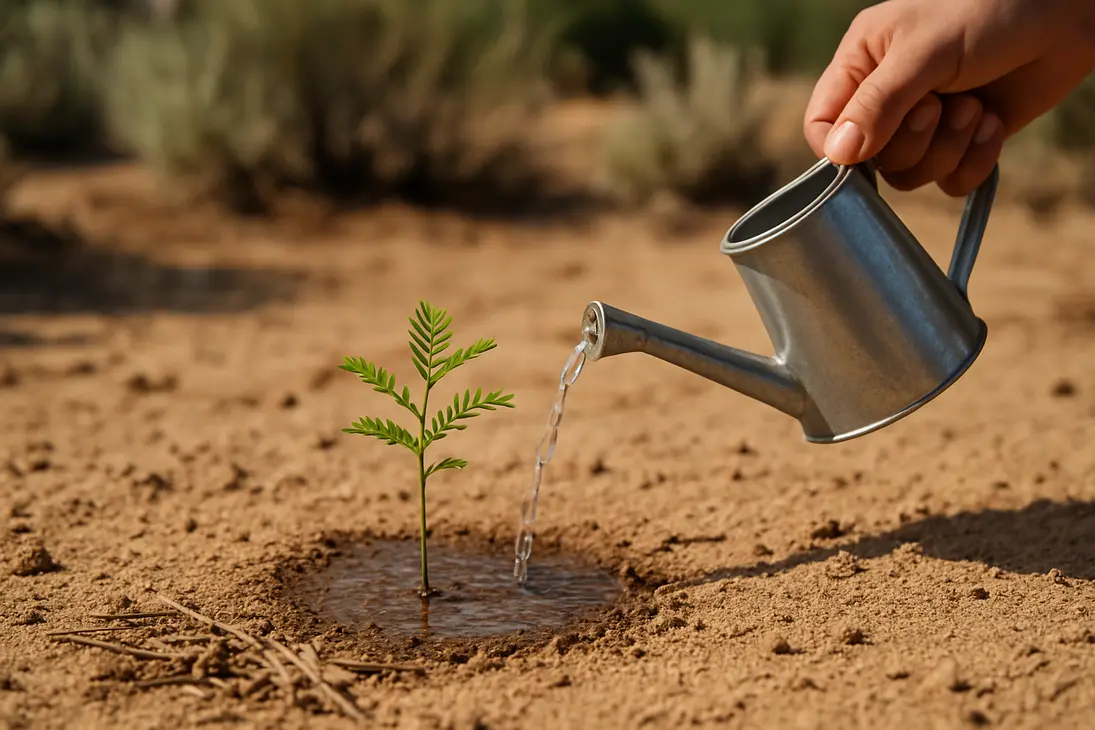
Hand watering is flexible and safe when done slowly. A watering can with a rose attachment or a hose with a gentle wand gives good control for pots, seedlings, new plantings, and dry spots.
The main risk is inconsistency. One plant may get a splash while another gets flooded. A hard hose stream can compact soil, expose roots, or splash soil onto leaves.
Use a gentle flow and aim at the soil. For containers, water until some drains from the bottom, then stop. For outdoor plants, moisten the surrounding root zone, not just the stem area.
Sprinklers for lawns and large beds
Sprinklers are practical for lawns and large areas, but they wet foliage and can waste water through evaporation, overspray, and runoff.
They are most appropriate for lawns, newly seeded grass, broad groundcovers, and large annual beds where drip irrigation is not practical. They are less suitable for disease-prone vegetables or crowded plantings where leaves stay wet.
If using sprinklers, water early in the morning when wind is usually calmer and leaves can dry during the day. Check coverage with shallow containers placed around the area; uneven fill levels mean the sprinkler pattern needs adjustment.
How Often Should You Water Plants?
There is no universal schedule. Safe frequency depends on how fast the soil dries and how much moisture the plant needs.
Instead of asking whether to water once or twice a day, ask whether the root zone has dried enough to need water again.
Check soil moisture before watering
The safest habit is to check before adding water.
For houseplants and containers:
- Push a finger 1–2 inches into the mix.
- For large pots, check deeper with a wooden skewer, chopstick, or moisture meter.
- Lift the pot dry and after watering to learn the weight difference.
- Do not rely only on the surface.
For garden beds, dig a small hole near the root zone and feel the soil several inches down. If it is cool and slightly moist, wait. If it is dry, dusty, or pale below the surface, water more deeply.
Moisture meters can help, but salt buildup, soil type, and poor contact can affect readings. Use them as a clue, not the only guide.
Water deeply but less often for most outdoor plants
For many established outdoor plants, deep watering less often is safer than shallow watering every day. Shallow watering keeps roots near the surface, where soil dries and heats quickly.
Deep watering encourages deeper roots, reduces heat stress, limits evaporation, and improves drought tolerance over time.
Adjust for soil type. Clay soil may need slower watering and longer dry-down time. Sandy soil drains quickly and may need more frequent watering. Mulch helps reduce evaporation, but keep it slightly away from stems and crowns.
Adjust for new plants, containers, heat, wind, and rainfall
Some situations need closer monitoring:
New plants: Recently planted shrubs, trees, perennials, and annuals have limited roots. Check both the original root ball and surrounding soil.
Containers: Pots dry faster than beds, especially small pots, terracotta pots, hanging baskets, and containers in full sun.
Heat and wind: Hot, windy weather dries soil quickly. Some plants wilt in afternoon heat even when soil is moist; if they recover later, they may not need more water.
Rainfall: Light rain may wet only the surface. Dense foliage can also shed rain away from roots, so check the soil after showers.
Once a day vs. twice a day: when frequent watering is and isn’t safe
Frequent watering can be safe for seedlings in small cells, newly sown seed beds, hanging baskets in extreme heat, small sunny containers, and newly transplanted annuals.
It is risky for succulents, cacti, many houseplants in low light, large pots with small root systems, clay soil, and any pot without drainage holes.
If a plant needs watering twice a day because the soil is truly dry each time, the pot may be too small, the plant may need shade, or the mix may repel water. If the soil is still damp, stop and let roots breathe.
How Much Water Is Too Much?
Too much water is not just the amount applied. It is how long the root zone stays saturated. A plant can handle a thorough watering if excess water drains away; the same amount can cause damage in a sealed pot or compacted soil.
Signs a plant is getting too much water
Overwatered plants can look like underwatered plants because damaged roots cannot move water well. Check the soil and drainage, not just the leaves.
Possible signs include:
- Yellowing lower leaves
- Soft, limp growth
- Wilting while soil is wet
- Mushy stems or crown
- Brown tips with damp soil
- Fungus gnats
- Mold or algae on the soil surface
- Sour or rotten smell
- Brown, black, mushy roots
One yellow leaf does not prove overwatering. Look for patterns and wet soil conditions.
Signs a plant is too dry
Underwatered plants may show:
- Dry soil pulling from the pot edge
- Crisp brown leaf edges
- Drooping with dry soil
- Slow growth or small new leaves
- Dropping flowers or buds
- Lightweight pots
- Water running over very dry, hydrophobic mix
If potting mix has become extremely dry, water slowly in rounds or bottom water briefly, then let the pot drain.
How long to hold a hose over outdoor plants
There is no reliable counting method because hose flow, soil type, slope, and plant size vary. Thirty seconds from one hose may deliver more water than several minutes from another.
Use a gentle flow, water around the root zone, pause if water runs off, and dig a small test hole after watering. Check whether moisture reached several inches down, then adjust next time.
A small annual may need less than a minute. A shrub may need several minutes of slow watering. A new tree usually benefits from a slow soak over a wider area rather than a fast blast at the trunk.
What to do after accidental overwatering or over-fertilizing
If you overwatered, stop watering until the soil partly dries, empty saucers, improve airflow and light if appropriate, and make sure drainage holes are open. Repot only if the mix smells rotten, roots are mushy, or decline is severe. Trim dead or mushy tissue with clean tools.
If you over-fertilized, do not add more fertilizer. Flush pots with drainage holes using plain water, then let them drain. In beds, water deeply only if drainage is good. Remove visible fertilizer granules if possible, and wait for healthy new growth before feeding again.
Fertilizer salts can damage roots, especially when soil is dry or feeding is too frequent.
Best Time of Day to Water Safely
Timing affects how much water reaches roots and how long leaves stay wet. The safest time is usually when water can soak in efficiently and foliage can dry quickly.
Why morning is usually best
Morning is usually the safest time to water plants and lawns. Temperatures are cooler, wind is often lighter, and plants have moisture before the hottest part of the day. If leaves get wet, they can dry in daylight.
Morning watering is especially helpful for vegetable gardens, lawns, roses, dense flower beds, and sunny containers.
Is it OK to water plants or lawns at night?
Night watering is not always bad, but it has trade-offs. Wet leaves may stay damp for hours, increasing disease risk in humid weather, dense plantings, and overhead sprinkler use.
Night watering is more acceptable when you water at the soil line, use drip irrigation, have dry warm weather, need to rescue a severely wilted plant, or must follow watering restrictions.
It is riskier with sprinklers on vegetables or roses, cool humid nights, crowded plants, existing fungal disease, or soil that is already wet. If evening is your only option, water early and aim at the soil.
Watering during hot afternoons: risks and exceptions
Hot afternoon watering is less efficient because more water may evaporate. Very cold hose water can also stress hot leaves or roots, and overhead spraying in intense sun is best avoided.
Still, afternoon watering may be necessary for a bone-dry container, collapsing transplant, or drying seedling tray. In heat, water the soil gently, avoid wetting foliage, move stressed containers to temporary shade if possible, and recheck very dry mixes later.
Do not assume all afternoon wilting means dry soil. Check first.
Conclusion
Safe watering focuses on the root zone: enough moisture, drainage, and oxygen. For many plants, the best approach is to water at the soil line, water deeply when needed, and let soil partly dry before watering again.
Bottom watering can help some potted plants, drip irrigation and soaker hoses are excellent for many beds, hand watering gives control, and sprinklers are most useful for lawns and large areas. The best routine is not a fixed schedule. Check the soil, consider the plant and weather, and adjust.
FAQ
Is it safe to water plants every day?
Sometimes. Daily watering can be safe for seedlings, small containers, hot hanging baskets, and newly planted annuals. It is often unsafe for succulents, many houseplants, large pots that dry slowly, and poorly drained soil.
Check the root zone first. If it is still damp, wait.
Should I water plants from the top or bottom?
Both can be safe. Top watering helps flush the potting mix and move water through the full root zone. Water at the soil surface and let excess drain.
Bottom watering helps seedlings, small pots, and plants sensitive to wet foliage or crowns. Do not leave pots sitting in water, and occasionally top water to reduce salt buildup.
Is watering at night always bad?
No. Night watering is usually safer if you use drip irrigation or water at the soil line. The main risk is foliage staying wet overnight, which can encourage disease.
If night is your only option, water early in the evening, avoid wetting leaves, and make sure the soil actually needs water.
How do I know if I watered enough?
Check below the surface. For containers, water until the mix is evenly moist and a little drains from the bottom, then empty the saucer. For outdoor plants, dig a small test hole to see whether moisture reached the root zone.
Do not judge by the surface alone; it can be wet on top and dry below, or dry on top while still wet around roots.
You Might Also Like