Can You Prevent a Tree From Blooming Too Early in Winter or Spring?
You can sometimes reduce the chance of early blooming, but you usually cannot stop a tree once its flower buds are ready to open. Trees bloom when dormancy requirements have been met and weather provides enough warmth for growth to resume.
A mild January, a warm south-facing wall, or a protected courtyard can make a tree bloom weeks too early. If cold returns, flowers and young fruit may be damaged, though the tree itself often survives.
The practical goal is not to “turn off” bloom. It is to avoid encouraging premature growth, choose better planting sites and varieties, and protect vulnerable buds and flowers when freezes are forecast.
Why Trees Bloom Early
Early bloom happens when a tree’s natural timing, winter chilling, warm weather, and local microclimate line up. Even different parts of the same yard can vary enough to affect bud development.
Dormancy, Chill Hours, and Warm Spells
Many temperate trees enter a deep rest period in fall and early winter. During this stage, buds usually will not open even if a few warm days arrive. The tree must first receive enough cold exposure, often called chilling hours or chilling accumulation.
After that requirement is met, buds respond more easily to warmth. This is why a 60°F day in November may do little, while the same warmth in February can trigger swelling buds or flowers.
Key points:
- Chilling needs vary by species and variety.
- Warm spells are more risky after chilling is met.
- Buds lose cold-hardiness as they open.
A tight bud may survive temperatures that would kill an open flower. Roller-coaster winters are especially risky because trees can be pushed forward before the last hard freeze.
Species That Commonly Bloom Early
Some trees and shrubs naturally bloom before spring is settled, including:
- Magnolia, especially saucer and star magnolia
- Flowering cherry and flowering plum
- Redbud
- Apricot, peach, nectarine, and almond
- Some pears and crabapples
- Witch hazel
- Cornelian cherry dogwood
- Some camellias
Fruit trees are the biggest concern. An ornamental magnolia may lose flowers and remain healthy, but a peach or apricot that blooms too early may lose much of that year’s crop.
Low-chill fruit varieties can be vulnerable in colder or erratic climates because they may complete chilling early and respond to brief warmth long before the last frost date.
Why One Side of a Tree May Bloom First
One side of a tree may bloom first because it is warmer. The south or southwest side often receives more winter sun, especially near:
- Brick, stone, concrete, or asphalt
- Rock mulch
- Wind-blocking fences
- Reflective windows
- Light-colored siding
Sheltered corners also warm faster because they block cold wind. This is usually a microclimate issue, not disease.
However, if one section stays bare long after the rest has leafed out, inspect for dead branches, wounds, girdling roots, borers, cankers, broken limbs, or drought stress. Early bloom on one side is usually harmless; failure to leaf out on one side is more concerning.
Can You Actually Stop a Tree From Blooming?
For most homeowners, the honest answer is: not completely.
Once flower buds are formed and chilling has been satisfied, you cannot reliably make a tree “un-bloom.” You may be able to slow bud development slightly by reducing extra heat or protect flowers from frost, but you cannot reset the tree with a spray, pruning cut, or watering trick.
What Works Reasonably Well
The best methods are preventive and protective:
- Choose later-blooming varieties
- Plant frost-sensitive trees away from heat traps
- Avoid late-season nitrogen fertilizer
- Keep soil evenly moist before winter
- Use organic mulch correctly
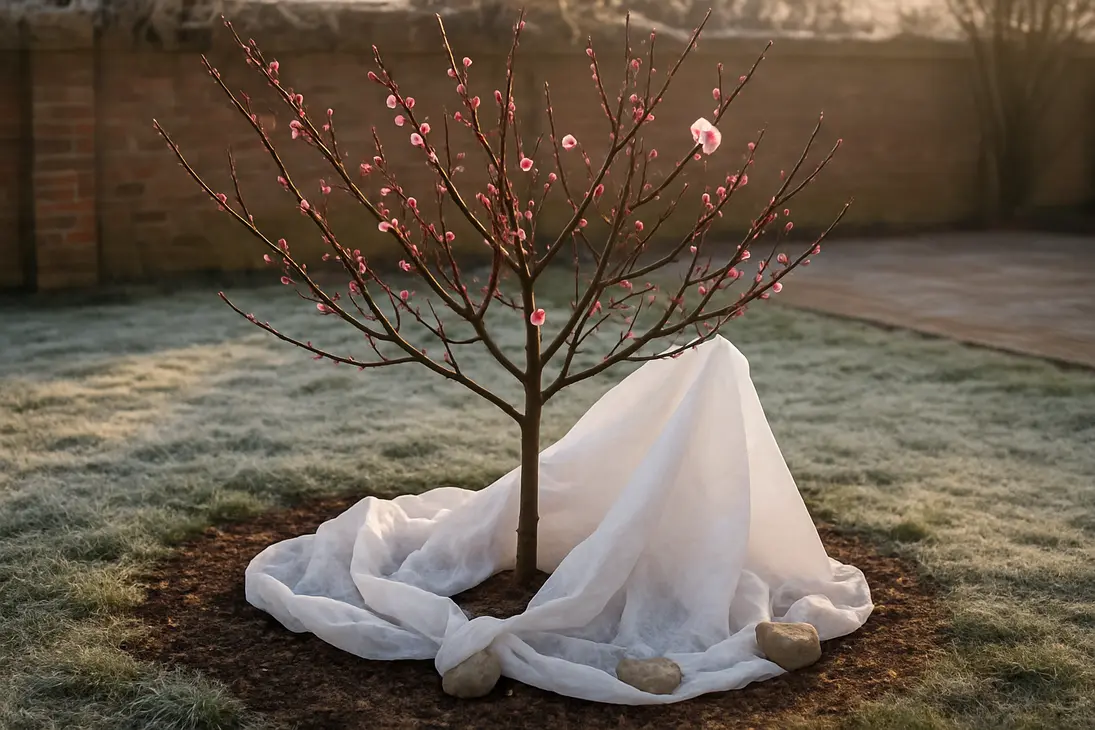
- Cover small trees during freezes
- Water dry soil before a freeze
- Reduce reflected heat where possible
These steps do not guarantee late bloom, but they reduce conditions that push buds ahead. A peach planted beside a warm brick wall may bloom earlier than the same variety in a more open site with good air drainage.
What Usually Does Not Work
Several common tactics are ineffective or harmful.
Pruning off flower buds removes the display or crop and does not change dormancy.
Heavy watering during a warm spell will not put the tree back to sleep and may damage roots.
Withholding all water can weaken the tree before winter.
Late-winter fertilizing may encourage tender growth before frost danger has passed.
Spraying water on blooms during a freeze is risky unless done as proper continuous overhead irrigation. A brief spray can worsen ice damage.
Covering a large tree poorly often disappoints. Covers work best when installed before the freeze and extended to the ground to trap heat.
When Professional Growth Regulators May Be an Option
In orchards, nurseries, or high-value landscapes, professionals may use plant growth regulators to influence bloom timing or fruit set. These products are crop-specific, timing-sensitive, and regulated by label directions.
For typical home gardeners, they are not the first solution. Misuse can damage plants, reduce flowering, affect fruiting, or violate labels. If early bloom repeatedly threatens a valuable fruit planting, contact a local extension office, certified arborist, or experienced fruit-tree specialist.
How to Reduce the Chance of Early Blooming
You cannot control winter weather, but you can avoid making early bloom more likely. Help the tree enter dormancy properly, avoid late soft growth, and keep the root zone stable.
Avoid Late Fertilizing That Encourages Soft Growth
Late nitrogen is one of the easiest mistakes to avoid. Nitrogen encourages tender growth, and if applied too late, it can delay hardening off and increase winter vulnerability. It may not directly force January bloom, but it can contribute to poorly timed growth and stress.
A better approach:
- Fertilize only when needed.
- Use tree growth, leaf color, soil conditions, and ideally a soil test.
- Avoid high-nitrogen feeding late in summer or fall in cold climates.
- Do not fertilize a stressed tree just because it bloomed early.
Many mature ornamental trees already receive enough nutrients from nearby lawn fertilization.
Manage Watering and Mulch Before Winter
Trees entering winter too dry are more vulnerable, especially young trees, newly planted trees, evergreens, and trees in sandy or exposed sites.
Before the ground freezes, water deeply during dry fall weather. Aim for moist soil, not saturated soil.
Mulch helps moderate soil moisture and temperature. Use 2 to 4 inches of organic mulch, such as wood chips, shredded bark, or leaf mold, spread widely when possible. Keep mulch several inches away from the trunk.
Avoid “mulch volcanoes,” which hold moisture against bark and can encourage rot, disease, and girdling roots. Mulch will not stop warm air from affecting buds, but it supports overall tree health.
Reduce Heat Traps Around the Tree
Heat traps collect daytime warmth and release it near the tree. In winter and early spring, this can push buds ahead.
Common heat traps include south-facing brick or stone walls, concrete patios, asphalt driveways, rock mulch, enclosed courtyards, reflective windows, and light-colored siding.
If the tree is already planted, options may be limited. Still, replacing stone mulch with wood chips, adding seasonal screening, or reducing reflected heat may help slightly. For new plantings, do not place frost-sensitive fruit trees in the warmest pocket of the yard unless you accept the risk.
Choose Later-Blooming or Better-Adapted Trees
The strongest long-term solution is choosing the right tree for your climate and site.
If late frosts are common, look for:
- Later-blooming cultivars
- Varieties suited to your chill-hour range
- Trees recommended locally
- Fruit types less prone to frost loss
- Sites with good air drainage
For fruit trees, “low chill” is not automatically better. A low-chill peach may work in mild-winter regions, but in a colder climate with warm spells, it may wake too early. Apricots are especially known for early bloom and inconsistent crops in frost-prone areas.
How to Protect Buds and Flowers From Frost
If a tree has already started blooming and a freeze is forecast, focus on damage reduction. The right method depends on tree size, bloom stage, wind, temperature, and freeze duration.
Tight buds are usually more cold-tolerant than open flowers. Tiny developing fruit can also be damaged.
Cover Small Trees Before a Freeze
Covering works best for small, young, dwarf, or espaliered trees. The cover should trap heat rising from the ground.
Use frost cloth, old sheets, lightweight blankets, row cover fabric, or burlap as a windbreak.
Basic steps:
- Water dry soil earlier in the day.
- Cover before sunset.
- Drape the cover over the canopy and down to the ground.
- Secure the edges so wind cannot lift it.
- Avoid crushing flowers when possible.
- Remove the cover after temperatures rise above freezing.
Do not place plastic directly against flowers or leaves. If plastic is the only option, use it over fabric and remove it promptly in the morning.
Water Before Cold Nights
Moist soil holds heat better than dry soil. If the soil is dry and a freeze is expected, water the root zone during the day before temperatures drop.
This is most useful when the tree is young or newly planted, the freeze is overnight, and the day is sunny enough to warm the soil.
Do not flood the area. Saturated soil can deprive roots of oxygen, especially in clay. Watering will not save open flowers from a severe freeze, but it can slightly improve the microclimate and reduce stress.
Avoid Pruning or Fertilizing Right After Frost
After a frost, damaged flowers or shoots may look terrible, but do not prune immediately. Cold damage can continue to appear for several days. Pruning too soon may remove living wood or stimulate tender growth before weather is stable.
Instead:
- Wait and observe.
- Keep soil evenly moist, not soggy.
- Avoid high-nitrogen fertilizer.
- Delay pruning until dead tissue is clear.
If only flowers were damaged, pruning may not be needed.
Know When Protection Is Not Practical
Covering a mature magnolia or large fruit tree is usually unrealistic. A cover that does not reach the ground provides limited protection, and wind can turn large fabric into a hazard.
Protection may not be practical when:
- The tree is too tall
- Temperatures will fall far below freezing
- Cold will last many hours or several nights
- Strong wind is expected
- The tree is in full bloom
- You cannot install covers safely
In those cases, focus on tree health. Losing flowers is disappointing, but it is not the same as losing the tree.
What to Do After a Tree Blooms Too Early
Once a tree blooms too early, be patient. Damage is not always obvious right away, and early bloom does not automatically mean disaster.
A tree can lose flowers or fruit and still leaf out normally. Many ornamental trees recover from frozen blooms with little long-term harm.
Check Buds, Flowers, and New Growth for Damage
After a freeze, inspect the tree over several days.
Signs of damage include:
- Brown or black flower centers
- Mushy or water-soaked petals
- Drooping flowers
- Shriveled buds
- Darkened young fruitlets
- Limp, blackened, or translucent new leaves
For fruit trees, gently open a few buds or flowers. Healthy internal tissue is often green or creamy white; damaged tissue may be brown or black. Check several parts of the tree because damage varies by exposure and bloom stage.
Do not assume the whole crop is lost because the first flowers browned. Later-opening flowers may survive.
Wait to Prune Until Damage Is Clear
For ornamental trees, wait until leaf-out shows which branches are alive. Dead twigs remain brittle and bare; living branches push leaves or shoots.
For fruit trees, do not rush corrective pruning after frost. Removing flower-damaged shoots rarely helps. When pruning is needed:
- Remove clearly dead, broken, or diseased wood.
- Cut just outside the branch collar.
- Avoid topping or shearing.
- Do not remove large limbs just because flowers were lost.
If a major limb fails to leaf out or bark is damaged, consider consulting a certified arborist.
Help the Tree Recover Without Forcing Growth
Recovery care should be steady, not aggressive.
Support the tree by:
- Keeping soil evenly moist during dry periods
- Maintaining proper mulch
- Avoiding trunk injury from mowers and string trimmers
- Skipping unnecessary fertilizer
- Watching for pests on stressed trees
- Protecting young trees from later cold snaps
If a fruit tree loses most of its crop, it may put more energy into leafy growth that season. That is not necessarily bad, especially for young trees. Avoid overreacting with heavy pruning or feeding.
Conclusion
You usually cannot stop a tree from blooming once its buds are ready and warm weather has pushed them open. But you can reduce early bloom risk by avoiding late nitrogen, watering properly before winter, mulching well, limiting heat traps, and planting later-blooming or better-adapted varieties.
When a tree blooms too early, frost protection is most realistic for small trees. Covers, moist soil, and temporary wind protection can help during light freezes, but severe cold may still damage flowers.
Most early-bloom problems are disappointing rather than fatal. Flowers or fruit may be lost for the season, while the tree remains healthy. The best response is calm observation, careful aftercare, and better prevention before next winter.
FAQ
Can I stop a tree from blooming once buds have opened?
Not reliably. Once buds open, you cannot return the tree to dormancy. Protect flowers from frost if the tree is small enough to cover. For future years, focus on site choice, variety selection, watering, mulch, and avoiding late nitrogen.
Will early winter blooming kill my tree?
Usually, no. Early bloom may ruin flowers or fruit for that season, but it rarely kills a healthy, well-adapted tree. Tender new growth, young trees, and stressed trees face more risk.
Should I prune flower buds off to prevent blooming?
No. Pruning off flower buds removes the display or crop and does not change the tree’s response to warmth. Heavy pruning can also stress the tree.
What is the best way to protect a blooming tree from frost?
For a small tree, cover it before sunset with frost cloth, sheets, or lightweight blankets that reach the ground. Secure the edges, water dry soil earlier in the day, and remove the cover after temperatures rise. Large mature trees are often impractical to protect fully.
You Might Also Like