What Are the Benefits of Converting Houseplants Into Bonsai?
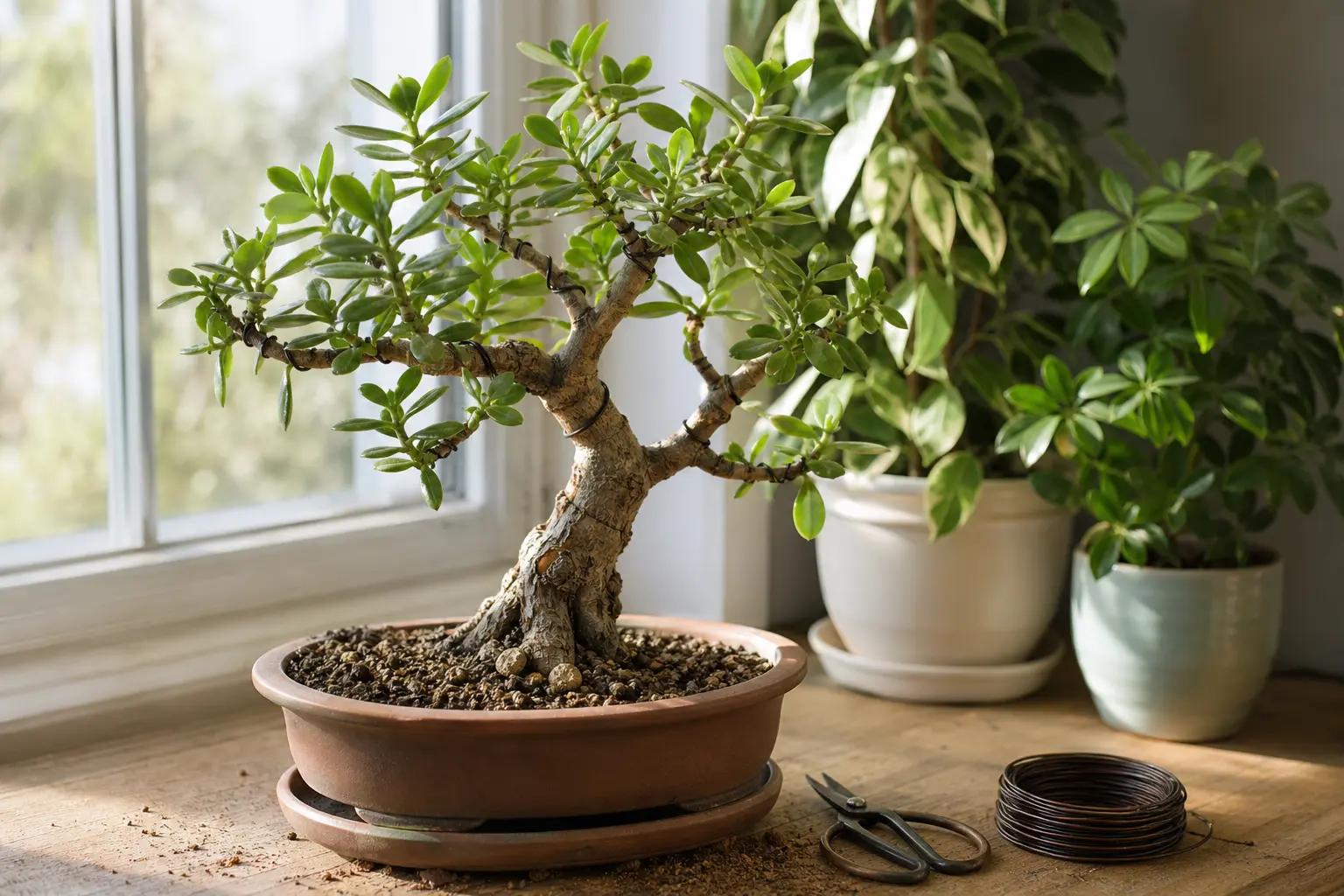
Converting a houseplant into bonsai can make it more compact, visually interesting, and personal without requiring a traditional outdoor bonsai tree. The main benefits are better use of indoor space, greater control over shape and size, and the satisfaction of developing a living design over time.
Bonsai is not a plant species. It is a method of training suitable plants through selective pruning, root management, wiring when appropriate, and pot choice. Jade, ficus, schefflera, and other woody or semi-woody houseplants can be grown in miniature, tree-like forms.
This does not change a plant’s basic care needs. It still requires suitable light, watering, growing medium, and feeding for its species. Bonsai simply makes its growth more intentional.
Why Train a Houseplant as Bonsai?
Bonsai is about creating the impression of a mature tree in limited space. A plant that might become lanky, top-heavy, or oversized can become a compact focal point with a visible trunk and deliberate branching.
Keep a Favorite Plant at a Manageable Size
Many houseplants eventually outgrow their original locations. A jade plant may become broad and heavy, while ficus and schefflera can become tall or sparse if left unpruned.
Bonsai training lets you keep the same plant in a contained form through regular pruning and controlled root space. It can be especially useful for:
- Small apartments or limited windowsill space
- Bright desks, shelves, or tabletops without room for floor plants
- Sentimental cuttings you want to keep for years
- Healthy plants becoming awkwardly tall or wide
Keeping a plant compact does not mean starving it. Successful bonsai should remain vigorous; the goal is to balance growth, not stop it.
Create a Living Decorative Focal Point
A bonsai-style plant encourages closer attention than an ordinary houseplant. Its pot, trunk, branches, and canopy all contribute to the display.
A compact bonsai can work on a dining table, bookshelf, office desk, entryway console, or bright kitchen counter. It adds a strong natural element without taking up much room.
Choose a pot with drainage holes first. A shallow glazed pot may suit a refined indoor setting, while unglazed clay can give jade or ficus a more natural look.
Highlight the Plant’s Trunk, Branching, and Character
Normal foliage growth can hide a plant’s most interesting features. Bonsai training emphasizes the trunk line, root flare, branch placement, and open spaces between branches.
This is rewarding with plants that develop woody stems. A curved ficus trunk, thick jade branches, or the root-like base of a ginseng ficus can become a design feature rather than merely supporting leaves.
Good bonsai design often works with what is already present. A naturally bent branch, thick lower stem, or appealing trunk lean can guide the shape better than forcing rigid symmetry.
Practical Benefits of Bonsai Houseplants
The benefits of bonsai are practical as well as decorative. Training encourages regular observation, helps you address problems earlier, and can make better use of indoor conditions.
Make Better Use of Limited Indoor Space
A bonsai uses less physical and visual space than a full-sized version of the same plant. It can sit near its light source instead of being pushed into a dim corner to make room for furniture.
Small size does not reduce light requirements, however. A ficus bonsai still needs bright light, and jade needs strong light to stay dense. Bonsai saves space; it does not make a sun-loving plant suitable for a dark room.
Shape Growth Instead of Letting Plants Become Leggy
Leggy indoor growth is often caused by weak light. Stems stretch toward windows, leaves become widely spaced, and plants lose their balanced appearance.
Selective pruning can encourage shoots closer to the trunk and create a fuller silhouette over time. But pruning cannot correct inadequate light. If a plant keeps stretching, move it closer to a suitable window or use an appropriate grow light.
Refresh Overgrown or Ordinary Houseplants
An established but neglected houseplant can make excellent bonsai material. A thick-stemmed jade, bare-trunked ficus, or top-heavy schefflera may have more potential than a young, perfectly symmetrical plant.
Training can give it a new purpose:
- Remove dead, crossing, or poorly placed branches.
- Shorten long shoots to bring the canopy closer to the trunk.
- Reveal an attractive base or trunk line.
- Repot into a container suited to its new scale.
- Refine the shape over several growing seasons.
Avoid major pruning when a plant is weak, pest-damaged, recently moved, or recovering from watering problems.
Build a Long-Term, Hands-On Indoor Hobby
Bonsai adds a creative dimension to houseplant care. You observe how branches respond, decide which shoots to keep, and make small adjustments over time.
A bonsai rarely looks finished after one pruning session. Its character develops through repeated cycles of growth and refinement. The fundamentals remain familiar: suitable light, careful watering, free-draining soil, airflow, and sensible feeding. Bonsai simply requires closer attention to them.
Creative and Well-Being Benefits
Bonsai can make plant care more enjoyable by encouraging observation, patience, and personal expression. It does not need to become a formal showpiece to be rewarding.
Express Personal Style Through Pruning and Pot Selection
Two people can begin with similar jade plants and create very different bonsai. One may prefer a neat upright shape, while another may favor a low canopy or gently leaning trunk.
Personal style can show through in:
- Canopy height and width
- Formal or informal structure
- How much trunk is visible
- Pot material and color
- A sculptural, naturalistic, or minimalist appearance
The best design suits both the plant and your home. Forcing dramatic shapes that fight the plant’s natural habit can cause stress and look artificial.
Learn More About How Plants Grow
Bonsai training makes plant growth easier to understand. You learn where buds emerge, how light affects leaf spacing, how plants respond to pruning, and how roots influence growth above the soil.
This can improve care for all houseplants. You may recognize sooner when a plant is reaching for light, becoming root-bound, or producing soft growth from too much fertilizer and too little sun.
Species still matter. Jade stores water in its leaves and stems, while ficus generally needs more consistent moisture. Good bonsai care starts with the plant’s natural habits.
Enjoy a Slow, Seasonal Project
Bonsai rewards gradual progress. A small cutback may lead to new branching months later, and trunks thicken slowly. A plain design can become convincing after years of careful growth.
Indoor growth may slow in winter as daylight declines. That is usually a time for lighter intervention rather than aggressive pruning or major root work.
Create a Calming Plant-Care Routine
Checking soil moisture, turning the plant for even growth, removing yellow leaves, and looking for pests can become a pleasant routine. Because bonsai invites close observation, you are more likely to notice changes early.
Choose a plant and care schedule that fit your lifestyle, though. A bonsai that dries out repeatedly while you are away will not remain enjoyable.
The Trade-Offs: Is Bonsai Better Than Keeping a Normal Houseplant?
Bonsai is not automatically better than growing a houseplant normally. Its compact size and refined appearance require more regular decisions about watering, pruning, and repotting.
A normal plant in a larger pot may tolerate missed watering better and need less frequent shaping.
Bonsai Needs Regular Water, Light, and Feeding
A bonsai is still an actively growing plant. It needs adequate light, water as its growing medium dries, and fertilizer during active growth.
Avoid watering by calendar. Temperature, light, pot size, soil mix, and season all affect drying speed. Check the soil instead. Also, do not try to compensate for low light with extra fertilizer; fertilizer cannot replace sunlight.
Small Pots Can Dry Out Faster
Shallow bonsai containers hold less growing medium, leaving less moisture reserve around the roots. In warm rooms, near sunny windows, or during active summer growth, a bonsai may need checking daily.
A free-draining mix is equally important because shallow pots can remain too wet if the soil is dense. Root health depends on both moisture and air in the growing medium.
Pruning and Repotting Require Timing
Indiscriminate pruning can weaken a plant. Avoid removing a large amount of foliage and roots at the same time unless you have experience with that species.
Repot when the plant is healthy and entering active growth, with timing adjusted for the species and local conditions. After root work, provide stable light and careful watering instead of immediately adding more styling stress.
Plan for Care When You Travel
Travel can be a challenge because small pots dry faster than conventional houseplant pots. Before leaving, assess the plant and conditions. You may need someone to check it, a temporary move away from harsh direct sun, or a tested watering setup.
Do not put a bonsai in a dark room merely to reduce watering needs. Prolonged low light creates a different problem.
Which Houseplants Work Well as Bonsai?
Not every houseplant is a strong bonsai candidate. The best choices tolerate pruning, produce new shoots after cutting, and develop stems or trunks with character.
Look for Plants That Tolerate Pruning and Root Work
Choose a healthy plant that can recover from selective pruning and occasional root maintenance. Woody or thick-stemmed plants are generally better suited than soft, trailing plants.
Good candidates usually have:
- Trunk-like stems
- New buds or shoots after pruning
- Leaves that suit the plant’s scale
- Roots that tolerate periodic repotting
- A growth habit compatible with your available light
Do not start with a struggling plant. Bonsai training adds stress and is best reserved for vigorous specimens.
Choose Species That Respond Well to Branching
Branching is essential to the miniature-tree effect. Ficus species are popular because they often respond well to pruning and develop attractive trunks. Jade can form thick, convincing branches but needs bright light to stay compact. Schefflera is forgiving and can make an appealing tropical-style bonsai.
Plants with very large leaves can still be trained, but may not create the same proportioned look as naturally small-leaved species.
Consider Jade, Ficus, Schefflera, and Other Suitable Candidates
| Plant | Why it works | Main indoor consideration |
|---|---|---|
| Jade (Crassula ovata) | Thickens over time and responds to pruning | Needs very bright light and careful watering |
| Ficus | Woody trunk and reliable branching potential | Prefers consistent warmth and bright light |
| Schefflera | Pruning-tolerant and adaptable indoors | Can become leggy in low light |
| Dwarf umbrella tree | Compact tropical appearance | Needs regular trimming to maintain scale |
| Portulacaria afra | Small leaves and drought tolerance | Requires strong light to remain dense |
A suitable species still needs proper care. Start with the plant you can grow well in your available conditions.
Match the Plant to Your Indoor Light Conditions
Light should guide your choice more than appearance alone. Sunny south- or west-facing windows may support jade or portulacaria. Bright, indirect light can suit many ficus and schefflera plants. Dim rooms are not ideal for bonsai training.
If natural light is inadequate, consider whether a grow light is realistic for your routine. Choosing a plant suited to your conditions is easier than repeatedly struggling with a light-demanding species.
How to Decide Whether to Convert a Houseplant Into Bonsai
Before cutting or repotting, consider whether bonsai training suits the plant and your available time. A gradual approach is more likely to succeed than a dramatic makeover.
Start With a Healthy, Established Plant
Choose a plant with firm growth, healthy leaves, and no major pest or root problems. It should be established enough to recover from pruning.
If it has recently been purchased, moved, repotted, or rescued from stress, let it settle first. New conditions alone can cause leaf drop or slowed growth.
Have a Clear Design Goal Before Pruning
Study the plant from all sides and decide what to emphasize: a thick base, graceful lean, or branch that could become the main leader.
Before making cuts, identify:
- The front view
- The trunk line to show
- Dead, crossing, or poorly placed branches
- Approximate height and canopy width
- Whether the current pot is temporary or part of the design
A few deliberate cuts are usually more effective than removing half the plant for an instant bonsai shape.
Begin Gradually Rather Than Reshaping It All at Once
Reduce overgrown plants in stages. Prune part of the growth, allow recovery and new shoots, then refine the structure later.
Avoid combining severe pruning, wiring, root pruning, and major environmental changes in one session. Give the plant time to recover between significant interventions.
Keep Normal Houseplant Care Needs in Mind
Bonsai training should support normal care, not replace it. Continue monitoring light, moisture, pests, temperature, and growth rate.
Dense, sturdy new growth usually suggests suitable conditions. Long weak stems, yellow leaves, persistent leaf drop, or soggy soil indicate that care conditions need attention before further styling.
Conclusion
The benefits of bonsai houseplants include space-saving growth, intentional shape, stronger decorative impact, and a rewarding long-term hobby. Training can turn an overgrown jade, ficus, or schefflera into a compact plant with visible trunk character and developed branching.
The trade-off is greater attention. Bonsai needs reliable light, species-appropriate watering, periodic pruning, and thoughtful repotting. Small pots also leave less room for missed care, especially when you travel.
If you have a healthy plant, suitable light, and interest in gradual hands-on care, converting a houseplant into bonsai can make an everyday plant more distinctive while still allowing it to thrive.
FAQ
Can any houseplant be turned into a bonsai?
No. Many houseplants can be kept small through pruning, but not all are suited to true bonsai-style training. The best candidates tolerate pruning and root work, develop trunk-like stems, and produce new growth after cutting. Jade, ficus, schefflera, and portulacaria are common indoor choices.
Soft-stemmed, trailing plants may work in small pots but usually do not develop the woody structure associated with bonsai.
Does making a houseplant into bonsai keep it permanently small?
Not without ongoing care. Bonsai plants remain genetically capable of reaching their normal size. Their compact form is maintained through pruning, controlled root space, and suitable conditions.
If you stop pruning and move the plant into a larger pot, it will usually resume more vigorous growth.
Are bonsai houseplants harder to care for than regular houseplants?
They can be. Bonsai requires more frequent observation because the pot holds less soil and the shape needs maintenance. Watering may be more demanding, and pruning and repotting require good timing.
However, the basic principles are the same as for regular houseplants. A bonsai in suitable light, planted in an appropriate mix, and checked regularly is manageable for many beginners.
How often do indoor bonsai need watering?
Water when the growing medium begins to dry rather than following a fixed schedule. A bonsai in bright light or a warm room may dry quickly, while one in lower light may remain wet longer.
Species matters as well. Jade and portulacaria generally need to dry more between waterings than ficus or schefflera. Always use a pot with drainage and avoid keeping the root ball constantly waterlogged.
You Might Also Like