Should You Remove or Leave Dry Buds on a Dracaena Marginata?
If you are concerned about dry buds on Dracaena margarita—more accurately, Dracaena marginata—the safest answer is: leave them unless they are clearly dead, diseased, or rotting.
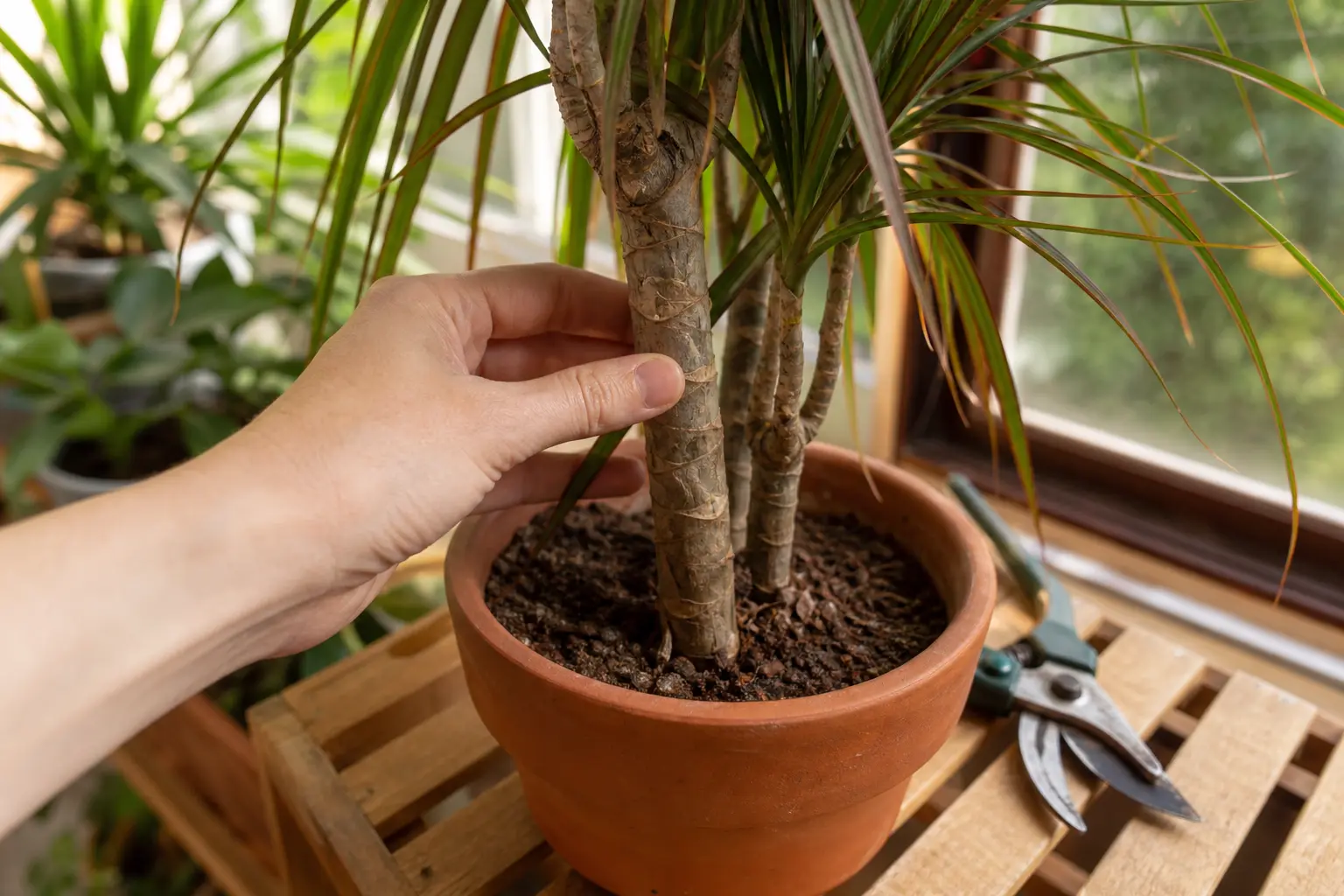
Dracaena canes often have small raised nodes, old leaf scars, or dormant growth points that look dry, woody, and inactive. These can still be alive. After pruning, leaf loss, or stress, a seemingly bare cane may eventually produce a new shoot from one of these points.
Do not remove a dry-looking bud simply because it is not green or actively growing. Instead, assess the condition of the surrounding stem. Firm, dry, intact tissue is usually worth keeping. Soft, blackened, wet, hollow, or collapsing tissue should be cut away before rot spreads.
First, Identify Whether the Bud Is Dormant, Dry, or Dead
A Dracaena marginata does not always show obvious green buds like a flowering shrub. Its dormant buds are often subtle bumps or rings along the cane, especially near old leaf scars or below a pruning cut. They may look tan, brown, or slightly dry on the surface while remaining viable underneath.
The important distinction is between surface dryness and dead internal tissue.
A healthy cane can look woody, scarred, and unpromising for a long time. In contrast, a dead or rotting cane changes texture. It may become soft, shriveled beyond recovery, darkened, or unstable at the base.
Signs a Bud May Still Grow
Leave the bud or node in place when most of the following are true:
- The cane is firm when gently pressed.
- The bark-like outer surface is dry but not loose, hollow, or mushy.
- The bud is intact rather than sunken deeply into the stem.
- The cane still has healthy leaves above it, or has recently been pruned.
- There is no sour smell, wet black patch, or spreading discoloration.
- The stem beneath the node is greenish, pale, or moist-looking when a tiny amount of outer skin is carefully scratched away.
Avoid repeatedly scratching several areas of the cane. Each wound creates an entry point for disease and does not make the plant grow faster.
A dormant bud may remain unchanged for weeks or months. This is especially common after a Dracaena has been cut back, moved, repotted, or exposed to lower light. Lack of immediate growth is not proof that the bud has failed.
Signs the Stem or Bud Should Be Removed
Remove tissue when there is clear evidence that it is dead or decaying. Warning signs include:
- A soft, squishy, or water-soaked cane
- Black, very dark brown, or translucent patches that are expanding
- A sour, fermented, or rotten odor
- A bud or branch that collapses when touched
- A hollow cane with dry, brittle interior tissue all the way through
- Dark rot moving upward from the soil line
- A stem that is completely brown, brittle, and dry from tip to base
A dry, papery leaf sheath around a node is not necessarily a problem. You can gently peel away loose material if it comes off easily, but do not dig into the cane searching for a bud.
When to Leave Dry Buds Alone
Leaving firm, intact dry buds alone is usually the better choice. Dracaena marginata stores energy in its canes, and healthy bare sections are valuable even when they look inactive. Removing nodes unnecessarily reduces the plant’s chances of branching or regrowing after stress.
This is particularly important if your plant has lost leaves from overwatering, underwatering, cold exposure, or a recent change in growing conditions. The remaining cane may still recover once the underlying problem is corrected.
Dormant Buds After Pruning
Pruning can encourage a Dracaena marginata to branch. When the growing tip is removed, the plant may activate one or more dormant buds below the cut. New shoots often emerge from the side of the cane rather than directly from the cut surface.
For the best chance of regrowth:
- Make a clean cut with disinfected pruners or a sharp knife.
- Cut above a firm, healthy section of cane.
- Leave the remaining cane upright and undisturbed.
- Keep the plant in bright, indirect light.
- Water only when the potting mix has dried appropriately for the plant and container.
Do not keep cutting lower and lower because buds have not appeared quickly. A Dracaena may need a long adjustment period before it begins new growth. Repeated pruning can use up stored energy and leave fewer viable nodes.
What a Healthy Dracaena Stem Feels Like
A healthy Dracaena cane should feel solid and supportive. It may have slight natural give, but it should not feel wet, spongy, or empty.
Use this quick comparison:
| Stem condition | Likely meaning | Best response |
|---|---|---|
| Firm, dry, woody, with intact nodes | Healthy or dormant | Leave it alone and provide steady care |
| Firm but lightly wrinkled | Possible thirst or root stress | Check potting mix and roots before watering |
| Dry, brittle, and hollow throughout | Dead tissue | Prune back to live, firm tissue |
| Soft, dark, wet, or smelly | Rot | Remove affected tissue promptly |
| Darkened only at an old cut, but firm underneath | Normal callusing or aging | Monitor; do not cut unless it softens |
A healthy cane can have scars, uneven coloring, and dry patches without being dead. Texture matters more than appearance alone.
When and How to Remove Dead Buds or Damaged Stem
Prune only what is clearly dead, diseased, or rotten. There is no benefit to trimming every dry node or cosmetic imperfection. Your aim is to stop decay and preserve as much healthy cane as possible.
Before pruning, clean your tools with rubbing alcohol or a household disinfectant, then allow them to dry. This reduces the chance of moving pathogens from one plant or cut to another.
Pruning a Dead Tip or Branch
If only the tip or one branch is dead, cut it back gradually until you reach healthy tissue.
- Locate the transition between damaged and firm stem.
- Make a clean cut slightly below the damaged area.
- Inspect the cut surface.
- If it is pale, greenish, cream-colored, or firm, stop there.
- If it is dark, wet, or soft, cut a little lower and check again.
- Discard rotten pieces rather than composting them indoors.
A clean cut on healthy cane may dry and seal naturally. Keep water off the fresh cut and avoid misting the cane.
If the remaining stem is healthy, it may later sprout from nodes below the cut. This is one reason not to remove an entire cane just because its top growth has failed.
If the Stem Is Soft, Mushy, or Dark
Softness near the soil line is more urgent than a dry bud higher up the plant. It often points to stem rot, commonly linked with roots staying wet too long.
Remove the plant from its pot and inspect the root system. Healthy roots are generally firm and pale to tan. Rotting roots may be dark, slimy, mushy, or easily pulled apart.
If rot is limited:
- Trim off rotten roots with clean tools.
- Cut away soft stem tissue until only firm tissue remains.
- Repot in fresh, airy potting mix in a pot with drainage holes.
- Do not place the plant in a larger pot than necessary.
- Wait to water until the mix begins drying rather than keeping it constantly moist.
If rot has moved far up the cane, a healthy upper section may still be saved as a cutting. A cane that is soft from base to tip is unlikely to recover.
What to Do With a Healthy Cutting
A firm, healthy top section removed during pruning can often be propagated. Choose a piece with a healthy cane and, ideally, a leafy top or several nodes.
Let the cut end dry in a shaded, airy place until it is no longer freshly wet. This brief callusing period helps the cut surface dry before it is placed in water or growing medium.
You can root a Dracaena cutting in water or a lightly moist, well-draining propagation mix. Keep it warm, in bright indirect light, and away from harsh sun. If rooting in water, refresh the water when it becomes cloudy. If rooting in soil, do not keep the mix saturated.
Anecdotal propagation reports often describe very slow results; one Reddit grower reported waiting many months before a Dracaena cutting began to grow. Patience is normal with this plant, not necessarily a sign of failure.
Check Watering and Roots Before Blaming the Buds
Dry buds are often not the main problem. A Dracaena with leaf drop, drooping foliage, wrinkled canes, or brown tips may be reacting to root conditions, inconsistent watering, poor drainage, heat, low humidity, or light stress.
Do not respond to every symptom by watering more. Check the potting mix, drainage hole, roots, and stem firmness first.
Wet Soil, Leaf Drop, and Possible Root Rot
If the potting mix remains wet for a long time, the plant drops leaves, or the base of the cane feels soft, overwatering or poor drainage is more likely than thirst.
Dracaena marginata prefers to dry somewhat between waterings. A heavy decorative pot, a pot without drainage, compacted mix, or a plant placed in low light can all slow drying dramatically.
Check moisture several inches below the surface rather than relying only on dry topsoil. If the lower root zone is still wet, wait before watering again.
Leaf drop caused by stressed roots can look alarming, but watering more will usually worsen it. First correct drainage and allow the root zone to regain oxygen.
Wrinkled Stalks and Dry Potting Mix
Wrinkled or slightly shrunken canes can indicate dehydration, but they can also occur when damaged roots cannot take up water. This is why the condition of the potting mix matters.
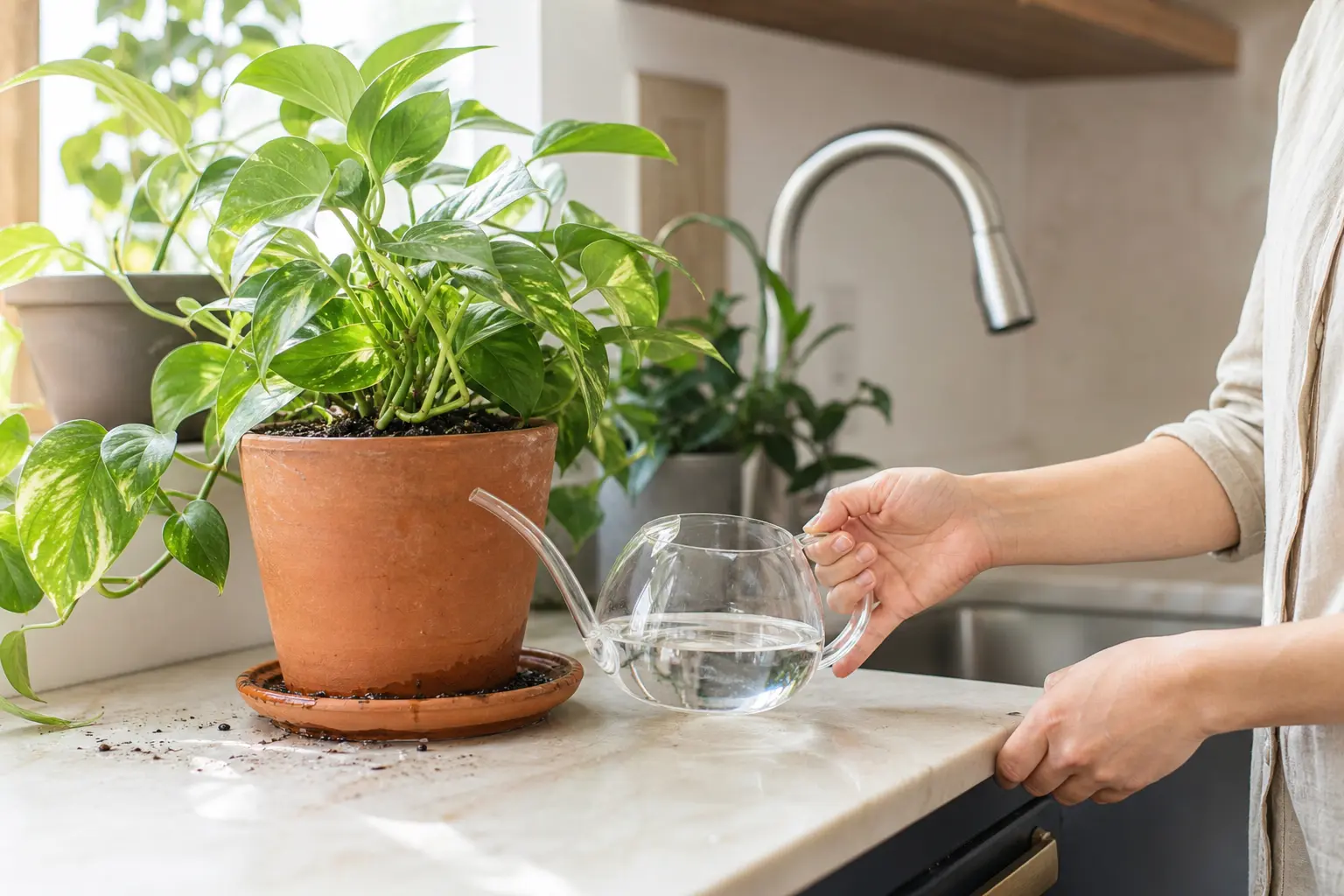
If the mix is dry well below the surface and the cane is firm but wrinkled, water thoroughly until excess drains from the pot. Empty any saucer afterward. Then wait for the mix to partly dry before watering again.
If the mix is wet but the cane is wrinkled, do not add water. Inspect for root problems instead. A plant can look thirsty while sitting in overly wet soil because unhealthy roots cannot function properly.
Brown Tips, Heat, Humidity, and Light Stress
Brown leaf tips are common on Dracaena marginata and do not automatically indicate dead buds or a failing cane. Possible contributors include:
- Inconsistent watering
- Very dry indoor air
- Hot air from radiators, vents, or appliances
- Strong direct sun
- Mineral buildup from water or fertilizer
- Physical damage to leaf tips
Move the plant away from hot drafts and intense afternoon sun. Provide bright, indirect light rather than a dim corner or a harsh south-facing windowsill without protection. Trim only the brown leaf tissue for appearance, following the natural pointed shape of the leaf, and avoid cutting into healthy green tissue more than necessary.
What to Expect After Pruning or Propagating
Dracaena marginata is resilient, but it is not fast. A cane can remain bare after pruning before new shoots begin to swell. A cutting can remain green and firm for a long time before producing roots or leaves.
The most useful aftercare is consistency: moderate warmth, bright indirect light, a pot with drainage, and watering based on the condition of the mix rather than a rigid calendar.
Letting Cuttings Callus Before Propagation
Freshly cut Dracaena stems benefit from a short period of air-drying before propagation. Keep cuttings out of direct sun while the cut end dries.
The goal is not to dehydrate the entire cutting. It is simply to allow the cut surface to dry and seal slightly. Once callused, place the cutting in water or a suitable rooting medium.
Keep the original orientation of the cane if possible. The end that was growing upward should remain upward in soil or water. While some cane cuttings can root in different positions, maintaining the original direction reduces confusion and gives the cutting a more natural start.
Patience With New Shoots and Roots
Expect progress in stages:
- The fresh pruning cut dries and stabilizes.
- Dormant nodes may swell slightly before visible leaves appear.
- A cutting may maintain its leaves without rooting immediately.
- Roots may form before obvious top growth, or new growth may begin before roots are visible in water.
Avoid pulling a cutting out repeatedly to check for roots. This can break delicate new roots and disturb the callusing process. Instead, watch for firm stems, healthy leaf color, subtle bud swelling, and resistance when a soil-rooted cutting is gently nudged after several weeks.
If a cutting becomes soft, black, or foul-smelling, remove the affected portion and recut to healthy tissue if enough remains.
Conclusion
Leave dry-looking buds on a Dracaena marginata when the cane is firm, intact, and free of rot. These buds may be dormant growth points, especially after pruning or leaf loss, and they can eventually produce new shoots.
Remove only tissue that is unmistakably dead or decaying: soft, blackened, hollow, collapsing, or foul-smelling stems and buds. Before cutting, check the plant’s roots and moisture level, because overwatering and root damage often cause the symptoms that make buds seem inactive.
A bare cane can still be a living cane. Give healthy stems time, stable conditions, and a chance to respond before reaching for the pruners.
FAQ
Can a dry-looking Dracaena marginata bud grow again?
Yes. A dry-looking bud or node can still be dormant and viable if the surrounding cane is firm and healthy. Dracaena buds often do not look green or actively swollen until they are ready to grow. Leave intact nodes alone unless they are soft, blackened, hollow, or part of a dead cane.
Should I cut off a dry node on my Dracaena?
Usually, no. Do not cut off a dry node simply because it looks inactive. Nodes are potential growth points, and removing them may reduce the chance of future branching. Prune only if the node is part of clearly dead, diseased, or rotting stem tissue.
How can I tell whether my Dracaena stem is dead or rotting?
A dead stem is usually dry, brittle, and hollow or uniformly brown inside. A rotting stem is more likely soft, mushy, dark, wet-looking, or foul-smelling. Healthy stem tissue feels firm and solid, even if its outer surface is dry, woody, or marked with old leaf scars.
Will pruning a Dracaena marginata make it branch?
It can. Removing the growing tip may encourage dormant buds below the cut to produce one or more new shoots. However, branching is not immediate or guaranteed on a fixed schedule. Keep the plant healthy with bright indirect light, good drainage, and sensible watering while it recovers.
You Might Also Like