Plant Pot Sizes Explained: How to Measure, Choose the Right Size, and Know When to Repot
A “6-inch pot,” a “1-gallon pot,” and a “#1 nursery container” are not the same: some labels describe diameter, others volume, and ”#” sizes describe industry container classes. When repotting for plant health, choose by the root ball, not the label. When fitting a nursery pot into a decorative pot, actual dimensions matter more than printed size. Bigger is not automatically better, but a large pot is not inherently harmful — it changes how water and air behave around the roots.
Key Takeaways
- Read the label, then measure the pot: Inches and centimeters describe top diameter, liters and gallons describe capacity, and nursery # sizes are industry container classes rather than exact gallon volumes. Under ANSI Z60.2-2025, a #5 only means 5 gallons when labeled “#5 True.”
- Size the new pot to the root ball, not the leaves: A large canopy can hide a small root system. Slide the plant out and check how fully roots occupy the mix before deciding how much larger to go.
- Treat the 1–2 inch rule as a starting point: Moving up one pot size—about 1–2 inches in diameter for houseplants—is a conservative moisture-management default, not a biological law.
- A bigger pot is a moisture challenge, not a poison: Oversized containers hold more water and dry more slowly, so the real risk is managing wet mix, not the pot size itself.
- Measure both pots before buying a cachepot: A “6-inch” nursery pot often will not fit a “6-inch” decorative pot, so compare the nursery pot’s widest rim with the planter’s inside opening.
How Plant Pot Sizes Are Actually Measured and Labeled
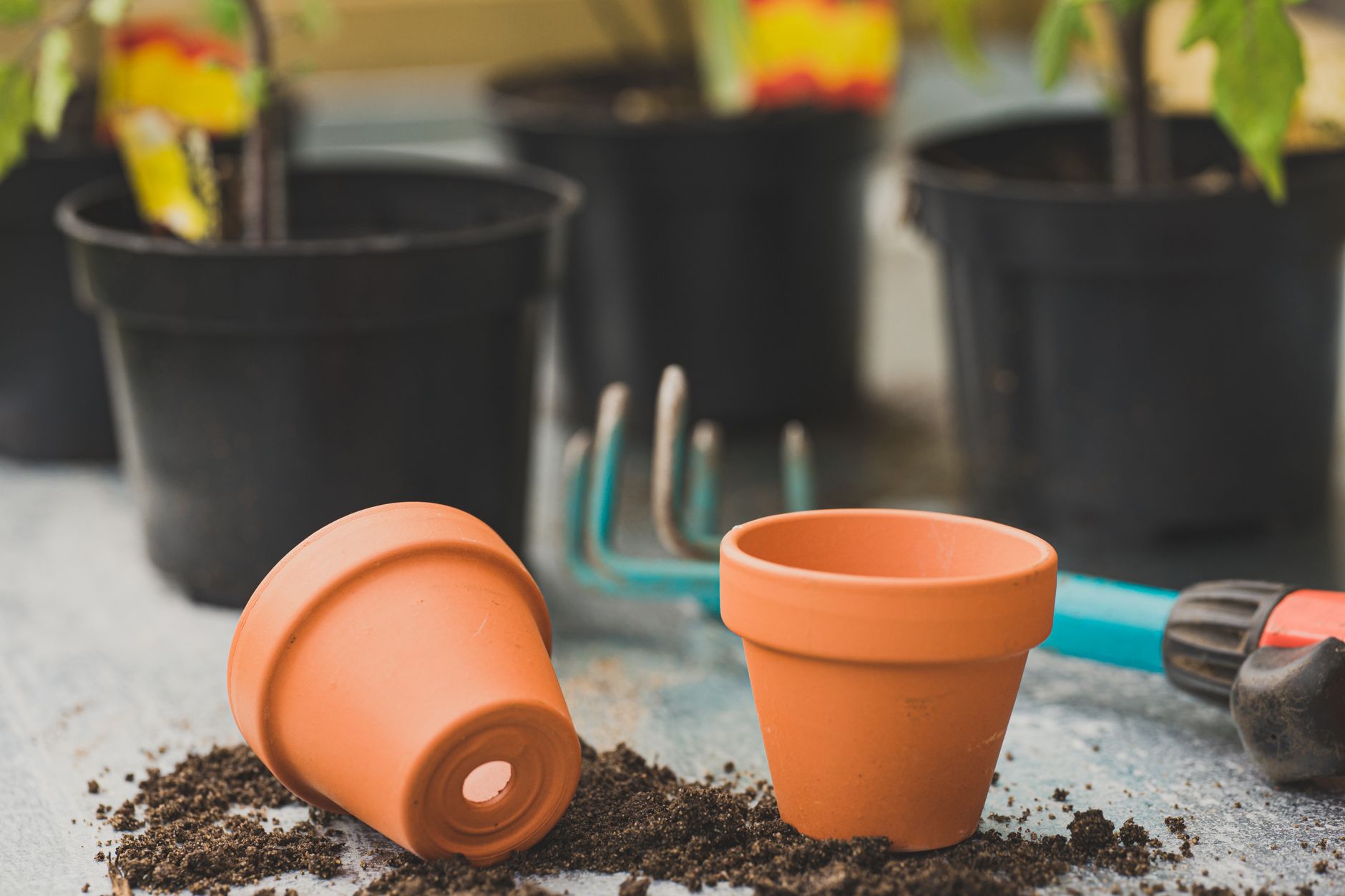
Diameter, Height, and Inside Space: What Should You Measure?
Round pots sold by inch or centimeter are usually described by top diameter. That number helps comparison but does not tell depth, base width, or wall thickness. For repotting directly, check the usable inside diameter and depth against the actual root ball, not the leaf canopy. For a cachepot, measure the nursery pot’s widest rim and the decorative pot’s inside opening. Also check internal height, taper, and base width — a pot that fits at the rim can wedge on inward-sloping walls. For square containers, measure along a side rather than diagonally.
How to Read Inches, Centimeters, Liters, Gallons, and Nursery # Sizes
Inches and centimeters describe a physical dimension such as top diameter. Liters, quarts, and gallons describe capacity. Nursery ”# sizes” describe industry container classes. You cannot convert one system to another without knowing the pot’s shape.
The American Standard for Nursery Stock (ANSI Z60.2-2025) defines these classes: a #1, #2, or #5 does not automatically mean exactly 1, 2, or 5 gallons; each class covers a permitted volume range. A “True” or “T” designation, such as #5 True, marks a container that genuinely holds that exact gallon volume.
| Label You See | What It Usually Describes | Useful For | What It Does Not Guarantee |
|---|---|---|---|
| 4”, 6”, 8”, etc. | Pot diameter | Comparing physical width | Exact soil volume |
| cm diameter | Pot diameter | Metric size comparison | Exact volume |
| Liters / quarts / gallons | Container capacity | Comparing growing volume | Exact diameter or height |
| #1 / #2 / #5 | Nursery container class | Nursery trade sizing | Exact gallon volume or diameter |
A “6-inch pot,” a “1-gallon pot,” and a “#1 container” are not the same measurement with different names. Treat labels as a starting point.
Why Two Pots With the Same “Size” Can Still Be Different
Two containers with similar volume can look completely different: one wide and shallow, another tall and narrow. Two 5-liter pots need not share diameter or height — one can be a squat bowl, another a tall cylinder. Both hold about 5 liters, but root-zone shape and drying behavior differ, which changes drainage and how quickly the mix dries. Printed volume says little about whether a nursery pot will nest inside a decorative planter; that fit needs real measurements.
What Size Pot Does Your Plant Actually Need?
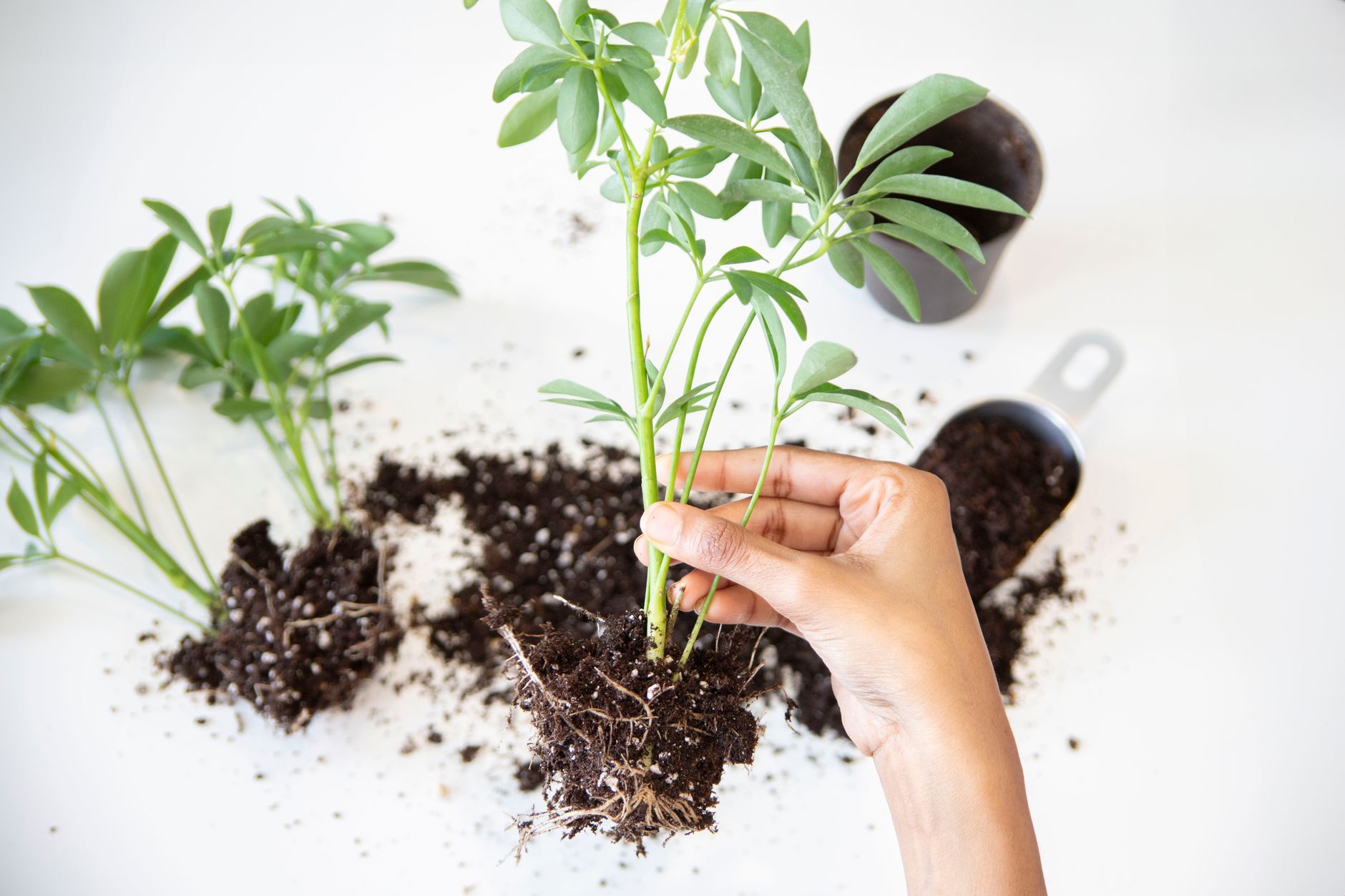
Size the New Pot to the Root Ball, Not Just the Plant Above the Soil
Foliage size alone misleads: a large-looking plant may have a compact root ball, while a smaller plant can be root-dense. Before buying a larger pot, slide the plant out and look for roots occupying most of the mix, dense circling roots, roots through the drainage holes, or little loose mix left. The current pot is a useful reference, but the root system is the better guide.
The 1–2 Inch Rule Is a Conservative Starting Point, Not a Law
The common houseplant recommendation is to move up one pot size — often 1–2 inches (2.5–5 cm) in diameter for smaller plants. University Extension guidance favors gradual upsizing because it leaves less unused mix around the root ball and makes moisture easier to manage. This is a practical default, not a universal biological limit. Larger plants, unusual root systems, outdoor container crops, and specialized substrates may need different decisions.
Can You Jump Straight to a Much Bigger Pot?
A much larger container does not automatically stop shoot growth while roots “fill the pot,” and root restriction itself can reduce growth, so more rooting space is not inherently harmful. The real concern is moisture: a larger volume of mix stores more water and may dry far more slowly than the roots can use it. The jump gets harder with a dense, water-retentive mix, low indoor light, cool conditions, a small root system, heavy watering, or poor drainage. Growers using highly aerated substrates and controlled irrigation can handle larger containers. Gradual potting up is a conservative moisture-management strategy, not a rule that roots must touch the pot walls before growth happens.
Diameter vs. Depth: Choose the Shape With Both Roots and Water Behavior in Mind
Root architecture matters, but the decision is not just “deep-rooted plant, deep pot.” Container height changes drainage and air-water distribution: taller pots generally drain more thoroughly, while short, squat pots retain more water-filled pore space after watering. Consider both the plant’s root form and the moisture behavior created by the shape; for most houseplants, wet-dry behavior matters more than matching a generic category label.
Why Bigger Isn’t Always Better: How Pot Size Changes Water, Air, and Growth
“Plants Grow in Unlimited Soil Outside — So Why Can a Pot Be Too Big?”
A container is not soil. A pot is a small, enclosed root zone with a limited drainage path, a defined volume of mix, and a watering event that can wet most of that volume at once. In the ground, roots spread through a larger soil profile where excess water has somewhere to go. The risk comes from the relationship between water-holding volume, air space, root uptake, drainage, evaporation, light, and temperature — not from size itself. A pot that holds far more water than the roots can use simply keeps the mix moist longer. It can be inconveniently large without being toxic.
Too Small and Too Large Cause Different Problems
When the root zone is too restricted, the mix dries quickly, the water and nutrient reserve is small, roots become congested, growth slows, and watering becomes constant. When the container is much larger than the active root system, more mix stays moist between waterings, and a poorly aerated medium can leave roots short of oxygen.
Rooting-volume research shows that root restriction genuinely limits growth. The goal is enough space for roots to expand within a wet-dry cycle the plant can handle.
| Situation | Typical Water Behavior | What to Check |
|---|---|---|
| Pot/root zone too small | Dries unusually quickly | Root congestion, watering frequency |
| Appropriate root volume | Predictable wet-dry cycle | Normal root growth and drainage |
| Large pot + small root system | May dry slowly | Media aeration, light, watering, root condition |
Pot Height and Material Can Change the Answer
Diameter alone does not determine moisture behavior. Height affects drainage and the air remaining after watering, and material changes drying rate: unglazed terracotta loses moisture through its walls, while plastic and glazed ceramic hold moisture longer. These variables belong in the decision, but there is no formula equating a plastic pot size to terracotta. The useful direction: a larger pot in a moisture-retentive material dries more slowly than the same size in a breathable one.
When to Repot: Snug, Root-Filled, or Truly Root-Bound?
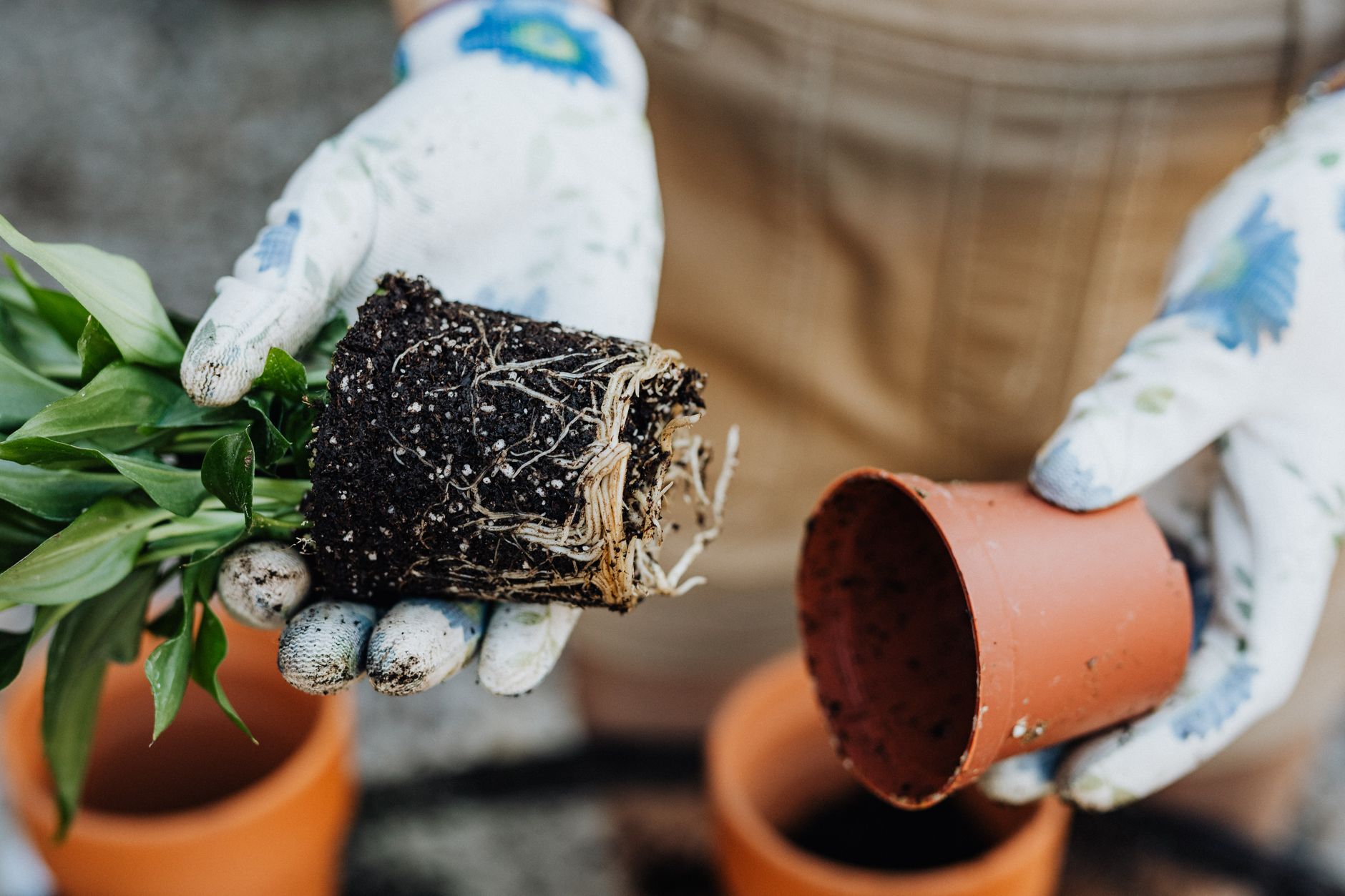
Signs Your Plant Has Actually Outgrown Its Pot
One symptom alone rarely proves a pot is too small. Look for several clues together:
- Roots densely circling inside the container
- Roots growing through the drainage holes
- Potting mix largely filled with roots
- The plant drying significantly faster than before
- Wilting between otherwise normal waterings
- New growth becoming unusually small, or slowing during the active season
One root from a drainage hole does not always mean much; plants naturally send roots to the bottom. When uncertain, inspect the whole root ball. Repot based on plant condition rather than a fixed yearly calendar.
”Likes to Be Root-Bound” Usually Means “Tolerates a Snug Pot”
The phrase “this plant likes to be root bound” usually means the plant tolerates a snug pot. In a snug pot, roots occupy much of the mix but still have functioning growing space. A root-filled pot dries quickly. A severely root-bound pot has dense, circling roots that significantly restrict volume. Some plants tolerate tight containers much longer than others, but tolerating a snug pot is not the same as benefiting from severe restriction.
Repot Now, Wait, or Keep the Same Pot?
A root check does not always end with a larger pot. Repot one size larger when the root ball fills the container, water demand is hard to manage, or healthy growth needs more rooting volume. Wait when substantial usable mix remains and the plant is healthy; aesthetics alone do not justify disturbing the roots. Use the same size — or a smaller pot — when damaged or rotted roots have shrunk the root system, or when the current pot was already oversized. Active growth is a convenient time to repot, but plant condition takes priority over the calendar.
Nursery Pots, Decorative Planters, and Cachepots: Making the Sizes Actually Fit
Should You Keep the Plant in Its Nursery Pot?
A plant does not need repotting just because you bought it. A nursery pot with drainage can sit inside a decorative cachepot: watering is easy, drainage is confirmed, root checks are simple, and you can change decorative pots without disturbing the root ball. Direct planting into a decorative pot also works when the container has adequate drainage and the size suits the roots. Base the decision on drainage, root condition, and fit rather than aesthetics alone.
Why a “6-Inch Nursery Pot” May Not Fit a “6-Inch Decorative Pot”
A “6-inch” nursery pot often does not fit inside a “6-inch” decorative pot. Nursery pots are sized by top diameter and often have a rolled rim wider than the rest of the pot, while a decorative pot’s printed size may describe its outside width, not its internal opening. The fit fails when the nursery pot’s rim is wider than the planter’s inside opening. Before buying a cachepot, compare the nursery pot’s widest rim with the decorative pot’s inside opening, and check height, taper, and base width for clearance. You need both measurements for cachepots.
Clear Nursery Pots: Useful for Monitoring, but Not Required
Clear pots let you see some root growth and observe moisture without pulling the plant out. They work well as removable inner pots, especially for beginners. But ordinary houseplants do not need transparent pots for healthy roots — the trend grew because a grower used available pots, not because clear plastic was proven better. Treat them as a monitoring convenience.
Don’t Leave the Nursery Pot Sitting in Drainage Water
A common cachepot mistake: water drains through the nursery pot and collects in the decorative outer pot, where it stays, leaving the lowest part of the mix sitting in standing water for days. Remove the inner pot when watering, or water at a sink and return the plant once it drains. If you water in place, empty standing water from the cachepot afterward — the system works because the inner pot can be lifted out.
Conclusion
The decision framework is simple. Determine what the size label actually describes — diameter, volume, or container class. Inspect the root ball before deciding how much larger to go. Treat 1–2 inches, or one pot size, as a conservative starting point for ordinary houseplants. When fitting a nursery pot into a decorative pot, measure the actual pots rather than trusting matching labels.
The “right plant pot size” is not one number. It gives roots workable growing room while keeping the water-air balance manageable for your plant, environment, and watering habits.
FAQ
How are plant pot sizes measured?
Plant pot sizes use two systems. Inch and centimeter labels describe a physical dimension, usually top diameter. Liter, quart, and gallon labels describe capacity, and nursery ”# sizes” describe container classes. For repotting, use inside diameter and depth; for fitting one pot into another, use the outer rim width of the inner pot and the inside opening of the outer pot.
What does a #5 plant pot mean?
A #5 is an ANSI nursery container class, not automatically an exact 5-gallon pot. Under the American Standard for Nursery Stock (ANSI Z60.2-2025), each # class covers a permitted volume range. The “#5 True” designation means the container genuinely holds 5 gallons.
How much bigger should a new plant pot be?
The common guideline is one pot size up — roughly 1–2 inches (2.5–5 cm) in diameter for small and medium houseplants. Root-ball size and growing conditions matter more than the number. A vigorous root system in bright light can handle a larger jump; a small root system in low light is safer with a smaller step.
Is a pot that is too big always bad for a plant?
No. A large pot mainly makes moisture management harder, especially with a small root system, water-retentive mix, low light, or generous watering. A large volume of mix can stay wet long enough to leave roots short of oxygen. With an aerated substrate and careful watering, larger containers work fine.
You Might Also Like