What Is the Optimal Light for Succulents?
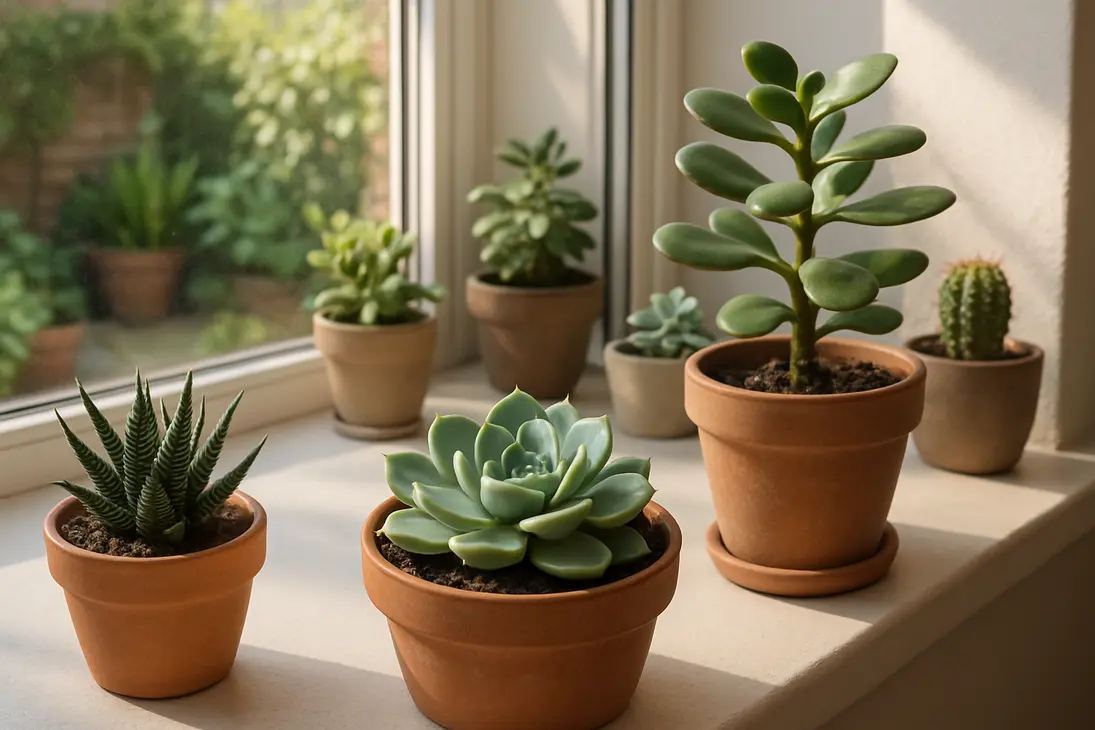
The optimal light for succulents is bright, consistent light that keeps growth compact without scorching the leaves. For many succulents, that means several hours of bright light each day, often with some direct sun. The right amount depends on the plant type, season, climate, indoor versus outdoor placement, and how gradually the plant has been introduced to stronger light.
An Echeveria on a sunny sill, a Haworthia on a desk, an Agave on a patio, and a snake plant in a shaded room do not need identical conditions. Match each plant to the brightest safe location it can handle.
How Much Light Do Succulents Need to Grow Well?
Most succulents grow best with bright light for much of the day. Indoors, that usually means a sunny window or strong grow light. Outdoors, it may mean morning sun, filtered sun, or full sun for tougher, acclimated species.
As a practical target:
- Many rosette succulents and cacti prefer 4–6+ hours of bright light or sun daily.
- Haworthia, Gasteria, and snake plants tolerate less direct sun but still need brightness.
- Newly purchased, recently repotted, or indoor-grown succulents should be moved into stronger light gradually.
A succulent can survive in poor light for a while, but that is not optimal. Too little light causes stretched, pale, weak growth and increases the risk of overwatering.
Bright indirect light vs. direct sun
“Bright indirect light” means strong ambient light without long exposure to harsh rays. It works well near a bright east, south, or west window, especially for moderate-light succulents.
“Direct sun” means sunlight lands directly on the leaves. Many succulents benefit from some direct sun, especially indoors where glass reduces intensity. Outdoor direct sun is much stronger, so a plant that thrives on a windowsill can burn if moved straight onto a hot patio.
| Light condition | Best use |
|---|---|
| Low light | Not ideal for most succulents |
| Bright indirect light | Haworthia, Gasteria, many Aloes, Kalanchoe |
| Morning direct sun | Most succulents transitioning outdoors |
| Afternoon direct sun | Tough, acclimated plants; risky in heat |
| Filtered sun | Useful in hot climates or for mixed collections |
Why “low light” usually means slower growth, not ideal growth
“Low light succulent” is often misunderstood. Some succulents tolerate lower light, but tolerance is not the same as thriving.
In low light, succulents photosynthesize less efficiently. Growth slows, rosettes open, leaves may thin, and stems may stretch. The plant also uses water more slowly, so soil stays damp longer and rot becomes more likely.
Snake plants, Haworthia, and Gasteria are better lower-light choices, but even they grow best in bright indirect light. If you cannot comfortably read during the day without a lamp, the spot is probably too dim for most succulents long term.
How seasonal changes affect succulent light needs
Light changes throughout the year. In winter, days are shorter and windows provide less usable light. Succulents may slow down and need less water, but they still need the brightest practical position.
In summer, sunlight is stronger and outdoor surfaces such as concrete, walls, gravel, and metal can reflect heat onto plants. A succulent that enjoys a south-facing winter window may still need protection from harsh outdoor afternoon sun.
In the Northern Hemisphere, south-facing windows are usually brightest, followed by west and east; north windows are lowest. In the Southern Hemisphere, reverse north and south.
Best Places to Put Succulents Indoors and Outdoors
The best location is not always the sunniest one. It is the place that gives enough light for compact growth while avoiding leaf burn, overheated pots, and soil that stays wet too long.
Best indoor window directions for succulents
Indoors, place succulents as close to the window as practical. Light drops quickly with distance, especially if screens, curtains, trees, overhangs, tinted glass, or nearby buildings block the sun.
For most homes:
- South-facing window: Best for high-light succulents in the Northern Hemisphere, including Echeveria, Sedum, many cacti, and other sun lovers.
- East-facing window: Excellent for many succulents because morning sun is bright but gentler.
- West-facing window: Bright but hotter; watch for summer sunburn.
- North-facing window: Usually too dim for high-light succulents, but may work for snake plant, Haworthia, or Gasteria if unobstructed.
A sunny windowsill is usually better than a table several feet away. If the plant is stretching, it may simply be too far from the glass.
When a succulent is too far from the window
A room can look bright to people while still being too dim for succulents. Human eyes adjust; plants cannot.
Signs the plant may be too far from the window include:
- New growth is longer, paler, or more widely spaced.
- A rosette flattens or reaches toward the light.
- Stems lean strongly.
- Soil stays wet much longer than expected.
- Lower leaves drop while weak top growth continues.
High-light succulents usually need the windowsill or the brightest area near the window. For shelves, desks, and darker rooms, use a grow light.
Outdoor placement: morning sun, afternoon shade, and gradual acclimation
Outdoors, many succulents can take stronger light than they receive indoors, but they need time to adjust. Sunburn often happens when a greenhouse, shop, office, or windowsill plant is suddenly placed in full outdoor sun.
A safer transition:
- Start in bright shade or filtered light.
- Add one to two hours of morning sun.
- Increase exposure over one to two weeks.
- Watch for compact, healthy new growth.
Morning sun with afternoon shade is one of the safest outdoor placements for mixed succulent collections. It provides strong light without the worst heat of the day.
How climate and heat change the best location
“Full sun” means different things in different climates. Full sun on a mild coastal patio is not the same as full sun on a 100°F inland balcony.
In hot, dry climates, many container succulents benefit from afternoon shade, shade cloth, or filtered sun. Pots heat faster than garden beds, and dark containers can overheat roots. In humid climates, airflow matters because soil dries more slowly.
Also consider reflected heat from white walls, glass railings, metal furniture, concrete, or gravel. These can make a location much harsher than it looks.
Light Needs by Succulent Type
Different succulent groups evolved in different habitats. Some grow in open sun; others naturally grow under shrubs, in rock crevices, or in bright shade. That is why treating all succulents the same often causes problems.
High-light succulents: Echeveria, Sedum, Sempervivum, Agave, and many cacti
High-light succulents need the brightest indoor spot available. Outdoors, many can take substantial direct sun after acclimation.
Examples include:
- Echeveria
- Sedum
- Sempervivum
- Agave
- Many desert cacti
- Graptopetalum and many Graptoveria hybrids
These plants stretch noticeably in weak light. Echeveria often loses its compact rosette shape indoors unless kept in a very bright window or under a grow light. Sempervivum is often sold as a houseplant but generally performs better outdoors.
Moderate-light succulents: Kalanchoe, Crassula, Aloe, and similar houseplant succulents
Moderate-light succulents still need brightness, but many are more forgiving indoors than Echeveria.
Examples include:
- Kalanchoe blossfeldiana
- Jade plant and other Crassula
- Many Aloe species and hybrids
- Peperomia-type succulents
- Some Euphorbia species grown as houseplants
These often do well in an east window, a bright south or west window with some protection, or under grow lights. Some develop red, bronze, or purple tones in stronger light. This stress coloring can be normal if the plant remains firm and growing.
Lower-light-tolerant succulents: Haworthia, Gasteria, and snake plant
For homes without sunny windows, choose succulents that tolerate lower light better.
Good candidates include:
- Haworthia and Haworthiopsis
- Gasteria
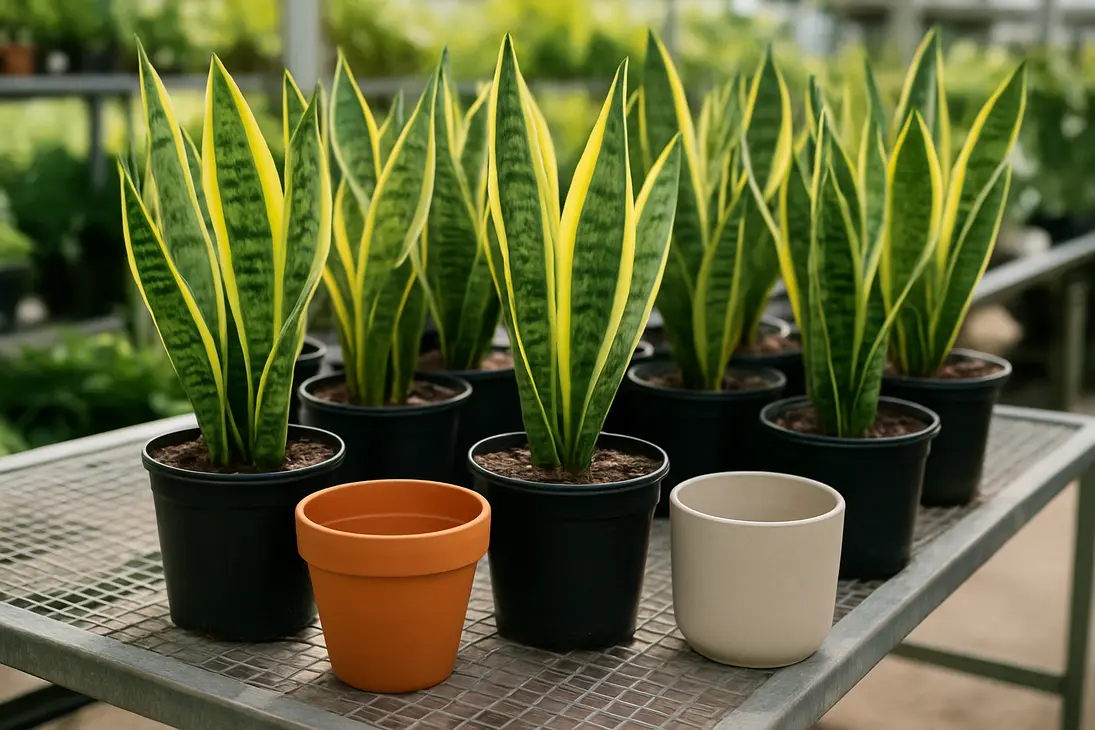
- Snake plant / Dracaena trifasciata, formerly Sansevieria
- Some small Aloe relatives that prefer filtered light
These plants do not need the same intense sun as Echeveria or many cacti. Haworthia can be damaged by light levels that suit high-light rosette succulents.
Why low-light-tolerant does not mean no-light
Even shade-tolerant succulents need light. A snake plant may survive in a dim corner, but it usually grows better near a bright window. Haworthia and Gasteria may stay attractive longer than Echeveria in lower light, but they can still stretch, weaken, or stop growing.
If you want a succulent on a dark shelf, rotate it back to bright light regularly or add a grow light. For long-term health, give it a bright permanent position.
Signs Your Succulent Is Getting Too Little or Too Much Light
Succulents show light problems through shape, color, and growth pattern. Catching these signs early helps prevent severe stretching or burn.
Signs of too little light: stretching, pale growth, leaning, and weak stems
Too little light causes etiolation, or stretching toward light. It is especially obvious in rosette succulents.
Common signs include:
- Long gaps between leaves
- Rosettes opening or flattening
- Tall, thin, or floppy stems
- Smaller, paler, softer new leaves
- Leaning toward the window
- Fading color
Once a succulent stretches, the elongated stem will not shrink back. Better light improves future growth, but old stretched growth remains. Many growers eventually behead and reroot stretched rosettes once the plant is healthier.
Signs of too much light: sunburn, bleaching, crispy patches, and stress colors
Too much light, especially too suddenly, can damage leaves. Sunburn appears as pale, tan, brown, or crispy patches on the side facing the light. Damaged tissue will not heal, though the plant can outgrow it.
Watch for:
- White or beige bleached areas
- Dry, crispy patches
- Sudden browning after moving outdoors
- Shriveling tips despite adequate water
- Rosettes closing tightly in hot sun
- Dark stress colors combined with stalled growth
Some stress color is normal. The warning signs are bleaching, crisping, wrinkling, collapse, or stopped growth.
How to adjust light without shocking the plant
Make light changes gradually.
If the plant needs more light:
- Move it closer to the window.
- Introduce gentle morning sun.
- Increase exposure over several days or weeks.
- Rotate the pot for even growth.
If the plant is getting too much light:
- Remove it from afternoon sun.
- Use a sheer curtain or shade cloth.
- Move it to bright shade while it recovers.
- Avoid fertilizing until normal growth resumes.
Do not move a scorched succulent into deep shade permanently unless it is truly shade tolerant. It still needs bright light to recover.
How lighting problems can lead to watering mistakes
Light and watering are connected. A succulent in strong light uses water faster. A succulent in low light uses water slowly.
Beginners often see a weak, stretched succulent and assume it needs water. In reality, it may be light-starved while the soil is already staying damp too long. More water can cause rot.
Before watering, ask whether the soil is dry deep in the pot, the plant is actively growing, light has decreased, or the pot is large, glazed, or poorly draining. If light is poor, water less often and improve light before trying to fix the plant with more water.
Using Grow Lights and Light Measurements for Succulents
Grow lights are useful when natural light is weak, blocked, seasonal, or too far from where you want to keep plants. They are often the easiest solution for apartments, offices, shelves, and winter care.
When succulents need a grow light
Consider a grow light if:
- Your windows face a low-light direction.
- Buildings, trees, screens, or curtains block sunlight.
- Succulents stretch even on the windowsill.
- Plants are kept on shelves away from windows.
- Winter light is too weak.
- You grow high-light succulents indoors, especially Echeveria or cacti.
A grow light can supplement a window or replace sunlight if strong enough and used long enough.
Choosing a grow light for indoor succulents
Choose a full-spectrum LED grow light with enough output for your plant area. Small clip lights may help low to moderate-light plants, but high-light succulents usually need stronger bars, panels, or bulbs placed close to the leaves.
Look for full-spectrum or white LED light, adjustable height, a timer, good coverage, and minimal heat at plant level. For most indoor succulents, 12–14 hours per day on a timer is a practical starting point. Plants still benefit from a regular dark period.
How close should a grow light be to succulents?
Distance depends on light strength. Check the manufacturer’s guidance, then adjust based on plant response.
General starting points:
- Small LED bars or bulbs: 6–12 inches above the plant tops
- Stronger LED panels: 12–24 inches, depending on output
- Lower-light succulents: farther away or near the edge
- High-light succulents: closer to the center and fixture
If leaves bleach or crisp, raise the light or shorten the duration. If plants stretch, lower the light, increase duration, or use a stronger fixture.
Lux, PPFD, and DLI: what matters for home growers
Home growers do not need perfect light measurements, but basic terms can help:
| Measurement | Meaning |
|---|---|
| Lux | Brightness as perceived by human eyes; easy but imperfect |
| PPFD | Plant-usable light reaching a surface at one moment |
| DLI | Total plant-usable light received over a day |
Plant response matters most. Compact, colorful, steady growth means the light is probably adequate. Stretching means the plant needs more intensity, longer duration, or a better position.
If you use a lux app, treat it as a comparison tool, not an exact plant measurement. Comparing a windowsill with a shelf often shows why a plant is struggling.
Conclusion
The optimal light for succulents is bright, species-appropriate light introduced gradually. Most succulents want more light than a typical indoor room provides, but not every succulent wants harsh all-day sun.
High-light succulents need sunny windows, strong grow lights, or acclimated outdoor sun. Moderate succulents do well in bright windows and protected sun. Haworthia, Gasteria, and snake plants tolerate lower light but still need brightness.
Watch the plant. Stretching, leaning, and pale growth usually mean it needs more light. Bleaching, crispy patches, and sudden browning mean the light was too strong or increased too quickly.
FAQ
Can succulents survive in low light?
Some can survive in low light for a while, especially snake plants, Haworthia, and Gasteria. Most succulents, however, will not thrive there. Bright indirect light is a better long-term goal.
Do succulents need direct sunlight indoors?
Many succulents benefit from direct indoor sun, especially Echeveria, Sedum, and many cacti. Lower-light succulents such as Haworthia may prefer bright indirect light.
How do I know if my succulent needs more light?
It likely needs more light if it stretches, leans toward the window, becomes pale, produces smaller leaves, or loses its compact shape. Move it closer to a bright window or add a grow light, increasing light gradually.
Can grow lights replace sunlight for succulents?
Yes. Grow lights can replace sunlight if they are strong enough, close enough, and used for enough hours. Compact growth means the setup is working; stretching means more light is needed.
You Might Also Like