Can Plants Photosynthesize With Light Sources Other Than the Sun?
Yes. Plants can photosynthesize with light sources other than the Sun, as long as the light provides usable wavelengths, enough intensity, and enough exposure time. Plants are not “checking” whether photons came from sunlight, an LED grow light, a fluorescent tube, or another source.
The real question is whether the plant receives enough useful light energy to make more sugars than it uses. Many everyday lights technically allow some photosynthesis, but not enough for healthy growth.
How Plants Use Light for Photosynthesis
Photosynthesis is how plants turn light energy, carbon dioxide, and water into sugars. Those sugars support leaves, roots, flowers, fruit, repair, and storage. Oxygen is released as a by-product.
For gardeners, the practical lesson is simple: plants need light energy, not sunlight as a special substance. If a non-solar light source gives the plant enough usable light, photosynthesis can happen.
That is why plants can grow under LED grow lights, fluorescent lamps, greenhouse lighting, and bright window light. It is also why weak indoor light can be frustrating: a plant may survive, but grow slowly, stretch, fade, or refuse to flower.
Why the source of the light matters less than the light itself
A plant responds mainly to the light that reaches its leaves. Three factors matter most:
- Spectrum: Does the light include wavelengths the plant can use well?
- Intensity: Is it strong enough at leaf level?
- Duration: Is the plant exposed for enough hours per day?
Sunlight performs well on all three. It is broad-spectrum, intense, and naturally available for many hours. Artificial light can also work, but only if it is strong enough, close enough, and used long enough.
A grow light close to seedlings can be more useful than a decorative lamp across the room. A torch waved at a plant for a few minutes will not matter much, even though it emits light.
Do Plants Need Direct Sunlight?
No. Many plants do not need direct sunlight to photosynthesize. They can photosynthesize in indirect sunlight, filtered light, reflected light, and cloudy conditions. The difference is the rate.
Direct sun usually provides far more light than shade or indoor window light. More light generally means more potential photosynthesis, until the plant reaches its limit or becomes stressed by heat and water loss. Less light means slower sugar production.
This is why plant labels use terms such as “full sun,” “part shade,” “bright indirect light,” and “low light.” These describe how much light a plant usually needs for good growth.
Direct sunlight vs. indirect sunlight
Direct sunlight means the sun’s rays fall directly on the leaves. Vegetables, many herbs, flowering annuals, and fruiting crops usually need several hours of direct sun to perform well.
Indirect sunlight means the plant receives light from the sky, nearby surfaces, or through a window, but not direct sunbeams. This can still support photosynthesis, especially for plants adapted to shade.
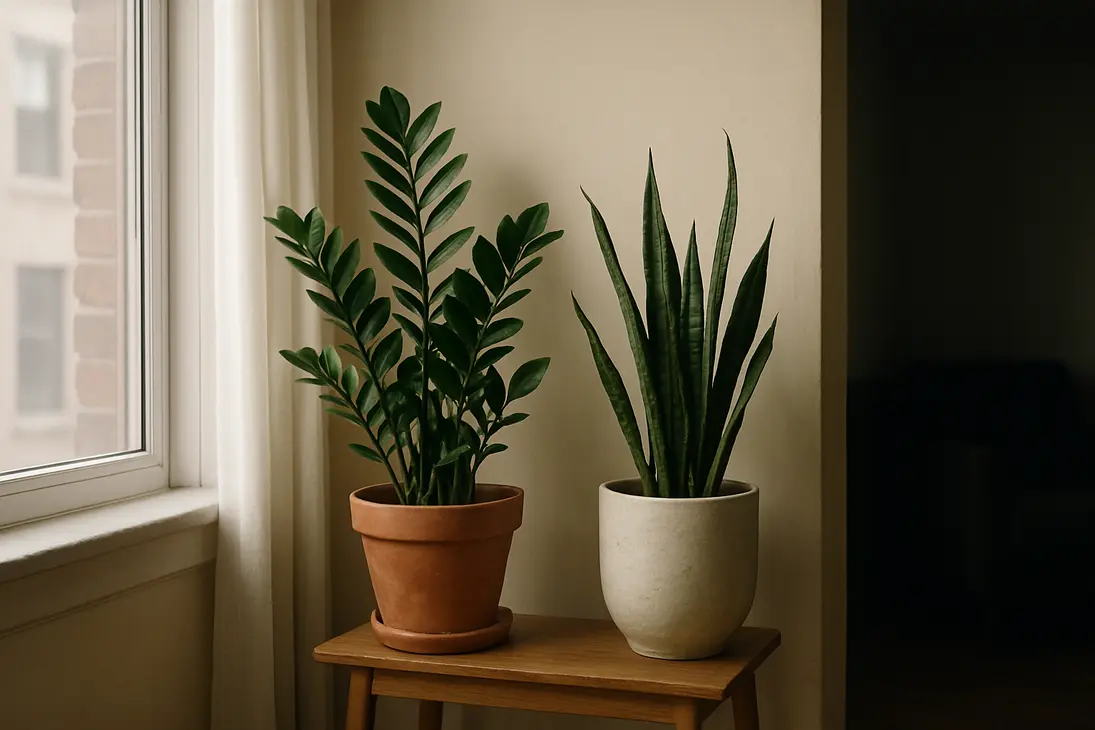
Common houseplants such as pothos, philodendron, peace lily, snake plant, ZZ plant, and many ferns can photosynthesize in indirect light. But survival is not the same as vigorous growth. In weak light, plants may make smaller leaves, lose variegation, lean toward the window, or grow very slowly.
A useful comparison is lettuce and tomatoes. Lettuce can produce in partial shade, especially in warm weather. Tomatoes can photosynthesize in indirect light, but usually need much stronger light to flower and fruit well.
Can plants photosynthesize on cloudy days or through windows?
Yes. Clouds reduce light intensity, but they do not stop photosynthesis. Cloudy light is often diffuse, reaching leaves from many angles, so plants continue growing, though usually more slowly.
Plants can also photosynthesize through windows, but windows reduce and alter the light:
- Glass lowers total light intensity.
- Distance from the window sharply reduces usable light.
- Window direction matters.
- Screens, curtains, overhangs, trees, tinted glass, and low-emissivity coatings reduce light further.
- Most window glass blocks much ultraviolet light, but plants do not need UV for ordinary photosynthesis.
A plant on a bright windowsill may get enough light for healthy growth. The same plant several feet into the room may receive only a small fraction of that light, even if the room looks bright to human eyes.
Can Artificial Light Support Photosynthesis?
Yes. Artificial light can support photosynthesis. This is the basis of seed starting, hydroponics, vertical farming, tissue culture, and overwintering plants indoors.
However, not every artificial light is useful. Some are too weak, too far away, too hot, poorly timed, or poorly matched to plant needs. What matters is the actual light reaching the leaves.
Grow lights and indoor plant lighting
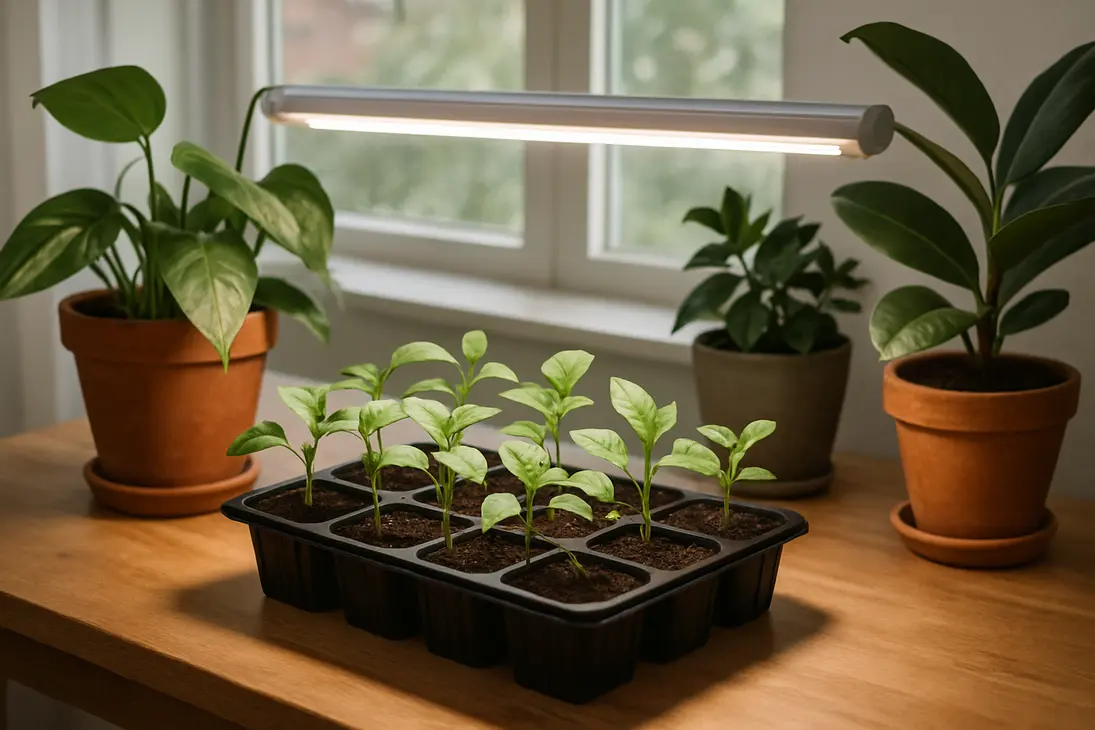
Grow lights are designed to provide useful wavelengths and enough intensity for plants. Modern LED grow lights are popular because they are efficient, relatively cool, and available in different spectrums. Fluorescent T5 or T8 fixtures can also grow seedlings, herbs, and leafy greens when placed close enough.
Match artificial lighting to the plant and goal:
| Plant goal | Practical artificial-light approach |
|---|---|
| Keeping low-light houseplants alive | Bright window plus supplemental LED if needed |
| Starting seedlings | LED or fluorescent light close above seedlings |
| Growing herbs indoors | Strong LED grow light; basil needs more light than mint or parsley |
| Flowering houseplants | Bright window plus grow light often helps |
| Fruiting crops indoors | Strong grow lights, close spacing, and careful care |
Seedlings show the difference clearly. A sunny windowsill may look adequate, but seedlings often stretch because the light is weaker and less consistent than they need. A grow light placed close above them usually produces stockier growth.
For houseplants, supplemental light can prevent winter decline. A modest LED grow bulb can help if it is close and used consistently. High-light plants such as citrus, succulents, tomatoes, and peppers need much stronger lighting than a small bulb across the room.
Household bulbs, torches, and street lights
Household bulbs can support some photosynthesis if bright and close enough, but ordinary room lighting is designed for people, not plants. It may look bright while providing little useful light at leaf level.
A standard LED bulb may help a nearby low-light houseplant, especially if used for many hours. It is usually not enough for seedlings, herbs, or flowering plants unless arranged carefully. Incandescent bulbs are inefficient and produce too much heat for close plant lighting.
A torch or flashlight can trigger photosynthesis in principle, but it is usually too weak, narrow, and brief to matter. Street lights may provide a small amount of photosynthesis to nearby leaves, but their bigger effect is often on plant timing. Night lighting can interfere with day-length responses, affecting flowering, dormancy, or leaf drop in some species.
Why some artificial lights keep plants alive but do not help them thrive
A plant can look acceptable for a while under marginal light because it grows slowly and uses stored energy. That does not mean the light is sufficient.
Low light commonly causes:
- Long, weak stems
- Smaller new leaves
- Wide gaps between leaves
- Pale growth
- Leaf drop
- Loss of variegation
- Few or no flowers
- Slow-drying soil and root problems
This is common with indoor plants in dim corners. They may not die quickly, but they gradually decline. Moving them closer to a window or adding a properly placed grow light can help.
More light is not always better. Shade plants can scorch in harsh direct sun, and plants moved suddenly from dim rooms to strong light may burn. Match the light to the plant.
Light Spectrum, Intensity, and Duration
When judging any photosynthesis light source, consider spectrum, intensity, and duration together.
- Spectrum is the color range of the light.
- Intensity is how much light reaches the leaf.
- Duration is how long the plant receives it each day.
A weak light left on all day may still be inadequate. A strong light used for only an hour may also be inadequate. A useful setup needs a reasonable balance of all three.
Which colors of light do plants use most?
Plants mainly use visible light for photosynthesis, often called photosynthetically active radiation. This runs roughly from violet-blue through red.
Chlorophyll absorbs blue and red light especially well. Blue light supports photosynthesis and compact growth. Red light is efficient for photosynthesis and influences growth and flowering responses.
Green light is less strongly absorbed, which is why many leaves look green, but plants can still use some green light. It can penetrate deeper into leaves and canopies. Full-spectrum white grow lights can therefore work very well.
Gardeners do not need to obsess over purple grow lights. Red-and-blue fixtures can work, but many people prefer white full-spectrum LEDs because they are easier on the eyes and make pests, color changes, and leaf problems easier to see.
Are there parts of the light spectrum plants cannot use well?
Plants do not use all light equally. Infrared mostly contributes heat rather than directly powering photosynthesis. Ultraviolet is not a major photosynthesis driver and can damage tissues at high levels, though small amounts can influence plant chemistry.
Far-red light affects plant shape, shade responses, and flowering signals, but it is not the main photosynthesis workhorse in the way red and blue light are.
For home gardeners, the rule is simple: use a light intended for plants or a bright, efficient white LED setup with enough intensity. Avoid relying on dim accent lights, decorative colored bulbs, or heat-heavy bulbs.
Why dim light may allow survival but slow growth
Every plant has a point where photosynthesis equals the energy it uses through respiration. Below that point, the plant spends more energy than it makes. Above it, the plant has energy available for growth.
In dim light, a plant may stay alive but grow little. It may drop older leaves, stretch toward the light, fade, or stall. This is why “low-light plant” can be misleading. It usually means “tolerates low light better than many plants,” not “needs almost no light.”
Watch the newest growth. Compact stems, healthy new leaves, and steady growth suggest adequate light. Long gaps between leaves, leaning, fading color, and no new growth suggest the plant needs more usable light.
What Happens When Plants Have No Sunlight?
If a plant has no sunlight but receives enough artificial light, it can still photosynthesize. If it has no light at all, photosynthesis stops. In complete darkness, a green plant cannot make new sugars through photosynthesis.
Death is not always immediate. Many plants store carbohydrates in roots, bulbs, stems, tubers, seeds, or woody tissues. They can use those reserves for a time, but without light the reserves eventually run down.
Short-term darkness vs. long-term lack of light
Short-term darkness is normal. At night, photosynthesis stops, but respiration continues. The plant uses some of the sugars made during the day.
A few days of darkness may not seriously harm many established plants, especially in cool conditions. Shipping, storms, indoor moves, and cloudy periods can all reduce light temporarily.
Long-term darkness is different. Seedlings become pale, stretched, and weak. Houseplants in windowless rooms without grow lights decline. Plants buried under opaque covers or debris may exhaust their stored energy.
Bulbs such as tulips and daffodils can send up shoots using stored energy, and potatoes can sprout in a dark cupboard. But those shoots still need light afterward if the plant is to continue growing and replenish reserves.
How plants survive winter, polar nights, or low-light periods
Plants in cold or seasonally dark climates survive by reducing their need for photosynthesis.
Deciduous trees drop their leaves and remain dormant, living on stored energy until conditions improve. Perennials may die back to crowns, roots, rhizomes, bulbs, or tubers. Evergreens keep leaves or needles, but slow down in cold weather and may photosynthesize only on milder bright days.
In polar and near-polar regions, plants are adapted to short growing seasons. They photosynthesize intensely during long summer days and store energy for darker periods, when cold temperatures slow metabolism.
These plants are not actively growing in complete darkness forever. They are surviving by slowing down, going dormant, or using stored reserves until usable light returns.
Conclusion
Plants do not require sunlight specifically for photosynthesis. They require usable light at sufficient intensity for enough time. Sunlight is simply the most familiar and powerful natural source.
Artificial light can support photosynthesis when chosen and positioned well. Grow lights, bright LEDs, fluorescent fixtures, indirect daylight, cloudy light, and window light can all work to some degree.
The main mistake is assuming any visible light is enough. A torch, street light, or dim household lamp may technically provide photons, but usually not enough for strong growth. Match the light source to the plant’s needs and watch the plant’s response.
FAQ
Can plants photosynthesize without sunlight?
Yes. Plants can photosynthesize without sunlight if they receive enough usable artificial light, such as an LED grow light or fluorescent fixture. In complete darkness, photosynthesis stops.
Do indoor plants photosynthesize with indirect light?
Yes. Many indoor plants photosynthesize with indirect window light or reflected daylight. Bright indirect light is much more useful than a dim corner, and distance from the window matters greatly.
Can a torch or street light make a plant photosynthesize?
In principle, yes, because they emit light. In practice, they are usually too weak, brief, distant, or poorly directed to support meaningful growth. A proper grow light is far more reliable.
Is morning sun or afternoon sun better for plants?
Morning sun is gentler and cooler, which suits many plants. Afternoon sun is stronger and hotter, which benefits some sun-loving plants but can stress shade-tolerant or newly moved plants. The best choice depends on the species, climate, moisture, and season.
You Might Also Like